
For steady shots, choose a tripod if you need maximum stability for long exposures, landscapes, or studio work, as it offers a broad, sturdy support. Opt for a monopod if you want mobility and quick setup for events or uneven terrain, though it provides less support. The right choice depends on your shooting style and environment. Keep exploring to discover which support tool suits your photography adventures best.
Key Takeaways
- Tripods provide superior stability for long exposures and stationary shots, reducing camera shake effectively.
- Monopods offer quick setup and mobility, making them ideal for dynamic scenes and fast-paced shooting environments.
- For detailed landscapes or studio work, tripods are preferable due to their adjustable height and stability.
- Monopods are suitable for uneven terrain and outdoor scenarios where portability and rapid repositioning are needed.
- Choose based on your photography style: stability-focused shots favor tripods, while versatile, on-the-move shooting benefits from monopods.
Understanding the Basic Designs and Functions
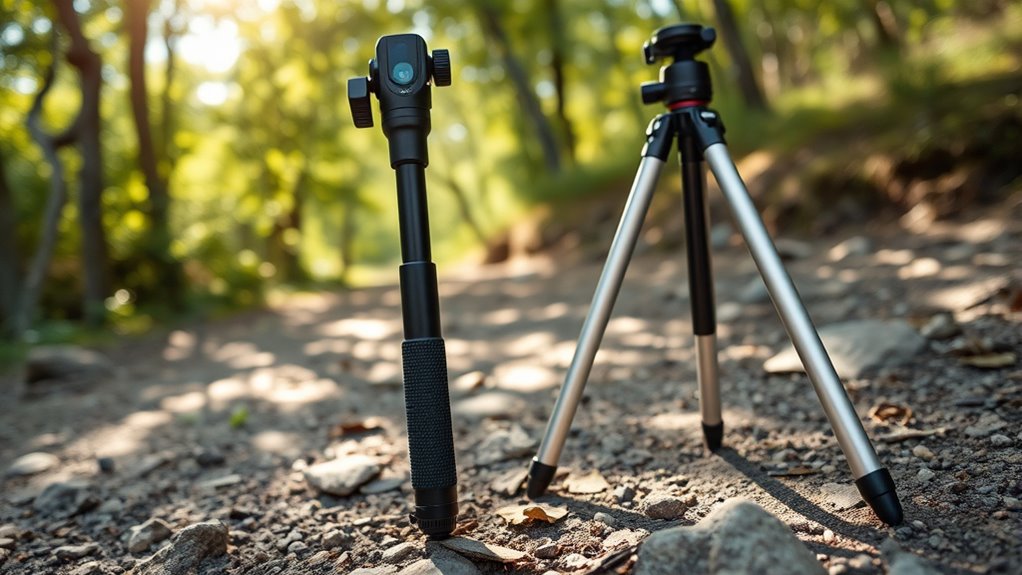
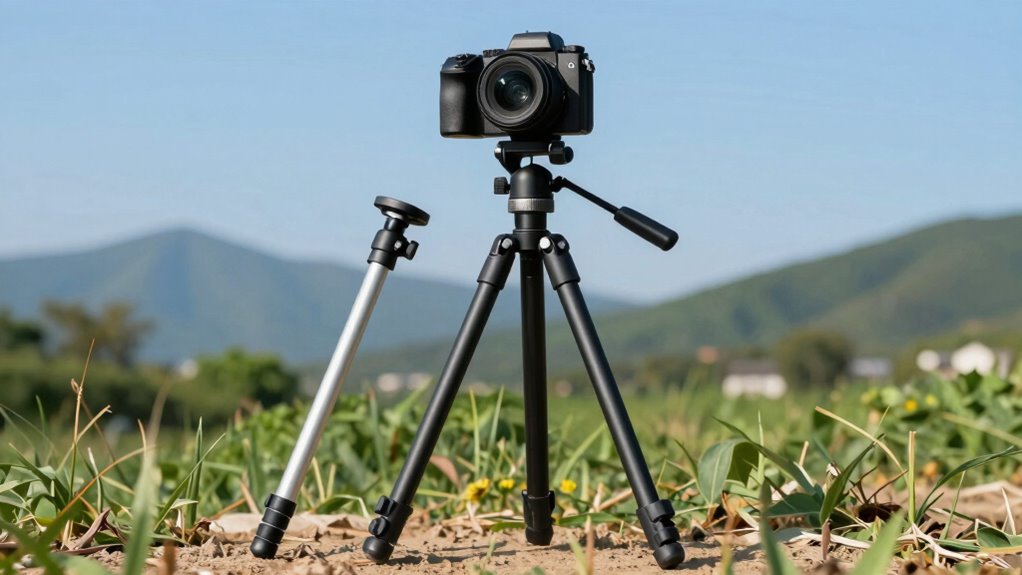
While both monopods and tripods provide stability for your camera, their designs and functions differ considerably. Monopods are single-legged supports, making them lightweight and portable, ideal for quick adjustments. They are compatible with most cameras, especially compact and mirrorless models, offering flexibility during shoots. Monopods are particularly useful in dynamic shooting environments where mobility is essential, and their ease of use allows for rapid repositioning. Tripods, on the other hand, have three legs, providing a broader base of support, which enhances stability. Their aesthetic design often appears more robust and professional, with adjustable heights and pan-and-tilt heads. While monopods are straightforward and easy to carry, tripods tend to be bulkier but offer more stability for long exposures. Additionally, support stability is a critical factor in choosing between the two, depending on your specific shooting needs. Understanding these basic design differences helps you choose the right support based on your camera compatibility and desired aesthetic.
Stability and Support Capabilities
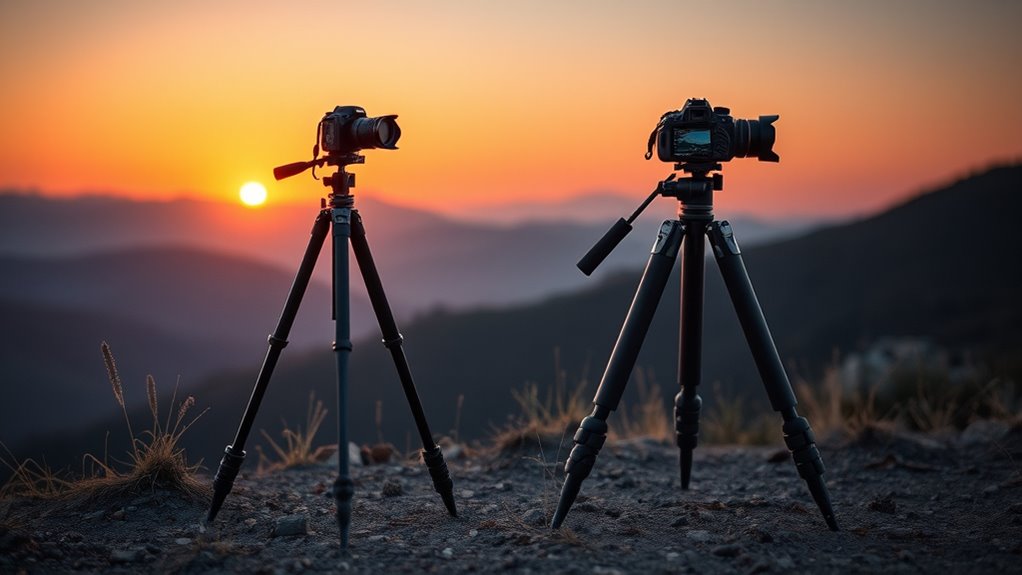
When it comes to stability and support, tripods generally outperform monopods by offering a broader and more solid base, which considerably reduces camera shake during long exposures. This stability allows you to focus on precise lighting adjustments without worrying about unwanted movement. With a tripod, you can confidently capture sharp images in low-light conditions or when working with slower shutter speeds. The enhanced support also enables you to experiment with different angles and compositions, enhancing the aesthetic impact of your shots. Monopods, while portable, provide less stability, making them less ideal for long exposures or intricate lighting setups. Choosing a tripod can elevate your photography by ensuring consistent support, especially when fine-tuning lighting and aiming for impactful, high-quality images. Additionally, understanding the navigation and mapping capabilities of modern tripods can help you set up more efficiently in complex environments. Incorporating features like height adjustment and quick-release mechanisms can further improve setup time and stability in challenging conditions. Moreover, the build quality of a tripod plays a crucial role in its durability and performance over time.
Portability and Ease of Use
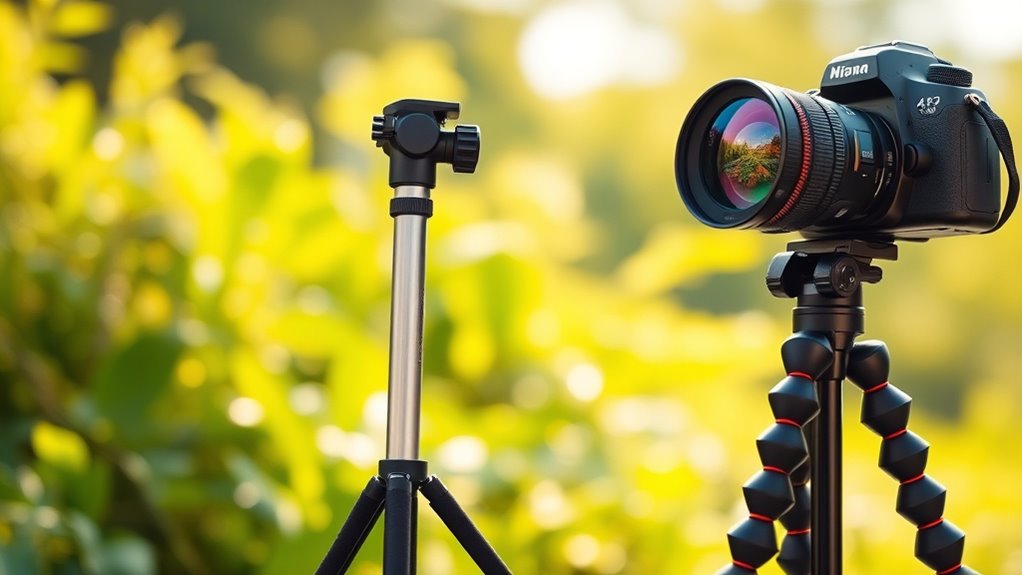
Portability and ease of use are key factors that often influence your choice between a monopod and a tripod. A monopod is lightweight and compact, making it easy to carry and quick to set up, especially when mobility is a priority. In contrast, tripods tend to be bulkier but offer stability, though they may require more effort to transport. Consider these points:
Choosing between a monopod and a tripod depends on your focus on portability versus stability for your photography needs.
- Monopods typically feature an ergonomic grip, providing comfort during extended use.
- Tripods distribute weight more evenly, which can enhance stability but may add to overall bulk.
- Ease of setup varies: monopods are simple to deploy, while tripods might involve extending multiple legs and locking mechanisms.
- The Air Fryer Hub offers insights on portable kitchen tools, emphasizing the importance of convenience and quick setup, similar to choosing between a monopod and a tripod for photography.
- When evaluating equipment, it’s also helpful to consider weight distribution and how it impacts your overall experience during extended shoots.
- Additionally, the material quality of your equipment can influence durability and ease of handling over time.
- Selecting the right equipment design can significantly enhance your shooting experience by reducing fatigue and improving handling.
- Understanding the contrast ratio can help you choose gear that optimizes image clarity and detail during critical moments.
Versatility Across Different Shooting Conditions
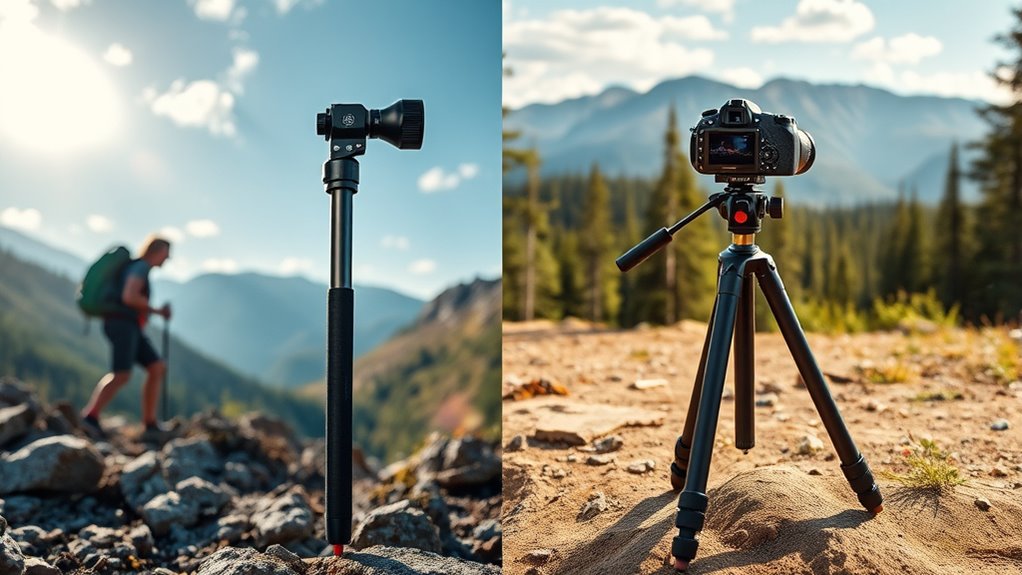
When shooting on uneven terrain, a monopod offers better stability and quick adjustments, making it easier to handle. Tripods, on the other hand, provide a sturdy platform for long exposures but can be cumbersome in dynamic scenes. Your choice depends on how much you need to adapt quickly and maintain stability across different conditions. Additionally, incorporating connected equipment like wireless remote controls can enhance your ability to capture steady shots in various environments. Considering the specific needs of your photography style can help you choose the right support to maximize your results. Understanding support stability and how it relates to your environment can further inform your decision-making process, especially when considering practical, room-by-room solutions to improve overall shooting conditions. Mastering camera stabilization techniques can also significantly impact the clarity and sharpness of your photos in diverse settings.
Adapting to Terrain
Adapting to varied terrain is essential for capturing sharp, stable shots in different environments. When dealing with uneven surfaces, your choice of support affects terrain adaptability considerably. A monopod offers portability and quick adjustments, making it ideal for rough or unpredictable terrains. Conversely, a tripod provides a broader base, enhancing stability on flat or uneven surfaces alike. Consider these factors:
- Use a monopod for quick movement across rocky or uneven terrains where stability is needed without sacrificing mobility.
- Opt for a tripod when shooting on uneven ground that allows for precise leveling, ensuring sharp images.
- Combine both tools when shifting between terrains, leveraging the monopod’s flexibility and the tripod’s stability for ideal results.
Your ability to adapt to terrain directly impacts shot quality, regardless of environment.
Handling Dynamic Scenes
Handling dynamic scenes requires quick adjustments and versatile support to keep up with unpredictable movements and changing conditions. A monopod offers mobility, making it easier to swiftly reposition your camera and adapt to fast-paced situations. It’s excellent for supporting camera accessories like external monitors or microphones, ensuring stability without sacrificing agility. When lighting changes suddenly, a monopod can help you quickly adjust angles without setting up bulky equipment. Tripods, while more stable, can be limiting in such scenarios, but their stability makes them ideal when working with lighting equipment that needs precise positioning. Both tools help manage camera accessories effectively, but your choice depends on how much flexibility you need. For fast, unpredictable scenes, a monopod’s versatility gives you an edge over a tripod’s rigid support. Additionally, power backup options like portable power stations can keep your gear running in remote locations or during extended shoots. Being aware of equipment management strategies can further enhance your ability to adapt quickly in dynamic shooting environments. Proper energy planning can ensure your gear remains operational during critical moments, especially in remote or challenging settings.
Suitability for Various Photography Styles
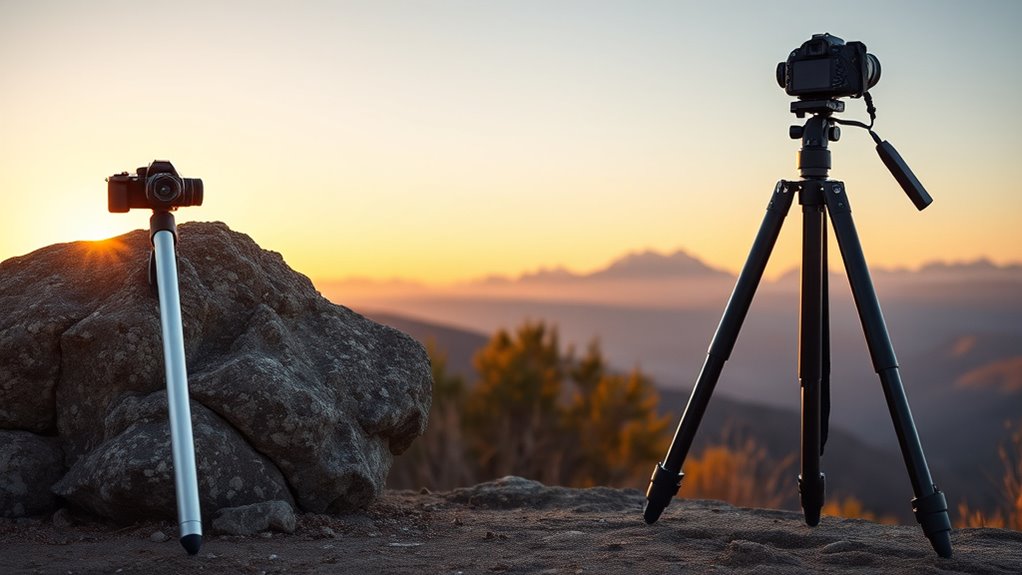
Choosing between a monopod and a tripod depends considerably on the photography style you pursue. For macro photography, a tripod offers stability, allowing you to focus closely without camera shake. A monopod might be less stable but offers mobility when working in tight spaces. For aerial shooting, a monopod’s lightweight design helps you maneuver easily, but a tripod provides steadiness for long exposures. Consider these points:
- Tripods excel in macro photography, providing a steady platform for detailed shots.
- Monopods are better suited for aerial shooting due to their portability and quick setup.
- Both tools can be useful across various styles, but your choice hinges on balancing stability with mobility.
- Using a support system like a tripod or monopod can significantly improve the sharpness and quality of your images, especially in low-light conditions.
Your decision should align with your specific photography needs and environments.
Cost and Investment Considerations
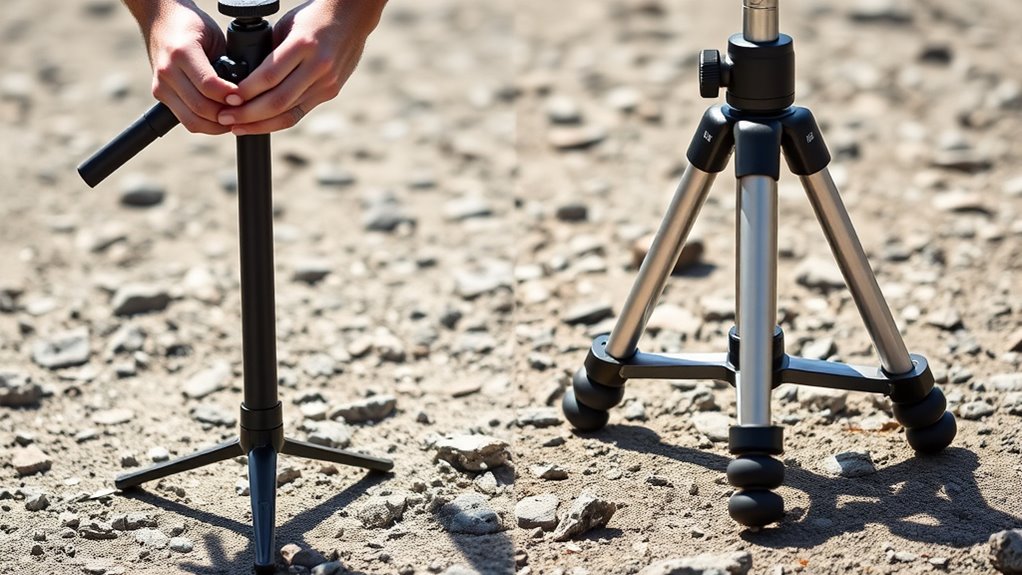
When choosing between a monopod and a tripod, you’ll want to consider your budget and the long-term costs involved. Budget-friendly options can save you money upfront, but they might not last as long or withstand heavy use. Think about durability and replacement costs to make a smart investment that fits your photography needs. Additionally, selecting equipment that can be used in various environments, such as water-related settings, can enhance your versatility as a photographer, so consider the environmental durability of your gear. Evaluating the material quality of your equipment can also impact its longevity and performance over time, especially when used in rugged terrains or challenging conditions like those found in outdoor destinations such as the Great Smoky Mountains or the Gulf Coast beaches. Opting for gear with weather resistance features can further ensure your equipment remains functional under different outdoor conditions. Moreover, choosing equipment made from quality materials can help prevent wear and tear, ensuring your investment lasts longer and performs reliably over time.
Budget-Friendly Options
Are you looking to stabilize your shots without breaking the bank? Budget-friendly options can provide solid support without hefty investments. When choosing affordable tripods and monopods, consider these key factors:
- Manual adjustments: Look for models with straightforward, easy-to-use knobs for quick setup.
- Electronic features: Some budget options include basic electronic stabilization or remote control capabilities, enhancing control.
- Build quality: Opt for materials like lightweight aluminum or sturdy plastic to balance durability and affordability.
- Stability and support are crucial aspects to ensure your shots come out clear and sharp, especially when working with budget equipment.
While these options may lack advanced features, they still offer reliable support for steady shots. Focus on models that meet your needs for manual adjustments and basic electronic features, ensuring you get the best value without overspending.
Long-Term Durability
Investing in a durable monopod or tripod can save you money in the long run by reducing the need for frequent replacements or repairs. Material durability and corrosion resistance are key factors that determine long-term performance. High-quality materials like aluminum or carbon fiber offer excellent durability, resisting wear and tear over time. Corrosion-resistant coatings prevent rust, especially in humid environments, extending your gear’s lifespan. Here’s a quick comparison:
| Material Type | Durability & Corrosion Resistance |
|---|---|
| Aluminum | Good durability, decent corrosion resistance |
| Carbon Fiber | Superior durability, excellent corrosion resistance |
| Plastic Components | Lower durability, limited corrosion resistance |
Choosing gear with these qualities ensures your investment stands the test of time.
Replacement Costs
Considering the initial purchase price and ongoing expenses is essential when evaluating monopods and tripods. Your choice impacts long-term costs, so a thorough price comparison is crucial. First, higher-quality brands with strong reputation often cost more initially but tend to last longer, reducing replacement frequency. Second, cheaper models may seem budget-friendly but might require more frequent repairs or replacements, increasing overall expenses. Third, evaluate the availability of replacement parts; well-known brands typically offer easier access, lowering maintenance costs. By weighing these factors, you can determine which option offers better value over time. Remember, investing in a reputable brand might be pricier upfront, but it can save you money on replacements and repairs in the long run.
Making the Right Choice for Your Photography Needs
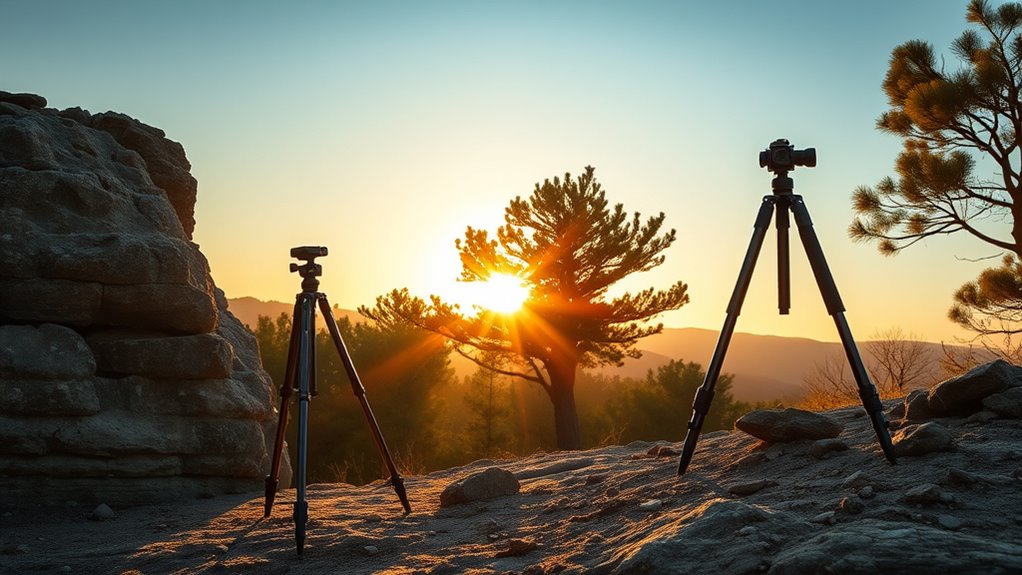
Choosing the right support tool depends on your specific photography needs and shooting style. If you’re exploring various photography genres, consider how a monopod offers portability and quick setup for street or wildlife shots, while a tripod provides stability for landscape or studio work. Your camera accessories should complement your gear and shooting habits. For fast-paced or on-the-go shooting, a monopod might be more practical, giving you support without sacrificing mobility. Conversely, if you prioritize sharpness and long exposures, a tripod ensures steady shots with minimal effort. Think about your typical environments and subjects. This assessment helps you select the support tool that aligns with your style, enhances your creativity, and makes your photography sessions more efficient.
Frequently Asked Questions
Can Monopods Replace Tripods for Professional Studio Photography?
Monopods can’t fully replace tripods in professional studio photography due to stability concerns, especially for long exposures or detailed shots. They offer portability but have flexibility limitations, making them less ideal for controlled, precise setups. Use a tripod for maximum stability and accuracy, while a monopod can serve as a quick, lightweight alternative for on-the-go shots. Choose based on your specific needs, but for studio work, tripods remain the better choice.
How Do Monopods Perform in Extreme Weather Conditions?
In extreme weather conditions, monopods offer decent weather resilience if made from durable materials like aluminum or carbon fiber. They maintain grip stability on uneven or slippery surfaces, but you should guarantee they have textured, non-slip grips. However, strong winds or heavy rain can challenge their stability, so always use additional support when possible. Overall, they perform reasonably well, but their resilience depends on build quality and how securely you handle them.
Are There Hybrid Options Combining Features of Both Monopods and Tripods?
Did you know hybrid designs are gaining popularity, with 65% of photographers favoring versatile options? These hybrid options combine features of both monopods and tripods, offering stability and mobility in one device. They’re perfect if you need adaptable gear for different shooting situations. Hybrid options let you switch between handheld, monopod, and tripod modes quickly, making your photography more flexible and efficient, especially in unpredictable environments.
Which Is Better for Video Recording: Monopod or Tripod?
A tripod is better for video recording because it offers superior stability, reducing shake and jitter for smooth footage. It provides a steady base, especially for longer shots, and allows you to set precise angles. While monopods are more portable and quick to deploy, they lack the stability needed for professional-quality videos. Choose a tripod for steady, polished results, especially when stability comparison is essential.
How Do Weight and Size Impact Long-Term Use and Fatigue?
Weight and size can secretly influence your long-term comfort and endurance. Heavier, bulkier gear may cause fatigue and strain, especially during extended shoots, challenging your ergonomics considerations. Conversely, lighter, more portable options reduce fatigue and boost mobility, making your workflow smoother. By balancing size and weight with your needs, you’ll enjoy prolonged use without discomfort, ensuring your shots stay steady and your creativity remains uninterrupted.
Conclusion
Ultimately, choosing between a monopod and tripod depends on your unique photography journey. Sometimes, it’s a coincidence—finding that perfect shot when you least expect it—that makes you realize what gear truly supports your passion. Trust your instincts, experiment with both, and let your moments guide you. After all, the right support isn’t just about stability; it’s about capturing the stories that matter most to you.