To look great on video calls, start by using warm or neutral lighting that evenly illuminates your face with minimal shadows. Position your camera at eye level and make certain it’s clear and focused. Take advantage of natural light by facing a window, but diffuse bright sunlight to prevent glare. Adjust your camera settings for sharpness, brightness, and contrast. For more tips, explore how simple adjustments can boost your on-camera presence.
Key Takeaways
- Use warm or neutral lighting (3500K-5000K) and diffuse it evenly to create a flattering, natural glow.
- Position your camera at eye level and ensure it’s focused for sharp, well-framed video.
- Face natural light sources or diffuse window light to achieve soft, even illumination on your face.
- Keep your background clean and organized to maintain a professional appearance.
- Test your camera settings and angles before calls to ensure clear, flattering visuals.
Top picks for "look good video"
Open Amazon search results for this keyword.
As an affiliate, we earn on qualifying purchases.
Find the Perfect Lighting Setup

Good lighting is essential for looking your best on video calls. To achieve this, you need to take into account color temperature and light diffusion. Aim for a warm or neutral color temperature, around 3500K to 5000K, to create a natural, flattering glow. Avoid overly cool or blue-toned lights, which can wash out your complexion. Light diffusion is equally important; use soft light sources or diffusers to spread light evenly across your face, reducing harsh shadows. This prevents unflattering contrasts and creates a more polished appearance. Position your lights to minimize shadows and ensure your face is well-lit from multiple angles. When you combine the right color temperature with effective light diffusion, you’ll look more vibrant, professional, and camera-ready during your video calls. Incorporating adaptive lighting that adjusts to your environment can further enhance your appearance and comfort. Additionally, considering air quality can help you feel more comfortable and reduce distractions during your calls. Improving your room’s air circulation can also help maintain consistent lighting conditions and overall comfort. Being mindful of natural light sources can also significantly improve your on-camera presence by adding a balanced, natural glow. Furthermore, optimizing your lighting placement ensures the most flattering and consistent results.
Position Your Camera for Flattering Angles

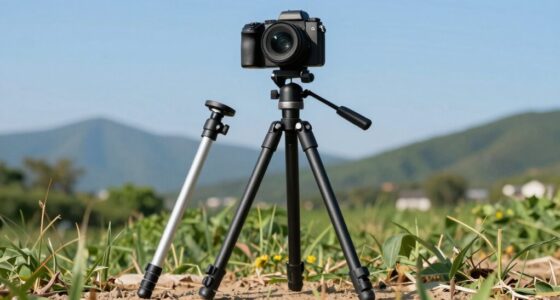
Positioning your camera correctly can make a noticeable difference in how you appear on video calls. The right camera height and head positioning can highlight your best features and minimize unflattering angles. To achieve this, keep your camera at eye level, so your face is centered and well-framed. Avoid looking down or up at the camera, which can distort your proportions. Additionally, position yourself so that your head is upright and slightly forward, creating a natural and engaging appearance. Proper camera setup ensures you look confident and polished on every call. Here are some tips to optimize your setup:
- Elevate your camera to eye level
- Keep your head centered and facing forward
- Avoid extreme angles that distort your features
- Maintain a consistent distance from the camera
- Use adjustable mounts or stands to achieve the optimal angle
- Consider lighting conditions to further enhance your appearance and reduce shadows
- Remember that ergonomic positioning can reduce fatigue and improve your overall presence on video calls
- Incorporate thermal behavior awareness by adjusting your lighting and environment to prevent glare or shadows that can detract from your appearance
Use Natural Light to Your Advantage

Natural light can considerably enhance your appearance on video calls by creating a soft, even glow that reduces shadows and highlights your features. Position yourself near a window with diffuse window light, which evenly spreads sunlight and avoids harsh shadows. Aim to face the light source directly or at a slight angle for the best results. If the light is too bright, use sheer curtains or a white sheet to diffuse it further. This setup softens your skin tone and minimizes unflattering shadows. Here’s a visual to help you picture it:
| Light Source Position | Effect on Face | Ideal Conditions |
|---|---|---|
| Facing window | Even lighting | Bright but not direct sun |
| Side window | Subtle shadows | Diffuse light, avoid glare |
| Behind you | Backlit effect | Use fill light for balance |
| Overhead light | Unflattering shadows | Avoid if possible |
| Outside in shade | Soft, natural glow | Perfect for natural look |
Additionally, experimenting with different angles can help you find the most flattering lighting for your face, especially when you understand lighting principles and how they impact your appearance. Implementing lighting techniques can further optimize your setup and ensure you look your best on camera. To improve your video quality, consider adjusting your camera settings and background for a polished look. Moreover, using a ring light or other supplementary lighting devices can provide consistent illumination regardless of ambient conditions. Being aware of lighting patterns can also help you position yourself more effectively for a professional appearance.
Adjust Your Camera Settings for Better Clarity

To guarantee you look sharp on video calls, adjusting your camera settings is essential. Start by setting your camera resolution to the highest option available; this ensures clear, crisp visuals. Next, fine-tune your focus settings to keep your face sharp and avoid blurriness. If your camera has auto-focus, ensure it’s functioning properly, or manually adjust focus for consistency. Additionally, check brightness and contrast levels so your image isn’t too dark or washed out. These small tweaks can considerably improve your appearance, making you look more professional and engaging. Proper camera setup can also enhance your overall video quality and reduce distractions during calls. Remember, good clarity depends on proper camera settings, so take a moment to optimize each one before joining your next call. Adjusting your lighting conditions can further improve the image quality and highlight your best features. Incorporating essential oils for respiratory health, such as eucalyptus or peppermint, can also create a fresh environment that enhances your overall presence on camera. Being mindful of camera positioning can help you achieve the most flattering angle and minimize unflattering shadows. Be aware that passive voice detection tools can help identify and improve unclear sentence structures, further enhancing your communication clarity.
Minimize Distractions and Optimize Your Background

Minimizing distractions and optimizing your background are crucial steps to guarantee your audience stays focused on you. Clear out background clutter to create a clean, professional look that draws attention to you, not your surroundings. Avoid busy or distracting items that can divert viewers’ attention. Noise reduction is equally important; choose a quiet space or use background noise filters to eliminate disruptions. Consider adding simple elements like a plant or a piece of artwork to enhance your background without cluttering it. Good lighting combined with an organized background helps you look polished and confident. Remember, your goal is to create a setting that is visually appealing yet unobtrusive, so your audience concentrates on your message instead of extraneous details. Creating a calm environment can further improve your overall presentation and help you feel more confident on camera. Additionally, paying attention to visual clarity ensures your image remains sharp and professional. Incorporating connected technology such as smart lighting and cameras can also optimize your setup and elevate your on-camera presence. Using smart home integrations to control lighting and background elements can streamline your setup process and enhance your appearance on video calls. Moreover, understanding ventilation considerations can help maintain a comfortable environment that prevents overheating or stuffiness during long calls.
Frequently Asked Questions
How Can I Improve My Appearance With Minimal Equipment?
You can improve your appearance with minimal equipment by choosing a clean, uncluttered background, which keeps the focus on you. Use natural light or position yourself near a window for soft, even lighting. Apply simple makeup tips like a bit of concealer and a touch of blush to brighten your face. These small adjustments make a big difference, ensuring you look polished and confident on your video calls.
What Are the Best Colors to Wear on Video?
Ever wonder what colors make you stand out on camera? Stick with solid, muted tones like blues, greens, or earth shades, which tend to complement most skin tones and reduce distractions. Avoid busy patterns or bright whites that can cause glare. Your wardrobe choices and color coordination can boost your confidence and clarity on video. So, choose colors that reflect your personality while enhancing your professional appearance effortlessly.
How Do I Reduce Shadows on My Face?
To reduce shadows on your face, you should focus on face illumination and shadow reduction techniques. Position soft, diffused lighting sources in front of you, ideally at eye level, to evenly light your face and minimize harsh shadows. Use ring lights or ring-style lamps for uniform illumination. Additionally, avoid strong backlighting, and consider adding fill lights or reflectors to bounce light onto shadowed areas, creating a balanced, well-lit appearance.
Can I Use My Smartphone Instead of a Webcam?
Yes, you can definitely use your smartphone instead of a webcam. Smartphones offer advantages like higher resolution, better flexibility, and portability, making them a great choice for video calls. Unlike webcams, which sometimes have limitations like fixed positioning or lower quality, smartphones let you easily adjust angles and lighting. Just make certain your phone is stable, well-lit, and connected securely to get the best video quality.
How Often Should I Adjust My Lighting During Calls?
You should adjust your lighting as needed to maintain lighting consistency throughout your call. Keep an eye on changes in ambient adjustment, especially if you move around or if the room’s lighting shifts. Aim to check your lighting every 10-15 minutes, so your face remains well-lit and clear. Consistent lighting helps you look your best and prevents distracting shadows or glare during the call.
Conclusion
Think of your video call setup like painting a masterpiece—you want every detail to shine. When I first started, I struggled with poor lighting and distracting backgrounds, but once I tweaked my setup, I looked sharper and more confident. Just like a good artist knows their tools, you can master your camera and lighting to create a polished look. With these simple tricks, you’ll be ready to impress every time you hit “video.”