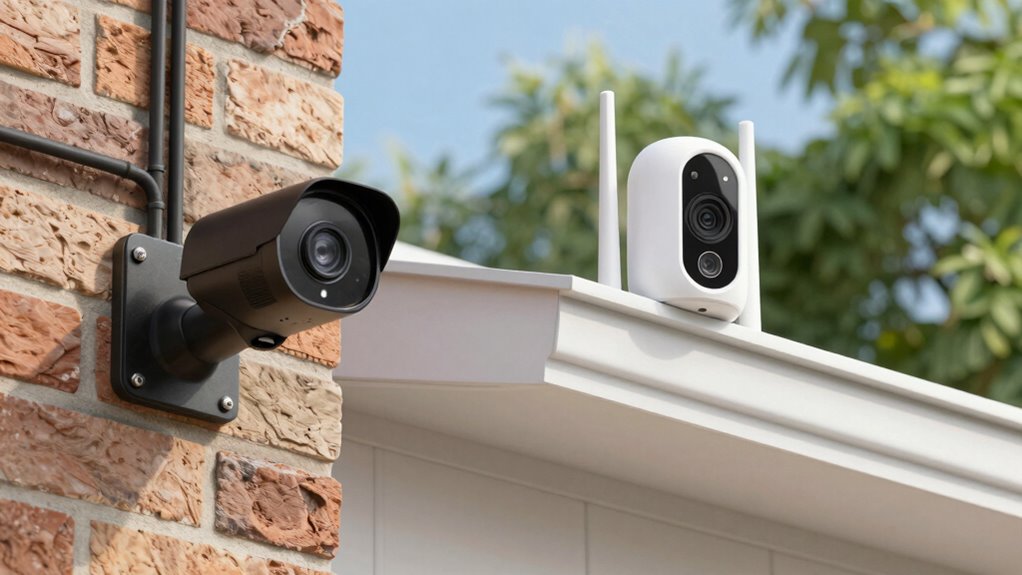

Choosing between wired and wireless security cameras depends on your needs. Wired cameras offer reliable, high-quality footage, and better security but require extensive installation and visible wiring. Wireless cameras are easier to install, flexible, and great for outdoor placement, but they may face interference and require regular maintenance. To make the best choice, consider your home layout, aesthetic preferences, and budget. Explore further to find out which system suits your security priorities best.
Key Takeaways
- Wired cameras offer reliable, high-quality footage with secure data transmission but require complex installation and visible wiring.
- Wireless cameras provide flexible placement and easier setup, ideal for quick deployment and outdoor use.
- Wired systems tend to have lower ongoing maintenance costs and better power reliability, while wireless may need battery management.
- For environments with interference or security concerns, wired cameras are more secure; wireless systems are more vulnerable to hacking.
- Choose wired for permanent, high-performance surveillance; opt for wireless for convenience, aesthetics, and quick installation.
Top picks for "security wireles camera"
Open Amazon search results for this keyword.
As an affiliate, we earn on qualifying purchases.
Understanding the Basics of Wired Security Cameras
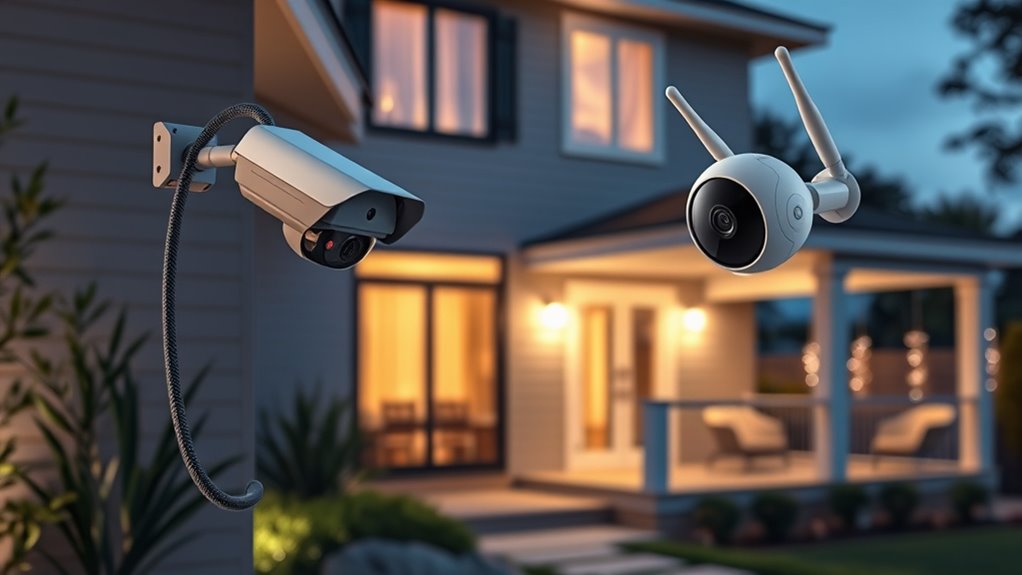
Wired security cameras are a reliable choice for many property owners because they connect directly to a recording device or network via cables. This setup relies on camera cabling to transmit video signals, ensuring a stable and consistent connection. Unlike wireless systems, wired cameras don’t experience interference from other devices, which helps maintain clear signal transmission. You’ll need to plan your cabling routes carefully to cover the areas you want monitored, but once installed, the system offers dependable performance. Because the connection isn’t wireless, you don’t have to worry about Wi-Fi signal strength or bandwidth issues. This makes wired cameras ideal for those who prioritize continuous, high-quality footage without interruptions caused by wireless interference. Additionally, European cloud innovation supports the development of secure data storage solutions for surveillance footage, enhancing overall security. Furthermore, understanding the contrast ratio helps in selecting cameras that perform well even in low-light conditions, ensuring clear footage at all times. For optimal performance, selecting a high-quality lens can significantly improve image clarity under various lighting conditions.
Exploring Wireless Security Camera Technologies
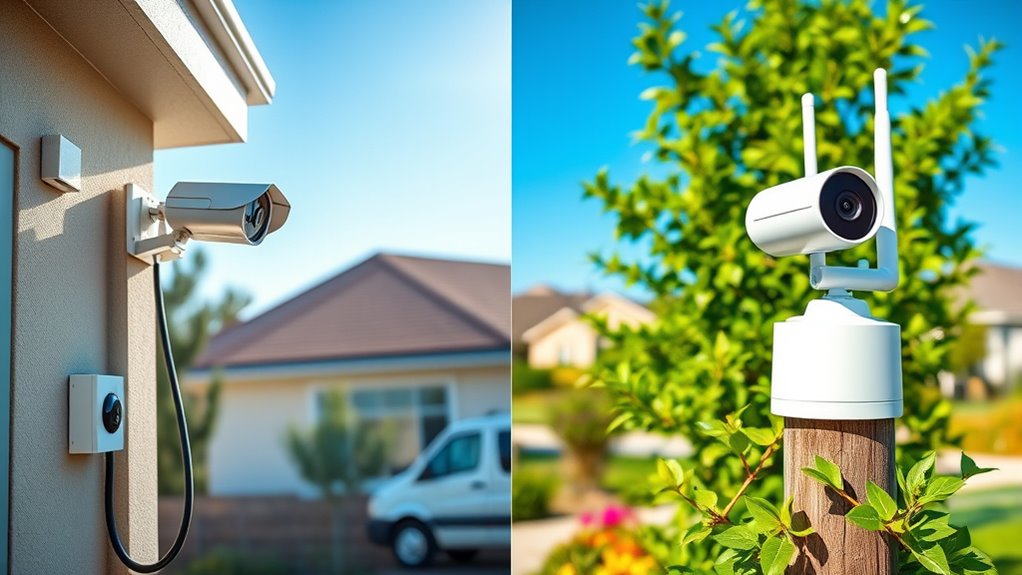
Wireless security camera technologies utilize radio frequency signals to transmit video footage without the need for physical cables. This wireless setup offers flexibility in placement, but you should consider battery life, as many cameras rely on rechargeable or replaceable batteries. Longer battery life means less frequent charging or replacements, ensuring continuous monitoring. Additionally, signal range is vital; a strong, stable connection ensures clear video feeds without interruptions. Factors like walls and interference can weaken signals, so choosing cameras with enhanced signal range helps maintain reliable coverage. Advances in wireless tech have improved these aspects, but understanding each camera’s specifications will help you select a device that balances battery efficiency and signal stability for your home security needs.
Installation Process and Ease of Setup
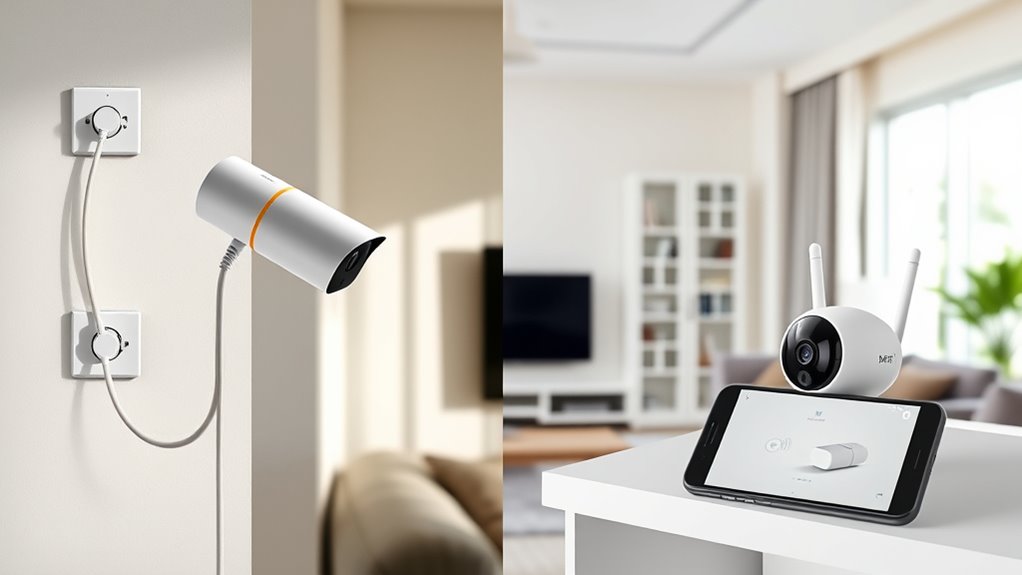
Setting up security cameras has become more straightforward than ever, thanks to modern designs that prioritize user-friendly installation. Wireless cameras typically require minimal effort, often involving just mounting the device and connecting to Wi-Fi, which simplifies the process. They usually rely on a power supply through rechargeable batteries or plug-in adapters, eliminating the need for extensive wiring. On the other hand, wired cameras involve more wiring methods, such as running cables through walls or ceilings, and connecting to a power source via electrical wiring. While wired setups may take more time and effort initially, they often provide a more stable connection. Overall, wireless cameras are easier to install for most homeowners, but wired systems can offer more permanence if you’re comfortable with basic wiring. Additionally, installation process can vary based on the type of system you choose, influencing your overall setup experience. For those seeking a reliable connection, wired systems may be advantageous, especially in larger or more complex home layouts. Proper planning and understanding of wiring basics can also help streamline the installation and improve system performance. Moreover, understanding the smart home ecosystem can help ensure your security system integrates seamlessly with other devices in your home. Recognizing potential cybersecurity vulnerabilities in connected devices is also important for maintaining system safety.
Reliability and Power Sources
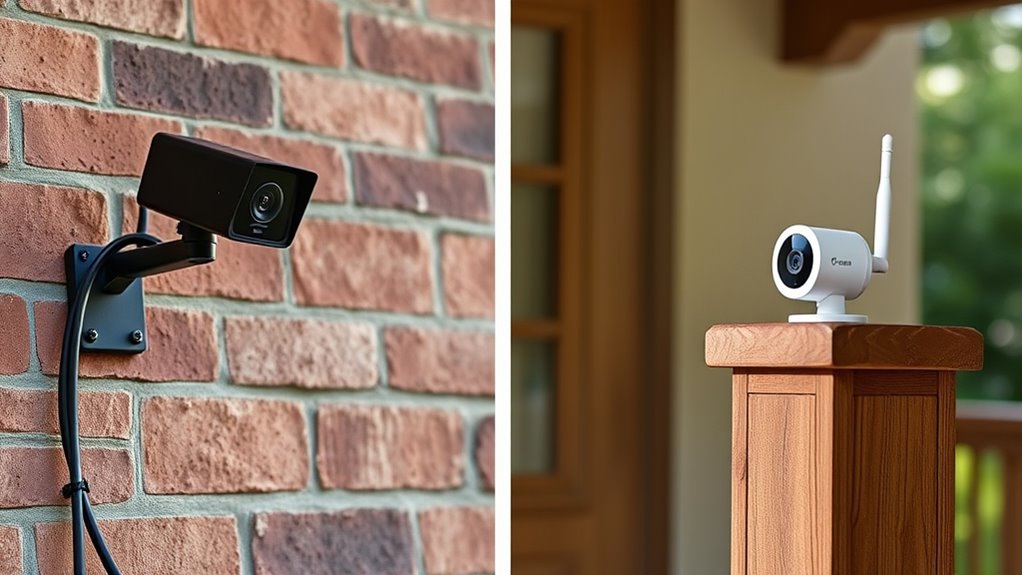
Because stability is indispensable for security footage, the reliability of your camera system matters greatly. Wired cameras typically offer better power reliability since they connect directly to a power source, reducing the risk of outages. Wireless cameras, however, depend on batteries or a power outlet, making battery backup options crucial. A strong battery backup ensures your cameras stay operational during power failures, maintaining continuous security coverage. Without reliable power sources, both wired and wireless systems can fail when needed most. Wireless cameras are more vulnerable if their batteries die or if they lose connection, so regular maintenance and backup plans are vital. Additionally, understanding power management can help optimize camera uptime and ensure consistent security. Ensuring your system has a reliable power source is essential for uninterrupted monitoring and peace of mind. Proper power supply options can significantly enhance the overall dependability of your security setup. Selecting a system with redundant power sources can provide an extra layer of security against power outages, further ensuring your home remains protected. Moreover, choosing systems with advanced backup technology can help mitigate unexpected interruptions and enhance overall system resilience. Ultimately, choosing a system with dependable power sources helps ensure your home security remains uninterrupted, providing peace of mind.
Flexibility and Placement Options
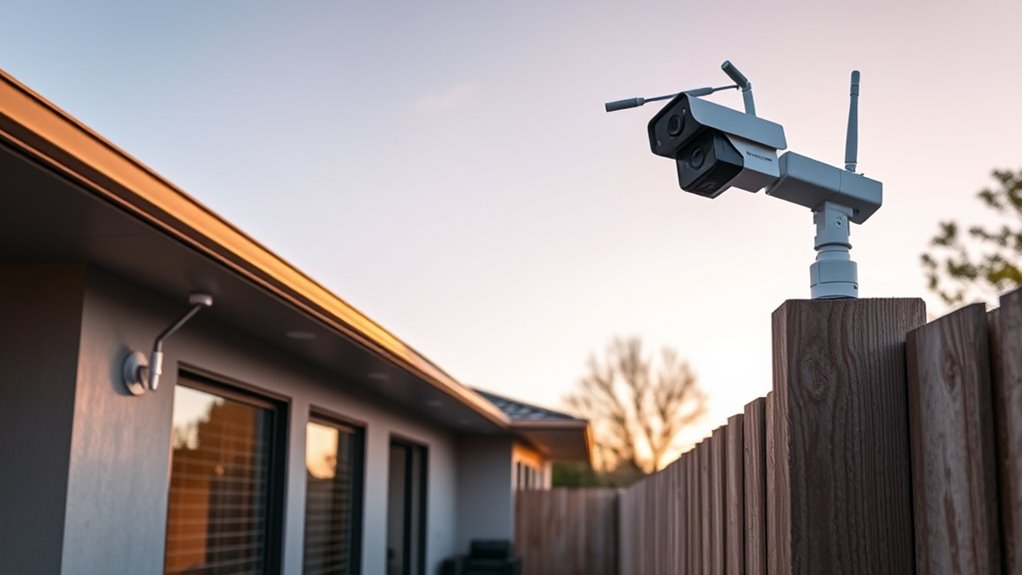
Wireless cameras are typically easier to install and move around, giving you more options for placement. You can position them almost anywhere without worrying about wires or outlets. This flexibility lets you tailor your security setup to fit your space perfectly. Additionally, air quality considerations can influence where you place your cameras to ensure optimal security and environmental monitoring. Considering smart-home integrations can also help you coordinate camera placement with other devices for comprehensive coverage. Moreover, wireless technology enhances your ability to adapt your security system as your needs evolve. Utilizing wireless network stability is essential to maintaining consistent camera performance and avoiding blind spots. Ensuring secure network connections is also vital to protect your surveillance system from cyber threats and unauthorized access.
Easy Installation Choices
When choosing between wired and wireless security cameras, ease of installation plays a crucial role in your decision. Wireless cameras are generally simpler to set up because they rely on wireless connectivity, eliminating the need for extensive wiring. You can mount them almost anywhere within range of your Wi-Fi, making placement flexible. In contrast, wired cameras require a wired infrastructure, which can involve drilling holes and running cables through walls. This setup takes more time and effort but offers a stable connection. If you prioritize quick, straightforward installation with minimal disruption, wireless cameras are the better choice. However, if you’re comfortable handling wiring or need a more reliable connection, wired options might suit your needs better. Additionally, consider the connectivity stability and potential interference issues associated with wireless systems to ensure your security setup remains dependable. Being aware of interference issues can help you select the most suitable system for your home environment. Moreover, understanding network infrastructure can help you optimize your camera placement and performance.
Flexible Camera Positioning
Flexible camera positioning is one of the main advantages of wireless security systems, allowing you to place cameras almost anywhere without the constraints of cables. This freedom makes it easy to enhance coverage, whether indoors or outdoors. You can quickly adjust camera angles to capture the desired view or reposition them as needed. Wireless cameras are particularly versatile for outdoor vs indoor placement, since they can be mounted on walls, ceilings, or trees without extensive wiring. To maximize their effectiveness, consider:
- Adjusting camera angles for ideal field of view
- Mounting cameras at strategic outdoor locations
- Placing cameras in hard-to-reach indoor spots
- Repositioning cameras as your security needs evolve
- Understanding security risks can help you make better placement decisions. Additionally, being aware of wireless signal interference can ensure your cameras maintain a stable connection and reliable footage. Proper placement also involves signal strength assessment to optimize performance. Conducting a site survey beforehand can help identify the best spots for camera placement and avoid potential obstacles. Recognizing environmental factors that could impact signal quality is crucial for maintaining consistent security coverage. This flexibility ensures all-encompassing coverage tailored to your home’s unique layout.
Maintenance and Troubleshooting
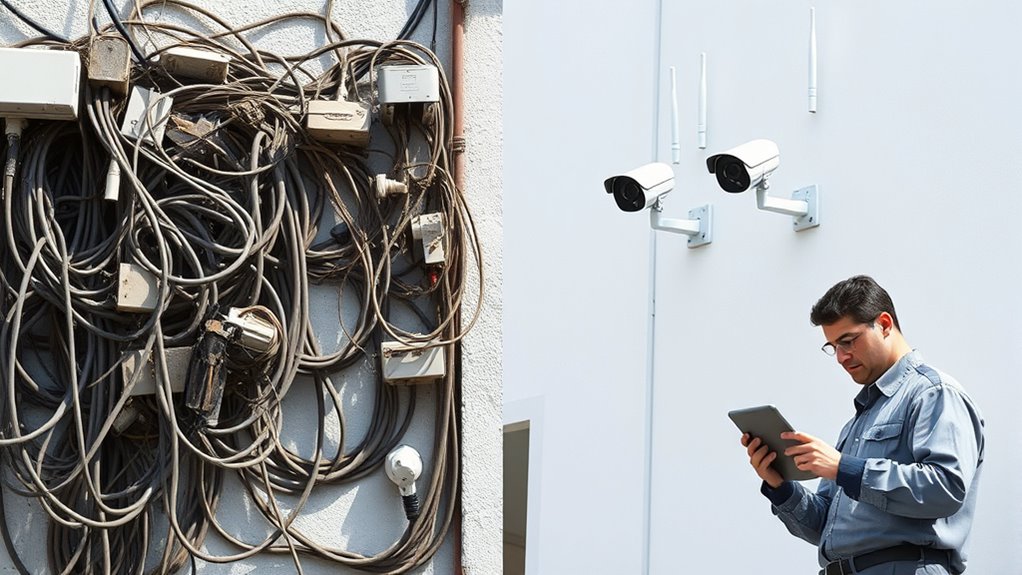
Regular maintenance is essential to guarantee your security cameras operate effectively and reliably. To keep them in top condition, regularly check your camera software for updates, as these often include security patches and new features. Firmware updates are vital because they improve performance and fix bugs that could cause disruptions. For wireless cameras, ensure your Wi-Fi connection remains strong and stable to prevent interruptions. Troubleshooting common issues like blurred images or connectivity problems starts with a quick restart or power cycle. If problems persist, verify your network settings or update the firmware. Staying proactive with maintenance helps prevent major failures, minimizes downtime, and guarantees your security system remains dependable. Regular checks and updates are your best defense against technical issues. Additionally, understanding common repairs can help you identify and address issues early, ensuring your system’s longevity.
Cost Considerations and Budgeting
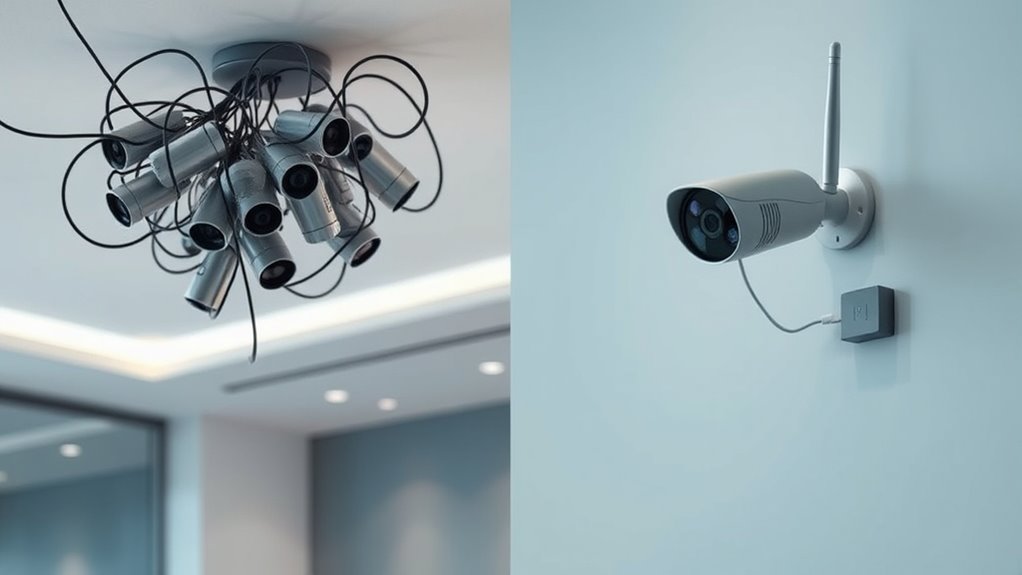
When comparing wired and wireless security cameras, you’ll want to take into account the initial purchase costs and how much you’ll spend on installation and setup. Keep in mind that wireless options often have lower upfront expenses but may incur higher long-term maintenance fees. Balancing these costs against your budget helps ensure you choose a system that’s both affordable and effective.
Initial Purchase Expenses
Initial purchase expenses for wired and wireless security cameras can vary considerably, so it’s vital to take your budget into account carefully. While wireless cameras often have lower upfront costs, high-quality models from reputable brands tend to be pricier. Wired systems may require additional expenses for professional installation and cabling. Consider these factors:
- The cost of the camera itself, influenced by brand reputation and features
- Potential accessories or expansion kits
- Subscription plans for cloud storage and ongoing updates
- Long-term value versus initial investment
Keep in mind, a reputable brand might have higher initial costs but could save you money through durability and better security. Budgeting for these expenses now ensures you choose a system that fits your needs without surprises later.
Installation and Setup Costs
Installation and setup costs can considerably impact your overall budget, especially when comparing wired and wireless security systems. Wired cameras often require extensive wiring, which involves drilling holes and running cables to achieve proper camera placement. This process can increase labor costs and might need professional installation, raising your expenses. In contrast, wireless cameras usually have minimal wiring requirements, making setup faster and more straightforward, often allowing DIY installation. However, some wireless models may need a reliable Wi-Fi connection, which could entail additional costs if your network needs upgrades. Overall, wired systems tend to have higher upfront installation costs due to wiring and labor, while wireless systems generally cost less during setup but could incur expenses related to network stability or additional accessories.
Long-term Maintenance Fees
Long-term maintenance fees play a significant role in your overall security system costs, and they can vary widely between wired and wireless setups. Wireless cameras often require ongoing expenses like subscription plans for cloud storage, which keep footage accessible and secure. Additionally, they may need regular software updates to patch vulnerabilities and enhance features, sometimes incurring costs or requiring paid plans. Wired systems typically have lower maintenance fees over time, as they lack subscription requirements and rely on physical storage. Keep in mind:
- Subscription plans for cloud storage or advanced features
- Costs for frequent software updates
- Battery replacements or power management needs
- Potential repairs for hardware components
Budgeting for these ongoing expenses guarantees your security system remains effective and up-to-date, regardless of the setup you choose.
Security and Privacy Aspects
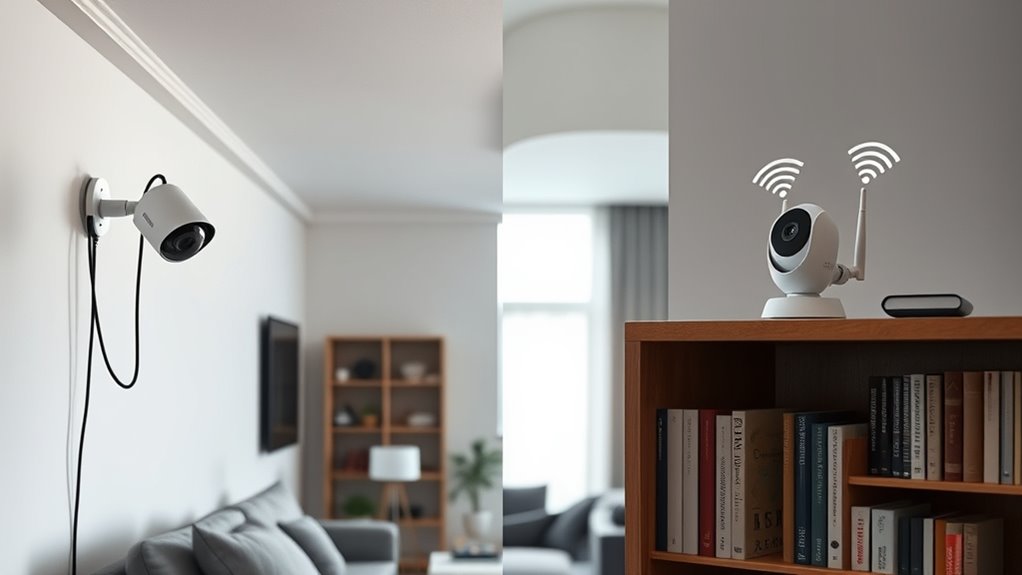
When considering security and privacy, wired and wireless cameras each present unique challenges. Wired cameras typically offer more secure data transmission because they rely on physical connections, reducing risks of interception. However, they can still be vulnerable if the network they connect to isn’t properly protected with strong encryption protocols. Wireless cameras, on the other hand, transmit data over Wi-Fi, making them more susceptible to hacking if encryption is weak or outdated. Protecting data privacy becomes vital, especially since wireless cameras often store footage in the cloud or on remote servers. To safeguard your home, make certain your wireless devices use robust encryption protocols. Meanwhile, wired cameras can offer peace of mind through their inherently more secure connection, but both require careful network security to prevent unauthorized access.
Making the Best Choice for Your Home
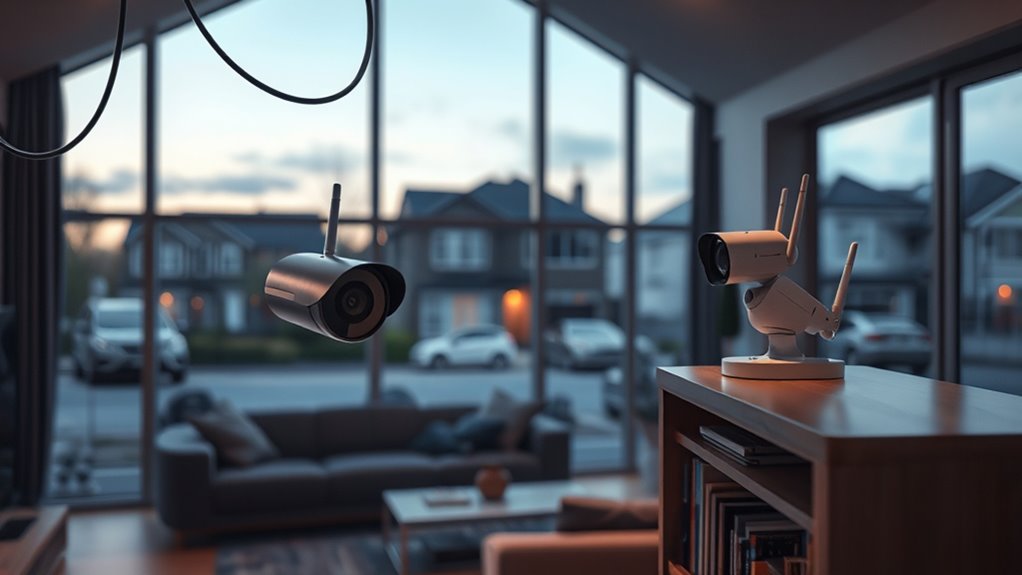
Choosing between wired and wireless security cameras depends on your specific needs, budget, and home layout. To make the best choice, consider factors like outdoor placement and aesthetic integration. Wireless cameras excel in flexible outdoor placement, offering easy installation without extensive wiring. They blend seamlessly into your home’s aesthetic, especially when mounted discreetly. Wired cameras provide reliable connections, ideal for consistent outdoor surveillance, but may require more effort for installation. Think about your home’s design and whether you prefer a clean, unobtrusive look or a more robust, wired system.
Key considerations include:
- Outdoor placement flexibility
- Aesthetic integration
- Ease of installation
- Reliability and power sources
Frequently Asked Questions
Can Wired Security Cameras Be Integrated With Smart Home Systems?
Yes, wired security cameras can be integrated with smart home systems, allowing you to control and monitor them through your network. They offer strong network integration and reliable connections, making it easier to sync with other smart devices. While scalability options may be more limited compared to wireless cameras, proper setup guarantees seamless integration. You can customize your security system to fit your needs, enhancing overall home security and automation.
How Do Wireless Cameras Perform During Power Outages?
Like a lighthouse in a storm, wireless cameras rely on battery life and signal stability during power outages. If the batteries run out, your camera won’t record, and signal disruptions can cause blind spots. To guarantee continuous security, choose models with long-lasting batteries and strong Wi-Fi signals. Consider an uninterruptible power supply (UPS) to keep your wireless cameras functioning when the power goes out.
Are There Legal Privacy Concerns With Wireless Camera Placement?
Yes, there are legal privacy concerns with wireless camera placement. You must adhere to privacy laws and obtain necessary consent requirements, especially if your cameras capture public areas or neighbors’ property. Always inform visitors or neighbors if they might be recorded, and avoid pointing cameras into private spaces like bedrooms or bathrooms. Staying aware of local regulations helps guarantee your security setup remains lawful and respectful of others’ privacy.
What Are the Long-Term Maintenance Costs for Wired Versus Wireless Cameras?
You’ll find that wired cameras have higher initial installation costs due to wiring and professional setup, but their replacement expenses are lower since they’re built for durability. Wireless cameras typically cost less upfront and are easier to install, but their replacement expenses can add up if batteries need frequent changing or if they face more technical issues. Over time, wired systems might be more cost-effective, depending on your maintenance preferences.
How Do Security Cameras Handle Weather and Environmental Conditions?
Your security cameras handle weather and environmental conditions well with their camera durability and environmental resistance. They’re designed to withstand rain, snow, heat, and humidity, ensuring continuous operation. Look for cameras with weatherproof or waterproof ratings, like IP65 or higher, to guarantee protection against harsh elements. Proper installation and regular maintenance also help maintain their durability, so your home stays secure regardless of the weather outside.
Conclusion
Choosing between wired and wireless security cameras is like selecting the right compass for your journey—each guides you differently, but both aim to keep you safe. Consider your terrain, needs, and preferences to find your true north. Trust your instincts, weigh the pros and cons, and you’ll navigate home security with confidence. Ultimately, your choice shapes your sanctuary, turning it into a fortress where peace of mind reigns supreme.