Monitoring your audio changes everything because it allows you to catch issues early, like unwanted noise or distortion, before finalizing your recording. It helps you maintain accurate sound levels and guarantees your setup is calibrated for precise results. With real-time monitoring, you can make immediate adjustments, improving clarity and professionalism. This control prevents costly mistakes and saves time. Keep exploring, and you’ll discover even more ways monitoring transforms your sound quality for the better.
Key Takeaways
- Real-time monitoring catches issues early, preventing poor-quality recordings and reducing post-production work.
- It ensures accurate sound reproduction through proper equipment calibration, maintaining consistency and clarity.
- Monitoring allows immediate detection of technical problems like distortion or background noise, enabling quick fixes.
- It helps maintain proper audio levels, avoiding distortion and ensuring a balanced, professional sound.
- Overall, monitoring transforms recording into a precise process, ensuring high-quality, polished results every time.
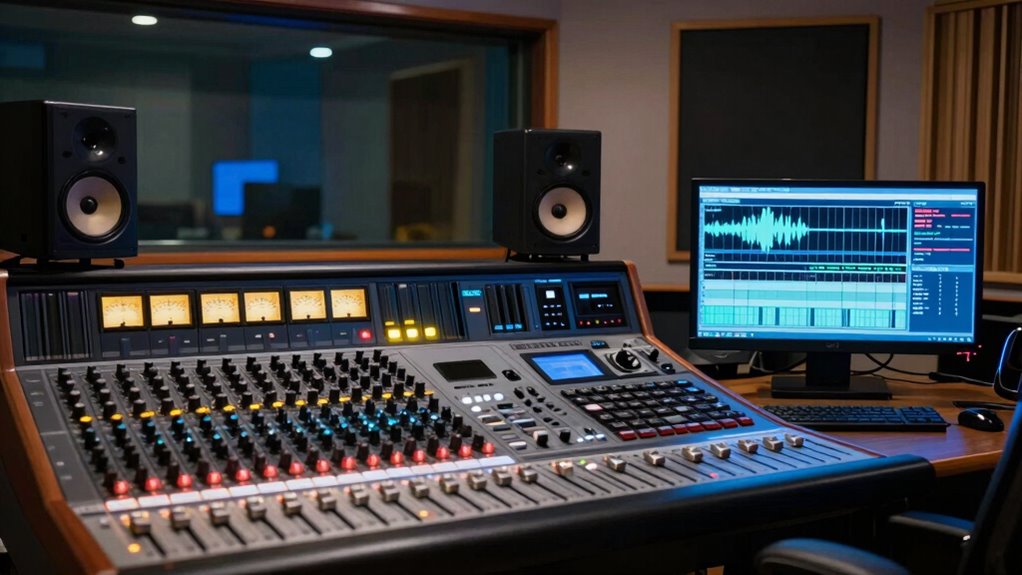
Have you ever recorded audio only to find out later that it’s plagued with unwanted noise or imbalances? If so, you already know how frustrating it can be to discover these issues after the fact. Monitoring your audio in real-time is the key to preventing those problems from slipping through the cracks. When you listen as you record, you gain immediate insight into the quality of your sound, allowing you to make adjustments on the fly. This process guarantees that your recordings have better audio clarity from the start, saving you time and effort during post-production.
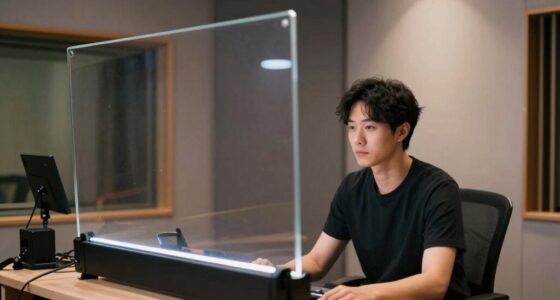
Monitoring your audio in real-time prevents issues, ensuring clear recordings and saving time during post-production.
One of the most vital aspects of effective monitoring is equipment calibration. When your equipment isn’t properly calibrated, even small discrepancies can result in muddy or uneven audio. By regularly calibrating your microphones, headphones, and audio interface, you guarantee that what you hear is an accurate representation of your source. Proper calibration creates a consistent listening environment, so you’re not misled by altered sound levels or frequency responses. This consistency is essential for making precise adjustments during recording, whether you’re balancing levels, EQ, or effects. Additionally, understanding audio equipment calibration can help you optimize your setup for the best results. Regular calibration also ensures your monitoring equipment functions correctly, which is crucial for maintaining accurate sound reproduction.
Monitoring also helps you catch technical issues early. For instance, if you notice distortion, clipping, or unusual background noise during recording, you can stop and troubleshoot immediately. This proactive approach prevents poor-quality audio from becoming part of your final product. It’s also an excellent way to confirm that your microphone positioning and room acoustics are suitable for capturing clear sound. When your monitoring setup is reliable, you develop a keener ear for nuances in your audio, enabling you to make subtle tweaks that elevate the overall quality. Incorporating herbal remedies into your environment can also help create a more relaxed and focused mindset for capturing high-quality recordings. Furthermore, consistent monitoring helps you develop a keen sense of your audio environment, allowing for more intuitive adjustments over time.
Furthermore, real-time monitoring sharpens your ability to judge audio levels accurately. If you’re unaware of how loud or soft your audio is during recording, you risk either overwhelming your recording with distortion or ending up with a quiet, inaudible track. Monitoring helps you maintain consistent levels, ensuring your audio remains balanced and professional. It also allows you to verify that your monitoring equipment is functioning correctly—if your headphones or speakers aren’t accurate, you might think your audio is fine when it’s not. That’s why equipment calibration and quality monitoring gear are essential for achieving the best possible results. Additionally, understanding supporting caregivers’ emotional well-being can help create a healthier environment for those managing stress and emotional challenges.
In essence, monitoring your audio transforms the recording process from guesswork into precision. It empowers you to catch issues early, maintain audio clarity, and make confident adjustments. By integrating regular equipment calibration and listening actively during recording, you take control of your sound quality, resulting in professional, polished recordings every time.
As an affiliate, we earn on qualifying purchases.
Frequently Asked Questions
How Often Should I Monitor My Audio During a Session?
You should monitor your audio constantly during a session, checking at least every 10-15 minutes. Keep an eye on speaker placement and regularly calibrate your headphones to guarantee accurate sound. This helps catch issues early and maintains consistent quality. By frequently monitoring, you’ll catch problems like imbalance or distortion, allowing you to make quick adjustments and ensure your audio remains clear and professional throughout the session.
What Equipment Is Essential for Effective Audio Monitoring?
Oh, surely you need a crystal ball—just kidding. For effective audio monitoring, focus on essential equipment like high-quality headphones and a reliable audio interface. Proper microphone placement is vital, ensuring your recordings capture the perfect sound. Don’t forget headphone calibration; it’s the secret sauce that guarantees your monitoring reflects reality. With these tools, you’ll catch every nuance, making your audio as impeccable as your taste in equipment.
Can Monitoring Improve Audio Editing Efficiency?
Yes, monitoring improves audio editing efficiency by allowing you to catch issues early. Proper audio calibration guarantees your equipment accurately reflects the sound, reducing guesswork. Selecting the right headphones provides a clear, detailed soundscape, making it easier to identify flaws or adjustments needed. With precise monitoring, you save time, avoid rework, and achieve a polished final product faster, making your editing process more effective and confident.
How Does Room Acoustics Affect Audio Monitoring Accuracy?
Did you know that poor room acoustics can distort sound by up to 30%? Room acoustics greatly impact your audio monitoring accuracy. Without proper room treatment and acoustic calibration, you might misjudge frequencies or levels. Echoes, reflections, and resonances skew your perception, leading to subpar mixes. Investing in room treatment and calibrating your space ensures your monitors deliver an accurate soundscape, helping you produce professional-quality audio every time.
Is Personal Hearing Health Important for Audio Monitoring?
Yes, personal hearing health is vital for accurate audio monitoring. Wearing hearing protection when exposed to loud environments preserves your hearing, ensuring you maintain audiology awareness. Protecting your ears helps you detect subtle sound differences and prevents long-term damage that could impair your listening skills. By prioritizing hearing health, you stay sharp and achieve better audio accuracy, ultimately enhancing your ability to monitor sound precisely.
audio interface with real-time monitoring
As an affiliate, we earn on qualifying purchases.
As an affiliate, we earn on qualifying purchases.
Conclusion
Monitoring your audio isn’t just a small tweak; it’s like giving your sound superpowers! When you listen carefully and make adjustments, you unveil a whole new level of clarity and perfection that can transform your entire project. Neglect it, and your audio might sound like a whisper in a hurricane. But embrace monitoring, and suddenly, your sound becomes unstoppable—crystal clear, professional, and unforgettable. It’s not just an improvement; it’s an audio revolution!
As an affiliate, we earn on qualifying purchases.
As an affiliate, we earn on qualifying purchases.