
TL;DR

Get the latest gadgets delivered free with Prime
- Fast, free delivery on millions of items
- Prime Video, Amazon Music and more included
- Member-only deals all year
This article examines the art and engineering behind Sega CD’s Silpheed, focusing on its innovative graphics and technical design. It highlights confirmed facts and ongoing discussions about its development complexity.
Sega’s Silpheed for the Sega CD is being recognized for its innovative combination of artistic design and technical engineering, setting new standards for FMV and sprite-based graphics on the platform. This development is significant for fans and historians of retro gaming, as it highlights the technical ingenuity involved in its creation.
Developed in the early 1990s, Silpheed for the Sega CD was a pioneering title that integrated detailed 2D sprite artwork with full-motion video (FMV) sequences. Its art style drew heavily from anime influences, with meticulously crafted backgrounds and character sprites, which required advanced graphic design techniques for the era.
Engineers faced significant challenges in optimizing the Sega CD hardware, which was limited in processing power and memory. To achieve smooth gameplay and high-quality visuals, the development team employed innovative data compression methods and custom hardware routines. These techniques allowed for detailed scenes and fluid animation despite hardware constraints.
Recent technical analyses suggest that the game’s graphics engine used a combination of sprite layering, palette swapping, and clever use of the Sega CD’s video DAC capabilities to produce its distinctive look. The game’s FMV sequences, in particular, are noted for their high-resolution quality relative to contemporaneous titles, a feat credited to meticulous hardware calibration and data streaming techniques.
Technical and Artistic Innovations in Sega CD Silpheed
Silpheed exemplifies the innovative spirit of early FMV and sprite-based game design on the Sega CD. Its successful integration of detailed art and complex engineering demonstrated what was possible within the platform’s limitations, influencing future multimedia game development. For collectors and developers, understanding its design offers insight into early digital art and hardware optimization techniques.
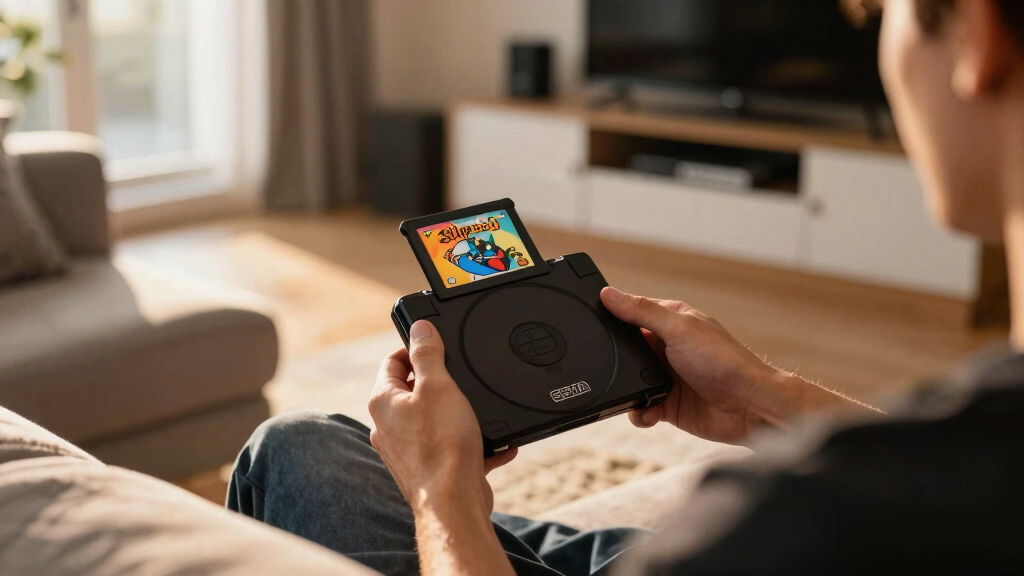
Sega CD Silpheed retro game cartridge
As an affiliate, we earn on qualifying purchases.
As an affiliate, we earn on qualifying purchases.
Development Challenges and Artistic Goals of Silpheed
During the early 1990s, the Sega CD aimed to push the boundaries of multimedia gaming, emphasizing high-quality visuals and cinematic storytelling. Silpheed was among the first titles to attempt a seamless blend of anime-inspired art and interactive gameplay, requiring both artistic vision and technical mastery.
The development team faced hardware limitations such as slow CD-ROM access speeds and limited RAM, which necessitated innovative approaches to data management and graphics rendering. The game’s art team aimed for a distinctive, anime-style aesthetic, which involved detailed sprite work and background design, pushing the limits of what was feasible on the hardware at the time.
Moreover, the engineering team developed custom routines to optimize data streaming and reduce load times, allowing for more complex scenes and smoother gameplay. These efforts contributed to the game’s reputation as a technical achievement, despite the platform’s constraints.
“Silpheed on the Sega CD was a technical marvel, blending anime art with innovative hardware routines that set a new standard for multimedia gaming.”
— Retro gaming historian Alex Johnson
anime style sprite art game Sega CD
As an affiliate, we earn on qualifying purchases.
As an affiliate, we earn on qualifying purchases.
Remaining Questions About Silpheed’s Development Techniques
While recent analyses shed light on some of the graphics and data management techniques used, specific details about the proprietary routines and compression algorithms remain undisclosed. It is not yet clear how much of the process was custom hardware versus software solutions, or how these techniques compare to other titles of the era.
As an affiliate, we earn on qualifying purchases.
Further Research and Preservation of Silpheed’s Technical Legacy
Future efforts will likely focus on detailed reverse-engineering of the game’s code and hardware routines. Additionally, digital preservation projects aim to document and emulate the original development environment, which could provide deeper insights into the engineering methods used. Developers and historians continue to analyze these techniques to better understand early multimedia game design.
As an affiliate, we earn on qualifying purchases.
Key Questions
What made Silpheed’s graphics stand out on the Sega CD?
The game combined anime-inspired sprite art with high-quality FMV sequences, achieved through innovative data compression and hardware routines that maximized the Sega CD’s capabilities.
What engineering challenges did developers face with Silpheed?
Developers had to optimize limited hardware resources, including slow CD-ROM access and limited RAM, by creating custom routines for data streaming and graphics rendering.
Are there detailed technical documents about Silpheed’s development?
No comprehensive official documentation has been publicly released. Most insights come from retrospective analyses and interviews with former developers.
How did Silpheed influence future multimedia games?
Its successful integration of art and hardware techniques demonstrated the potential of multimedia gaming, inspiring subsequent titles to explore similar approaches.
Will there be any efforts to emulate or preserve Silpheed’s technology?
Yes, ongoing preservation projects aim to reverse-engineer the game’s routines and emulate its environment, helping to document its technical achievements for future study.
Source: hn
Halloween Picks
halloween
As an affiliate, we earn on qualifying purchases.