
🔍 Read the full analysis: 10 Best Graphics Cards For AI And Gaming: A 2026 Buying Guide on ThorstenMeyerAI.com

Get the latest gadgets delivered free — and shop member deals
- Fast, free delivery on millions of items
- Access to Prime Big Deal Days deals on October 6–7
- Prime Video, Amazon Music and more included
TL;DR
The supplied guide compares 10 graphics cards spanning current gaming GPUs, premium variants and older display or upgrade cards. It gives no benchmark results, prices or AI workload tests, so buyers should verify performance, compatibility and software requirements for their own systems.
ThorstenMeyerAI.com has published a 10-card graphics buying guide for 2026, the original analysis, comparing current-generation gaming models with older cards for upgrades or display needs. The guide identifies gaming targets, memory, case fit, power supply and display connections as factors to consider. It does not provide benchmark results or tested AI performance.
The guide lists the GIGABYTE Radeon RX 9070 XT Gaming OC 16G among its gaming recommendations and describes the ASUS Prime GeForce RTX 5070 as a current-generation option; see more gaming graphics card picks. It groups three RTX 5080 variants as premium choices and identifies cooler design, physical dimensions and system fit as factors to compare among models built around the same GPU.
The 10 listed picks are the GIGABYTE Radeon RX 9070 XT Gaming OC 16G; ASUS Prime Radeon RX 9070 XT; ASUS Prime GeForce RTX 5070; ASUS ROG Astral GeForce RTX 5080 White; two other RTX 5080 models whose names are not specified in the supplied text; NVIDIA GeForce GT 730; NVIDIA GeForce GT 740; and AMD Radeon RX 580. The supplied text does not clearly identify all 10 picks.
The source says the RX 9070 XT and RTX 5080 groups have 16GB of graphics memory, the RX 580 has 8GB, and older GT 730 and GT 740 cards are positioned for display support or compact systems rather than as current gaming alternatives; graphics cards for gaming, AI, and creative work cover broader use cases. It recommends checking the exact card’s dimensions, power requirements and connectors before purchase.
The 10 picks
- 1
 ASUS ROG Astral GeForce RTX 5080 16GB GDDR7 White OC Edition Graphics CardView on Amazon →
 - 2
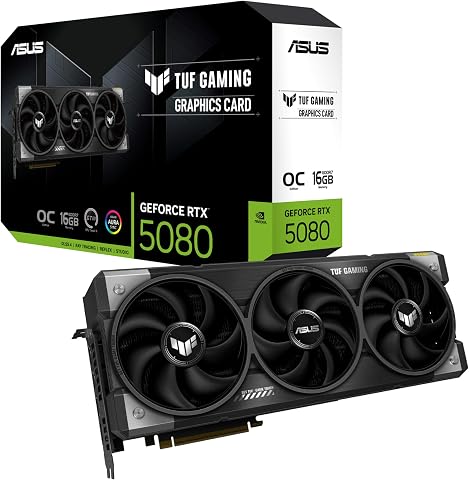 ASUS TUF Gaming GeForce RTX 5080 16GB GDDR7 OC Edition Graphics CardView on Amazon →
 - 3
 GIGABYTE GeForce RTX 5080 Gaming OC 16G Graphics CardView on Amazon →
 - 4
 ASUS Prime NVIDIA GeForce RTX 5070 OC Edition Graphics CardView on Amazon →
 - 5
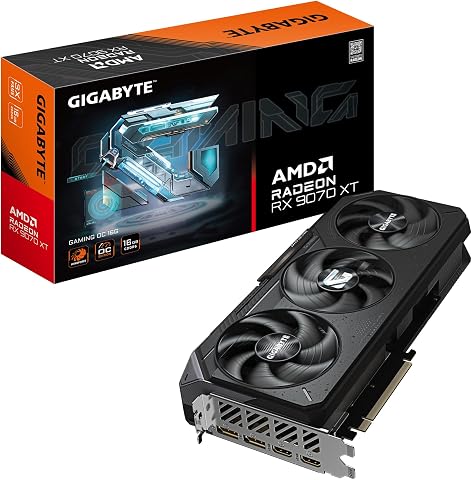 GIGABYTE Radeon RX 9070 XT Gaming OC 16G Graphics CardView on Amazon →
 - 6
 ASUS Prime Radeon RX 9070 XT 16GB GDDR6 OC Edition Gaming Graphics CardView on Amazon →
 - 7
 ASRock Radeon RX 9070 Challenger 16GB OC Graphics Card, RDNA 4, 2520MHz Boost…View on Amazon →
 - 8
 Kelinx AISURIX RX 580 8GB GDDR5 Graphics Card with Dual HDMI and DisplayPortView on Amazon →
 - 9
 GT 730 Graphics Card 4GB DDR3 64-bit with HDMI, DisplayPort, VGAView on Amazon →
 - 10
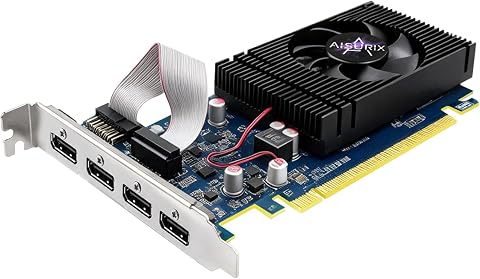 AISURIX GT 740 4GB GDDR5 Low-Profile Graphics Card with 4 HDMI PortsView on Amazon →
Factors in Graphics Card Selection
The comparison covers factors that affect whether a graphics card can be installed and used in a particular system, including cooler size, slot coverage and system fit. The source distinguishes older cards intended to add display outputs from newer models positioned for gaming.
For AI buyers, the guide provides memory capacities and product categories but no AI software compatibility information, workload testing or model-size guidance. Readers considering a card for AI tasks will need workload-specific evidence beyond the roundup.
Newer and Older GPU Categories
The roundup covers distinct product tiers rather than 10 direct competitors. It presents the RX 9070 XT and RTX 5080 models as higher-performance gaming groups, the RTX 5070 as a current-generation option, and the RX 580, GT 730 and GT 740 as older options for existing systems or specific display requirements.
The source describes its ranking approach as weighing GPU generation, memory, product-family position, cooler and form-factor cues, and intended use. It advises buyers to consult performance tests for their games and display resolution, and software guidance for creative workloads. The supplied material includes no test methodology, price comparison or dated benchmark data.
““The main tradeoffs are gaming capability, memory, card size, power needs, and whether you need modern gaming hardware or simply extra display outputs.””
— ThorstenMeyerAI.com buying guide
Missing Benchmarks and Model Names
The supplied source does not identify every card in its promised 10 picks: it names the ROG Astral White RTX 5080 and refers to two other RTX 5080 options without giving their model names. It also supplies no prices, dated gaming benchmarks, power figures or AI workload results.
Performance and compatibility can depend on the exact card version, games, resolution, case and power supply. The guide does not establish how any pick performs on a specific AI task, and its general memory comparisons do not resolve software support or workload limits.
Checks Before Purchase
Buyers should confirm the exact product name and dimensions, compare independent benchmarks for their games and resolution, and check the card maker’s power and connector requirements against the full system. AI buyers should also consult the documentation for their intended software and workload. The supplied article gives no follow-up testing schedule or later update date.
Key Questions
Which card does the guide recommend for a broad gaming build?
It says to start with the GIGABYTE Radeon RX 9070 XT Gaming OC 16G, but offers no benchmark data or price comparison to establish how it performs against alternatives.
Does this guide prove which card is best for AI?
No. The supplied material gives memory capacities and general product positioning, but no AI workload tests or software compatibility results.
Are the GT 730 and GT 740 modern gaming alternatives?
The source positions them for display support and compact-PC needs, not as direct substitutes for newer gaming GPUs.
What should I check before upgrading?
Check the exact card’s case dimensions, power supply capacity, connectors and display needs. Also compare performance tests for the games and screen resolution you use.
Source: ThorstenMeyerAI.com
Fall Picks
fall essentials
As an affiliate, we earn on qualifying purchases.