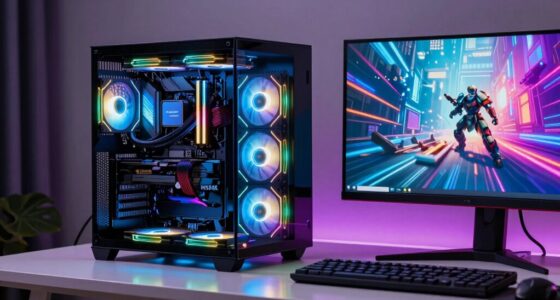

You see, flight simulation hardware has become more serious thanks to advances in motion platforms and VR integration that make your experience more realistic and immersive. Precise movements and tactile feedback help train your muscle memory and handling skills better. Improved hardware and software boost fidelity, response time, and accuracy. This combination allows you to train more effectively and reliably. If you keep exploring, you’ll discover how these innovations are transforming flight training into a professional-grade experience.

Get the latest gadgets delivered free with Prime
- Fast, free delivery on millions of items
- Prime Video, Amazon Music and more included
- Member-only deals all year
Key Takeaways
- Integration of motion platforms with VR creates a more immersive and realistic flight experience.
- Advancements in hardware and software improve fidelity, responsiveness, and simulation accuracy.
- Real-time tactile feedback enhances muscle memory and handling skills during training.
- High-fidelity hardware mimics real-world conditions, making simulations more effective for complex procedures.
- Cost-effective, scalable solutions expand professional-grade flight training beyond specialized facilities.
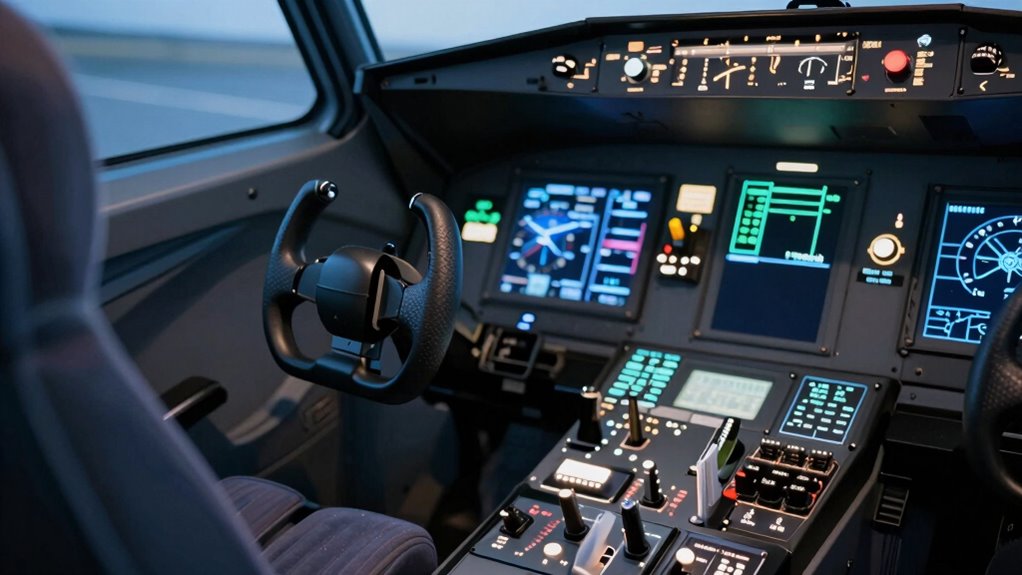
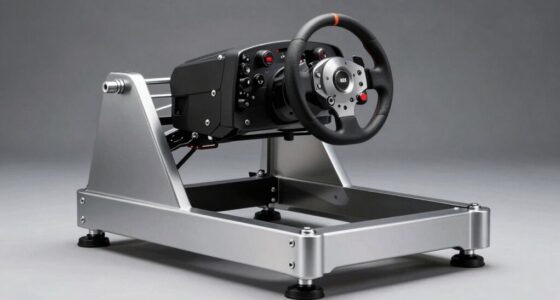
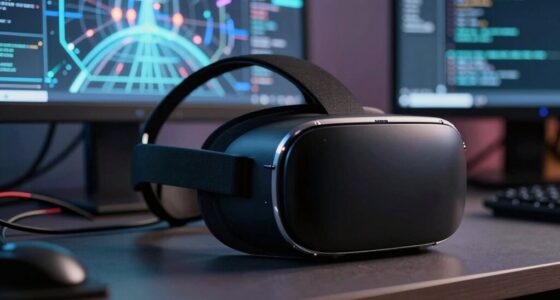
Motion integration plays an equally important role in making flight simulators more serious and effective. With motion platforms, your entire body feels the movements associated with flying—pitch, roll, yaw, and acceleration—creating a physical connection to the virtual environment. When you bank into a turn or experience turbulence, the hardware responds with precise movements, making the simulation feel authentic. This tactile feedback is essential because it trains your muscle memory and enhances your ability to handle real aircraft. Combining motion integration with virtual reality amplifies the realism, engaging more senses and creating a cohesive experience that closely resembles actual flight. You no longer just observe the simulation; you physically participate in it. The evolution of flight simulation hardware toward a more serious and professional-grade tool also means better hardware performance and software fidelity. Manufacturers now prioritize high-resolution visuals, low latency responses, and seamless integration of VR and motion systems. As a result, your training sessions become more effective and efficient, whether you’re an aviation student or a seasoned pilot refining specific skills. These advancements have also made simulation training more accessible, with more affordable options offering high-quality experiences suitable for serious training purposes. You can now practice emergency procedures, navigation, and complex maneuvers in a controlled environment that feels remarkably real. Additionally, advancements in hardware fidelity ensure that the simulation closely mimics real-world conditions, making training more comprehensive. The integration of real-time feedback further enhances the learning process by providing immediate insights into performance and areas for improvement. Incorporating advanced sensors also helps capture subtle movements and responses, increasing the accuracy of the simulation. A focus on system reliability ensures consistent performance during intensive training sessions, which is critical for professional use. This progress has also contributed to training scalability, allowing institutions to expand their programs without sacrificing quality. Ultimately, the combination of virtual reality and motion integration marks a turning point in flight simulation hardware. It’s no longer just a toy or a hobby; it’s a credible training tool that prepares you for the demands of actual flying. These innovations guarantee that every flight session is as close to reality as possible, sharpening your skills and boosting your confidence before you ever take to the skies.
flight simulation motion platform
As an affiliate, we earn on qualifying purchases.
As an affiliate, we earn on qualifying purchases.
Frequently Asked Questions
How Do Flight Simulators Impact Pilot Training Effectiveness?
Flight simulators considerably boost your training effectiveness by enhancing aircraft ergonomics and simulation fidelity. They allow you to practice real cockpit scenarios, improving your responses and decision-making skills without risk. By mimicking actual flight conditions closely, you gain confidence and familiarity, which translates directly to real-world performance. The realistic environment helps you develop better muscle memory and situational awareness, making your training more efficient and preparing you thoroughly for actual flights.
What Are the Costs Associated With High-End Simulation Hardware?
The costs associated with high-end simulation hardware can be significant, requiring a thorough cost analysis to justify the investment. You’ll face expenses for advanced equipment, including realistic displays, motion systems, and durable components designed for long-term use. Equipment durability is essential, as it impacts ongoing maintenance and replacement costs. While the initial investment is high, the enhanced training realism can lead to better pilot preparedness, making it a worthwhile expense.
How Realistic Is the Feedback From Advanced Flight Controls?
You’ll be amazed at how realistic the feedback from advanced flight controls feels, heightening your immersion. Haptic feedback mimics the sensations of turbulence, engine vibrations, and control resistance, making every maneuver feel authentic. Combined with stunning visual realism, it creates a compelling experience that keeps you on the edge of your seat. This seamless integration blurs the line between simulation and reality, pulling you deeper into the cockpit than ever before.
What Safety Features Are Integrated Into Modern Flight Simulators?
You’ll find modern flight simulators equipped with safety features like emergency stop buttons and system fail-safes that guarantee your training remains secure. They incorporate aircraft ergonomics, allowing you to practice realistic scenarios comfortably. Regular simulator maintenance keeps all systems in top shape, preventing malfunctions. These features work together to create a safe, reliable environment where you can hone your skills without risking actual aircraft or personnel.
How Long Does It Take to Develop New Flight Simulation Hardware?
Developing new flight simulation hardware typically takes several years, depending on hardware innovation and design challenges. You’ll face complex engineering, ensuring realistic motion, visuals, and safety features, which all require extensive testing and refinement. The process involves collaboration among designers, engineers, and pilots to meet industry standards. Ultimately, patience and attention to detail are vital, as balancing innovation with reliability can extend development timelines considerably.
virtual reality flight simulator
As an affiliate, we earn on qualifying purchases.
As an affiliate, we earn on qualifying purchases.
Conclusion
As you step into the world of flight simulation hardware, you’re gently guided into a domain where realism and precision become your trusted companions. The once playful cockpit now whispers promises of professionalism, inviting you to soar with confidence. With every click and turn, you find yourself immersed in a landscape that’s grown more serious, yet remains inviting. It’s a subtle dance between aspiration and mastery, where your journey takes flight on the wings of innovation.
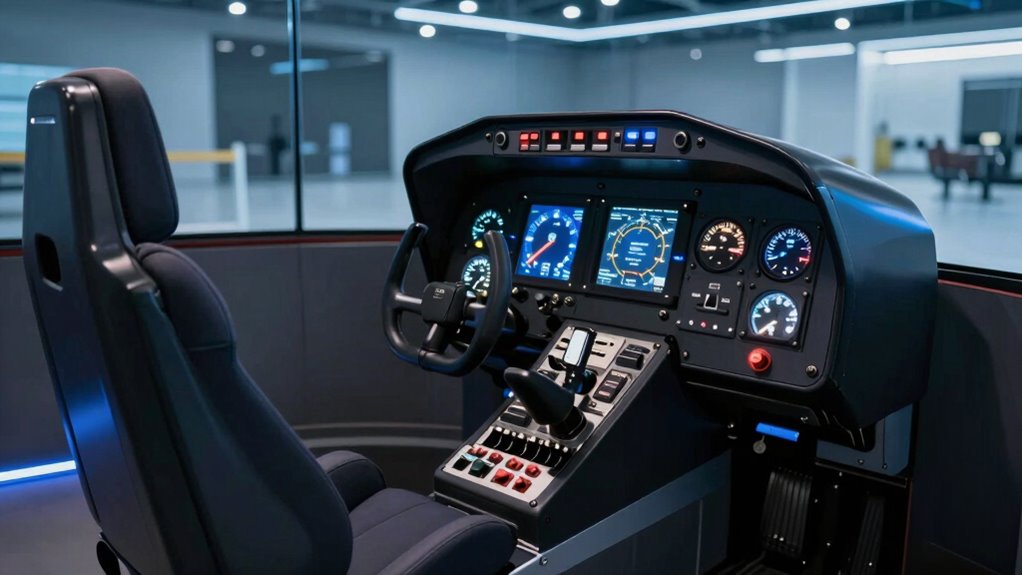
professional flight simulator hardware
As an affiliate, we earn on qualifying purchases.
As an affiliate, we earn on qualifying purchases.
high fidelity flight simulator setup
As an affiliate, we earn on qualifying purchases.
As an affiliate, we earn on qualifying purchases.
Halloween Picks
halloween
As an affiliate, we earn on qualifying purchases.