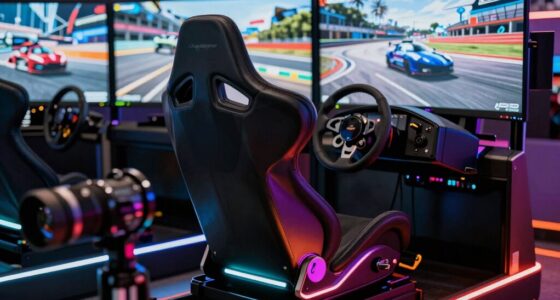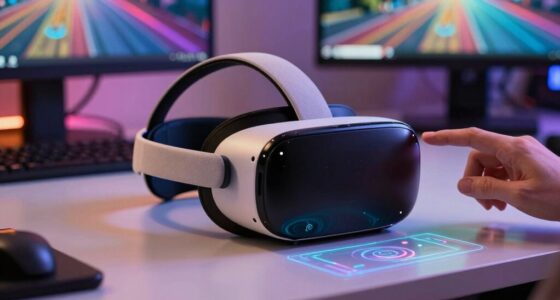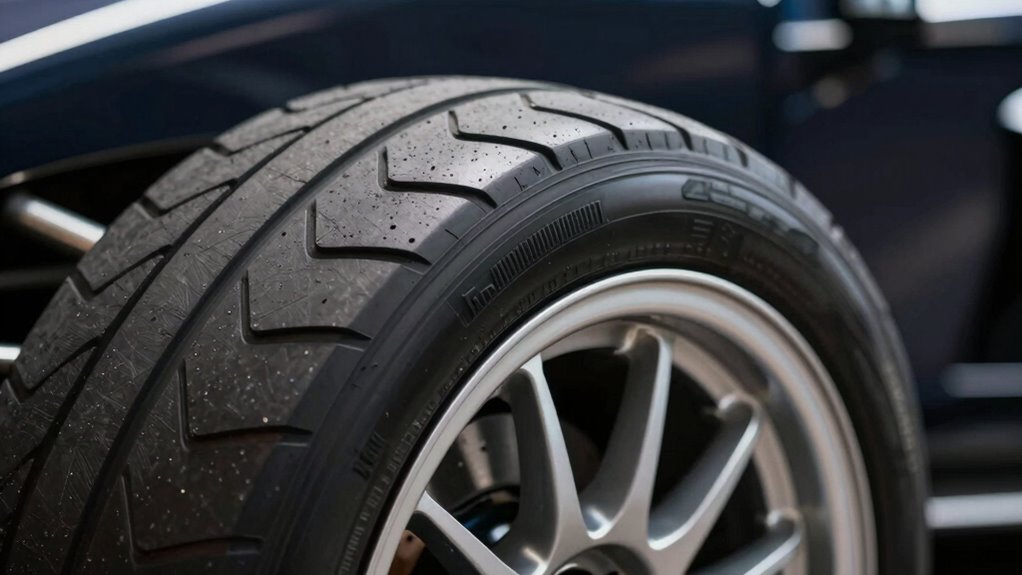
To make your racing wheel feel more realistic, focus on high-quality force feedback that accurately mimics road textures and vehicle dynamics. Proper calibration is essential to guarantee your wheel responds precisely to your inputs, creating a natural steering feel. Durable hardware made from advanced materials enhances responsiveness and longevity. When these elements work together, they create a more immersive experience. Keep exploring to discover additional ways to boost your virtual driving realism.

Get the latest gadgets delivered free with Prime
- Fast, free delivery on millions of items
- Prime Video, Amazon Music and more included
- Member-only deals all year
Key Takeaways
- High-quality force feedback technology accurately mimics road texture, tire grip, and vehicle dynamics.
- Proper calibration ensures precise input and realistic response to game physics.
- Responsive pedals and seamless integration enhance the authenticity of the driving experience.
- Durable, premium materials improve responsiveness and long-term realism.
- Combining accurate force feedback, calibration, and hardware quality creates a convincing simulation.
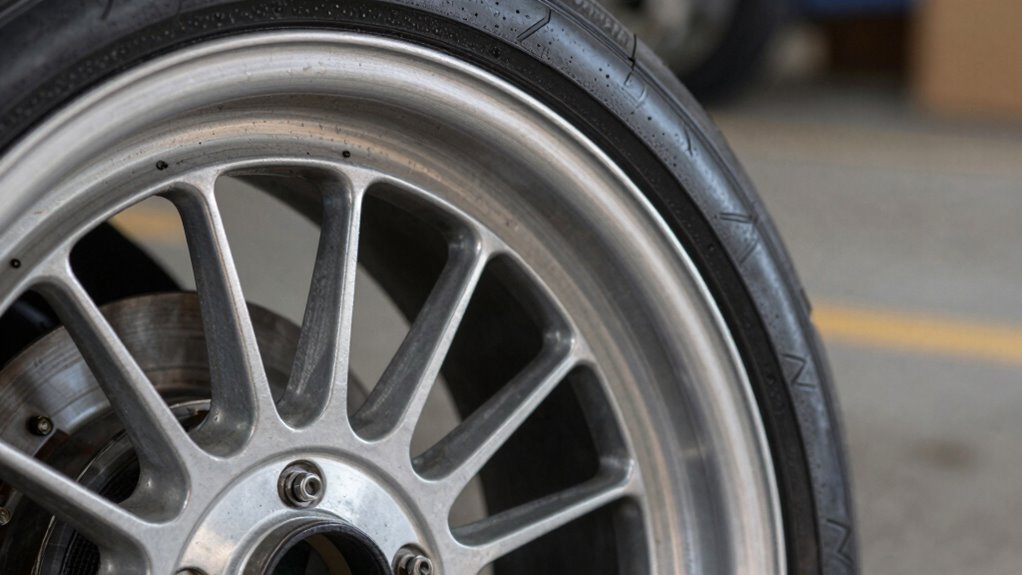
If you’ve ever wished your racing games felt more authentic, the latest racing wheels deliver just that. One of the key features that make these wheels feel more realistic is force feedback. This technology simulates the physical sensations of driving by applying resistance and vibrations to the wheel, mimicking the feel of road surface textures, tire grip, and vehicle dynamics. When you corner sharply or hit an obstacle, the force feedback responds instantly, giving you a tactile sense of what’s happening on the track. High-quality force feedback systems are finely tuned, providing subtle cues that enhance immersion without overwhelming your senses. The better the force feedback, the more natural and convincing your driving experience becomes, helping you feel connected to your virtual car in a way that’s almost tangible.
Another crucial aspect that influences realism is wheel calibration. Proper calibration ensures that the wheel’s movements accurately reflect the commands you input and the responses from the game. When you set up your racing wheel, taking the time to calibrate it correctly guarantees that steering feels precise and consistent. Misaligned or uncalibrated wheels can cause steering to feel loose or unresponsive, breaking the sense of immersion. Regular calibration updates the wheel’s settings, making sure that the input matches what you see on the screen. It’s especially critical when switching between different racing titles or updating firmware, as each game may have its own ideal settings. The process often involves adjusting the wheel’s rotation angle, dead zones, and sensitivity, all of which contribute to a more accurate and realistic feel. Proper calibration also helps prevent issues like wheel drift or uneven responses, so you can focus on racing rather than troubleshooting. Additionally, tuning the force feedback settings can significantly improve how authentic the driving sensations feel, aligning the tactile feedback more closely with real-world physics. Using software tools designed for calibration can further refine the wheel’s performance, making the experience even more immersive. Ensuring the hardware quality of your racing wheel is top-notch can also greatly impact the overall realism, as durable and well-designed components respond more precisely to your inputs. For example, advanced materials** used in high-end wheels can improve responsiveness and durability, making the experience feel even more authentic. When all these elements work together—force feedback that reacts convincingly, a well-calibrated wheel, responsive pedals**, and high-quality construction—you create a driving experience that’s remarkably close to real life. That’s what makes modern racing wheels feel so authentic and engaging.
high quality force feedback racing wheel
As an affiliate, we earn on qualifying purchases.
As an affiliate, we earn on qualifying purchases.
Frequently Asked Questions
How Does Force Feedback Improve Realism in Racing Wheels?
Force feedback enhances realism by mimicking real-world driving sensations through wheel resistance and vibrations. When you turn the wheel, force feedback adjusts resistance based on road conditions, curves, and collisions, making each turn feel authentic. It provides tactile cues that help you sense traction, steering angle, and surface texture, so your experience becomes more immersive and precise. This tactile feedback bridges the gap between virtual and real racing, increasing your overall sense of control.
What Role Does Wheel Grip Play in Realism?
Wheel grip plays a vital role in realism by enhancing your hand feel and immersion. When the grip texture closely mimics real steering wheels, it gives you authentic tactile feedback, making you feel more connected to the car’s movements. A well-designed grip allows for better control, helping you react naturally during intense moments. This realistic hand feel elevates your overall experience, making racing feel more genuine and engaging.
Can Customization Enhance the Racing Experience?
Yes, customization can considerably enhance your racing experience. When you choose an aesthetic design that appeals to you and prioritize material quality, your wheel becomes more than just a controller—it feels personal and immersive. Custom features like grip, button placement, and even visual elements make your setup unique, boosting your confidence and enjoyment. Ultimately, tailored options help you feel more connected and engaged during races.
How Important Is Pedal Sensitivity for Realism?
Think of your racing wheel like a finely-tuned instrument; pedal sensitivity is its heartbeat. You need precise pedal calibration and sensitivity adjustment to feel every nuance of the track. When these are set right, the wheel responds just like real pedals, giving you better control and immersion. Without it, your experience feels robotic, missing that critical connection between you and the racing world. Sensitivity truly elevates realism.
Do Racing Wheel Brands Differ Significantly in Realism?
Yes, racing wheel brands differ markedly in realism. Your experience depends on brand reputation and price differences; higher-end brands like Fanatec or SimXperience often deliver more precise force feedback and realistic feel. Cheaper options might lack nuanced feedback or build quality, impacting immersion. Investing in a reputable brand usually means better materials, advanced features, and a more authentic racing experience, making your simulation feel closer to real racing.
calibrated racing wheel with pedals
As an affiliate, we earn on qualifying purchases.
As an affiliate, we earn on qualifying purchases.
Conclusion
As you grip the racing wheel, feel the textured surface under your fingertips and the subtle rumble beneath your palms. The authentic resistance guides your hands like the steering of a real car, immersing you deeper into the race. With each turn and shift, the tactile feedback paints a vivid picture of speed and control, transforming your setup into a cockpit of raw emotion. It’s more than a game — it’s a visceral experience that pulls you into the heart of the track.
As an affiliate, we earn on qualifying purchases.
As an affiliate, we earn on qualifying purchases.
Halloween Picks
halloween
As an affiliate, we earn on qualifying purchases.