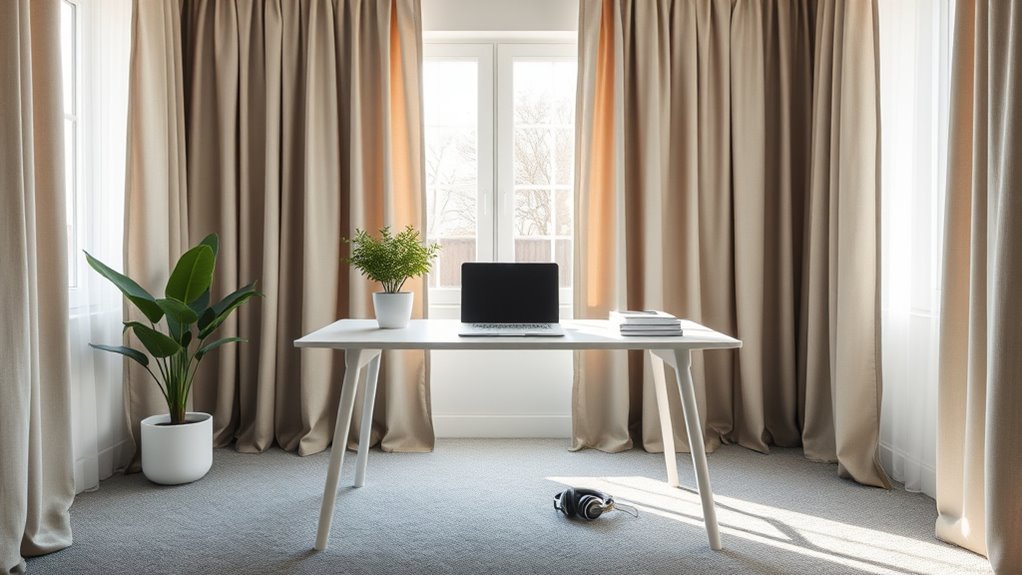

To create a quiet home office, start by adding soundproofing curtains over your windows to block external noise like traffic or street sounds. Combine these with acoustic wall panels to absorb echoes and prevent internal noise from bouncing around. Seal gaps around doors and windows with weatherstripping for extra noise reduction. Using these strategies together dramatically improves focus and productivity. Keep exploring for even more tips to make your workspace as peaceful as possible.
Key Takeaways
- Use soundproofing curtains over windows and doors to block external noise effectively.
- Install acoustic wall panels behind work areas to absorb internal echoes and minimize noise transfer.
- Seal gaps around windows, doors, and vents with weatherstripping for enhanced noise reduction.
- Combine curtains and wall panels with additional sound-absorbing materials for maximum silence.
- Position sound-absorbing elements strategically to create a calm, distraction-free home office environment.
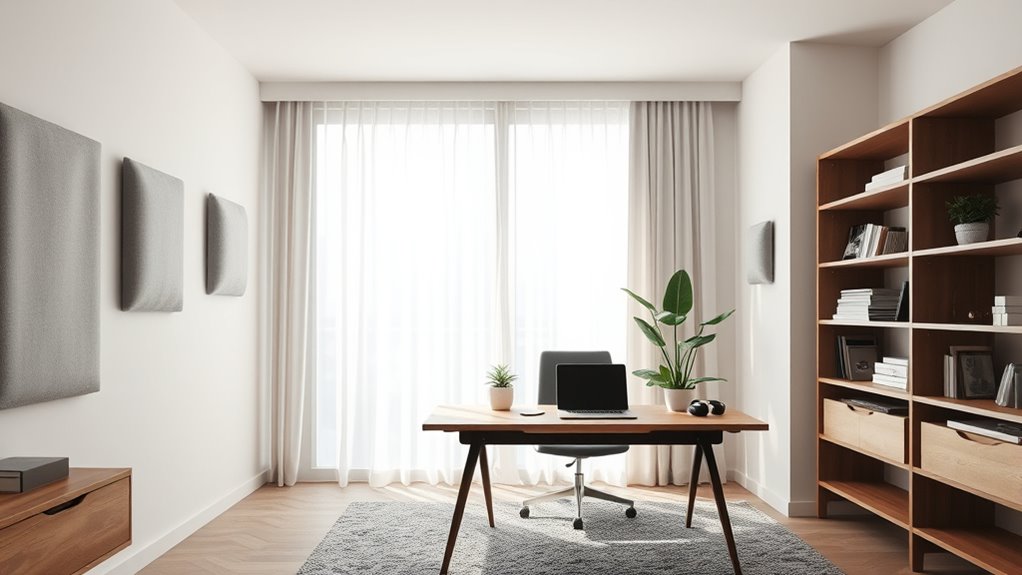
Creating a quiet home office can notably boost your productivity and focus. When your environment is free from distractions, you can work more efficiently and feel less stressed. One effective way to achieve this is by controlling the noise that enters and echoes within your space. Soundproofing curtains are an excellent solution for blocking out external sounds, such as street noise or household chatter. These thick, dense curtains are designed to absorb sound waves rather than just block light, making them ideal for creating a calmer atmosphere. Hang them over windows and doors to drastically reduce noise infiltration and improve your concentration. Pairing soundproofing curtains with acoustic wall panels can further enhance your soundproofing efforts. Acoustic wall panels are specially designed to absorb sound within a room, preventing echoes and minimizing noise transfer from adjacent spaces. Installing these panels on your walls, especially behind your workspace, helps dampen sound reflections and creates a more controlled acoustic environment.
Creating a quiet home office boosts productivity through soundproofing curtains and acoustic wall panels.
When choosing acoustic wall panels, opt for ones that match your decor to keep your home office visually appealing. They come in various styles and materials, allowing you to customize your setup while improving sound quality. Combining soundproofing curtains with acoustic wall panels is a strategic approach; curtains block external noise, while wall panels absorb internal echoes. This dual method ensures that external sounds don’t disrupt your focus and internal noise doesn’t bounce around, creating a peaceful work environment.
To maximize their effectiveness, install soundproofing curtains to cover large windows and consider lining them with a sound-absorbing layer if your space faces particularly noisy streets. For acoustic wall panels, position them on walls where sound tends to bounce most, such as behind your desk or along shared walls with noisy areas. Remember, sealing gaps around windows, doors, and vents is equally essential, as these openings often let in unwanted noise. Using weatherstripping or draft stoppers can seal these gaps and prevent sound leaks, complementing your soundproofing efforts. Additionally, understanding sound absorption materials can help you choose the most effective options for your space.
Creating a quiet home office isn’t just about adding soundproofing materials—it’s about designing a space that minimizes distraction and enhances your focus. Combining soundproofing curtains with acoustic wall panels offers a practical, effective, and visually pleasing solution. With these tools, you can enjoy a serene environment that fosters productivity, whether you’re working on important projects or simply need a peaceful space to think.
Top picks for "make quiet home"
Open Amazon search results for this keyword.
As an affiliate, we earn on qualifying purchases.
Frequently Asked Questions
How Can I Block Noise From Outside My Home Office Effectively?
To block outside noise effectively, start by installing soundproof curtains that absorb sound and reduce noise transmission. Add window inserts to create an extra barrier, sealing gaps and preventing sound leaks. You can also consider sealing cracks around your window frames with weatherstripping or caulk. Combining these methods greatly diminishes outside noise, helping you focus better in your home office and creating a peaceful workspace.
What Are the Best Materials for Soundproofing a Small Workspace?
Sure, acoustic panels and soundproof curtains are your best bets. Ironically, these materials are so effective, they might just make your office feel too quiet—no more accidental chats or street noise. Acoustic panels absorb sound within the room, while soundproof curtains block external noise. Together, they create a peaceful workspace, proving that sometimes, the simplest materials bring the best results in soundproofing your small office.
Can Plants Help Reduce Noise Levels in a Home Office?
Yes, plants can help reduce noise levels in your home office. Their benefits include noise absorption, which can soften sound waves and minimize echoes. By adding plants to your space, you create a natural barrier that dampens noise, making your workspace quieter. Plus, they improve air quality and add a calming vibe. Incorporate various sizes and types of plants for the best noise reduction and a more inviting environment.
Are There Affordable DIY Solutions for Noise Reduction?
Yes, you can achieve budget soundproofing with DIY acoustic panels. Start by repurposing materials like old blankets, foam, or thick fabric to create effective barriers. You can also build simple DIY acoustic panels using wooden frames, insulation, and fabric covers. These solutions are affordable, easy to assemble, and markedly reduce noise. With a little effort, you’ll enjoy a quieter, more focused home office environment without breaking the bank.
How Does Furniture Placement Impact Soundproofing in a Home Office?
Furniture placement plays a key role in soundproofing your home office. Position ergonomic furniture and decorative wall art strategically to absorb and block noise. Place bookshelves or large pieces near noisy walls to reduce sound transmission, and keep your desk away from shared walls. Arranging furniture thoughtfully creates a buffer zone that minimizes sound, making your workspace quieter, more comfortable, and better suited for focus and productivity.
Conclusion
So, after all that noise-blocking advice, you might find your home office so peaceful, you’ll wonder why you ever needed quiet in the first place. Ironically, creating a silent sanctuary often means turning your space into a fortress of silence. But hey, if you love the sound of absolute quiet—no distractions, no interruptions—then you’re all set. Just don’t forget to enjoy the rare moments when you actually hear yourself think!