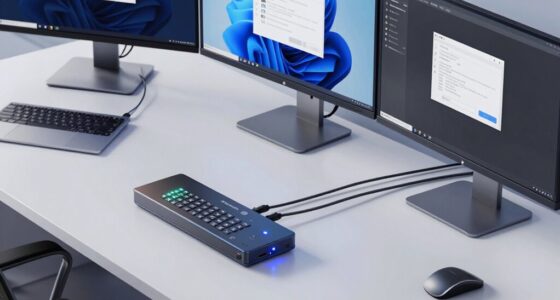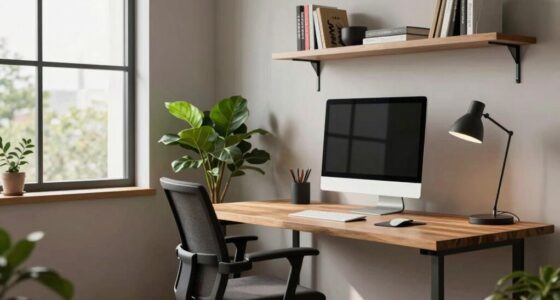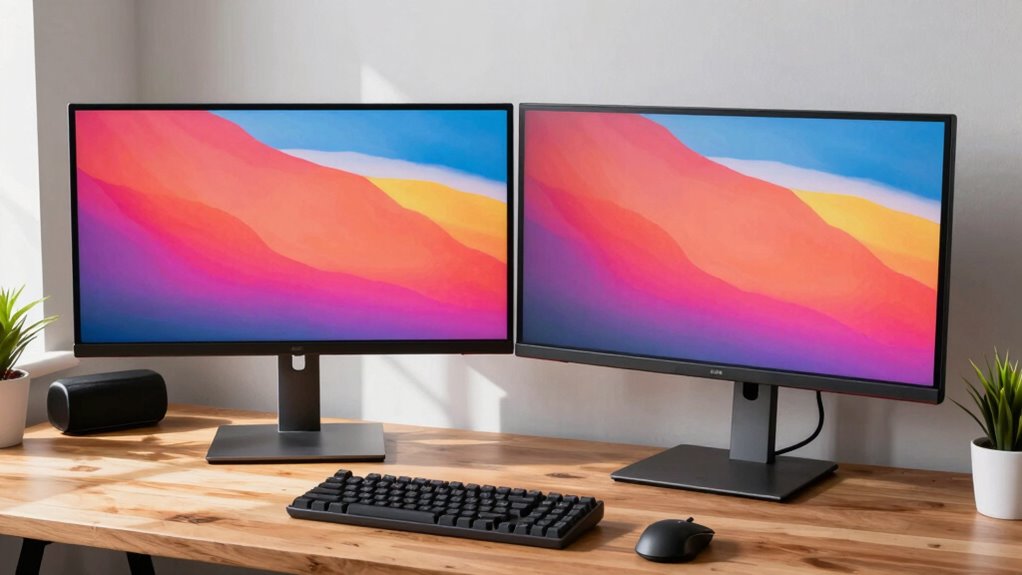

A great dual-monitor setup starts with ergonomic positioning—place your main monitor directly in front at eye level and position the second at a comfortable angle to reduce neck strain. Calibrate your screens for color accuracy and consistent brightness to prevent eye fatigue. Keep your workspace organized and use tools to manage windows efficiently. Adjust your chair and desk for natural posture, and take breaks often. Want to discover more ways to optimize your dual monitor experience? Keep exploring.

Get the latest gadgets delivered free — and shop member deals
- Fast, free delivery on millions of items
- Access to Prime Big Deal Days deals on October 6–7
- Prime Video, Amazon Music and more included
Key Takeaways
- Position monitors at eye level and at an appropriate distance to reduce neck and eye strain.
- Ensure consistent calibration of both screens for accurate color, brightness, and contrast.
- Arrange monitors to minimize neck movement and streamline workflow with primary in front and secondary at an angle.
- Maintain a clutter-free, organized workspace to enhance focus and productivity.
- Incorporate ergonomic adjustments and take regular breaks to promote comfort during extended use.
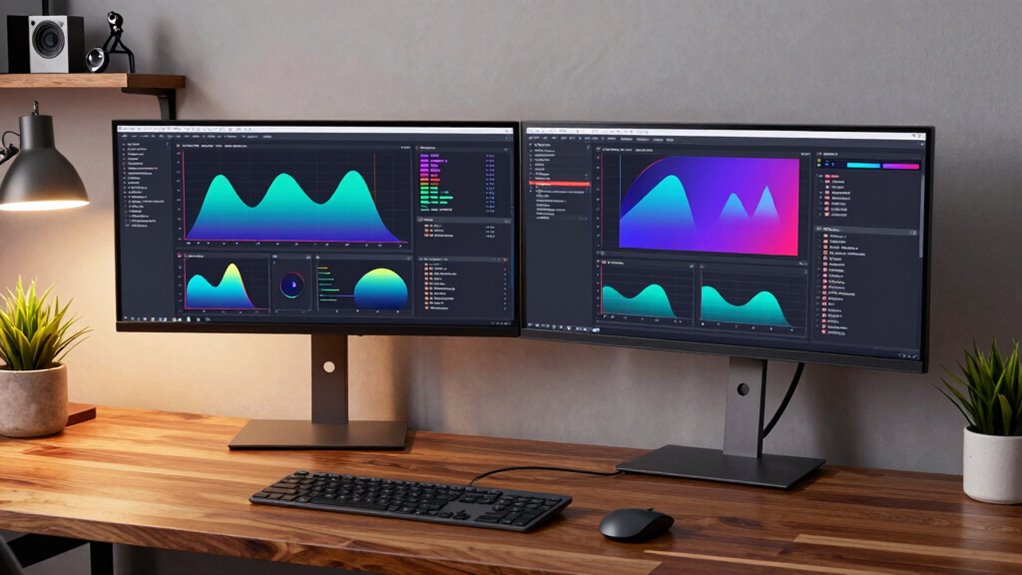
Have you ever considered how a dual-monitor setup can boost your productivity and streamline your workflow? It’s a game-changer, but only when set up correctly. To create an effective workspace, you need to focus on ergonomic adjustments and screen calibration. Proper ergonomic adjustments mean positioning your monitors so you can work comfortably for hours without straining your neck, eyes, or back. Your monitors should be at eye level, directly in front of you, with the top of the screen roughly at your eye height. This prevents you from tilting your head up or down, reducing neck fatigue. Keep the monitors about an arm’s length away, so you can easily see the screen without leaning forward or squinting. Adjust your chair height and desk position to support a natural sitting posture, with feet flat on the floor and knees at a 90-degree angle. This not only promotes comfort but also helps maintain focus during long work sessions. Additionally, choosing the right projector technology can enhance your viewing experience if you’re also working with visual content on a larger scale. For tasks that require precise color work, calibrating your monitors for color accuracy can make a noticeable difference in your results.
Position monitors at eye level and about an arm’s length away for comfortable, strain-free work sessions.
Screen calibration plays an equally crucial role in making your dual-monitor setup effective. Properly calibrated screens ensure color accuracy, brightness, and contrast, which is especially important if your work involves design, photo editing, or any detail-oriented tasks. Spend a few minutes calibrating your monitors using built-in tools or calibration hardware. Adjust the brightness and contrast settings so that whites appear white and blacks are deep and rich, reducing eye strain. Color calibration ensures consistency across both screens, so images and documents look uniform when moved between monitors. This step minimizes visual distractions and helps you work more efficiently, especially when multitasking or comparing data across screens. A well-calibrated setup can also prevent unnecessary eye fatigue caused by mismatched color tones or brightness levels.
Beyond adjustments and calibration, think about how you organize your workspace. Position your primary monitor directly in front of you and place the secondary monitor to the side at a slight angle. This setup minimizes neck movement and keeps your workflow smooth. Use keyboard shortcuts and window management tools to switch between screens easily, avoiding clutter and unnecessary mouse movements. Regularly taking breaks, maintaining good posture, and keeping your workspace clean also contribute to a more productive environment. Remember, a cluttered workspace can lead to distraction, so keeping your area organized supports overall efficiency.
In essence, a great dual-monitor setup isn’t just about having two screens; it’s about making those screens work for you. Proper ergonomic adjustments and screen calibration are the foundation for comfort and clarity. When these elements are in place, you’ll notice a significant boost in efficiency, focus, and overall comfort—making your work not just easier but also more enjoyable.
As an affiliate, we earn on qualifying purchases.
Frequently Asked Questions
How Do I Calibrate Colors Across Two Monitors?
To calibrate colors across two monitors, start with color calibration tips like adjusting brightness, contrast, and gamma settings for consistency. Use monitor calibration tools, such as a colorimeter or calibration software, to guarantee accurate color matching. Follow the tool’s instructions carefully, and compare the displays side-by-side. Regularly recalibrate to maintain color accuracy, especially if you notice discrepancies, so your dual-monitor setup stays visually cohesive.
What Are the Best Cables for Dual-Monitor Setups?
Did you know that using the right cables can improve your display quality by up to 30%? For your dual-monitor setup, HDMI, DisplayPort, and Thunderbolt cables are the best choices, offering high bandwidth and support for color calibration. These cable types guarantee sharp images and accurate color reproduction, which is essential when matching displays. Choosing quality cables helps maintain consistent color calibration and overall visual performance across both monitors.
How Do I Prevent Screen Flickering Between Monitors?
To prevent screen flickering between monitors, first guarantee both displays have the same refresh rate, as mismatched rates can cause flickering. Next, adjust your monitor placement to minimize cable strain and interference, keeping cables tidy and away from electronic devices. Updating your graphics drivers and checking your display settings also helps, ensuring your system correctly recognizes each monitor’s capabilities. Proper setup and configuration keep your dual-monitor experience smooth and flicker-free.
Can I Use Different Monitor Brands Together?
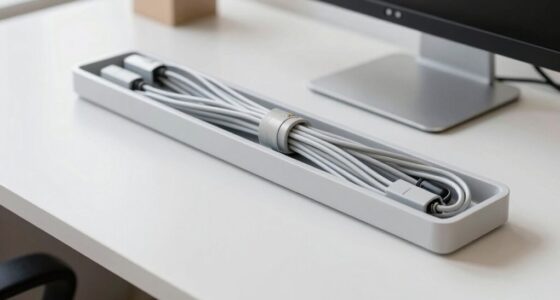
Yes, you can use different monitor brands together. An impressive 85% of multi-monitor setups feature different brands, showing compatibility isn’t an issue. When doing so, focus on proper monitor placement and cable management to guarantee a seamless workspace. Adjust display settings for color consistency, and use matching stands or mounts for a unified look. Proper cable management prevents clutter, making your varied monitors feel like a cohesive, efficient setup.
How Do I Optimize Sound Output for Dual Monitors?
To optimize sound output for dual monitors, first guarantee your audio synchronization is seamless by selecting the correct default playback device in your settings. Adjust speaker placement so sound evenly fills your workspace, positioning speakers at ear level and equidistant from you. Test audio levels and, if needed, tweak volume settings. Using a dedicated audio interface or external speakers can also improve sound quality and ensure consistent audio across both monitors.
As an affiliate, we earn on qualifying purchases.
Conclusion
A great dual-monitor setup can boost your productivity by up to 50%, transforming your workspace into a powerhouse of efficiency. With seamless shifts between screens and optimized ergonomics, you’ll work smarter, not harder. Imagine having twice the view—it’s like upgrading your desk from a single lane to a busy highway, where ideas flow effortlessly. So, invest in the right setup, and watch your focus and output skyrocket. Your ideal workspace is just a dual-monitor away.
As an affiliate, we earn on qualifying purchases.
As an affiliate, we earn on qualifying purchases.
Fall Picks
fall essentials
As an affiliate, we earn on qualifying purchases.