
To back up your phone properly and never lose your photos again, use cloud services like iCloud or Google Drive for automatic backups that stay up-to-date. You can also connect your phone to a computer via USB and manually transfer files or pictures to a secure folder. Automate regular backups and guarantee they’re encrypted for added security. Keep these backups organized and verify them periodically to ensure your precious memories are safe—continue to learn how to make this process effortless.
Key Takeaways
- Use cloud services like iCloud or Google Drive for automatic, secure photo backups.
- Connect your phone to a computer via USB to manually transfer and save photos regularly.
- Enable automatic backup settings on your device for continuous photo protection.
- Regularly verify your backups to ensure photos are stored correctly and accessible.
- Maintain multiple backup copies in different locations to prevent data loss from corruption or device failure.

Backup your files
As an affiliate, we earn on qualifying purchases.
As an affiliate, we earn on qualifying purchases.
Using Cloud Services for Easy Backup

Using cloud services makes backing up your phone quick and hassle-free. You have various storage options, from dedicated services like iCloud or Google Drive to third-party providers, giving you flexibility based on your needs and budget. These services automatically sync your photos, contacts, and app data, ensuring everything’s up to date. Additionally, many cloud providers offer energy-efficient infrastructure to help reduce your digital carbon footprint, aligning with sustainable practices. This focus on eco-friendly data centers demonstrates how technology can support environmental responsibility. However, security considerations are essential. Make sure you enable strong passwords and two-factor authentication to protect your data from unauthorized access. Review the privacy policies of your chosen provider to understand how your information is stored and used. Cloud backups are convenient, but always stay aware of potential vulnerabilities. By choosing reputable providers and practicing good security habits, you can confidently back up your phone without worry. Additionally, understanding the contrast ratio of your device can help you optimize your screen settings during the backup process for clearer visuals. To further enhance your backup strategy, consider the reliability of your network infrastructure to ensure smooth and uninterrupted data transfers. Moreover, being aware of data encryption practices can further safeguard your information during transit and storage.

USB C Data Cable White, 3ft USB 3.0 to USB C Data Transfer Cable, 10Gbps High Speed USB A to USBC Data Cable for iPhone 17 16 Pro Max, Samsung Galaxy S25 S24
10Gbps Data Transfer: USB 3.1 Gen 2 cable for ultra-fast sync of 4K movies, photos, & music. It's…
As an affiliate, we earn on qualifying purchases.
As an affiliate, we earn on qualifying purchases.
Backing up Your Phone With a Computer
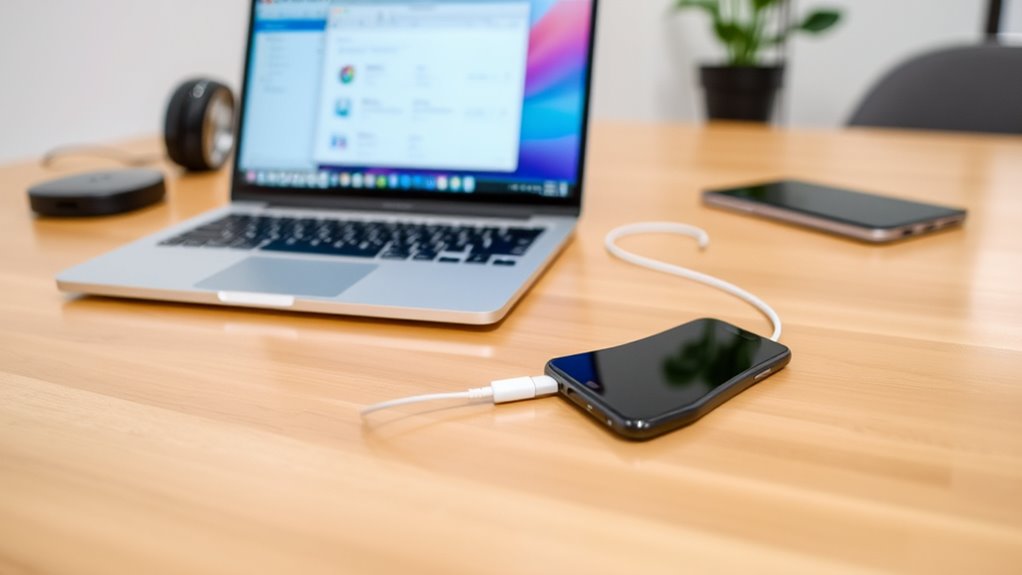
Connecting your phone to a computer is a reliable way to create a manual backup. This method gives you control over your data and helps guarantee security. Before transferring files, use security precautions like antivirus scans and secure connections. To protect sensitive data, enable data encryption on your device and during transfer. Here’s a quick overview:
| Step | Action |
|---|---|
| Connect | Use a USB cable to link your phone and computer |
| Transfer Files | Drag and drop your photos, videos, and documents |
| Secure Data | Encrypt files or enable device encryption before transfer |
| Safeguard Backup | Store the backup in a secure, password-protected folder |
Implementing proper wiring basics can prevent connection issues during the transfer process. This approach keeps your backups safe while giving you peace of mind that your data is protected. Ensuring your backup process is reliable can prevent data loss in case of device failure or theft, especially when combined with encryption methods for added security. Additionally, regularly testing your backups ensures they’re accessible and intact, providing confidence that your data can be recovered when needed. Keeping your backup up-to-date is essential for comprehensive data protection.

WD 6TB My Passport, Portable External Hard Drive, Black, Backup Software with Defense Against ransomware, and Password Protection, USB 3.1/USB 3.0 Compatible – WDBR9S0060BBK-WESN
World’s First 6TB 2.5” Portable Hard Drive
As an affiliate, we earn on qualifying purchases.
As an affiliate, we earn on qualifying purchases.
How to Save Photos and Files Manually
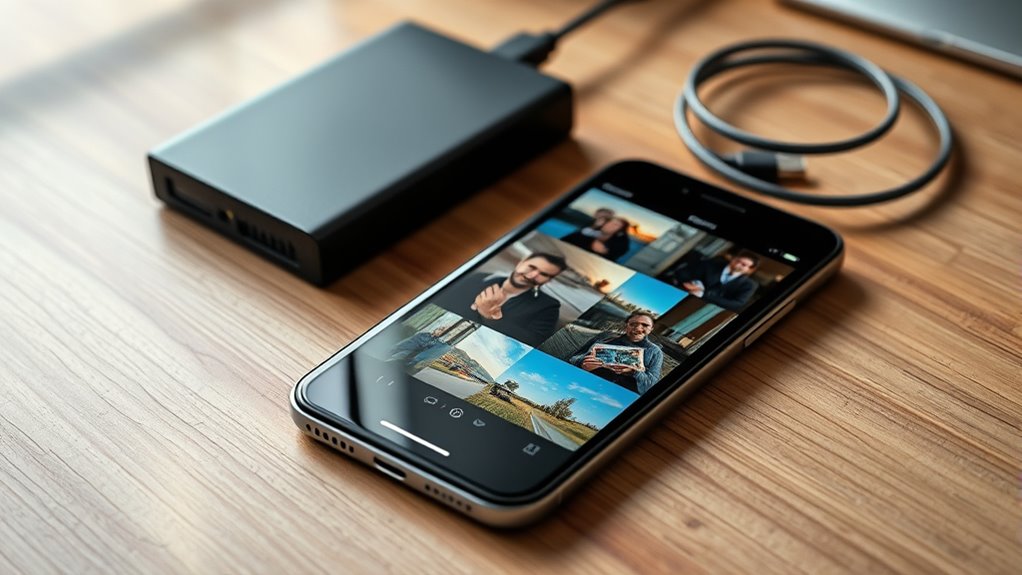
To save photos and files manually, start by locating the files on your device that you want to back up. Organize your photos with clear labels or folders to make future access easier. Use simple file transfer techniques like connecting your phone to your computer via USB or using a card reader. Once connected, open your device’s storage and select the photos or files you wish to save. Copy them to a designated folder on your computer or external drive. Be sure to verify that all files transferred correctly before deleting any from your device. Manual backups require careful photo organization and effective file transfer techniques, but they give you control over what gets saved and ensure your precious memories are safely stored elsewhere. Understanding file transfer methods can help streamline your backup process and prevent data loss. Additionally, familiarizing yourself with backup best practices can help ensure that all your important files are consistently protected. Regularly updating your backup procedures and using redundant storage solutions can further enhance your data security, especially when combined with knowledge of the most reliable vacuum features to consider for home safety and maintenance.
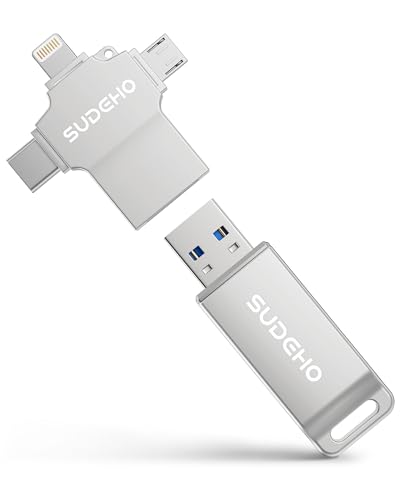
MFi Certified Photo Stick 128GB USB Flash Drive for iPhone, 4 in 1 External Memory Thumb Drive for Picture Video Saver and Backup, High Speed Memory Stick USB Drive for iPhone/iPad/Android/PC (Silver)
【MFi Certified iPhone Flash Drive – Wide Compatibility】This MFi certified photo stick for iPhone works smoothly with iOS…
As an affiliate, we earn on qualifying purchases.
As an affiliate, we earn on qualifying purchases.
Automating Regular Backups for Peace of Mind

After manually saving your important photos and files, setting up automatic backups guarantees your data stays protected without extra effort. You can schedule regular backups to run seamlessly in the background, ensuring your latest photos and documents are always safe. Use encrypted storage options to keep your data secure from unauthorized access. Establish backup schedules that suit your routine—daily, weekly, or monthly—to avoid forgetting. Automating backups minimizes the risk of losing valuable memories and important files. For added security, choose reliable cloud services with encrypted storage to protect your data from potential breaches. Enable automatic backups on your device for consistent protection, and remember that privacy policies ensure your data remains confidential during the process. Understanding backup strategies can help you select the best approach for your needs and prevent data loss effectively. Incorporating automated processes can further streamline your backup routine and reduce the chance of human error. Additionally, understanding the importance of data recovery can help you confidently restore your files if needed.
Tips for Choosing the Right Backup Method
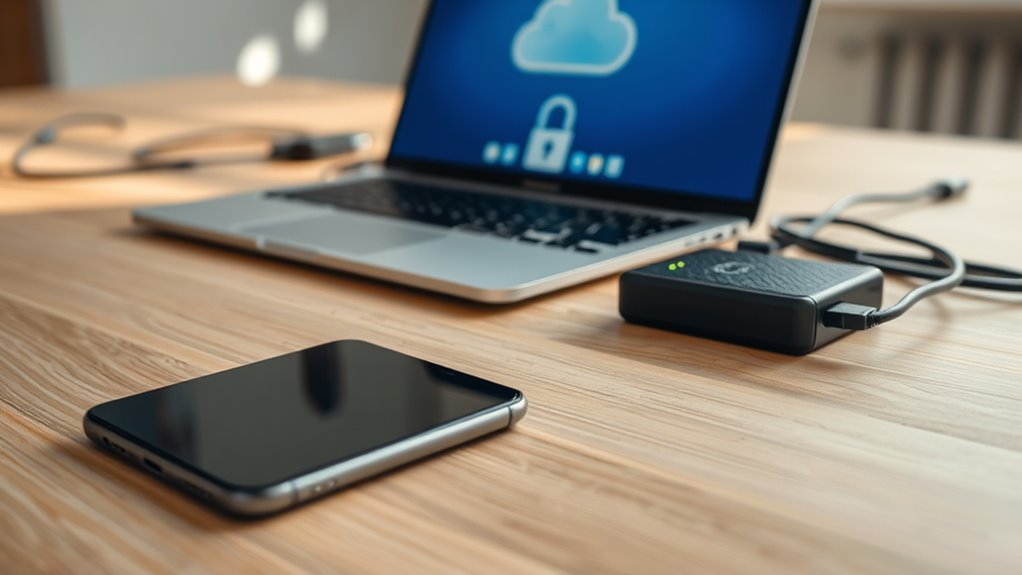
Choosing the right backup method depends on your needs and preferences, so it’s important to evaluate your priorities. Start by considering your storage options—cloud services like iCloud or Google Drive offer convenience, while external drives provide physical control. Next, think about security considerations; make sure your backups are encrypted and protected with strong passwords to keep your data safe. If you value quick access and automatic updates, cloud options might suit you best. If you prefer having physical control or are concerned about ongoing internet costs, external storage is a reliable choice. Balance these factors based on how often you back up, the sensitivity of your data, and your budget. Making an informed decision helps ensure your photos and files are protected effectively. Cookies can also play a role in enhancing your backup experience by enabling secure log-in and preference settings. Additionally, understanding data security best practices helps prevent unauthorized access to your backups, and implementing encryption techniques adds an extra layer of protection to your stored files. To further optimize your backup strategy, consider automatic backups that save time and reduce the chance of human error. Incorporating regular maintenance of your backup system can also help identify and resolve potential issues before data loss occurs.
Frequently Asked Questions
How Secure Are Cloud Backup Services for Private Photos?
Cloud backup services are generally secure for private photos, but you should be aware of privacy concerns. Many providers use strong encryption standards to protect your data both during transfer and storage. However, it’s wise to choose reputable services with transparent privacy policies and two-factor authentication. While no system is completely foolproof, these measures considerably reduce the risk of unauthorized access, keeping your photos safer in the cloud.
Can I Backup Specific Photos Instead of Entire Device Data?
Did you know that over 1.2 trillion photos are taken worldwide each year? You can perform selective backup by choosing specific photos to save, rather than backing up your entire device. Use photo-specific storage options like cloud services that allow you to select individual images or albums. This way, you conserve space and keep your most cherished memories safe without unnecessary data transfer.
What Is the Best Way to Recover Lost Photos From Backups?
You can recover lost photos by accessing your backup through your chosen service, like iCloud or Google Photos. First, verify your backup to make certain your photos are stored correctly. Then, perform device recovery by restoring from the backup. Always double-check backup verification before restoring, so you avoid losing recent photos. This process helps you retrieve your images efficiently and securely, giving you peace of mind knowing your memories are safe.
How Often Should I Back up My Phone for Optimal Safety?
Did you know that 25% of smartphone users lose data annually? To protect your photos, you should plan your backup frequency based on how often you add new content. For maximum safety, set up backup automation to run daily or weekly, ensuring your data stays current without extra effort. Regular backups minimize loss, so establishing a routine keeps your memories secure and easily recoverable whenever needed.
Are There Any Costs Associated With Free Backup Options?
Free backup options usually don’t cost anything upfront, but you should consider data privacy and backup compatibility. Some free services might have limited storage, risking your data’s safety, and could compromise your privacy. Make sure the service is compatible with your device and operating system. While free options are budget-friendly, always read their privacy policies to guarantee your photos and info stay secure and private.
Conclusion
Now that you know how to back up your phone, you’d think it’s foolproof, right? Ironically, the hardest part is actually doing it regularly. But hey, if you forget, at least your photos will be safe somewhere—just not necessarily on your phone. So, pick a method, set a reminder, and enjoy the peace of mind that comes with knowing your memories are protected… or so you hope!