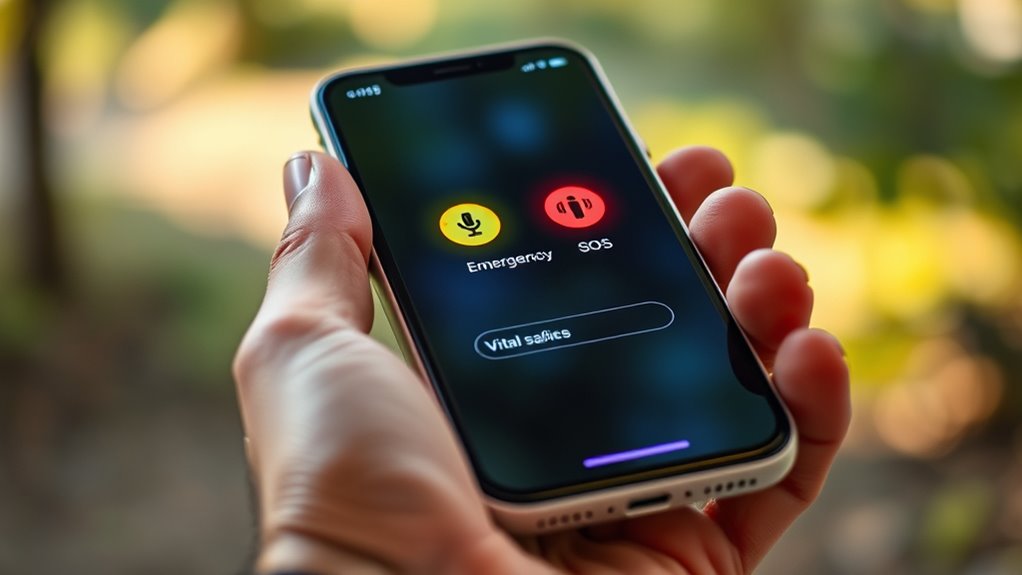

Your phone’s Emergency SOS features can save your life by quickly alerting authorities and sharing your location during an emergency. You can activate these tools on different devices using specific button presses or settings, customize who receives your info, and even add medical details for responders. Practice these functions safely to make certain they work when needed. To find out more about how these lifesaving features operate and how to optimize them, keep exploring.
Key Takeaways
- Activate Emergency SOS by pressing specific buttons on your device, such as side or power buttons, to quickly call emergency services.
- Your phone can automatically share your real-time location with emergency responders during SOS activation.
- Customize emergency contacts and settings to ensure quick alerts and location sharing during crises.
- Medical ID provides vital health information to responders, accessible even when the phone is locked.
- Practice emergency drills safely to familiarize yourself with SOS features and ensure prompt, effective use.
Top picks for "emergency featur phone"
Open Amazon search results for this keyword.
As an affiliate, we earn on qualifying purchases.
How to Activate Emergency SOS on Different Smartphone Models
Activating Emergency SOS features varies depending on your smartphone model, but the process is generally straightforward. First, check your phone model compatibility, as different devices have unique activation procedures. For iPhones, you typically press the side button five times quickly or use the emergency slider. Android phones may require pressing the power and volume buttons simultaneously or using a dedicated emergency app. Always consult your device’s user manual or settings menu to confirm the correct steps. In some cases, you might need to enable the feature in your security or emergency settings before it becomes active. Understanding your phone’s specific activation procedures ensures you can quickly access Emergency SOS when needed, providing peace of mind in critical moments. Additionally, display settings can influence how clearly you see visual emergency instructions or alerts on your screen during urgent situations. Proper device setup and familiarity with these features can make a crucial difference in emergencies, especially if you know your device’s capabilities. Being aware of emergency contact options on your device can also facilitate faster assistance when necessary.
Using Emergency SOS to Alert Authorities Quickly
Once you’ve activated Emergency SOS on your device, you can quickly alert authorities when needed, enhancing your personal safety through technology integration. To do this efficiently, follow these steps:
Activating Emergency SOS enables quick alerts to authorities, ensuring swift assistance when every second counts.
- Press the emergency button or power button multiple times, depending on your device.
- Confirm your alert if prompted.
- Your phone automatically contacts emergency services.
- A loud alarm or vibration alerts you that help is on the way.
- Remember that user privacy is maintained during these communications, with certain data being securely transmitted to aid responders.
- Many devices now feature security zone info that allows you to customize emergency contacts and notifications for added safety.
- Familiarizing yourself with emergency response features on your device can further improve your ability to get help quickly in critical situations, especially when integrated with natural pools or other outdoor features for safety during outdoor activities, and understanding device security can help protect your information during emergencies.
Sending Your Location During an Emergency
During an emergency, your phone can automatically share your location with emergency services, saving you time. You can also manually send your coordinates if you need to keep someone else updated. Understanding these options guarantees you can quickly provide your exact whereabouts when it matters most. Smart energy management features can also help you stay connected and informed during critical situations. Being aware of location-sharing capabilities can significantly improve your safety response. Familiarity with bank swiftifs codes can be crucial if you need to make urgent financial transactions or verify information securely. Additionally, exploring user privacy settings ensures your data remains protected while utilizing these lifesaving features. Leveraging technological integration in your devices can further enhance your safety and responsiveness during emergencies.
Automatic Location Sharing
Automatic location sharing is a crucial feature that helps emergency services respond quickly when you need help. It automatically sends your current location during an emergency, saving precious time. To make the most of this feature, consider these points:
- Confirm your device supports automatic sharing—compatibility varies across models.
- Be aware of privacy concerns; enabling this feature means your location is shared instantly during emergencies.
- Keep your device’s software updated to maintain excellent functionality and security.
- Know how to activate or disable automatic sharing easily, depending on your comfort level.
- Review your backup power options regularly to ensure your device remains operational during power outages, which can be critical in emergencies. Additionally, understanding total-cost clarity can help you evaluate any potential expenses involved in maintaining these features. Being aware of the device’s capabilities ensures you maximize safety without compromising your privacy. Regularly testing this feature can enhance your preparedness and ensure it functions correctly when needed. Incorporating emergency preparedness practices can further improve your safety and response readiness in critical situations.
Manually Sending Coordinates
While automatic location sharing is helpful, there are times when you might need to manually send your coordinates for greater accuracy. This can be vital if you’re in an area where signals are weak or if you want to ensure responders get the exact spot. Manually sharing your location allows you to control your personal safety and maintain location privacy by choosing when and what to send. To do this, open your emergency app or messaging service and select the option to share your location. Confirm the coordinates before sending. Keep in mind, manually transmitting your location can provide responders with the most precise info, potentially speeding up assistance. Just be cautious about sharing your coordinates to protect your privacy once the emergency is over. Navigation and mapping features can also assist in pinpointing your position more accurately in complex environments, especially when combined with privacy controls to safeguard your data. Additionally, understanding user experience aspects of these tools can help you utilize them more effectively during critical moments. Knowing how to interpret and adjust location accuracy settings can further enhance the effectiveness of your shared information. Utilizing advanced GPS techniques can also improve the precision of your location data in challenging situations.
Customizing Emergency SOS Settings for Your Safety
Customizing your Emergency SOS settings guarantees that the feature works seamlessly when you need it most. Start by adding your personalized alerts to make sure your alerts are clear and tailored. Next, set up your customized emergency contacts so the right people are notified immediately. To optimize your safety, consider these key steps:
- Enable Auto Call to initiate a call with a quick press.
- Add Emergency Contacts for instant notifications.
- Customize Personalized Alerts to include specific messages.
- Adjust Alert Sound and Vibration to ensure you notice alerts in any environment.
Additional Safety Features to Know on Your Phone
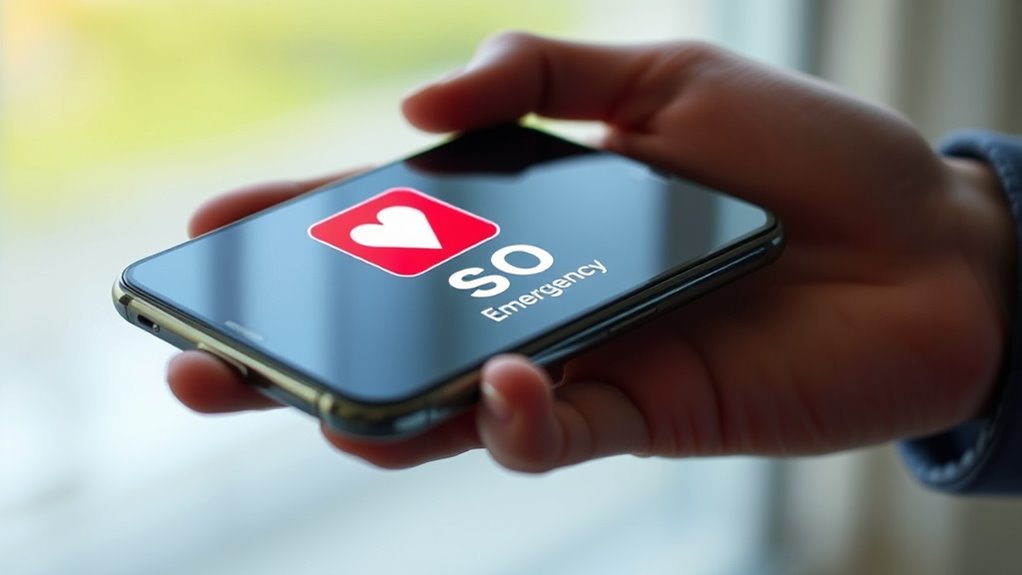
Your phone offers additional safety features like Emergency Location Sharing and easy access to your Medical ID. These tools can help responders find you quickly and provide critical health information in emergencies. Knowing how to activate and use these features can make a big difference when seconds count.
Emergency Location Sharing
Emergency Location Sharing allows your phone to send your real-time location to trusted contacts or emergency services when you’re in trouble. This feature can be a lifesaver, but it’s essential to think about how it works while protecting your personal privacy and data security.
Here are four key points to consider:
- You control who receives your location, ensuring only trusted contacts get updates.
- Location sharing can be temporary or ongoing, giving you flexibility.
- Your data is encrypted to maintain data security during transmission.
- Always review privacy settings to prevent unwanted sharing or access.
Medical ID Accessibility
Medical ID Accessibility is an essential safety feature that allows quick access to critical health information during emergencies. By setting up your medical profile, you enable first responders or bystanders to view your medical information without unlatching your phone. This includes details like allergies, medications, medical conditions, and emergency contacts. Accessing profiles is simple—on most devices, you can tap the emergency button and then select Medical ID to view crucial information. This feature saves valuable time when every second counts, ensuring responders have the details they need to provide appropriate care. Making your medical information easily accessible can be a crucial step in protecting your health and safety in urgent situations.
Tips for Practicing Emergency SOS Functions Safely
Practicing Emergency SOS functions is essential to guarantee you’re comfortable using them when it really counts. To do this safely, consider these tips:
- Schedule public practice drills in low-traffic areas to avoid startling others or causing unnecessary panic.
- Keep your phone battery management in mind—practice with a fully charged device to ensure it won’t die during an emergency.
- Use a quiet environment initially to familiarize yourself with the activation process before trying it in more distracting settings.
- Avoid pressing the SOS buttons repeatedly or prematurely, which could cause confusion or false alarms.
These steps help you build confidence while minimizing risks, ensuring you can rely on your phone’s emergency features when needed most.
Important Considerations When Relying on Phone Safety Features

While phone safety features can be lifesaving tools, it’s important to remember that they aren’t foolproof. Your phone’s emergency functions rely heavily on a good phone battery; if your battery dies, these features won’t activate when needed. Always verify your device is charged enough to use emergency services if necessary. Additionally, consider user privacy—your location data and emergency information are sensitive. Make sure your privacy settings are configured to protect your information, even when using safety features. Don’t assume these tools will always work perfectly; technical glitches or network issues can occur. Regularly test and familiarize yourself with how these features operate, keeping in mind their limitations. Being prepared and cautious enhances your safety when relying on your phone’s emergency functions.
Frequently Asked Questions
Can Emergency SOS Be Used Without an Internet Connection?
Yes, you can use Emergency SOS without an internet connection through offline activation. When you activate Emergency SOS by pressing your phone’s side buttons, it automatically contacts local emergency services using cellular networks, which don’t require Wi-Fi. This feature is designed with privacy concerns in mind, ensuring your location and emergency details are shared only with emergency responders, not with third parties or online services.
How Long Does It Take for Emergency Contacts to Be Notified?
When you trigger Emergency SOS, emergency contact delays and notification timeframes can differ based on your device and network. Typically, your contacts are notified within a few minutes once the emergency mode is activated. Sometimes, delays occur if your phone is in a low-signal area or experiencing network congestion. To guarantee quick notifications, keep your device updated and check your emergency contact settings regularly.
Are There Any Risks of Accidental Activation?
Yes, there’s a risk of false alarms due to device sensitivity or accidental button presses. If your phone’s emergency features are too sensitive, you might trigger Emergency SOS unintentionally while handling or dropping it. To minimize this, adjust the sensitivity settings if available, and be mindful when carrying or using your device. This helps prevent false alarms and ensures emergency services aren’t contacted unnecessarily.
Can Emergency SOS Be Disabled Temporarily?
Yes, you can temporarily disable Emergency SOS features on your phone. To do this, you typically go into your settings and find the emergency or SOS options. Disabling features allows you to prevent accidental activations during certain activities. Just remember, this is a temporary deactivation, so re-enable the features when you need them. Always consider the importance of these safety features before disabling them.
Does Emergency SOS Work Internationally?
Yes, Emergency SOS can work internationally if your phone supports international compatibility and you’re in an area with emergency service coverage. When you travel, make sure your device is unlocked and compatible with local networks. Keep in mind that emergency service coverage varies by country, so check ahead. If set up correctly, activating Emergency SOS can connect you to local emergency services, potentially saving your life during critical situations abroad.
Conclusion
Remember, your phone is like a trusted lifeline in the chaos, ready to ring out help when you need it most. Mastering these Emergency SOS features turns your device into a guardian angel, always watching over you. So, take a moment to familiarize yourself with these tools—because when seconds count, you want your safety net to catch you effortlessly. Stay prepared, stay safe, and let your phone be the hero in your story.