
To speed up your slow PC without spending a dime, start by closing unnecessary background programs and disabling unneeded startup items. Clear your desktop and delete unused files to reduce clutter. Run Disk Cleanup to remove junk files and free space. Scan for malware to keep your system secure and optimized. Adjust visual effects for better performance and restart your PC regularly. Keep things organized and perform routine maintenance—more tips await if you continue exploring.

Get the latest gadgets delivered free with Prime
- Fast, free delivery on millions of items
- Prime Video, Amazon Music and more included
- Member-only deals all year
Key Takeaways
- Use Task Manager to identify and close unnecessary background processes and disable non-essential startup programs.
- Run Disk Cleanup and organize files to free up disk space and reduce clutter.
- Regularly update your operating system and drivers, and restart your PC to refresh system resources.
- Perform full system scans with antivirus software to detect and remove malware threats.
- Adjust visual effects settings to prioritize performance over graphics for a smoother experience.
Close Unnecessary Background Programs

Many background programs run silently without you realizing it, which can slow down your PC considerably. Managing these processes through effective background process management helps prevent unnecessary software interference. Open your Task Manager to see what’s running in the background and identify programs that you don’t need. Closing these unnecessary processes frees up system resources, boosting performance. Be cautious not to end essential system processes that keep Windows stable. Regularly monitoring your background programs ensures your computer isn’t bogged down by software interference that hampers speed. By shutting down unneeded processes, you improve your PC’s responsiveness without installing new software or making major changes. Additionally, leveraging European cloud servers can enhance your system’s security and efficiency by offloading resource-intensive tasks to reliable, energy-efficient cloud solutions. Using cloud computing resources can further optimize system performance by distributing workloads more effectively. This simple step can make a noticeable difference in your system’s overall speed and efficiency. Keeping your system optimized is an ongoing process, and understanding background processes helps maintain peak performance over time. Recognizing how hardware resources are allocated can also help you identify bottlenecks and optimize your system further. Monitoring system performance with task management tools can provide deeper insights into resource usage and areas for improvement.
Disable Startup Items You Don’t Need

Start by identifying which startup programs are unnecessary and slowing down your PC. Once you know what’s not essential, you can disable those items to reduce boot time. Managing your startup impact helps your computer run faster right from the moment you turn it on. Additionally, reviewing the filtering and pump protection of your system can prevent issues that may cause delays or performance drops during operation. Being aware of system components and their roles can further optimize your PC’s overall performance and stability. Understanding the network infrastructure within your system can also help identify potential bottlenecks that affect overall speed and responsiveness, similar to how electric bike horsepower influences performance in off-road conditions. Regularly updating your device drivers and hardware configuration can also ensure optimal performance and reduce unnecessary lag.
Identify Unnecessary Programs
Unnecessary programs often load during startup, slowing down your PC’s boot time and overall performance. These background software and unnecessary apps can run silently in the background, consuming system resources without your knowledge. To identify them, open your Task Manager and review the list of startup programs. Look for apps you don’t use regularly or don’t need immediately after booting. Disabling these unnecessary programs reduces the load on your system, helping it start faster and run smoother. Remember, not all programs can be disabled safely, so research any unfamiliar items before turning them off. By minimizing background software, you free up resources, which directly improves your PC’s speed and responsiveness.
Manage Startup Impact
Once you’ve identified unnecessary programs, the next step is to reduce their impact on your startup time by managing which items automatically launch. This step is vital for effective startup optimization. Open the Task Manager (Ctrl + Shift + Esc) and go to the Startup tab. Here, you’ll see a list of programs that run as background processes when your PC boots. Disable the ones you don’t need immediately, especially those that aren’t essential for your daily tasks. This reduces the number of background processes, speeding up your startup. Be cautious not to disable critical system services. Managing startup impact helps your PC boot faster and runs more smoothly, making your overall experience better without any additional cost.
Clear Your Desktop and Delete Unused Files

A cluttered desktop can slow down your computer and make it harder to find important files. Organizing your files efficiently and removing unnecessary ones frees up space and improves performance. Regularly clearing clutter keeps your PC running smoothly and helps prevent unnecessary lag. Additionally, adopting good digital habits such as regularly deleting unused files can further enhance your computer’s speed and longevity. Incorporating Free Floating techniques like streamlining your workspace can also contribute to a more efficient digital environment.
Organize Files Efficiently
Have you ever noticed how a cluttered desktop or scattered files can slow down your computer? Organizing your files efficiently is key to speeding things up. Start by creating a clear folder hierarchy—group related files into folders and subfolders. Use consistent file naming conventions so you can easily find what you need without searching through endless documents. Regularly delete unused or outdated files to free up space and reduce clutter. Moving files from your desktop into designated folders not only declutters your workspace but also improves system performance. Keep only essential files on your desktop for quick access. By maintaining a tidy digital environment, you’ll prevent your PC from slowing down due to unnecessary data and make future file management much easier.
Remove Clutter Regularly
Regularly clearing your desktop and deleting unused files can considerably boost your PC’s speed. Digital clutter and file overload slow down your system and make it harder to find important documents. To keep your PC running smoothly, take a few minutes each week to:
- Delete files you no longer need
- Empty your Recycle Bin
- Organize files into folders
- Remove unnecessary shortcuts
- Clear temporary files and caches
- Understand how clutter impacts system performance to better manage your digital space.
Run Disk Cleanup to Remove Junk Files
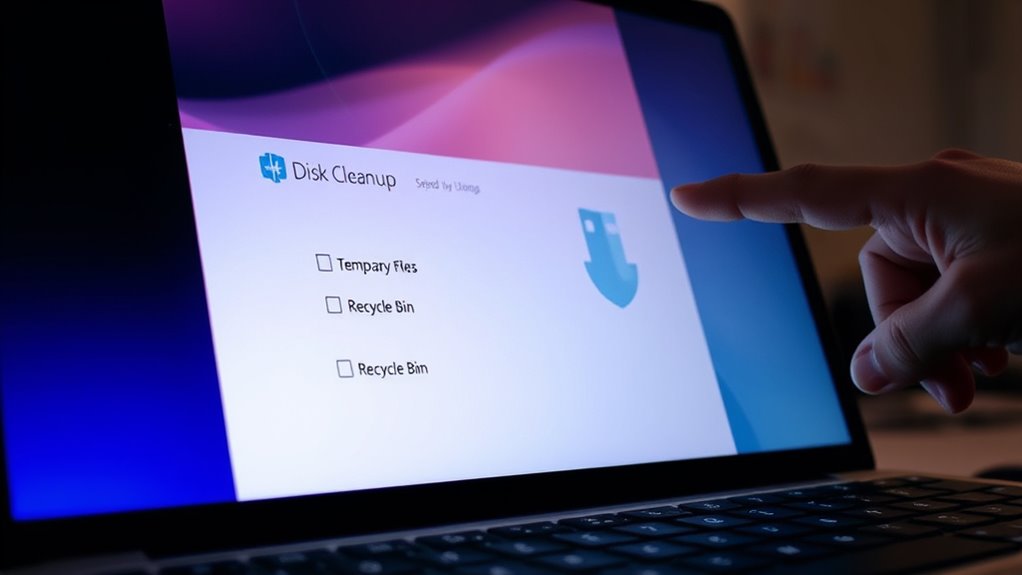
When your PC starts lagging, running Disk Cleanup is a quick and effective way to free up space and boost performance. This tool helps with junk file removal, clearing out temporary files, system caches, and other unnecessary data cluttering your drive. To start, open Disk Cleanup by searching for it in the Start menu or right-clicking your drive in File Explorer and selecting Properties. Then, click on Disk Cleanup, select the files you want to delete, and confirm. Regular disk cleanup prevents your system from becoming bogged down by unnecessary files, ensuring it runs smoother. Removing junk files frees up storage and can markedly improve your PC’s speed without requiring any software or hardware upgrades. It’s an easy step that makes a noticeable difference. Understanding power management concepts can help you optimize your PC’s performance further. Additionally, adjusting startup programs can further enhance speed by reducing background processes. Moreover, being aware of system optimization techniques can help maintain your PC’s responsiveness over time. Optimizing system settings can also contribute to maintaining a faster, more responsive PC over time.
Check for Malware and Remove Threats

Is malware secretly slowing down your PC? It can cause crashes, sluggishness, and strange pop-ups. To fix this, run a thorough malware removal process using reliable antivirus software. Make sure your antivirus is up to date before scanning. Look out for signs like unexpected ads, unknown programs, or high CPU usage—all red flags for malware. To enhance malware removal, consider these steps:
- Perform a full system scan with your antivirus software
- Quarantine or delete detected threats immediately
- Use additional malware removal tools for stubborn infections
- Disable suspicious browser extensions or add-ons
- Keep your antivirus definitions current for ongoing protection
Regularly checking for malware helps keep your system clean and fast. Removing threats ensures your PC runs smoothly and securely without slowing down over time.
Update Your Operating System and Drivers
Keeping your operating system up to date guarantees you have the latest performance improvements and security patches. Updating your hardware drivers can fix bugs and boost compatibility with new software. Make sure to regularly check for updates to keep your PC running smoothly.
Keep OS Current
Updating your operating system and drivers regularly guarantees your PC runs smoothly and securely. OS updates and system patches fix bugs, improve performance, and patch security vulnerabilities. To keep your system current, check for updates often, ideally weekly. Enable automatic updates to save time and ensure you never miss critical patches. Regular updates can prevent crashes and slowdowns caused by outdated software. Additionally, understanding affiliate disclosure and privacy policies can help you make informed decisions about your data and browsing experience. Staying current with OS updates and system patches is essential for a faster, safer PC experience. It helps prevent issues that can drag down your system’s performance.
Update Hardware Drivers
Ensuring your hardware drivers are current is vital for peak system performance. Outdated or incompatible drivers can cause crashes, slowdowns, and hardware malfunctions. Regular driver updates improve driver compatibility, ensuring your components work seamlessly with your OS. To visualize, imagine these hardware parts:
| Hardware Component | Current Driver Status | Effect of Updates |
|---|---|---|
| Graphics Card | Outdated | Faster rendering |
| Network Adapter | Not updated | Better connection stability |
| Sound Card | Compatibility issues | Clearer audio |
| Printer | Driver mismatch | Faster printing |
Updating drivers ensures your system runs smoothly without conflicts. Check for updates regularly via device manager or manufacturer websites for optimal performance. Staying informed about driver updates helps prevent issues and keeps your system running efficiently.
Free Up Space on Your Hard Drive
Have you noticed your PC slowing down lately? One simple fix is freeing up space on your hard drive. When your storage gets crowded, your PC struggles to access files efficiently. Start by deleting unnecessary files or uninstalling unused programs. Use external storage to move large files like videos or archives, freeing up internal space. Cloud backups are also helpful; back up important data online and then delete local copies. Additionally, clear your browser cache and temporary files regularly. Keep an eye on your disk usage with built-in tools to identify space hogs. Regularly manage your storage with system tools and keep ample free space to help your system run smoothly. You can also consider cleaning your hard drive with specialized software to optimize storage and improve performance. Regularly monitoring your disk usage ensures that your computer remains speedy and responsive. To prevent clutter from accumulating over time, setting up automatic cleanup schedules can save you effort and maintain performance. By managing storage wisely, you’ll improve speed without spending a dime.
Adjust Visual Effects for Better Performance
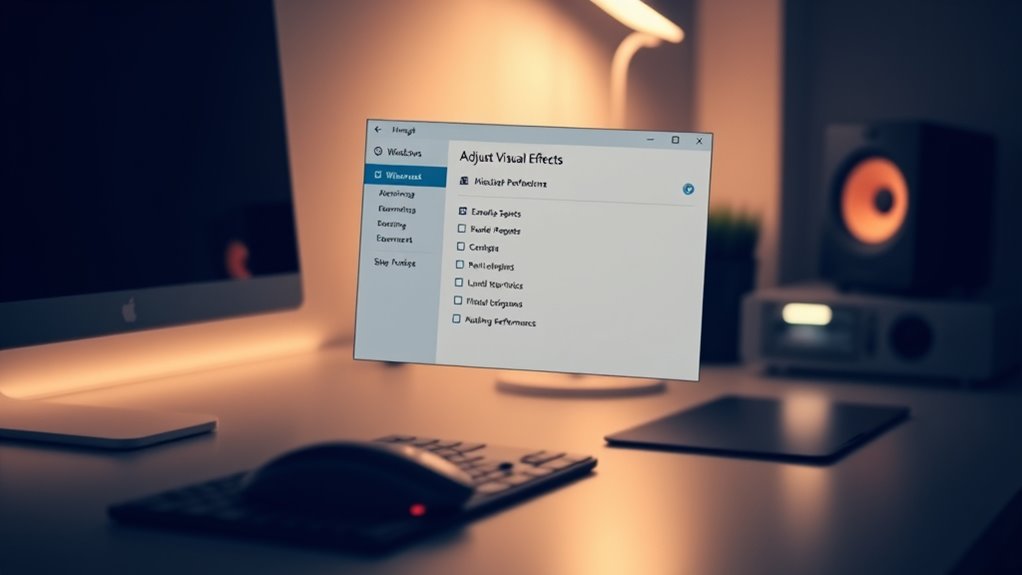
If your PC feels sluggish, adjusting your visual effects can make a noticeable difference. Windows uses visual effects like animations, shadows, and transparency to enhance appearance, but these can slow down your graphics performance on older or low-end systems. To improve speed, open the System Properties, go to Advanced system settings, and click on Settings under Performance. Select “Adjust for best performance” or manually disable specific effects like animations and shadows. This reduces the load on your graphics processor, freeing up resources for other tasks. Disabling unnecessary visual effects doesn’t considerably impact your user experience but can greatly boost your PC’s responsiveness. Keeping an eye on your system’s performance settings can help you balance visual appeal with efficiency and optimize system resources to ensure your system runs smoothly.
Restart Your Computer Regularly
Restarting your computer regularly helps clear temporary files, close background processes, and refresh system resources, which can prevent slowdowns and improve overall performance. It also guarantees that automatic updates install correctly and that system changes take effect. Regular restarts can reduce memory leaks and prevent lingering issues that cause your PC to lag. To maximize benefits, consider scheduling restarts after installing hardware upgrades or updates. This simple habit keeps your system running smoothly without extra effort. You can also set your PC to restart automatically during off-hours to maintain performance without interrupting your work. Remember, a quick restart is often enough to resolve many common slowdowns and keep your computer functioning at its best.
Keep Your PC Organized and Regularly Maintain It
Keeping your PC organized and maintaining it regularly are key steps to ensuring smooth performance. Good digital organization and file management help prevent clutter that can slow down your system. Start by deleting unnecessary files and emptying your recycle bin. Use folders to categorize documents, photos, and downloads for easy access. Regularly run disk cleanup tools to remove temporary files. Back up important data to avoid loss and keep your storage optimized. Here’s a quick visual guide:
| Action | Purpose |
|---|---|
| Delete old files | Free up space |
| Organize folders | Simplify file access |
| Run disk cleanup | Remove unnecessary system files |
| Remove duplicate files | Improve file management |
| Backup data | Protect against data loss |
Frequently Asked Questions
How Often Should I Perform Maintenance to Keep My PC Running Smoothly?
You should perform maintenance like disk cleanup and system defragmentation every month to keep your PC running smoothly. Regularly clearing out unnecessary files frees up space, while defragmentation reorganizes your data for faster access. If you notice your PC slowing down or programs lagging, increase the frequency to every two weeks. Staying consistent with these tasks helps prevent clutter and keeps your system optimized without spending a dime.
Can Hardware Upgrades Significantly Improve My Slow Pc’s Performance?
Absolutely, hardware upgrades can be a game-changer for your slow PC, giving it a new lease on life. Adding more RAM or switching to an SSD often makes a noticeable difference. Pairing hardware upgrades with software optimization ensures your system runs smoothly. While it’s not a magic fix, these upgrades can notably boost performance, helping you avoid the frustration of a sluggish machine and keep things running like clockwork.
What Are Signs My PC Is Infected With Malware?
If your PC is infected with malware, you’ll notice symptoms like slow performance, frequent crashes, or strange pop-ups. You might also see new, unfamiliar programs or your browser behaving oddly. To confirm, run a scan with reliable antivirus software. Recognizing malware symptoms early helps you remove threats quickly, protecting your data and keeping your PC running smoothly. Stay vigilant and keep your antivirus software up to date.
How Do I Identify Unnecessary Startup Programs?
To identify unnecessary startup programs, you should access your Task Manager by pressing Ctrl+Shift+Esc. In the Startup tab, you’ll see a list of programs that launch at startup. Look for applications you don’t recognize or don’t need immediately. Use startup management to disable unimportant programs, prioritizing essential ones. This helps your PC boot faster and runs more smoothly, ensuring you control which applications run during startup.
Are There Free Tools to Automate PC Speed Optimization?
Yes, you can find free tools for automated cleanup and PC speed optimization. Many options, like CCleaner or Advanced SystemCare, offer free versions that automatically identify and remove junk files, unnecessary startup items, and registry issues. These tools simplify optimization, saving you time and effort. Just download a reputable program, run the automated cleanup, and watch your PC’s performance improve without spending a dime.
Conclusion
By taking these simple steps, you can breathe new life into your sluggish PC, turning it into a sleek, responsive machine. Imagine the satisfaction of watching programs load instantly and files open in a flash. With a little effort, you’ll enjoy a smoother, more reliable experience, freeing your mind from frustration. Your computer’s renewed speed will feel like a fresh start—a bright, swift companion ready to support your every task.
Halloween Picks
halloween
As an affiliate, we earn on qualifying purchases.