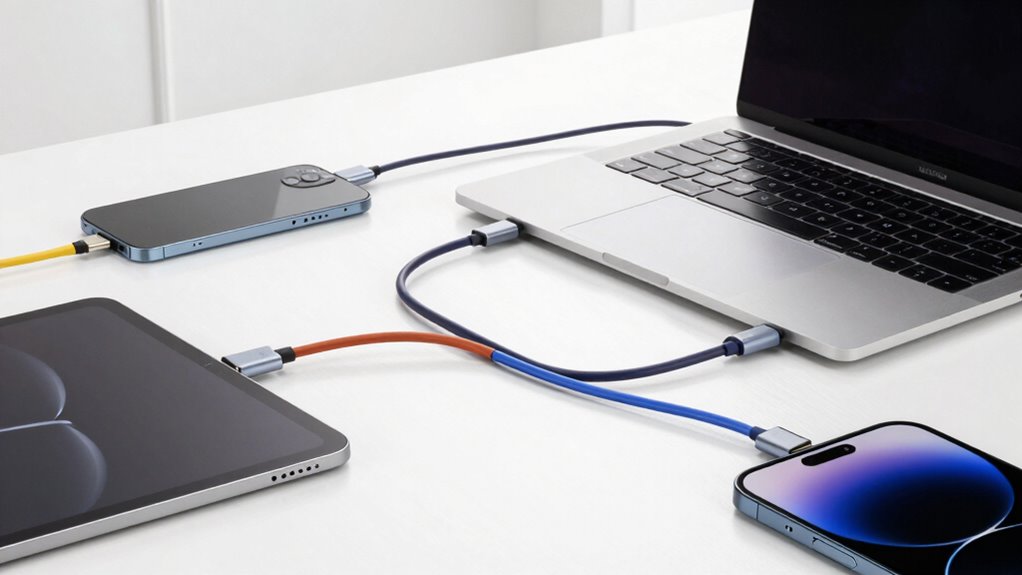

USB-C has become the universal port, simplifying your device connections by consolidating charging, data transfer, and video output into a single, sleek connector. It’s designed to be compatible across gadgets, reducing cable clutter and streamlining your setup. While some compatibility challenges exist, ongoing innovations promise even more seamless performance. Want to learn how USB-C is transforming your tech world and how to manage it effectively? Keep exploring to discover all the potentials.
Key Takeaways
- USB-C consolidates multiple functions—charging, data transfer, video, and audio—reducing the need for multiple cables.
- Its universal compatibility across devices simplifies connections and minimizes confusion from proprietary ports.
- USB-C supports high power delivery and fast data transfer, enabling efficient device charging and quick file sharing.
- Transitioning to USB-C streamlines device ecosystems, reducing cable clutter and enhancing future-proofing.
- Wireless options complement USB-C, further decreasing dependency on cables and promoting a cleaner workspace.
Top picks for "cable chao became"
Open Amazon search results for this keyword.
As an affiliate, we earn on qualifying purchases.
The Evolution of Device Connectivity
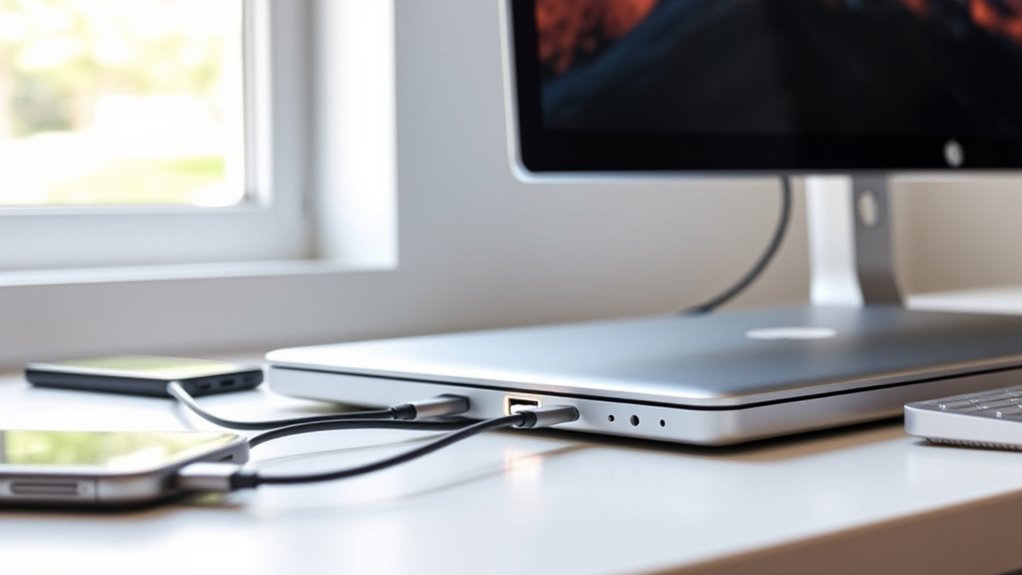
The way devices connect has changed dramatically over the years, transforming from bulky ports to sleek, universal solutions. Wireless charging has revolutionized convenience, allowing you to power your devices without plugging in. This advancement reduces clutter and makes charging more flexible. Simultaneously, data encryption has become a key feature, safeguarding your information during transfers. As technology progressed, manufacturers sought simpler, more efficient connections, leading to the rise of universal standards like USB-C. These innovations ensure that your devices can connect seamlessly, whether you’re transferring data securely or charging wirelessly. The evolution reflects a focus on user convenience, security, and minimalism, paving the way for a future where multiple functions happen through a single, versatile port. Additionally, the integration of European cloud innovation in device ecosystems emphasizes the importance of secure, energy-efficient connectivity solutions. As a result, the development of unified connection standards has been crucial in simplifying user experience across diverse devices and environments, with standardization efforts driving widespread adoption. Moreover, the adoption of universal connectivity has facilitated greater compatibility among devices from different manufacturers, further streamlining user interactions.
What Makes USB-C a Universal Standard

USB-C has gained recognition as a universal standard because of its versatility and compatibility across a wide range of devices. Its design allows for high power delivery, so you can charge smartphones, laptops, and tablets using a single port. This means fewer cables cluttering your workspace and the convenience of fast, efficient charging. Additionally, USB-C supports rapid data transfer, enabling quick file sharing and seamless connection to peripherals like external drives and monitors. Its standardized connector guarantees that you don’t have to worry about incompatible ports or cables. With these capabilities, USB-C simplifies your tech setup, making it easier to connect and power your devices without fuss. Its adoption is also driven by the increasing integration of cross-platform compatibility in modern devices, further cementing its role as the universal port. This widespread compatibility promotes a unified user experience, reducing the need for multiple adapters or converters. The multifunctionality of USB-C also enables it to handle audio, video, and data transmission simultaneously, further streamlining device connections. The backward compatibility with older standards ensures that existing devices can still benefit from its advantages. Furthermore, the growing adoption of USB-C across different device categories ensures its position as the future-proof port for the digital age. That’s why it’s become the go-to port for everyone looking to streamline their digital life.
Overcoming Compatibility Challenges
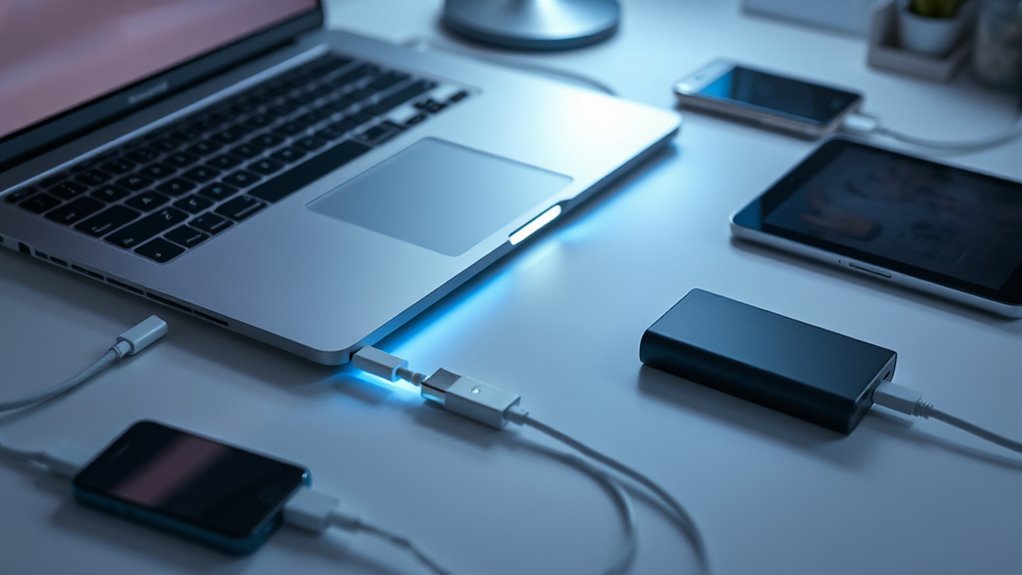
You might face compatibility issues when connecting different devices, but understanding universal standards can help. Using simplified cable standards guarantees your cables work across multiple gadgets without hassle. Embracing future-proof connectivity means investing in versatile ports that stay compatible as technology evolves. Additionally, staying informed about industry standards can help you make smarter choices when selecting cables and adapters. Recognizing the importance of standardized connectors ensures seamless integration and reduces the need for multiple adapters or replacements. Incorporating universal charging protocols can further simplify your device management and enhance compatibility.
Universal Device Compatibility
While USB-C ports are designed to simplify device connections, achieving universal compatibility remains a challenge due to varying standards and protocols. Different devices support different charging speeds, which can lead to slower charging or inconsistent power delivery. Similarly, data transfer rates vary depending on the USB-C version and device capabilities, causing potential bottlenecks. You might find that some USB-C ports don’t provide the fast charging or high-speed data transfer you expect, especially with older devices or accessories. To verify compatibility, check device specifications and support for standards like USB 3.1 or Thunderbolt 3. Additionally, compatibility challenges can arise from differing implementations of USB-C features across manufacturers. While USB-C offers great versatility, understanding these differences helps you maximize performance and avoid frustration.
Simplified Cable Standards
Simplified cable standards are helping to address the compatibility issues caused by varying protocols and features across devices. With multiple proprietary connectors and inconsistent standards in the past, users faced frustration and confusion. USB-C streamlines this by providing a universal interface for data transfer, charging, and video output. This reduces reliance on wireless alternatives when wired connections are preferred, ensuring faster, more reliable performance. By adopting a single, standardized port, manufacturers avoid creating new proprietary connectors, which often lead to compatibility headaches. This unified approach simplifies your device ecosystem, minimizing the need for multiple cables and adapters. Additionally, vetted standards ensure that devices adhere to consistent specifications, further reducing compatibility issues. Ultimately, simplified cable standards make it easier for you to connect and use your devices seamlessly, eliminating compatibility barriers that once complicated the tech experience.
Future-Proof Connectivity
With a universal port like USB-C, devices are better equipped to handle future updates and new standards. This adaptability reduces compatibility challenges caused by proprietary connectors and outdated interfaces. As wireless alternatives like Bluetooth and Wi-Fi improve, USB-C ensures seamless integration with wireless peripherals, minimizing reliance on physical cables. You no longer need to worry about carrying multiple cables or adapters for different devices. USB-C’s versatility supports fast data transfer, power delivery, and video output, which helps future-proof your devices against evolving technology. By adopting a standard that’s continually updated, you’ll avoid the pitfalls of proprietary connectors that often become obsolete. This unified approach makes your setup more flexible, reducing clutter and enhancing compatibility with upcoming innovations. Standardization plays a crucial role in ensuring consistent and reliable performance across devices and accessories.
The Benefits of a Single Port Solution

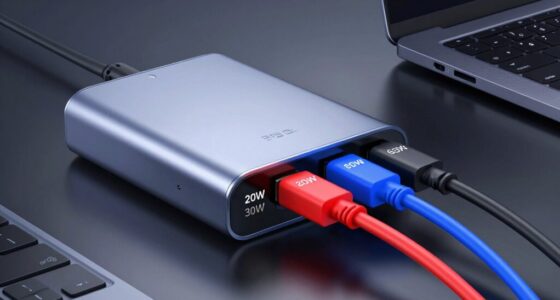
A single port solution, such as the USB-C port, streamlines your device setup by reducing the need for multiple cables and adapters. With one universal port, you don’t have to worry about incompatible charging standards or carrying around different cables for data transfer. USB-C supports fast charging, so your devices power up quickly, and it handles data transfer efficiently across various devices. This versatility means fewer cables clutter your workspace and less frustration when connecting peripherals. The versatility of USB-C simplifies your tech life, making it easier to keep everything connected and charged without switching ports or adapters. Additionally, port compatibility helps future-proof your devices by supporting a wide range of peripherals and standards. The connectivity capabilities of USB-C also enable seamless integration with other modern devices, enhancing overall user experience. Overall, adopting a single port solution saves time, reduces clutter, and offers a more seamless connectivity experience. Universal port technology enhances device compatibility and future-proofing.
Transitioning to USB-C: What Consumers Need to Know
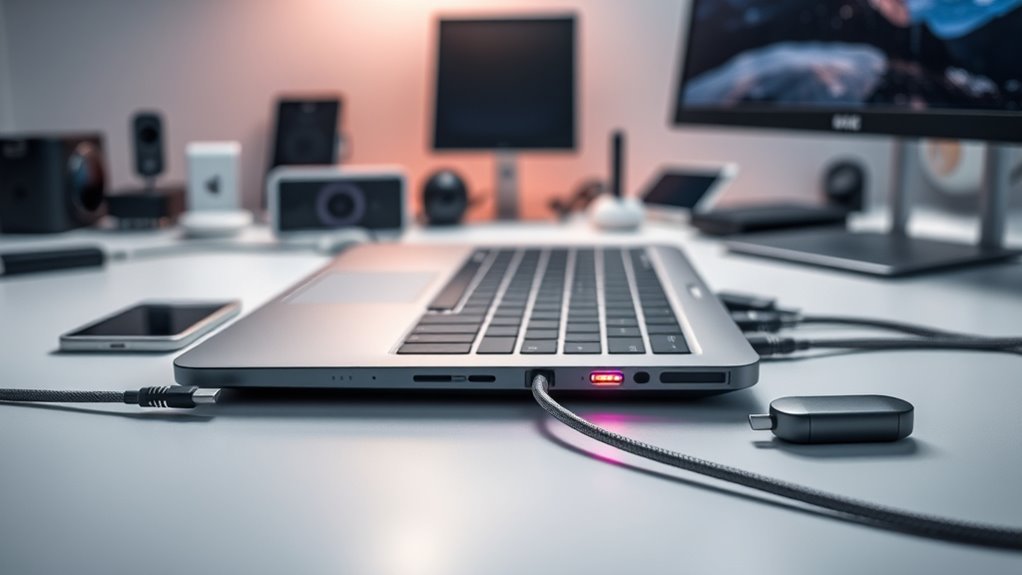
As you shift to USB-C, you’ll want to understand how compatible your devices are with this new port. You might also face some challenges during the changeover, but simple tips can make the process smoother. Being informed helps you make smart choices and avoid surprises along the way. Additionally, understanding the different charging connectors and safe installation practices can help ensure a seamless transition.
Compatibility Across Devices
Switching to USB-C means you’ll need to take device compatibility carefully into account. While most new devices now support USB-C, some older gadgets still rely on proprietary connectors, which may require adapters or replacements. USB-C’s widespread adoption simplifies connections, but compatibility isn’t always guaranteed across brands and models. If you prefer wireless alternatives, many devices now support Bluetooth or Wi-Fi, reducing reliance on cables altogether. However, for certain peripherals like external drives or chargers, you’ll want to verify compatibility to avoid frustration. Keep in mind that not all USB-C ports deliver the same power or data transfer rates, so check device specifications. By understanding these nuances, you can ensure your devices work seamlessly without surprises or extra costs.
Transition Challenges and Tips
Switching to USB-C can present several challenges, but with proper planning, you can navigate them smoothly. One common issue is adapter problems—some older devices may need new adapters, leading to compatibility headaches. Make sure to invest in quality, reliable adapters to avoid connection failures. Training challenges also arise, especially if you’re unfamiliar with USB-C’s features or how to identify compatible accessories. Take time to learn about the different port standards and functions, so you don’t get frustrated trying to connect your devices. Keep track of which cables and adapters are essential, and consider consolidating your accessories to reduce clutter. Preparing in advance minimizes inconvenience, helping you enjoy the benefits of USB-C without the hassle of adapter issues or confusion.
Future Trends and Innovations With USB-C

Looking ahead, USB-C technology is poised to evolve rapidly, driven by advancements in data transfer speeds, power delivery, and versatility. You can expect faster connections that support high-resolution video and seamless smart device integration. Wireless charging will become more integrated, reducing reliance on cables for power. Future USB-C ports will likely support even higher power outputs to charge larger devices efficiently. Enhanced smart device compatibility will enable smoother syncing across ecosystems. You may also see innovations like improved durability and multi-function ports that combine charging, data, and wireless capabilities. These trends will simplify your tech setup, making devices more interconnected and user-friendly. As USB-C continues to advance, it’s set to become your go-to port for a truly cable-free experience.
Practical Tips for Managing Your USB-C Devices
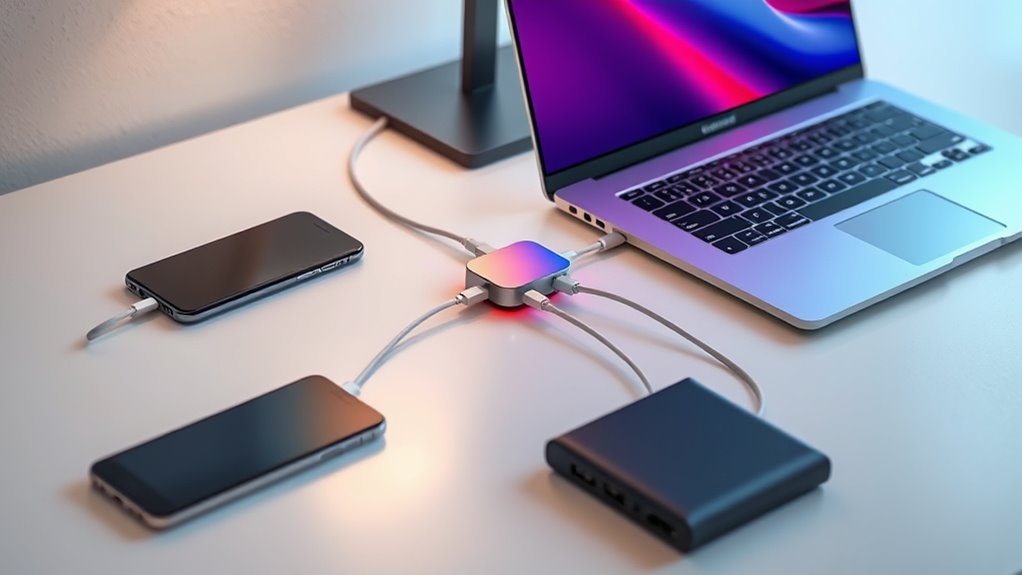
As USB-C technology continues to advance, managing your devices effectively becomes increasingly important to maximize their benefits. To reduce cable clutter, explore wireless alternatives like Bluetooth or Wi-Fi connections, which can simplify your setup and improve portability. However, keep security considerations in mind—use strong passwords, enable device encryption, and avoid connecting to unsecured networks to protect your data. Organize your cables and accessories with dedicated storage solutions, and label your devices to prevent confusion. Regularly update device firmware and software to ensure compatibility and security. Understanding device security and staying vigilant can help you prevent potential threats while enjoying the convenience of USB-C’s versatility. Implementing proper device management strategies can further streamline your setup and reduce technical issues. Additionally, staying informed about USB-C standards ensures you are using compatible and future-proof accessories. By staying organized and cautious, you’ll enjoy the convenience of USB-C’s versatility without the chaos, making your device management more efficient and secure.
Frequently Asked Questions
Are All USB-C Cables and Devices Interchangeable Without Issues?
Not all USB-C cables and devices are fully interchangeable because of differences in cable compatibility and device interoperability. Some cables support fast charging, high data transfer, or video output, while others don’t. You need to check the specifications to guarantee your cable matches your device’s requirements. Using incompatible cables can cause charging issues or data transfer problems, so always verify compatibility before connecting your devices.
How Does USB-C Handle Power Delivery for High-Wattage Devices?
USB-C handles power delivery for high-wattage devices through smart power negotiation and voltage regulation. You’ll notice that when you connect a compatible device, it communicates with the charger to determine the best power level, preventing overloads. This negotiation ensures the device receives the right voltage and wattage, allowing safe, efficient charging without risking damage. So, USB-C adapts seamlessly to support even demanding high-power devices.
Can USB-C Ports Support Multiple Functions Simultaneously?
Yes, USB-C ports support multiple functions simultaneously thanks to their multi-tasking capabilities and port versatility. You can connect a monitor, charge your device, and transfer data all at once without switching cables. This flexibility makes USB-C ideal for streamlined setups, allowing you to maximize productivity with a single port. Its ability to handle diverse tasks at the same time truly solidifies its role as the universal port for modern devices.
What Security Concerns Are Associated With USB-C Connections?
You should know that USB-C connections pose some security risks, with an estimated 60% of data breaches linked to compromised ports. These ports can be exploited for malware infections or data theft if not properly secured. To protect yourself, make sure data encryption is enabled and use trusted cables and devices. Vigilance and updated security measures help reduce the risks associated with malware and unauthorized access via USB-C.
Will USB-C Completely Replace Other Ports Like HDMI or SD Cards?
You can expect USB-C to gradually replace other ports like HDMI or SD cards, but not entirely. Its versatility offers port compatibility and supports accessory diversity, making it ideal for many devices. However, specialized ports like HDMI for high-quality video and SD cards for storage will still be used in specific contexts. USB-C will become the dominant standard, but some ports will remain for niche needs.
Conclusion
Switching to USB-C simplifies your tech life and keeps you ahead of the curve. With one port doing it all, you won’t have to juggle multiple cables anymore. It’s a win-win, making your devices more compatible and future-proof. Embrace the change now—don’t let the chaos get the best of you. Once you make the switch, you’ll wonder how you ever managed without it. It’s a game-changer that’s here to stay.