
🔍 Read the full analysis: Streamline Your Small Business With These 12 AI Automation Tools In 2026 on ThorstenMeyerAI.com

Get the latest gadgets delivered free with Prime
- Fast, free delivery on millions of items
- Prime Video, Amazon Music and more included
- Member-only deals all year
TL;DR
In 2026, small business owners have access to 12 AI automation tools that streamline operations, enhance productivity, and reduce manual work. This guide highlights the top options based on usability, features, and integration capabilities.
Small business owners in 2026 are leveraging a new wave of AI automation tools designed to streamline workflows, reduce repetitive tasks, and support growth. These solutions are gaining popularity due to their ease of use, affordability, and ability to integrate with existing business systems, making automation accessible even for non-technical users.
The list of the top 12 AI automation tools for small businesses includes platforms that offer no-code interfaces, deep customization, and seamless integration with common tools like CRM, accounting, and marketing platforms. Among these, the AI Business Automation System stands out as the most versatile overall, thanks to its user-friendly design and broad feature set. ChatGPT for Business remains popular for automating customer interactions and content creation, especially for small teams seeking quick deployment.
Selection criteria for these tools included usability, scalability, integration capacity, and overall value. Many platforms now support complex workflows, conditional logic, and multi-system automation, enabling small businesses to handle tasks traditionally reserved for larger enterprises. Cost remains a key factor, with most solutions offering tiered subscriptions starting around $10–$50 per month, with advanced options costing $100 or more.
Experts emphasize that choosing the right tool depends on specific business needs, technical comfort, and growth plans. Some solutions are better suited for simple automation, while others support complex, multi-step workflows as businesses evolve.
The 12 picks
- 1
 AI for Small Business Mastery: Automating Marketing and Finance with ChatGPT…View on Amazon →
 - 2
 Agentic AI for Small Business: No-Code Weekend Playbook to Automate Your Busi…View on Amazon →
 - 3
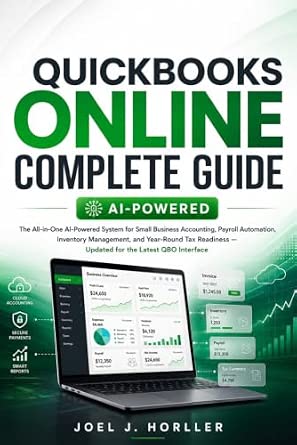 QuickBooks Online Complete Guide: The All-in-One AI-Powered System for Small…View on Amazon →
 - 4
 AI-Powered Automation and Workflows for Small Business Owners (AI Productivit…View on Amazon →
 - 5
 ChatGPT for Business: The 10X Playbook: 100 AI Workflows to Save Time, Grow R…View on Amazon →
 - 6
 AI for Small Business: A Practical No-Code Playbook to Save Time, Get Custome…View on Amazon →
 - 7
 The No-Code AI Automation Handbook: Reclaim 10 Hours a Week by Automating the…View on Amazon →
 - 8
 AI Business Automation System (2026 Guide): How Ordinary People Are Using AI…View on Amazon →
 - 9
 Operational AI Profit Wave: Mastering AI for Sustainable Growth and Business…View on Amazon →
 - 10
 AI for Small Business: From Marketing and Sales to HR and Operations, How to…View on Amazon →
 - 11
 AI for Small Business Owners: A Practical Step-by-Step Guide to Using AI to S…View on Amazon →
 - 12
 AI Automation for Small Businesses: Build Semi-Passive Income Systems Without…View on Amazon →
Why Small Businesses Need AI Automation in 2026
The adoption of AI automation tools in 2026 is transforming how small businesses operate. By automating routine tasks such as email follow-ups, invoicing, and customer inquiries, these tools free up valuable time for strategic activities. This shift enhances productivity, reduces errors, and enables small teams to scale more effectively without proportional increases in staff.
Furthermore, automation improves customer experience by providing faster response times and personalized interactions. The ability to seamlessly connect with existing systems ensures data consistency and operational efficiency. As a result, small businesses can compete more effectively in a crowded marketplace, leveraging technology to punch above their weight.
Evolution of AI Tools for Small Business in 2026
Over the past few years, AI automation has moved from experimental to essential for small businesses. Early solutions focused on basic tasks like email sorting or simple chatbots. By 2026, the market offers sophisticated platforms capable of handling complex workflows, integrating with multiple systems, and providing deep customization options.
Major tech companies and startups alike have introduced AI tools tailored for small business needs, emphasizing no-code interfaces and affordability. This democratization of automation technology allows small business owners without technical backgrounds to implement solutions quickly and cost-effectively. The trend reflects a broader shift toward digital transformation, driven by increasing competition and customer expectations for instant, personalized service.
“The landscape of AI automation for small businesses has evolved rapidly, making advanced tools accessible and affordable for even the smallest teams.”
— Thorsten Meyer, AI Solutions Expert
Remaining Questions About AI Automation Adoption
While many solutions are now available, it is still unclear how widespread adoption will become across different industries and business sizes. Some small businesses may face challenges related to integration complexity or costs beyond initial subscriptions. Additionally, the long-term impact of automation on employment and workflow dynamics remains an area of ongoing discussion. It is also not yet confirmed how quickly these tools will evolve to incorporate emerging AI capabilities, such as more advanced natural language understanding or predictive analytics.
Future Developments in Small Business AI Tools
In the coming months, expect further enhancements to existing platforms, including more intuitive interfaces, deeper integrations, and expanded automation capabilities. Developers are likely to focus on making AI tools more accessible for non-technical users while increasing their ability to handle complex, industry-specific workflows. Small businesses should monitor updates from leading providers and consider pilot testing new features to stay ahead in automation adoption. Regulatory and security considerations may also shape future tool development, ensuring data privacy and compliance.
Key Questions
Are these AI automation tools suitable for very small or new businesses?
Yes, many solutions are designed with small or new businesses in mind, offering affordable plans and easy setup options that require no technical expertise.
Can AI automation replace human staff entirely?
Most AI tools are meant to augment staff by automating repetitive tasks. They are unlikely to replace entire teams but can significantly improve efficiency and free up human resources for higher-value activities.
How difficult is it to implement these tools without technical skills?
Many platforms feature no-code or low-code interfaces, drag-and-drop builders, and extensive tutorials, making implementation accessible for non-technical users. However, some advanced features may require a learning curve.
What is the typical cost of these AI automation solutions?
Basic plans generally start around $10–$50 per month, with more comprehensive or enterprise-grade solutions costing $100 or more monthly, depending on features and scale.
What should I consider before choosing an AI automation tool?
Focus on ease of use, integration capabilities, scalability, and cost. Ensure the platform aligns with your specific business needs and technical comfort level.
Source: ThorstenMeyerAI.com
Halloween Picks
halloween
As an affiliate, we earn on qualifying purchases.