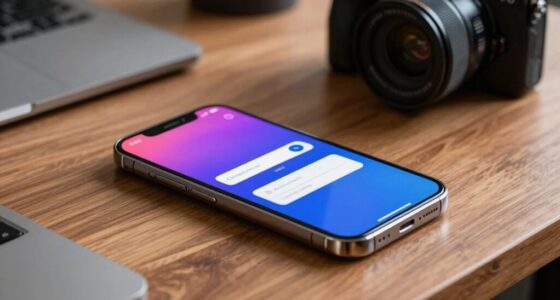
To keep your gadgets in top shape, regularly clean screens and dust out ports, and protect them with sturdy cases and screen protectors. Keep software updated automatically and check for updates manually to stay secure. Manage storage by deleting unnecessary files and backing up important data. Protect your devices with strong passwords and security settings, monitor battery health, and optimize usage with power-saving features. Follow these simple steps, and you’ll discover even more tips to make device maintenance effortless.
Key Takeaways
- Regularly clean devices and protect them with cases and screen protectors to prevent physical damage.
- Enable automatic software updates and back up data frequently to ensure security and data safety.
- Manage storage by deleting unnecessary files and using cloud storage to free up space.
- Set strong security measures, including complex passwords and biometric locks, to protect privacy.
- Monitor battery health and optimize power settings to prolong device lifespan and performance.
Top picks for "ultimate gadget maintenance"
Open Amazon search results for this keyword.
As an affiliate, we earn on qualifying purchases.
Keep Your Devices Clean and Dust-Free

Keeping your devices clean and dust-free is essential for their longevity and ideal performance. Regular screen cleaning prevents smudges and glare, ensuring clear visuals and comfortable viewing. Use a soft, lint-free cloth to gently wipe the screen, avoiding harsh chemicals that could damage it. Dust removal is equally important; accumulated dust can clog vents and cause overheating. Use compressed air or a soft brush to clear dust from crevices, ports, and fans. Be careful not to insert objects into small openings. Maintaining a dust-free environment inside your device helps prevent hardware issues and prolongs lifespan. Incorporating a routine cleaning schedule to keep your gadgets looking new and functioning smoothly, ensuring you get the most out of your investment. Additionally, proper airflow around your devices, like ensuring unobstructed vents, can significantly improve their performance and lifespan airflow management. Regularly checking and replacing filters in your device setup can also contribute to maintaining optimal conditions filter maintenance. Creating a clutter-free space around your gadgets can further support device longevity and ease of cleaning. Implementing smart home devices with air quality monitoring can also alert you to dust accumulation and other issues, helping maintain a clean environment for your gadgets.
Regularly Update Software and Apps

You should regularly update your software and apps to keep your gadgets secure and running smoothly. Enabling automatic updates makes this process effortless, but it’s also smart to manually check for new versions periodically. Staying current guarantees you get the latest features and security patches without delay. Additionally, using high-quality projectors can significantly improve your viewing experience and ensure long-term satisfaction. Regularly reviewing and managing your cookie preferences can also help optimize your browsing privacy and performance. Incorporating network security practices based on reliable infrastructure principles can further enhance your device’s security and sustainability, especially when managing multiple gadgets. Being aware of vetted security measures ensures your devices remain protected against potential vulnerabilities.
Enable Automatic Updates
Enabling automatic updates guarantees your device stays protected and running smoothly without requiring manual intervention. When you turn on automatic updates, your device regularly fetches the latest software and app versions, ensuring ideal software compatibility. This process reduces security vulnerabilities and bugs that could compromise performance. Before enabling, make sure you have the necessary user permissions, especially on shared devices or work accounts, to avoid interruptions. Automatic updates save you time and effort, keeping your apps current without manual checks. Additionally, software update management tools can help you monitor update progress and troubleshoot issues if they arise. However, it’s a good idea to periodically verify that updates are installing correctly, ensuring your device benefits from the latest features and security patches. Regularly updating your device is also crucial for staying current with anime movies and animated films, as software updates can improve media playback and compatibility. Incorporating a comprehensive update strategy can further enhance your device’s security and performance over time. Staying aware of software update best practices helps you maintain your device’s reliability and security effortlessly. Additionally, understanding automatic update settings can help you customize update preferences to suit your needs. Overall, this simple step helps maintain peak performance and security effortlessly.
Manually Check for Freshness
While automatic updates handle software refreshes seamlessly, it’s still important to manually check for the latest versions periodically. Regularly updating your apps and software ensures you get new features, security patches, and bug fixes. During these checks, take time to verify sensor calibration to keep device readings accurate, especially for gadgets like fitness trackers or cameras. Additionally, perform hardware inspections to spot any signs of wear or malfunction. Updating software can also improve the device’s overall performance and stability. You can also review security settings during these checks to enhance your device’s protection. Staying informed about Deaf Vibes strategies can provide valuable insights into audio and speech-related functionalities. Regular manual checks are especially crucial for vetted vacuum devices to maintain their optimal operation and longevity. Incorporating reliable backup solutions into your maintenance routine can help protect your devices and data from unexpected issues. Don’t rely solely on automatic updates—manual checks give you control and peace of mind, ensuring your gadgets operate smoothly and securely. Set a reminder to review updates every few weeks, and stay proactive about maintaining your device’s software freshness.
Manage Storage and Delete Unnecessary Files

Managing storage effectively requires regularly identifying and deleting unnecessary files that clutter your device. Start by clearing out old downloads, photos, and documents you no longer need. Use cloud storage options to offload large files and free up space on your device. Be vigilant about duplicate files—they take up unnecessary room and can slow down your device’s performance. Regularly scan your device for these duplicates and remove them. To stay organized, consider creating folders for different file types and deleting files you haven’t accessed in months. Additionally, file management techniques can help streamline your digital workspace and improve device efficiency. For example, using storage optimization tools can automatically identify large or redundant files to delete, saving you time and effort. Here are some tips to keep your storage optimized:
- Empty your trash or recycle bin regularly
- Back up important files to cloud storage options to ensure easy access and safety
- Delete duplicate files that are no longer needed
- Remove large, unused apps and files
- Choose the right storage options to ensure your device runs smoothly
- Keep an eye on device storage capacity to prevent unexpected issues and maintain optimal performance.
Protect Your Devices With Passwords and Security Settings
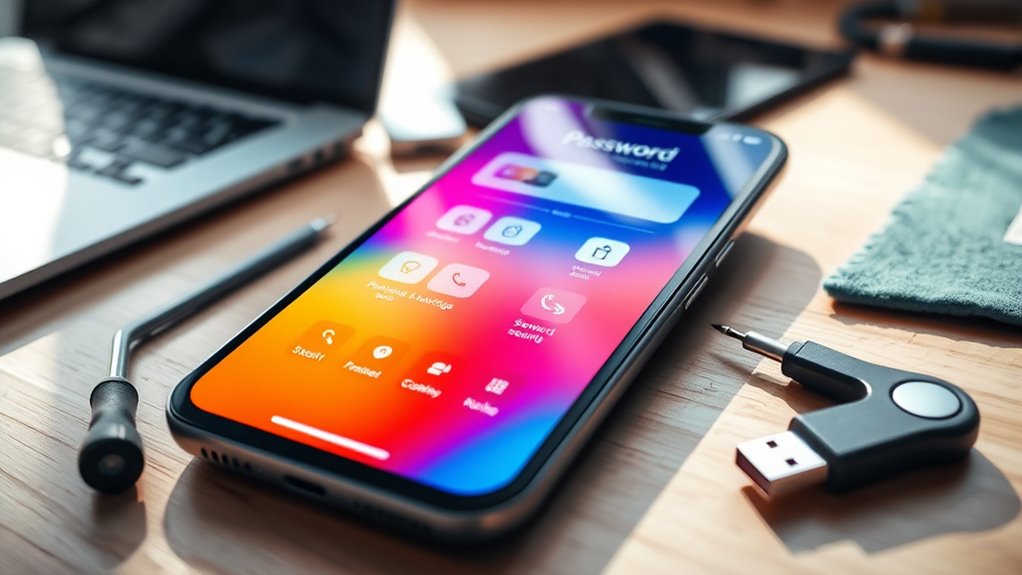
After clearing out unnecessary files and organizing your device, protecting your data becomes the next priority. Start by setting strong passwords that incorporate password complexity, combining uppercase and lowercase letters, numbers, and symbols. Avoid simple or repeated passwords to prevent easy hacking. Enable security protocols like two-factor authentication where available, adding an extra layer of protection. Adjust your device’s security settings to lock automatically after a short period of inactivity, and ensure remote tracking options are activated in case your device gets lost. Regularly update your passwords and security protocols to stay ahead of potential threats. By taking these steps, you considerably reduce the risk of unauthorized access and keep your personal information safe and secure.
Check Battery Health and Optimize Usage
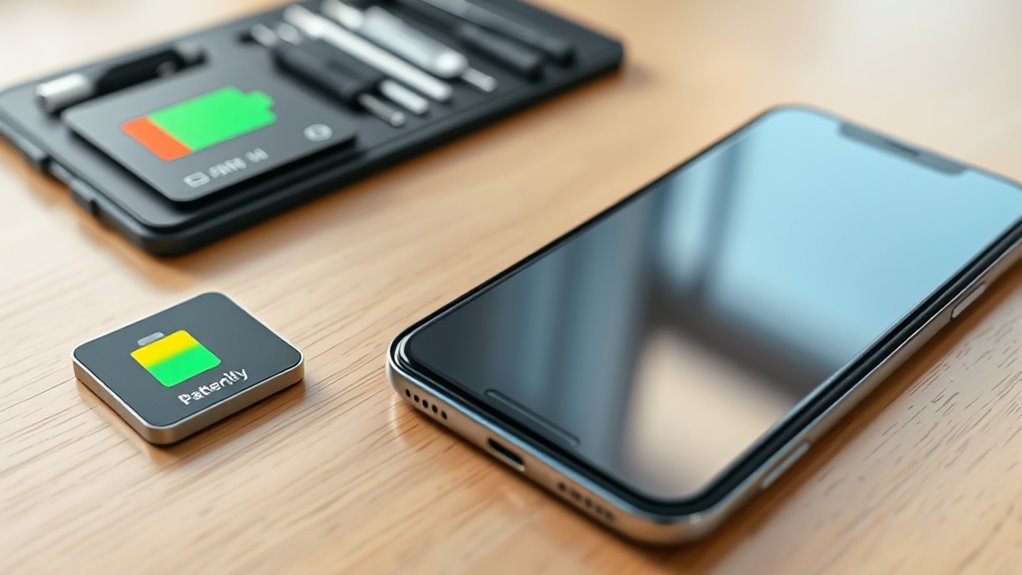
Regularly checking your device’s battery health helps you identify potential issues before they cause unexpected shutdowns. To do this, consider performing a battery calibration by fully charging and discharging your device periodically. This helps the system provide accurate battery readings. You can also optimize usage by enabling power-saving modes, which reduce background activity and screen brightness, extending battery life. Keep an eye on app activity and close unnecessary ones to prevent battery drain. Additionally, avoid extreme temperatures that can damage your battery over time.
- Perform regular battery calibration cycles
- Enable power saving modes when needed
- Limit background app activity
- Keep your device in moderate temperatures
Use Protective Cases and Screen Protectors
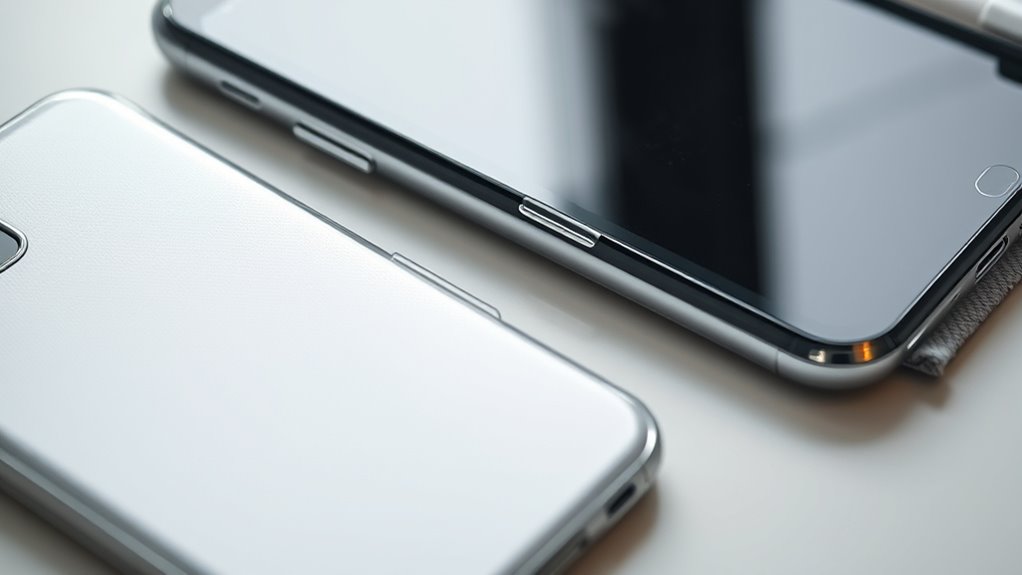
Using protective cases and screen protectors is one of the simplest ways to safeguard your device from everyday damage. They offer durability enhancement by absorbing shocks and preventing scratches, saving you money on repairs. A good case also provides a firm grip, reducing the risk of accidental drops. Screen protectors shield your display from cracks and smudges, maintaining clarity and touch sensitivity. Besides protection, these accessories allow for aesthetic customization—whether you prefer sleek, minimalist designs or vibrant, eye-catching patterns. Choosing the right case and screen protector tailored to your style and device ensures both durability and personal expression. Regularly inspecting and replacing them when worn out keeps your device in top shape, prolonging its lifespan and keeping it looking new.
Back Up Your Data Regularly

Backing up your data consistently guarantees you won’t lose important information if your device is lost, damaged, or hacked. Regular backups safeguard your files and assure peace of mind. Use cloud storage services for automatic backups, which keep your data accessible from any device. Always enable data encryption to protect sensitive information from unauthorized access. Consider the following tips:
Regular backups protect your data from loss, damage, or hacking, ensuring peace of mind and security.
- Schedule automatic backups to avoid forgetting
- Choose reputable cloud storage providers with strong security
- Encrypt your data before uploading for added protection
- Keep local backups on external drives for extra security
Frequently Asked Questions
How Often Should I Clean My Device to Prevent Damage?
You should clean your device at least once a month to prevent damage and maintain performance. Regularly wipe the screen with a microfiber cloth to guarantee proper screen calibration and avoid streaks. Don’t forget to clean accessories like chargers and headphones to prevent dirt buildup. If you notice smudges or dust, give your device a quick clean. Consistent maintenance keeps your gadgets working smoothly and extends their lifespan.
What Are the Signs My Device’s Software Needs Updating?
You’ll notice software update indicators on your device’s screen or in settings, signaling when updates are available. If your device runs slowly, crashes, or apps behave oddly, it’s a sign you need to check your device update schedule. Regular updates fix bugs and improve security. Don’t ignore these signals—keeping your device’s software current guarantees peak performance and protection. Make updating part of your routine.
How Do I Identify Unnecessary Files Taking up Storage?
Think of your device’s storage as a closet. Unnecessary files are like clutter, taking up space and making it hard to find what you need. To identify them, perform a file cleanup by checking downloads, old apps, and duplicate photos. Use built-in storage management tools or third-party apps to scan for large, unused files. Regular storage management keeps your device running smoothly and frees up space for what truly matters.
Which Security Settings Are Most Effective for Non-Techies?
You should focus on simple security settings like password management and firewall configuration. Use a password manager to create and store strong, unique passwords for each account, reducing the risk of breaches. Enable your device’s firewall to block unauthorized access. Regularly update your software to patch security vulnerabilities. These steps are user-friendly and effective, helping protect your gadgets without needing advanced technical skills.
What’s the Best Way to Check My Device’s Battery Health?
You can check your device’s battery health by going into the settings menu—look for a battery or device care section. To preserve battery lifespan, avoid frequent full charges and keep your device charged between 20% and 80%. Also, monitor your charging habits; unplug once it hits 80% to prevent strain. Regularly checking your battery health helps spot issues early and extends your device’s overall performance.
Conclusion
By following this simple, steady, and smart maintenance checklist, you’ll keep your gadgets glowing and going. Stay vigilant, secure your screens, and sweep away unnecessary files. Regular care cultivates confidence, prolongs performance, and prevents problems. With consistent cleaning, updating, and backing up, you’ll enjoy hassle-free harmony with your devices. Master these mindful maintenance moves, and your gadgets will serve you smoothly, securely, and silently, making technology your trusted partner every step of the way.