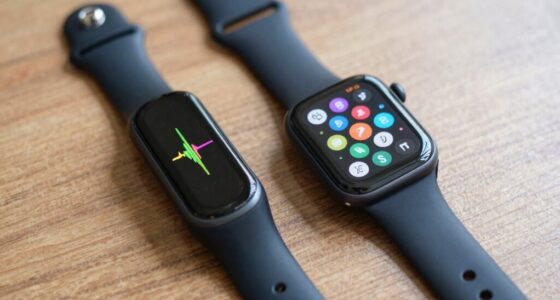
Smartwatches keep getting more expensive because manufacturers add advanced features like health sensors, GPS, and LTE, which increase hardware complexity. They also use high-quality materials such as stainless steel, ceramic, and OLED displays, pushing costs higher. Sleek, durable designs and improved battery life require sophisticated technology and craftsmanship. As brands aim to meet consumer demands for luxury and performance, prices rise. Want to understand how these factors combine to elevate smartwatch costs? Keep exploring for details.

Get the latest gadgets delivered free — and shop member deals
- Fast, free delivery on millions of items
- Access to Prime Big Deal Days deals on October 6–7
- Prime Video, Amazon Music and more included
Key Takeaways
- Manufacturers add advanced features like health sensors and connectivity, increasing hardware complexity and production costs.
- Premium materials and sleek designs elevate manufacturing expenses to meet consumer expectations.
- Incorporating innovative display technologies and durable components raises overall device costs.
- Market demand for high-performance, luxury smartwatches justifies higher prices.
- Precision manufacturing for sophisticated designs and features adds to production expenses.
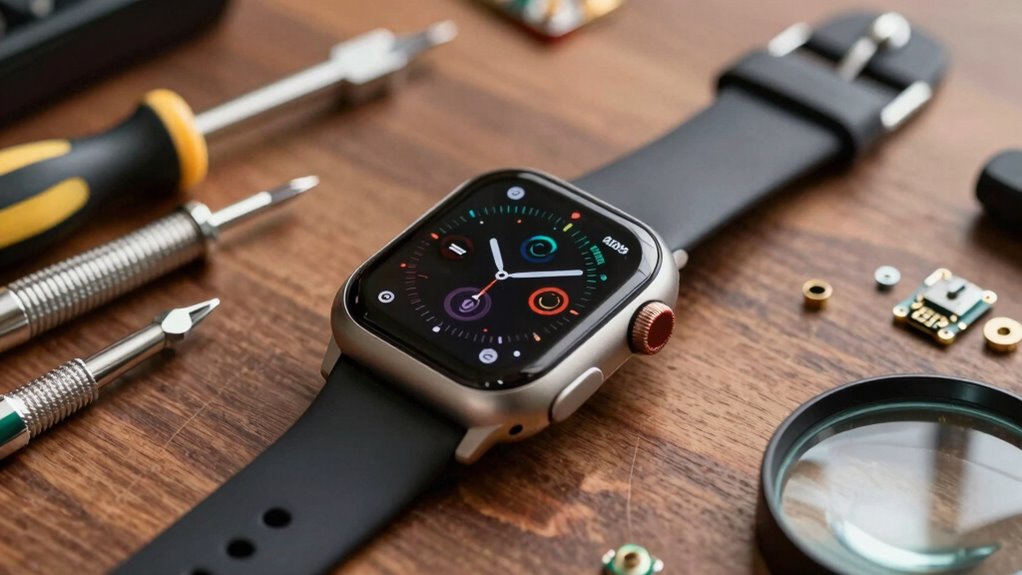
In recent years, the price of smartwatches has been steadily climbing, and it’s not just a coincidence. Manufacturers are investing heavily in advanced features, which naturally drive up costs. One of the key factors behind the rising prices is the focus on improving battery life. As smartwatch capabilities expand, so does the demand for longer-lasting devices. You might have noticed that newer models boast batteries that can last several days on a single charge, unlike earlier versions that required daily recharging. Achieving this requires sophisticated power management technologies, larger or more efficient batteries, and sometimes additional hardware components. All these enhancements add to the manufacturing costs, which are reflected in the retail price. Additionally, the design evolution of smartwatches plays a *vital* role in their increased expense. Over time, manufacturers have shifted from bulky, utilitarian shapes to sleek, premium-looking designs that mimic traditional watches. This evolution involves using high-quality materials like stainless steel, ceramic, or even titanium, which are more costly than plastic or basic metals. Fine craftsmanship, attention to detail, and aesthetic appeal are now integral to smartwatch manufacturing, and these elements naturally elevate the price. You also see more intricate watch faces and customizable options that require advanced display technology, such as OLED or AMOLED screens, which are more expensive to produce. The trend toward premium design isn’t just about looks; it’s also about durability and user experience. These higher-quality materials and sophisticated designs often require precision manufacturing, adding to the overall cost. Plus, as companies aim to differentiate their products in a competitive market, they integrate more cutting-edge features like health sensors, GPS, and LTE connectivity. These technological upgrades necessitate better hardware, more complex software, and tighter integration—all of which push the price upward. You’ll also find that higher-end smartwatches often come with better build quality, water resistance, and additional functionalities, making them more costly to produce. As the market shifts toward luxury and high-performance devices, manufacturers are willing to charge a premium for these enhancements. Moreover, the increasing integration of advanced sensors and connectivity options contributes to higher production costs. Additionally, the use of innovative materials in watch construction not only enhances durability but also significantly influences manufacturing expenses. Furthermore, as the demand for customizable watch faces grows, manufacturers are investing more in developing versatile display technologies that add to the overall costs. So, when you see a smartwatch that’s more expensive than its predecessor, it’s usually a combination of improved battery life, a refined design evolution, and the integration of advanced features that justify the higher price tag. These incremental upgrades make the device more functional, stylish, and durable—traits that many consumers now expect as standard in today’s competitive smartwatch landscape.
high-end smartwatch with health sensors
As an affiliate, we earn on qualifying purchases.
As an affiliate, we earn on qualifying purchases.
Frequently Asked Questions
How Do Brand Reputations Influence Smartwatch Prices?
Brand reputation considerably influences smartwatch prices because brand prestige boosts consumer perception of quality and status. When you see a well-known brand, you associate it with reliability, innovation, and luxury, making you willing to pay more. This consumer perception drives manufacturers to set higher prices, leveraging their reputation to justify premium costs. Ultimately, a strong brand reputation elevates a smartwatch’s desirability and perceived value, allowing companies to command higher prices.
Are Luxury Materials Significantly Driving up Smartwatch Costs?
Luxury materials do considerably drive up smartwatch costs, especially as fashion trends favor unique, high-end looks. You’ll notice brands use material innovation, like gold, platinum, or premium leather, to appeal to style-conscious buyers. This combination of trendy design and exclusive materials increases manufacturing costs, which then get passed on to you. As a result, smartwatches with luxury materials become more expensive, reflecting both fashion demands and technological advancements.
Do Exclusive Features Justify Higher Smartwatch Prices?
Exclusive features can justify higher smartwatch prices if they offer real value. When you harness innovative sensors that monitor your health more accurately or enjoy seamless software updates that keep your device fresh, you’re paying for a smarter, more personalized experience. These enhancements act like a finely tuned engine, propelling your device beyond basic functions into a domain where technology truly adapts to your life, making the cost worthwhile.
How Do Manufacturing Costs Impact Smartwatch Pricing?
Manufacturing costs directly influence smartwatch pricing because a complex supply chain and small production scale increase expenses. When components are pricey or supply chain disruptions occur, manufacturers face higher costs, which they often pass to you. Limited production scale means less efficiency and higher per-unit costs. So, if sourcing parts or scaling up production gets costly, expect the smartwatch price to rise, reflecting these manufacturing challenges.
What Role Does Marketing Play in Smartwatch Pricing Strategies?
Marketing acts like a spotlight, illuminating your smartwatch’s allure. You’re drawn in by influencer endorsements and advertising campaigns that make the device seem indispensable. These strategies elevate perceived value, allowing brands to set higher prices. You might pay more because you see the watch as a lifestyle upgrade or status symbol, not just a gadget. Fundamentally, marketing shapes your desire, turning a simple device into a must-have luxury.
luxury stainless steel smartwatch
As an affiliate, we earn on qualifying purchases.
As an affiliate, we earn on qualifying purchases.
Conclusion
As you consider the rising costs of smartwatches, remember that their increasing prices often reflect advanced features and better materials. For example, premium models now comprise over 60% of the market, showcasing how consumers prioritize quality and innovation. While the price may seem steep, you’re investing in cutting-edge technology that enhances your daily life. So, next time you see a high-end smartwatch, you’ll understand it’s more than a gadget—it’s a symbol of evolving tech and consumer demand.
As an affiliate, we earn on qualifying purchases.
As an affiliate, we earn on qualifying purchases.
Halloween Picks
halloween
As an affiliate, we earn on qualifying purchases.