
🔍 Read the full analysis: AI And Public Work: Abu Dhabi’s Move Toward Machine-Readable Rules on ThorstenMeyerAI.com

Get the latest gadgets delivered free with Prime
- Fast, free delivery on millions of items
- Prime Video, Amazon Music and more included
- Member-only deals all year
TL;DR
Abu Dhabi and OpenAI announced four agreements on Nov. 2, including a government pilot that uses AI to help officials assess food-import compliance against machine-readable rules. The government says officials retain final decision-making responsibility, but it has not disclosed performance data, appeal procedures or the pilot’s scope beyond food imports.
Abu Dhabi has begun using AI to assist officials with food-import compliance checks, after the government and OpenAI announced a pilot that converts selected policies and regulations into machine-readable rules. The initiative is one of four agreements announced on November 2 and is intended to help officials assess cases against applicable requirements, while the government says people retain responsibility for final decisions.
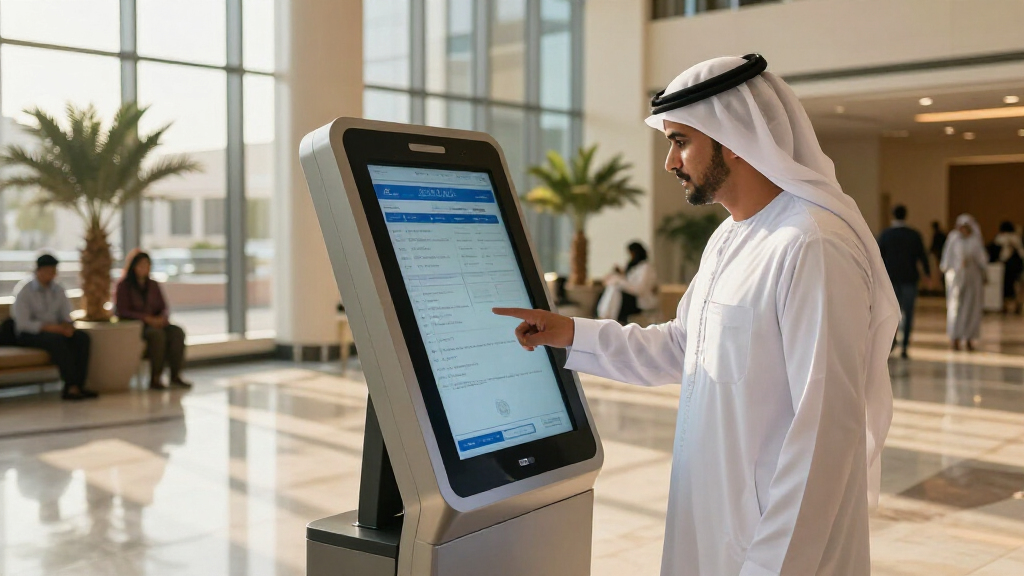
The first pilot is with the Abu Dhabi Agriculture and Food Safety Authority (ADAFSA) and concerns food imports. According to the Abu Dhabi Media Office, the system applies AI to a defined set of rules covering routine checks, such as determining which certificates or limits apply. Each assessment is intended to be traceable to its governing rule, the office said. The authority’s involvement places the trial in a practical regulatory process: deciding whether an incoming food shipment meets requirements before it enters the market.
The government initiative is led and governed by the Department of Government Enablement. The announcement says the rules are translated into machine-readable form and that AI assists officials in applying them to individual cases. It describes the pilot as already in production, but provides no public evaluation results. Abu Dhabi also says processing takes place on OpenAI’s UAE inference infrastructure, using GPUs in UAE data centres. The models remain OpenAI’s, according to the supplied announcement details.
The other agreements concern different parts of Abu Dhabi’s public and commercial sectors. ADNOC, G42 subsidiary Inception42 and OpenAI signed an arrangement for AI in operational, investment and commercial decisions. Mubadala, Inception42 and OpenAI will use AI for investment analysis, identifying opportunities and assessing risk. A separate five-year Inception42–OpenAI partnership is intended to support AI adoption in government, enterprise and education across the UAE. The announcements do not establish that all four arrangements are already deployed at scale.
Infographic 01 · What Abu Dhabi signed with OpenAI
Four agreements in one day
Government, energy, investment and a five-year rollout. What each deal covers, according to the official release, and what it leaves out.
1Machine-Readable Government
Abu Dhabi Government · OpenAI · led by DGE
A defined set of policies and regulations in machine-readable form. AI assists officials with routine compliance assessments, including permits and certificates.
- First pilot: food imports, with the food-safety authority ADAFSA, “already in production”.
- Safeguard as stated: each assessment traceable to the governing rule; officials keep final decisions.
2Energy
ADNOC · G42 via Inception42 · OpenAI
ADNOC “the first company in the energy sector to deploy OpenAI’s frontier technology”, across operational, investment and commercial decisions.
- Runs on: OpenAI GPT models, in-country inference in the UAE.
3Investment
Mubadala · Inception42 · OpenAI
AI for investment analysis, opportunity identification and risk assessment.
- Scope beyond that: not disclosed.
4Five-year adoption deal
Inception42 · OpenAI
Frontier AI across government, enterprise and education in the UAE, with consultancy-led professional services.
- Term: five years, the only time frame in the release.
- Processing on OpenAI’s UAE inference residency, on GPUs inside UAE data centres.
- OpenAI offers inference residency in three locations: the US, Europe and the UAE (since Aug 2026).
- Contract values
- How many rules and services are covered
- Error rates and override rates
- How applicants can appeal
Sources: Abu Dhabi Media Office, 2 Nov 2026 · The National, 2 Nov 2026 · OpenAI release, 12 Aug 2026. “Frontier” wording as in the release.
Powered by Thorsten Meyer AI
How AI Could Change Permit Reviews
Machine-readable rules could change how public agencies handle routine decisions. If an AI system can connect a case to the relevant requirement and show the official which rule applies, it may help staff process applications more consistently or reduce the time spent searching through policy documents. For importers, a well-functioning system could make it easier to understand what documentation a shipment needs. Those are potential benefits, not measured outcomes: the announcement includes no processing-time comparisons, accuracy results or evidence of reduced costs.
The change also affects accountability. The government says officials retain oversight and responsibility for final decisions, but AI-generated assessments may shape what staff see and how they interpret a case. That makes the quality of review, the ability to identify an error and a clear route to challenge a decision important safeguards. Businesses interacting with the system will need to know which rule informed an assessment and whether a human can reconsider it. Those operating details have not been disclosed.
The agreements are also a visible commitment to using AI in government and major institutions, not just a trial in a single agency. Abu Dhabi has stated an ambition to become “the world’s first fully AI-native government.” That is a policy goal; the announcement does not show that the broader public sector has reached it. The food-import pilot offers an early test of whether AI can support regulatory work while keeping public officials accountable.
Products Worth Considering

Logitech MX Keys S Wireless Keyboard, Graphite

Amazon Kindle Scribe (64GB) with Premium Pen, Metallic Jade

Bose QuietComfort Wireless Earbuds with Active Noise Cancellation, Dewdrop Mint
As an affiliate, we earn on qualifying purchases.
From Written Rules to Software
Governments traditionally publish regulations in language intended for people. Officials then interpret those texts and apply them to particular cases. A machine-readable version translates some of the rules into a format software can process. The approach is related to the OECD’s “Rules as Code” concept, described in 2020 as a machine-consumable version of government rules that exists alongside the ordinary-language text. The OECD noted possible gains in consistency and transparency, while also identifying questions about governance, legal status and scaling.
Abu Dhabi’s announcement adds an AI system to this kind of rule translation and application. The government has not said whether the machine-readable rules have legal standing separate from existing regulations, or how officials will resolve any difference between the encoded version and the official text. The distinction matters because the underlying regulation remains the authority; a software interpretation is not, by itself, proof that a decision is legally correct.
The pilot sits within a wider digital-government effort. The source material cites Abu Dhabi’s AED 13 billion digital strategy, which includes a goal of an AI-native government by 2027. Separately, the UAE federal Cabinet set a target in April to move 50% of federal services and operations to agentic AI within two years. These are separate government ambitions and should not be confused with evidence that Abu Dhabi’s food-import pilot has achieved particular results.
“Officials “retain oversight and accountability for final decisions.””
— Abu Dhabi Media Office
Pilot Scope and Appeals Still Unknown
The announcement does not say how many rules, services or import categories are included in the pilot, or how many assessments it has handled. It gives no error rates, independent review findings, time savings or comparison with the previous process. Without those details, it is not possible to determine whether the system improves accuracy, consistency or speed.
It is also unclear how an importer can challenge an AI-assisted assessment, what information the system considers in an individual case, and how officials will handle ambiguous rules or conflicting evidence. The government says officials retain final accountability, but has not described the review process or the practical steps staff take before reaching a decision. No contract values were disclosed for the four agreements, and the public announcement gives no rollout schedule for additional services beyond the five-year term of the separate adoption partnership.
Evidence Needed Before Expansion
The immediate next step is operation and evaluation of the ADAFSA food-import pilot. The government has not announced a public date for releasing results or a timetable for expanding the initiative. Future updates would need to clarify the rules covered, the way officials review AI assistance, available appeal routes and how errors are tracked and corrected.
Any move into other government services will depend on decisions not detailed in the announcement. Businesses and residents will be watching for practical guidance on how assessments are made and what to do when they disagree with one. The four agreements establish a framework for cooperation, but their wider effects remain unverified until agencies publish implementation details and results.
Key Questions
What did Abu Dhabi announce with OpenAI?
Abu Dhabi announced four agreements covering a government machine-readable rules initiative, ADNOC’s use of AI, Mubadala investment analysis and a five-year Inception42–OpenAI partnership for wider AI adoption.
What is the machine-readable government pilot?
It converts a defined set of policies and regulations into a format software can process. AI then assists ADAFSA officials with food-import compliance checks, according to the Abu Dhabi Media Office.
Will AI make the final decision on food imports?
The government says officials retain oversight and accountability for final decisions. The announcement does not explain the detailed review process or how a business can appeal an AI-assisted assessment.
Has Abu Dhabi shown that the pilot improves results?
No performance data were provided in the announcement. It does not report accuracy, error rates, processing times or cost savings, so the pilot’s effects cannot yet be assessed from the disclosed information.
Source: ThorstenMeyerAI.com