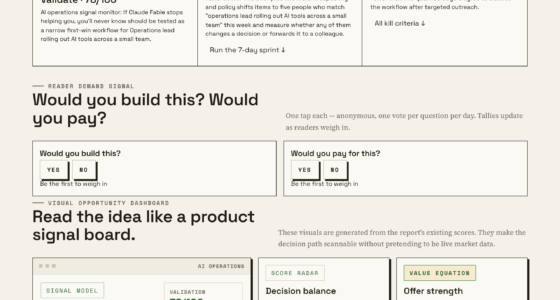

📊 Full opportunity report: How Full-Scale AI Solutions Enhance China’s Position In Global Markets on ThorstenMeyerAI.com — validation score, market gap, and execution plan.

Get the latest gadgets delivered free with Prime
- Fast, free delivery on millions of items
- Prime Video, Amazon Music and more included
- Member-only deals all year
TL;DR
China is promoting the export of comprehensive AI systems, moving beyond isolated models. The strategy aims to strengthen China’s position in global markets, though specific deals are not yet confirmed.
China is increasingly focusing on exporting full-scale AI solutions, according to a recent China Daily report carried by SenseTime, as detailed in the original analysis. This shift emphasizes complete systems—combining models, infrastructure, deployment, and support—rather than standalone algorithms. While no specific export deals or markets have been publicly confirmed, the development signals a strategic move to enhance China’s global competitiveness in artificial intelligence, as explored in the original analysis.
The China Daily report highlights that end-to-end AI solutions are viewed as a key export strategy, emphasizing the importance of comprehensive AI systems in global markets. These solutions typically include integrated components such as models, hardware, deployment tools, and ongoing support, providing customers with a ready-to-use system tailored to particular use cases. SenseTime is credited with publishing the report, but there are no details on specific contracts, target countries, or commercial outcomes. This approach contrasts with selling isolated AI models, which require extensive integration by the buyer.
Experts note that offering complete systems can lower technical barriers for overseas clients, potentially accelerating adoption. However, this also increases the provider’s responsibilities related to data security, regulatory compliance, and long-term support. The report does not specify which Chinese companies are pursuing this strategy or whether any systems have been deployed abroad.
Implications of China’s Focus on Full AI Systems
This development suggests China aims to strengthen its competitive edge in global AI markets by providing comprehensive solutions that meet diverse regulatory and infrastructural needs. Such a strategy could enable Chinese firms to secure larger, more complex contracts, especially in regions with strict compliance standards. However, the lack of concrete deployment data means the actual impact remains uncertain. If successful, this approach might reshape how AI exports are conducted, emphasizing integrated systems over isolated models.
As an affiliate, we earn on qualifying purchases.
Recent Trends in China’s AI Export Strategies
Over the past few years, China has invested heavily in developing advanced AI technologies and expanding its international presence. Government initiatives have supported the growth of domestic AI firms, aiming to boost exports amid international trade tensions and technology restrictions. Previously, Chinese companies primarily exported AI models and software; the recent shift toward end-to-end solutions indicates a strategic evolution to offer more comprehensive, market-ready products. International scrutiny over technology transfer, data security, and export controls continues to influence how these strategies are shaped and communicated.
As an affiliate, we earn on qualifying purchases.
Unconfirmed Details on Deployment and Market Impact
It remains unclear whether any Chinese companies have secured significant export contracts based on these end-to-end solutions. No specific deployment cases, customer names, or geographic targets have been disclosed. The report does not specify how the success of this strategy is measured or whether it has already resulted in tangible sales or market share gains. International trade restrictions and regulatory hurdles could also influence the actual deployment of these systems.
As an affiliate, we earn on qualifying purchases.
Monitoring for Deployment Announcements and Contracts
Future developments will likely include official announcements of deployed systems, signed contracts, or new product launches from Chinese AI firms. Tracking these disclosures will be essential to evaluate the real-world impact of the strategy. Additionally, industry analysts will watch for shifts in market share, regulatory approvals, and partnerships that could validate the effectiveness of offering full AI systems in global markets.
As an affiliate, we earn on qualifying purchases.
Key Questions
What are end-to-end AI solutions?
End-to-end AI solutions are comprehensive systems that include AI models, hardware infrastructure, deployment tools, and ongoing support, designed to deliver ready-to-use AI products for specific applications.
Why is China focusing on full AI systems for exports?
Providing complete systems can lower technical barriers for overseas clients, improve compliance with local regulations, and potentially secure larger, more complex contracts in competitive markets.
Has China already exported these full AI systems?
There are no publicly confirmed export deals or deployments at this time. The recent report indicates a strategic emphasis, but concrete evidence of deployment remains absent.
What challenges could China face with this approach?
Challenges include navigating international export controls, ensuring data security and compliance, managing long-term support obligations, and establishing trust with foreign customers.
How might this strategy influence global AI markets?
If successful, it could lead to increased Chinese presence in large-scale AI deployments worldwide, potentially shifting competitive dynamics and setting new standards for AI product offerings.
Source: ThorstenMeyerAI.com
Halloween Picks
halloween
As an affiliate, we earn on qualifying purchases.