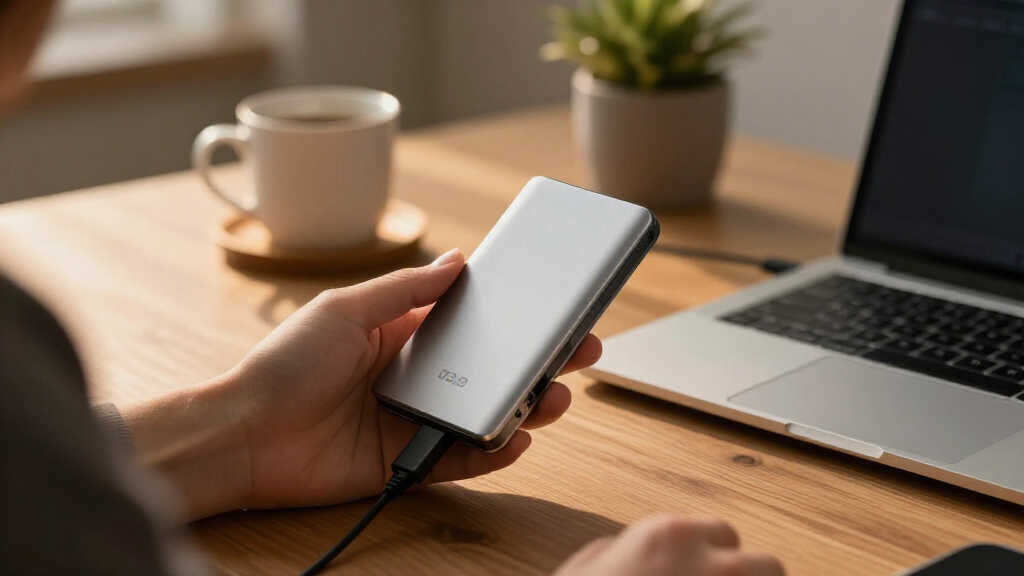

A good portable external SSD in 2026 costs less than ever, but the gap between a smart buy and a frustrating one comes down to matching the drive to your ports, your devices, and how rough you are on gear. After comparing 14 of the most popular options, I named the Samsung T7 Shield 1TB the best overall pick because it pairs 1,050MB/s speeds with an IP65-rated rubber shell at a price that undercuts most rugged rivals. If raw speed is the priority, the Samsung T9 2TB doubles that throughput on compatible PCs, while the Amazon Basics Portable SSD proves you no longer need to pay brand-name prices for solid everyday performance. The main tradeoffs in this category are speed class versus port compatibility, ruggedness versus cost, and big-brand warranty support versus budget pricing. Keep reading for the full breakdown of all 14 drives, who each one suits, and who should skip it.

Get the latest gadgets delivered free with Prime
- Fast, free delivery on millions of items
- Prime Video, Amazon Music and more included
- Member-only deals all year
Complete the kit



Key Takeaways
- amazon.com/dp/B09VLK9W3S?tag=gadgetfee-20&ascsubtag=dc-480961″ target=”_blank” rel=”nofollow sponsored noopener”>Samsung placed four drives in this lineup, and the T7 Shield 1TB took the top spot not through peak benchmarks but by combining 1,050MB/s speeds, IP65 sealing, and a mid-range price — consistency beat raw numbers for most buyers.
- USB 3.2 Gen 2×2 drives like the Samsung T9 advertise 2,000MB/s, but that speed only appears on PCs with a Gen 2×2 port; on every Mac and many thin laptops, they run at the same ~1,000MB/s as drives costing half as much.
- Budget drives changed the value math this year: Amazon Basics and SSK now offer 1,050MB/s-class performance — and in Amazon’s case an IP65 rating — for meaningfully less than Samsung or SanDisk.
- Capacity turned out to be the biggest price lever: the 2TB Samsung T9 costs far less per terabyte than any 500GB or 128GB option here, and the 128GB SSK only makes sense for light document backups.
- Phone-focused designs like the DIGIERA magnetic SSD show the category shifting toward iPhone ProRes recording, where compact size and sustained writes matter more than headline transfer speeds.
| Samsung T7 Shield Portable SSD 1TB |  | Best Overall | Capacity: 1TB | Interface: USB 3.2 Gen 2 | Max transfer speed: Up to 1,050 MB/s | VIEW LATEST PRICE | See Our Full Breakdown |
| Amazon Basics Portable External SSD 1TB |  | Best Value | Capacity: 1TB | Interface: USB 3.2 Gen 2 | Max transfer speed: Up to 2,000 MB/s | VIEW LATEST PRICE | See Our Full Breakdown |
| Samsung T9 Portable SSD 2TB | 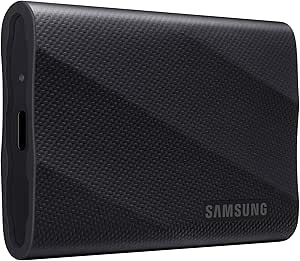 | Best Premium for Creators | Capacity: 2TB | Interface: USB 3.2 Gen 2×2 | Max transfer speed: Up to 2,000 MB/s | VIEW LATEST PRICE | See Our Full Breakdown |
| 1TB External SSD Up to 2000MB/s (USB 3.2 Gen 2×2) |  | Most Portable | Capacity: 1TB | Interface: USB 3.2 Gen 2×2 | Read speed: Up to 2,000 MB/s | VIEW LATEST PRICE | See Our Full Breakdown |
| SSK Portable SSD 1TB (USB-C, Aluminum) |  | Best Budget Pick for iPhone Users | Capacity: 1TB | Interface: USB 3.2 Gen 2 (USB-C and USB-A) | Max speed: Up to 1,050 MB/s | VIEW LATEST PRICE | See Our Full Breakdown |
| Samsung T7 Portable SSD 1TB Titan Gray |  | Best Overall | Capacity: 1TB | Interface: USB 3.2 Gen 2 | Max transfer speed: Up to 1,050MB/s | VIEW LATEST PRICE | See Our Full Breakdown |
| DIGIERA 1TB Magnetic Portable SSD |  | Best for iPhone Creators | Capacity: 1TB | Interface: USB-C 3.2 Gen 2×2 | Max transfer speed: Up to 2,000MB/s | VIEW LATEST PRICE | See Our Full Breakdown |
| Lexar ES3 1TB Portable SSD |  | Best Value Pick | Capacity: 1TB | Interface: USB 3.2 Gen 2 | Max transfer speed: Up to 1,050MB/s | VIEW LATEST PRICE | See Our Full Breakdown |
| SanDisk 2TB Extreme Portable SSD (Old Model) |  | Best High-Capacity Rugged Drive | Capacity: 2TB | Read speed: Up to 1,050MB/s | Write speed: Up to 1,000MB/s | VIEW LATEST PRICE | See Our Full Breakdown |
| SanDisk 1TB Extreme Portable SSD |  | Best Rugged Performer | Capacity: 1TB | Max transfer speed: Up to 2,000MB/s | Connectivity: USB Type-C | VIEW LATEST PRICE | See Our Full Breakdown |
| Samsung T9 Portable SSD 1TB USB 3.2 Gen 2×2 |  | Best Overall | Capacity: 1TB | Interface: USB 3.2 Gen 2×2 | Max Transfer Speed: Up to 2,000MB/s | VIEW LATEST PRICE | See Our Full Breakdown |
| SSK Portable SSD 500GB USB-C Up to 1050MB/s Aluminum |  | Best Value | Capacity: 500GB (about 465GB shown on Windows) | Max Read Speed: 1,050MB/s | Max Write Speed: 1,000MB/s | VIEW LATEST PRICE | See Our Full Breakdown |
| SanDisk 1TB Portable SSD Up to 800MB/s USB-C |  | Best for Travel | Capacity: 1TB | Max Read Speed: Up to 800MB/s | Connector: USB-C | VIEW LATEST PRICE | See Our Full Breakdown |
| SSK 128GB Portable SSD USB 3.2 Gen 2, USB-C & USB-A, 550MB/s |  | Best Budget Pick | Capacity: 128GB (about 116GB shown on Windows) | Max Speed: 550MB/s | Interface: USB 3.2 Gen 2 | VIEW LATEST PRICE | See Our Full Breakdown |
| portable external SSD | Capacity | Interface | Compatibility | Max transfer speed |
|---|---|---|---|---|
| Samsung T7 Shield Portable SSD | 1TB | USB 3.2 Gen 2 | PC, Mac, Android, gaming consoles, iPhone | Up to 1,050 MB/s |
| Amazon Basics Portable Externa | 1TB | USB 3.2 Gen 2 | — | Up to 2,000 MB/s |
| Samsung T9 Portable SSD 2TB | 2TB | USB 3.2 Gen 2×2 | Desktop, camera, gaming console, iPhone 15 Pro | Up to 2,000 MB/s |
| 1TB External SSD Up to 2000MB/ | 1TB | USB 3.2 Gen 2×2 | Windows, macOS, iPadOS, Android, Chrome OS, Linux, PS5, Xbox | — |
| SSK Portable SSD 1TB | 1TB | USB 3.2 Gen 2 (USB-C and USB-A) | iPhone 15/16/17 Pro, Windows, macOS, tablets, smartphones | — |
| Samsung T7 Portable SSD 1TB Ti | 1TB | USB 3.2 Gen 2 | PC, mobile phones, iPhone 15 Pro | Up to 1,050MB/s |
| DIGIERA 1TB Magnetic Portable | 1TB | USB-C 3.2 Gen 2×2 | iPhone 15/16 series and USB-C devices | Up to 2,000MB/s |
| Lexar ES3 1TB Portable SSD | 1TB | USB 3.2 Gen 2 | iPhone 17, Mac, PS5, Xbox, Laptop, PC, Android | Up to 1,050MB/s |
| SanDisk 2TB Extreme Portable S | 2TB | — | — | — |
| SanDisk 1TB Extreme Portable S | 1TB | — | — | Up to 2,000MB/s |
| Samsung T9 Portable SSD 1TB US | 1TB | USB 3.2 Gen 2×2 | Desktop, camera, gaming console, iPhone 15 Pro (4K) | Up to 2,000MB/s |
| SSK Portable SSD 500GB USB-C U | 500GB (about 465GB shown on Windows) | USB 3.2 Gen 2 (USB-C and USB-A) | iPhone 15/16/17 Pro, macOS, Windows | — |
| SanDisk 1TB Portable SSD Up to | 1TB | — | — | — |
| SSK 128GB Portable SSD USB 3.2 | 128GB (about 116GB shown on Windows) | USB 3.2 Gen 2 | — | — |
More Details on Our Top Picks
Samsung T7 Shield Portable SSD 1TB
For my money, the Samsung T7 Shield is the easiest portable SSD to recommend to the most people. It doesn’t chase headline numbers — the 1,050 MB/s ceiling is half what the Samsung T9 and the Amazon Basics drive claim — but that speed still moves a 50GB photo library in about a minute, and it holds up on any USB 3.2 Gen 2 port without fuss. Where it beats those faster rivals is durability: IP65 water and dust resistance plus drop protection to 9.8 feet means it survives camera bags, job sites, and rain in ways the Samsung T9 simply isn’t rated for. I’d call it the safe, proven middle ground. The tradeoffs are real, though: this model tops out at 1TB, and you’ll need the bundled cable to reach full speed.
Pros:- IP65 sealing plus 9.8-foot drop resistance for real outdoor use
- Consistent 1,050 MB/s transfers that work on nearly any modern port
- Broad compatibility across PC, Mac, Android, consoles, and iPhone
- Backed by Samsung’s track record and Magician software support
Cons:- Half the rated speed of Gen 2×2 rivals like the Samsung T9
- This model caps at 1TB, so heavy video shooters may outgrow it
- Full speed requires the included cable
Best for: Photographers, field shooters, and travelers who need a drive that shrugs off rain, dust, and drops without babying it
Not ideal for: Video editors with USB 3.2 Gen 2×2 ports — the Samsung T9 moves their footage twice as fast
- Capacity:1TB
- Interface:USB 3.2 Gen 2
- Max transfer speed:Up to 1,050 MB/s
- Water/dust resistance:IP65
- Drop resistance:Falls up to 9.8 feet
- Compatibility:PC, Mac, Android, gaming consoles, iPhone
Our verdict“The right pick for most buyers who want proven speed and genuine ruggedness without paying a premium for bandwidth their ports can’t use.”
Amazon Basics Portable External SSD 1TB
The Amazon Basics Portable SSD makes the value case bluntly: it advertises the same 2,000 MB/s headline speed as the Samsung T9 while undercutting it on price, and it still adds IP65 sealing and a metal shell with a scratch-resistant base. For everyday transfers and 4K footage, that’s more speed than many laptops can even accept. The catch is pedigree. Samsung backs the T9 with thermal management, firmware updates, and encryption software; Amazon offers none of that, and the listing itself concedes speeds vary by device and file size. Compared with the SSK drive, you’re getting roughly double the rated throughput plus weather sealing for what is usually a modest premium. I’d treat this as the pick for buyers who want big numbers on a budget and can live without brand-name polish.
Pros:- 2,000 MB/s rated speed at a value price point
- IP65 water and dust resistance with a durable metal casing
- Both USB-C to C and USB-C to A cables included in the box
- Scratch-resistant bottom holds up to daily bag carry
Cons:- Real-world speeds vary by device and file size, per the listing itself
- No bundled encryption, backup, or firmware-update software
- Usable capacity comes in below the labeled 1TB
Best for: Budget-conscious buyers who want 2,000 MB/s-class transfers and IP65 protection without paying Samsung prices
Not ideal for: Professionals who depend on sustained speeds, firmware support, and encryption tools — the Samsung T9 is the safer bet
- Capacity:1TB
- Interface:USB 3.2 Gen 2
- Max transfer speed:Up to 2,000 MB/s
- Water/dust resistance:IP65
- Enclosure:Metal casing with scratch-resistant bottom
- Included cables:USB-C to C, USB-C to A
Our verdict“The smart buy for price-first shoppers who want flagship-class speed claims and rugged sealing, and can accept fewer software extras.”
Samsung T9 Portable SSD 2TB
The Samsung T9 is the drive I’d point working creators toward. Its 2,000 MB/s transfers over USB 3.2 Gen 2×2 and 2TB of space mean editing 4K ProRes directly off the drive instead of copying files first — the Amazon Basics SSD claims the same peak speed, but Samsung pairs it with thermal management that sustains performance through long transfers rather than sagging midway. It also records ProRes straight from an iPhone 15 Pro, a job the Samsung T7 Shield handles at half the bandwidth. Two catches matter. Most laptops lack Gen 2×2 ports, so many buyers will see roughly T7-class speeds unless their machine supports the standard. And unlike the T7 Shield, there’s no IP65 rating here, so this is a desk-and-studio drive, not a job-site one.
Pros:- Sustained 2,000 MB/s performance with advanced thermal management
- 2TB capacity suits large video projects and game libraries
- Records ProRes video directly from an iPhone 15 Pro
- Encryption and firmware-update software included
Cons:- Full speed requires a rare USB 3.2 Gen 2×2 port; falls back on most laptops
- No IP65 water or dust resistance, unlike the T7 Shield
- Costs more per terabyte than value rivals
Best for: Video editors and content creators with Gen 2×2-equipped machines who edit projects straight off the drive
Not ideal for: Outdoor and field shooters — with no IP rating, the Samsung T7 Shield handles rough conditions far better
- Capacity:2TB
- Interface:USB 3.2 Gen 2×2
- Max transfer speed:Up to 2,000 MB/s
- Thermal management:Advanced cooling for sustained transfers
- Compatibility:Desktop, camera, gaming console, iPhone 15 Pro
- Color:Black
Our verdict“The drive to buy if your workflow lives on 4K footage and your machine has the Gen 2×2 port to feed it.”
1TB External SSD Up to 2000MB/s (USB 3.2 Gen 2×2)
This 33-gram drive is the one I’d clip to a keyring and forget about. Rated at 2,000 MB/s reads and 1,800 MB/s writes, it matches the Samsung T9’s speed class in a far smaller package, and the compatibility list — Windows, macOS, Android, Linux, Chrome OS, PS5, Xbox — is the broadest in this roundup. Console gamers can plug it straight into a PS5 or Xbox without checking a chart first. The compromise is confidence: the brand lacks the track record of Samsung or even the clearer support story of the SSK drive, and write speeds trail the advertised read figure. It also stops at 1TB, so it’s not a long-term archive. For travel and console duty where weight and plug-anywhere flexibility matter more than name recognition, though, this option stands out.
Pros:- 2,000 MB/s read speeds in a 33-gram body with a keychain hole
- Works with Windows, macOS, Linux, Chrome OS, Android, PS5, and Xbox
- Shock-resistant build suited to daily travel
- Strong 1,800 MB/s write speeds for the size
Cons:- Lesser-known brand with an unproven long-term support record
- Write speeds trail the headline read figure
- 1TB ceiling with no larger capacity option
Best for: Travelers and console gamers who want the lightest possible 2,000 MB/s drive that plugs into nearly anything
Not ideal for: Buyers who prioritize brand track record, warranty clarity, and long-term support over weight and price
- Capacity:1TB
- Interface:USB 3.2 Gen 2×2
- Read speed:Up to 2,000 MB/s
- Write speed:Up to 1,800 MB/s
- Weight:33 g
- Design:Shock-resistant with keychain hole
- Compatibility:Windows, macOS, iPadOS, Android, Chrome OS, Linux, PS5, Xbox
Our verdict“The pick for minimalists and console players who want big speed in a drive small enough to live on a keychain.”
SSK Portable SSD 1TB (USB-C, Aluminum)
The SSK Portable SSD earns its spot by doing the fundamentals cheaply and thoughtfully. Its 1,050 MB/s speed matches the Samsung T7 Shield in a smaller aluminum body, and the sub-2.4-watt power draw is a quiet win for phone users — it won’t hammer an iPhone 15/16/17 Pro’s battery during ProRes offloads the way hungrier drives can. S.M.A.R.T. diagnostics and adaptive TRIM help the drive age gracefully, rare attention to longevity at this price. Versus the Amazon Basics SSD, you give up half the rated speed and any weather sealing; versus the T7 Shield, you give up the IP65 shell and the bigger brand behind it. Windows users will also see roughly 931GB rather than the labeled 1TB. I see this as the smart pick for iPhone-centric buyers who count every dollar.
Pros:- 1,050 MB/s transfers at a genuinely budget price
- Low power draw under 2.4 W preserves phone battery life
- Aluminum alloy shell dissipates heat during long transfers
- S.M.A.R.T. diagnostics and adaptive TRIM support long-term drive health
Cons:- No water or dust resistance rating
- Shows as roughly 931GB on Windows due to binary calculation
- Little published detail on encryption or security features
Best for: iPhone 15/16/17 Pro owners offloading ProRes footage and photos on a tight budget
Not ideal for: Anyone working outdoors in dust or rain — with no IP rating, the Samsung T7 Shield is the tougher choice
- Capacity:1TB
- Interface:USB 3.2 Gen 2 (USB-C and USB-A)
- Max speed:Up to 1,050 MB/s
- Drive health features:S.M.A.R.T. diagnostics, adaptive TRIM
- Enclosure:Aluminum alloy
- Dimensions:2.6 x 1.5 x 0.5 inches
- Weight:36.6 g
- Power consumption:Under 2.4 W
- Compatibility:iPhone 15/16/17 Pro, Windows, macOS, tablets, smartphones
Our verdict“A wallet-friendly 1TB drive that makes the most sense for iPhone shooters who don’t need weather sealing.”
Samsung T7 Portable SSD 1TB Titan Gray
The Samsung T7 is the drive I’d measure every other mid-range portable SSD against, and it earns the top slot on consistency rather than raw numbers. Its 1,050MB/s reads match the Lexar ES3 on paper, but Samsung’s controller tuning and long firmware track record make sustained transfers feel more dependable in day-to-day use. Against the SanDisk Extreme 1TB, it surrenders both the IP65 rating and a faster 2,000MB/s interface, so outdoor shooters should look there instead. The aluminum unibody shrugs off six-foot drops, and iPhone 15 Pro support means direct ProRes 4K recording. The real tradeoff is price: it seldom undercuts rivals, and budget buyers will find the Lexar ES3 covers most of the same ground for less.
Pros:- Consistently fast 1,050MB/s transfers
- Drop-resistant aluminum unibody survives six-foot falls
- Records 4K ProRes video directly from iPhone 15 Pro
- Strong long-term reliability record and mature firmware
Cons:- No water or dust resistance rating
- Costs more than the Lexar ES3 for the same speed class
- This configuration tops out at 1TB
Best for: Professionals and students who want one proven, do-everything 1TB drive for daily backups, large project folders, and direct iPhone 15 Pro video recording
Not ideal for: Outdoor shooters and strict bargain hunters — there’s no IP rating, and the Lexar ES3 delivers the same speed class for less
- Capacity:1TB
- Interface:USB 3.2 Gen 2
- Max transfer speed:Up to 1,050MB/s
- Drop resistance:Up to 6 feet
- Enclosure:Aluminum unibody
- Color:Titan Gray
- Compatibility:PC, mobile phones, iPhone 15 Pro
- Video support:High-resolution 4K recording
Our verdict“The default choice for most buyers: fast enough, tough enough, and backed by the strongest track record in this lineup.”
DIGIERA 1TB Magnetic Portable SSD
The DIGIERA magnetic SSD is the pick I’d hand to anyone shooting video on a recent iPhone. Its snap-on magnetic attachment keeps the drive planted against the phone while recording, something neither the Samsung T7 nor the SanDisk Extreme attempts. On a full USB 3.2 Gen 2×2 connection it reaches 2,000MB/s — double the T7’s ceiling — though matching that figure, as with the Samsung T9, requires a host port many laptops still lack. The aluminum shell tolerates 1500G of shock at just 1.58 ounces. The catches: it won’t pair with iPhone 14 or earlier, real speeds depend heavily on the host device, and DIGIERA lacks the long reliability record of Samsung or SanDisk. Convenience leads here; brand pedigree trails.
Pros:- 2,000MB/s transfers over USB 3.2 Gen 2×2
- Magnetic attachment keeps the drive secured to the phone
- Featherweight 1.58 oz rugged aluminum body
- Rated for 1500G shock and drops up to 3.94 feet
Cons:- Requires a Gen 2×2 host port to hit advertised speeds, which many laptops lack
- No support for iPhone 14 or earlier models
- Lesser-known brand with a shorter reliability track record
Best for: iPhone 15/16 owners recording ProRes video or large photo libraries who want the drive physically attached to the phone
Not ideal for: Desktop users without a USB 3.2 Gen 2×2 port — they’d pay for speed their machine can’t deliver — and anyone on iPhone 14 or older
- Capacity:1TB
- Interface:USB-C 3.2 Gen 2×2
- Max transfer speed:Up to 2,000MB/s
- Attachment:Magnetic connection
- Dimensions:2.28 x 0.46 inches
- Weight:1.58 oz
- Shock resistance:1500G
- Drop resistance:Up to 3.94 feet
- Compatibility:iPhone 15/16 series and USB-C devices
Our verdict“The most convenient way to add fast storage to a recent iPhone, provided the rest of your gear can feed its Gen 2×2 speed.”
Lexar ES3 1TB Portable SSD
What puts the Lexar ES3 on this list is how much of the Samsung T7’s formula it replicates for less money. You get the same 1,050MB/s USB 3.2 Gen 2 performance class, a lighter 42-gram body, and 256-bit AES encryption that the base T7 lacks — genuinely useful if the drive ever goes missing in transit. Compatibility runs wide: Mac, PC, Android, PS5, Xbox, even iPhone 17. Where it falls behind the SanDisk Extreme models is ruggedness; there’s no IP rating or drop certification, so I wouldn’t clip it to a camera bag in the rain. MagSafe support is also absent from this version, which nudges iPhone videographers toward the DIGIERA instead. For desk-to-desk shuttling rather than field work, it’s the smarter spend.
Pros:- Matches the Samsung T7’s 1,050MB/s speed class for less
- 256-bit AES encryption built in
- Very light at 42g and only 10.5mm thick
- Broad compatibility: Mac, PC, Android, PS5, Xbox, iPhone 17
Cons:- No IP rating or certified drop protection
- MagSafe not supported in this version
- Full speed depends on host support for USB 3.2 Gen 2
Best for: Budget-conscious buyers shuttling files between a laptop, game console, and phone who still want hardware encryption included
Not ideal for: Field shooters who need weather sealing or certified drop protection — the SanDisk Extreme models handle abuse this drive won’t
- Capacity:1TB
- Interface:USB 3.2 Gen 2
- Max transfer speed:Up to 1,050MB/s
- Encryption:256-bit AES
- Weight:42g
- Thickness:10.5mm
- Compatibility:iPhone 17, Mac, PS5, Xbox, Laptop, PC, Android
Our verdict“The sensible budget buy, trading ruggedness for encryption and T7-class speed at a lower price.”
SanDisk 2TB Extreme Portable SSD (Old Model)
Capacity is the whole argument for the SanDisk Extreme 2TB, and it’s a strong one. Doubling the storage of most picks here means a full shoot’s footage stays on one drive instead of two. The IP65 rating and three-meter drop protection outmuscle anything Samsung’s plain T7 offers, and hardware encryption with password protection guards client work in transit. Being the older model, though, its 1,050MB/s reads run at half the speed of the newer SanDisk Extreme 1TB and the DIGIERA, so large transfers take longer. There’s also no carrying case in the box, a small but real omission for a drive built to travel. If your priority is room to grow inside a weather-sealed shell, this still makes sense; if speed leads, buy newer.
Pros:- 2TB capacity doubles most rivals in this roundup
- IP65 water and dust sealing plus three-meter drop protection
- 256-bit AES hardware encryption with password protection
- Carabiner loop for clipping to bags and belts
Cons:- Older model capped at 1,050MB/s — half the newer Extreme’s ceiling
- No carrying case included
- Real-world performance varies by host device
Best for: Videographers and photographers archiving large shoots on one weather-sealed drive rather than juggling multiple 1TB units
Not ideal for: Speed-first buyers — the newer SanDisk Extreme 1TB and the DIGIERA move the same files roughly twice as fast
- Capacity:2TB
- Read speed:Up to 1,050MB/s
- Write speed:Up to 1,000MB/s
- Connectivity:USB-C, USB 3.2 Gen 2
- Water/dust resistance:IP65
- Drop protection:Up to 3 meters
- Encryption:256-bit AES hardware encryption
- Extras:Carabiner loop
SanDisk 1TB Extreme Portable SSD
The newer SanDisk Extreme 1TB is where ruggedness and speed stop being a tradeoff. It pairs a 2,000MB/s ceiling with IP65 water and dust resistance and three-meter drop protection — a combination the Samsung T7 Shield can’t match, since the Shield tops out at 1,050MB/s. Against the DIGIERA, which reaches the same speeds, SanDisk answers with weather sealing and a far longer field record. The caveats: hitting full speed demands a compatible high-speed host port, the listing skips finer hardware details like weight, and it’s USB-C only with no USB-A fallback mentioned. For photographers and videographers who work outdoors and move big files fast, this is the most balanced tough drive here.
Pros:- 2,000MB/s transfers cut big-file wait times
- IP65-rated against water and dust
- Survives drops up to 3 meters
- 256-bit AES encryption for private files
Cons:- Full speed requires a compatible high-speed host port
- USB-C only, with no USB-A adapter mentioned
- Sparse hardware detail — weight and dimensions not listed
Best for: Outdoor creators moving high-res photos, video, and large project files who can’t risk a drive failing after rain or a drop
Not ideal for: Buyers on older USB-A-only machines or hosts without a high-speed port, who won’t see the 2,000MB/s they’re paying for
- Capacity:1TB
- Max transfer speed:Up to 2,000MB/s
- Connectivity:USB Type-C
- Water/dust resistance:IP65
- Drop protection:Up to 3 meters
- Encryption:256-bit AES
Our verdict“The best mix of toughness and speed for creators who work outside the studio.”
Samsung T9 Portable SSD 1TB USB 3.2 Gen 2×2
I’d point most buyers toward the Samsung T9 first. Its 2,000MB/s ceiling is roughly double what the SSK 500GB reaches and more than twice the SanDisk 1TB’s 800MB/s, so a 50GB video project copies in under a minute instead of several. The advanced thermal management matters here: cheaper drives throttle when transfers run long, and this one is built to hold speed through heavy sessions. The tradeoff is that you only see those numbers on a USB 3.2 Gen 2×2 port with the included cable; plug into an older port and it behaves like any mid-tier drive. It also costs more per gigabyte than the SanDisk, so casual backup users would pay for speed they never feel. For creators, gamers, and anyone moving big files daily, this pick makes the most sense.
Pros:- Transfers up to 2,000MB/s cut large project copies to seconds
- Thermal management holds speed through long, heavy transfers
- Works with desktops, cameras, consoles, and iPhone 15 Pro 4K
- Software support covers firmware updates and encryption
Cons:- Full speed requires a USB 3.2 Gen 2×2 port and the included cable
- Higher cost per gigabyte than mid-tier rivals like the SanDisk 1TB
- This model tops out at 1TB
Best for: Video editors, gamers, and professionals who move multi-gigabyte files daily and have USB 3.2 Gen 2×2 ports
Not ideal for: Casual backup users on older USB ports — they’d pay a premium for speed their hardware can’t use
- Capacity:1TB
- Interface:USB 3.2 Gen 2×2
- Max Transfer Speed:Up to 2,000MB/s
- Thermal Management:Advanced cooling for sustained loads
- Compatibility:Desktop, camera, gaming console, iPhone 15 Pro (4K)
- Software:Firmware updates and encryption support
- Color:Black
Our verdict“The drive to buy if you want the fastest, most consistent portable SSD here and have the ports to feed it.”
SSK Portable SSD 500GB USB-C Up to 1050MB/s Aluminum
This option stands out as the value sweet spot in the lineup. At 1,050MB/s reads in a 36.6-gram aluminum body, it delivers most of what everyday buyers need without the Samsung T9’s premium price. The metal shell isn’t cosmetic — it sheds heat during sustained writes, so speeds hold steadier than on plastic-bodied rivals like the SanDisk 1TB. Compared with its cheaper sibling, the SSK 128GB, you get four times the room and nearly double the speed, which is why I’d skip the 128GB model unless money is truly tight. The catch is capacity: 500GB, reported as about 465GB by Windows, fills quickly if you shoot 4K video on an iPhone 15/16/17 Pro, and heavy users will outgrow it. SSK also lacks Samsung’s software polish for firmware updates and encryption.
Pros:- 1,050MB/s read and 1,000MB/s write speeds at a mid-range price
- Aluminum alloy body dissipates heat during long transfers
- Only 36.6g and 0.5 inches thick — genuinely pocketable
- Broad compatibility across iPhone, macOS, and Windows
Cons:- Shows about 465GB on Windows due to binary capacity calculation
- 500GB runs tight for large 4K video projects
- Less brand track record and software support than Samsung
Best for: iPhone 15/16/17 Pro shooters and students who want near-1,050MB/s speed on a mid-range budget
Not ideal for: Anyone archiving large 4K libraries — 500GB (465GB usable) fills fast, and the 1TB SanDisk offers more headroom
- Capacity:500GB (about 465GB shown on Windows)
- Max Read Speed:1,050MB/s
- Max Write Speed:1,000MB/s
- Interface:USB 3.2 Gen 2 (USB-C and USB-A)
- Compatibility:iPhone 15/16/17 Pro, macOS, Windows
- Dimensions:2.6 x 1.5 x 0.5 inches
- Weight:36.6g
- Build:Aluminum alloy, under 2.4W power draw
Our verdict“The smartest buy for most people — fast, light, and well-built, as long as half a terabyte is enough.”
SanDisk 1TB Portable SSD Up to 800MB/s USB-C
This model is better suited to life on the move than anything else here. The two-meter drop protection and rubber hook mean you can clip it to a bag and stop worrying about knocks, something neither the Samsung T9 nor the aluminum SSK 500GB is explicitly built for. You trade raw pace for that peace of mind: 800MB/s reads sit below the 1,050MB/s class, so massive transfers take a bit longer, though everyday photo and document backups feel identical. Next to the Samsung T7 Shield elsewhere in this roundup, this SanDisk delivers similar travel-friendly toughness without the Shield’s IP65 rating, so rain is a bigger risk. The unconfirmed cable situation is also worth a pause — nothing in the listing says what’s in the box. For commuters and field shooters, the durability math still favors it.
Pros:- Survives drops up to 2 meters
- Rubber hook clips securely to bags and straps
- 800MB/s reads handle everyday backups with ease
- Full 1TB capacity at a mainstream price
Cons:- Trails 1,050MB/s and 2,000MB/s rivals on large transfers
- No IP water or dust resistance rating listed
- Included cables and accessories not confirmed in the listing
Best for: Commuters, travelers, and field photographers who clip storage to a bag and need real drop protection
Not ideal for: Speed-focused creators — the Samsung T9 moves big files more than twice as fast
- Capacity:1TB
- Max Read Speed:Up to 800MB/s
- Connector:USB-C
- USB Standard:USB 3.2 Gen 2
- Drop Protection:Up to 2 meters
- Attachment:Rubber hook for secure transport
- Included Accessories:Not specified in listing
Our verdict“The right call for buyers who prioritize surviving the journey over winning the speed race.”
SSK 128GB Portable SSD USB 3.2 Gen 2, USB-C & USB-A, 550MB/s
This pick makes the most sense when the goal is spending as little as possible on real SSD speed. The 550MB/s ceiling is half what the SSK 500GB manages and a quarter of the Samsung T9, yet it still outruns any spinning hard drive, and USB-C plus USB-A support means it plugs into old laptops and new phones without adapters. S.M.A.R.T. monitoring and TRIM are welcome at this price, helping the drive stay healthy and consistent over time. The hard limit is 128GB — about 116GB usable on Windows — which suits documents and photo libraries but chokes on a single large video project. Anyone shooting 4K footage should step up to the 500GB SSK or the SanDisk 1TB instead. Treat this as a fast, cheap shuttle drive, not a long-term archive.
Pros:- Cheapest entry point to genuine SSD speed in the lineup
- Both USB-C and USB-A connections work out of the box
- S.M.A.R.T. monitoring and TRIM rare at this price
- Compact design slips into any pocket
Cons:- Only about 116GB usable on Windows — fills almost immediately
- 550MB/s is half the speed of the step-up SSK 500GB
- No drop protection or ruggedization
Best for: Budget buyers who need a fast shuttle for documents, photos, and small projects across USB-C and USB-A devices
Not ideal for: Video shooters and gamers — 128GB (116GB usable) can’t hold large 4K projects or modern game libraries
- Capacity:128GB (about 116GB shown on Windows)
- Max Speed:550MB/s
- Interface:USB 3.2 Gen 2
- Connections:USB-C and USB-A
- Health Monitoring:S.M.A.R.T.
- Performance Features:TRIM technology, LED activity indicator
Our verdict“A sensible ultra-budget shuttle for light files, provided you accept its small capacity from day one.”
How We Picked
I ranked these 14 drives the way a buyer actually experiences them: not by benchmark peaks, but by speed class, price per terabyte, build quality, warranty backing, and device compatibility. Drives in the 1,050MB/s USB 3.2 Gen 2 class earned credit for running at full speed on nearly any modern laptop, while 2,000MB/s Gen 2×2 models like the Samsung T9 were judged with a caveat — that speed only materializes on PCs with the right port, so they rank high for Windows power users but not for everyone. Ruggedness carried real weight too: an IP65 rating on the T7 Shield and SanDisk Extreme models means rain and dust are non-events, which matters more for a drive that lives in a bag than a few extra megabytes per second on paper.
Price-per-terabyte math reshuffled the middle of the ranking. The 2TB Samsung T9 looks expensive until you divide cost by capacity, at which point it beats most 500GB and 1TB options in this lineup. Budget entries from Amazon Basics and SSK scored well on specs per dollar but lost ground on warranty track record and software support, which is why they sit below Samsung and SanDisk despite similar speed ratings. The smallest drives, like the 128GB SSK, landed at the bottom because the savings are minor and the capacity ceiling arrives fast.
| portable external SSD | Interface | Max transfer speed |
|---|---|---|
| Samsung T7 Shield Portable SSD | USB 3.2 Gen 2 | Up to 1,050 MB/s |
| Amazon Basics Portable Externa | USB 3.2 Gen 2 | Up to 2,000 MB/s |
| Samsung T9 Portable SSD 2TB | USB 3.2 Gen 2×2 | Up to 2,000 MB/s |
| 1TB External SSD Up to 2000MB/ | USB 3.2 Gen 2×2 | — |
| SSK Portable SSD 1TB | USB 3.2 Gen 2 (USB-C and USB-A) | — |
| Samsung T7 Portable SSD 1TB Ti | USB 3.2 Gen 2 | Up to 1,050MB/s |
| DIGIERA 1TB Magnetic Portable | USB-C 3.2 Gen 2×2 | Up to 2,000MB/s |
| Lexar ES3 1TB Portable SSD | USB 3.2 Gen 2 | Up to 1,050MB/s |
| SanDisk 2TB Extreme Portable S | — | — |
| SanDisk 1TB Extreme Portable S | — | Up to 2,000MB/s |
| Samsung T9 Portable SSD 1TB US | USB 3.2 Gen 2×2 | Up to 2,000MB/s |
| SSK Portable SSD 500GB USB-C U | USB 3.2 Gen 2 (USB-C and USB-A) | — |
| SanDisk 1TB Portable SSD Up to | — | — |
| SSK 128GB Portable SSD USB 3.2 | USB 3.2 Gen 2 | — |
Factors to Consider When Choosing Portable External SSDs
The 14 drives in this roundup cluster into a few clear tiers, and most buying mistakes happen when a shopper pays for one tier while their hardware or workload belongs to another. These are the factors I’d weigh before spending anything.
Match the Drive’s Speed Class to Your Computer’s Ports
Portable SSD marketing leads with numbers like 1,050MB/s or 2,000MB/s, but those figures only apply when your computer’s port matches the drive’s interface. Drives rated around 1,050MB/s use USB 3.2 Gen 2 (10Gbps), a standard found on almost every modern laptop, so they run at full speed nearly everywhere. Drives rated at 2,000MB/s require USB 3.2 Gen 2×2 (20Gbps), which appears on some newer Windows desktops and gaming laptops but has never shipped on any Mac — even Thunderbolt-equipped MacBooks cap these drives at roughly 1,000MB/s. The most common buying mistake in this category is paying a premium for a Gen 2×2 drive that the owner’s computer physically cannot run at full speed. Cable quality matters too: a worn or charge-only USB-C cable can cut transfer rates sharply, so use the cable in the box or a certified replacement. Before choosing a speed class, check your computer’s spec sheet for its USB generation and buy to that ceiling, not the one printed on the box.
Buy More Capacity Than You Think You Need
Of all the specs in this roundup, capacity is the one buyers misjudge most often, usually by going too small. The price gap between 500GB and 1TB models is typically modest, while the jump in usable life is enormous — 1TB is the practical floor for anyone storing photo libraries, 4K footage, or game installs. A single modern game can occupy over 100GB, and a minute of iPhone ProRes 4K video eats around 6GB, so a 128GB drive can fill in one serious shooting session. Cost-per-terabyte math also favors bigger drives: 2TB models like the Samsung T9 often cost only 60 to 70 percent more than their 1TB versions, not double. There’s a performance angle as well, since SSDs slow down as they fill, and keeping 10 to 20 percent free space helps sustain write speeds. Buy the capacity you expect to need in two years, not the one that fits today’s budget by a hair.
Rugged Ratings and Heat Matter More Than Benchmarks
A portable drive lives a harder life than a desktop one — it gets dropped in bags, rained on, and left in hot cars. That’s why IP65 water and dust resistance on models like the Samsung T7 Shield and SanDisk Extreme is worth a small premium if the drive travels daily. Equally telling is something spec sheets rarely show: sustained speed under heat. Every portable SSD throttles when it gets hot, and shell design plays a real role in how quickly that happens. For short bursts of file copying this barely registers, but video editors moving hundreds of gigabytes in one session will feel the difference between a drive that holds 800MB/s for an hour and one that peaks at 2,000MB/s for two minutes. If your work involves long transfers, favor drives with a reputation for thermal consistency over the one with the biggest number on the box.
Phone and Console Compatibility Has Fine Print
Compatibility claims on portable SSD boxes cover a lot of fine print. iPhones from the 15 Pro onward can record ProRes video directly to an external SSD over USB-C, which has turned compact 1,050MB/s drives into genuine video accessories — magnetic models like the DIGIERA exist purely for this job. The drive needs to sustain the write rate ProRes demands and use a file system the phone accepts, so exFAT is the safe default for anyone moving between iPhone, Mac, and Windows. Consoles come with their own catches: a PS5 or Xbox Series X will happily store current-gen games on an external SSD, but those games must be moved back to internal storage to actually play. What an external drive will do is run PS4 and Xbox One titles directly and cut re-download time dramatically. None of this is a reason to avoid a drive — it’s a reason to buy one sized and formatted for the job you have in mind.
When a Cheaper No-Name Drive Makes Sense — and When It Doesn’t
This roundup includes drives from established storage brands and from names most buyers have never heard of, and the honest answer is that the cheap ones often perform surprisingly well. Generic 2,000MB/s models use the same categories of controllers and NAND flash as bigger brands, so raw speed is rarely the problem. What you give up is support infrastructure: warranty claims handled through marketplace sellers, firmware updates that may never ship, and no desktop management software. That tradeoff is acceptable for a scratch drive, a second copy of footage, or shuttling files between machines — less so for the only copy of a client project. Whichever brand you buy, no single SSD is a backup; keep important data in at least two places and treat any portable drive as one copy among several. Spend on brand reputation when a failure would cost you more than the price difference.
Frequently Asked Questions
Is the Samsung T7 Shield worth the extra cost over the standard Samsung T7?
Internally, these two drives are nearly identical — both deliver up to 1,050MB/s over USB 3.2 Gen 2 and share the same Samsung software and warranty coverage. What the Shield’s higher price buys is the shell: a rubberized, IP65-rated exterior sealed against dust and water, with drop protection rated to about three meters versus two on the standard T7. If your drive mostly lives on a desk or in a padded laptop sleeve, the standard T7 gives you the same speed for less money. If it travels loose in a backpack, gets used on location shoots, or belongs to someone hard on gear, the Shield’s premium is cheap insurance. Neither choice is wrong — it comes down to where the drive spends its life.
Will a 2,000MB/s portable SSD actually reach that speed on my computer?
Only if your computer has a USB 3.2 Gen 2×2 (20Gbps) port — and many don’t. This standard appears on some newer Windows motherboards and gaming laptops, but it has never shipped on any Mac, and it’s missing from plenty of thin-and-light Windows machines too. Plug a 2,000MB/s drive like the Samsung T9 into a regular 10Gbps port or a Thunderbolt-only MacBook and it will run at roughly 1,000MB/s, the same as drives costing half as much. Check your computer’s spec sheet for the phrase ‘USB 3.2 Gen 2×2’ before paying for the extra speed. If it’s not listed, a quality 1,050MB/s drive will deliver the same real-world experience for less money.
Can I record iPhone ProRes video straight to a portable SSD?
Yes — iPhones with USB-C, starting with the iPhone 15 Pro line, support recording ProRes video directly to an external SSD, and for 4K ProRes at 60 frames per second Apple actually requires one. The drive doesn’t need to be exotic: any model sustaining a few hundred megabytes per second handles the data rate, so 1,050MB/s-class drives have plenty of headroom. What matters more is physical convenience and formatting — the drive should use a compatible file system (exFAT works reliably), and a compact or magnetic design like the DIGIERA keeps the rig manageable on a gimbal or cage. Budget for capacity as well, since ProRes 4K consumes roughly 6GB per minute and 1TB is a realistic starting point. For casual clips the phone’s internal storage is fine; for serious mobile filmmaking, an external SSD is the standard setup.
Are budget brands like SSK and Amazon Basics reliable enough for important files?
Mostly, yes — with realistic expectations. Drives from SSK, Amazon Basics, and similar value brands use the same categories of controllers and NAND flash as the big names, and their real-world speeds typically land close to the advertised figures. The difference shows up after the sale: warranty service runs through marketplace channels rather than dedicated support teams, firmware fixes are rare, and longevity data is thinner because these brands lack multi-year track records. For everyday file transfers, media libraries, and secondary copies, that tradeoff is easy to accept at the savings involved. For the sole copy of anything irreplaceable, I’d pay for Samsung, SanDisk, or Lexar — and regardless of brand, keep a second copy somewhere else, because no portable SSD from any maker is immune to failure or loss.
Is a 500GB or 128GB portable SSD big enough?
For documents, spreadsheets, and modest photo collections, yes — and a compact 500GB drive is a reasonable budget pick for that use. The math changes fast once video or games enter the picture: ProRes 4K footage runs about 6GB per minute, and a single large game install can exceed 100GB, which means a 128GB drive like the smallest SSK here can fill during one project. Price is the other half of the argument, since the step from 500GB to 1TB usually costs far less than buying a second drive later when the first one fills. My advice: treat 1TB as the sensible starting point for mixed use, drop to 500GB only if the savings genuinely matter and the workload is light, and skip 128GB unless the drive has one narrow job like moving documents between machines.
Conclusion
If you want one drive that does almost everything well, buy the Samsung T7 Shield 1TB — it balances speed, toughness, and price better than anything else here, which is why it tops my list. Value-focused buyers should grab the Amazon Basics Portable SSD 1TB, which delivers roughly the same everyday performance with IP65 protection for less money. For video editors and power users on Windows, the Samsung T9 2TB is the premium pick: its 2,000MB/s ceiling and low cost per terabyte justify the higher upfront price. First-time buyers who just want simple, dependable storage from a name they know will be happy with the SanDisk 1TB Portable SSD (800MB/s) — no speed hype, just a fair price. iPhone shooters should pick the DIGIERA magnetic SSD for pocketable ProRes recording, and if your budget is genuinely tight and your files are small, the SSK 128GB covers basic backups — though stretching to a 1TB model will age far better. Match the drive to your ports and your workload first, and the right choice makes itself.
Columbus Day / Indigenous Peoples' Day Picks
long weekend sales
As an affiliate, we earn on qualifying purchases.