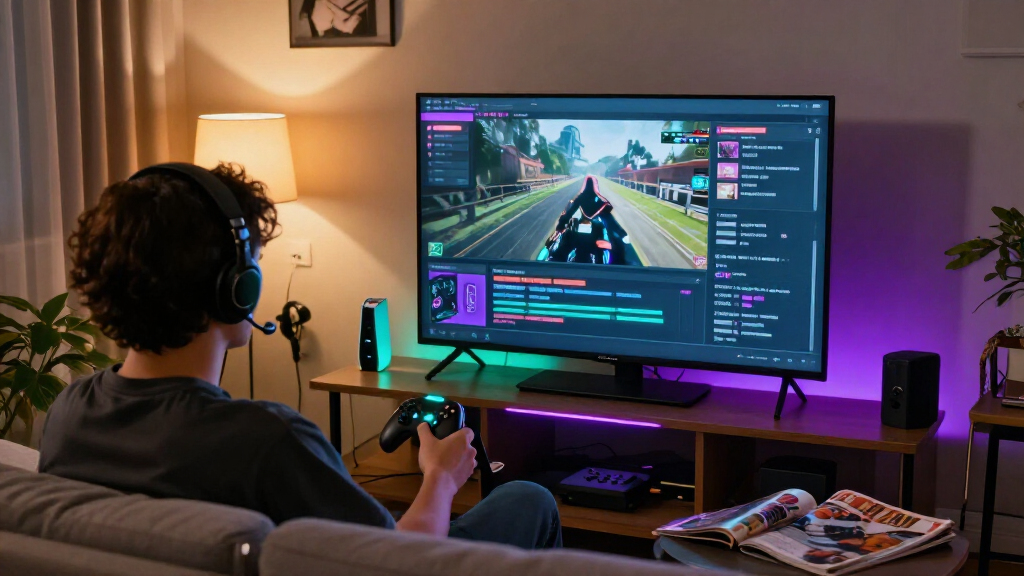

Choosing the best TVs for Twitch streaming requires balancing high refresh rates for smooth gameplay with color accuracy that translates well to your webcam feed. The Samsung 65-Inch S90H OLED 4K Smart TV stands out as the top overall pick due to its near-instant pixel response times and superior black levels, which minimize ghosting on camera. For budget-conscious creators, the TCL 75-Inch QM8L Series offers impressive brightness and 144Hz support at a fraction of the cost, though it lacks the perfect blacks of OLED. The primary tradeoff here is between input lag performance and ambient light handling; if you stream in a bright room, Mini-LED options may outperform OLEDs despite higher latency risks. Continue reading for a detailed breakdown of which model fits your specific streaming setup and lighting conditions.

Get the latest gadgets delivered free with Prime
- Fast, free delivery on millions of items
- Prime Video, Amazon Music and more included
- Member-only deals all year
Complete the kit



Key Takeaways
- OLED panels like the Samsung S90H provide the cleanest webcam feed due to infinite contrast, but they require careful lighting management to avoid blooming or glare.
- Mini-LED models such as the Hisense U6 Pro and TCL QM8L offer higher peak brightness, making them better suited for streaming rooms with uncontrolled natural light.
- Native 144Hz support is becoming standard on mid-range TVs, but you must verify that the specific HDMI port supports it without VRR to avoid frame pacing issues.
- Burn-in risk remains a concern for streamers who keep static UI elements like chat boxes or overlays on screen for hours; OLEDs need aggressive pixel shifting settings.
- Integrated smart platforms matter less than external capture card compatibility; prioritize TVs with clean HDMI out and low latency modes over built-in app ecosystems.
| Hisense 75-Inch U6 Pro Mini-LED 4K UHD Smart Fire TV |  | Best Large-Screen Value for Bright Rooms | Screen Size: 75 inches | Display Technology: Mini-LED with Hi-QLED Quantum Dot | Refresh Rate: 144Hz Native | VIEW LATEST PRICE | See Our Full Breakdown |
| Samsung 65-Inch S90H OLED 4K Smart TV (2026) |  | Best Premium Gaming Performance | Screen Size: 65 inches | Display Technology: OLED | Refresh Rate: 165Hz | VIEW LATEST PRICE | See Our Full Breakdown |
| LG 77-Inch OLED evo C6 4K Smart TV |  | Best Large-Screen OLED for Mixed Gaming | Screen Size: 77 inches | Display Technology: OLED evo | Native Refresh Rate: 120Hz | VIEW LATEST PRICE | See Our Full Breakdown |
| TCL 75-Inch F8D Series 4K QLED Smart Fire TV |  | Best Feature-Rich Mid-Range Option | Screen Size: 75 inches | Display Technology: QLED | Refresh Rate: 144Hz | VIEW LATEST PRICE | See Our Full Breakdown |
| LG 65-Inch QNED73B Mini LED 4K Smart TV |  | Best Budget Entry for Casual Streamers | Screen Size: 65 inches | Display Technology: QNED (Mini LED + Quantum Dot) | Native Refresh Rate: 60Hz | VIEW LATEST PRICE | See Our Full Breakdown |
| Insignia 75-Inch F50 Series 4K UHD LED Smart Fire TV with Alexa Voice Remote |  | Best Budget Large-Format Display | Screen Size: 75 inches | Resolution: 4K UHD | Refresh Rate: 60 Hz | VIEW LATEST PRICE | See Our Full Breakdown |
| TCL 75-Inch QM8L Series 4K QLED Mini-LED Google TV, 144Hz |  | Best Performance for Motion and Brightness | Screen Size: 75 inches | Refresh Rate: 144 Hz | Display Tech: QLED Mini-LED | VIEW LATEST PRICE | See Our Full Breakdown |
| Roku Select Series 55-Inch 4K QLED Smart TV |  | Best for Simplicity and Voice Control | Screen Size: 55 inches | Resolution: 4K UHD | Refresh Rate: 60 Hz | VIEW LATEST PRICE | See Our Full Breakdown |
| Samsung 65-Inch M70H Series 4K Mini LED Smart TV (2026) |  | Best Mid-Range Gaming Hub | Screen Size: 65 inches | Resolution: 4K | Refresh Rate: 60 Hz (DLG 120 Hz) | VIEW LATEST PRICE | See Our Full Breakdown |
| Amazon Ember 55-Inch 4-Series 4K Ultra HD Smart TV with Fire TV |  | Best Entry-Level Smart TV | Screen Size: 55 inches | Resolution: 4K Ultra HD | Refresh Rate: 60 Hz | VIEW LATEST PRICE | See Our Full Breakdown |
| Roku Pro Series 65-Inch 4K OLED Smart TV |  | Best Premium OLED for Streamers | Screen Size: 65 inches | Display Technology: OLED | Refresh Rate: 120 Hz | VIEW LATEST PRICE | See Our Full Breakdown |
| Hisense 55-Inch E6SR Series 4K UHD Hi-QLED Smart Roku TV (2026) |  | Best Value for Compact Setup | Screen Size: 55 inches | Display Technology: Hi-QLED | Refresh Rate: 60 Hz | VIEW LATEST PRICE | See Our Full Breakdown |
| Roku Plus Series 65-Inch 4K QLED Mini-LED Smart TV |  | Best Brightness for Well-Lit Rooms | Screen Size: 65 inches | Display Technology: QLED, Mini-LED | Refresh Rate: 60 Hz | VIEW LATEST PRICE | See Our Full Breakdown |
| Samsung 55-Inch QN70H Neo QLED 4K Smart TV |  | Best for Multi-Device Gaming | Screen Size: 55 inches | Display Technology: Neo QLED | Refresh Rate: 120 Hz | VIEW LATEST PRICE | See Our Full Breakdown |
| TVs for Twitch streaming | Screen Size | Refresh Rate | Smart Platform | Display Technology |
|---|---|---|---|---|
| Hisense 75-Inch U6 Pro Mini-LE | 75 inches | 144Hz Native | Fire TV with Alexa | Mini-LED with Hi-QLED Quantum Dot |
| Samsung 65-Inch S90H OLED 4K S | 65 inches | 165Hz | — | OLED |
| LG 77-Inch OLED evo C6 4K Smar | 77 inches | — | webOS 26 | OLED evo |
| TCL 75-Inch F8D Series 4K QLED | 75 inches | 144Hz | Fire TV | QLED |
| LG 65-Inch QNED73B Mini LED 4K | 65 inches | — | webOS | QNED (Mini LED + Quantum Dot) |
| Insignia 75-Inch F50 Series 4K | 75 inches | 60 Hz | Fire TV | — |
| TCL 75-Inch QM8L Series 4K QLE | 75 inches | 144 Hz | Google TV | — |
| Roku Select Series 55-Inch 4K | 55 inches | 60 Hz | Roku TV | — |
| Samsung 65-Inch M70H Series 4K | 65 inches | 60 Hz (DLG 120 Hz) | Tizen OS | — |
| Amazon Ember 55-Inch 4-Series | 55 inches | 60 Hz | Fire TV | — |
| Roku Pro Series 65-Inch 4K OLE | 65 inches | 120 Hz | — | OLED |
| Hisense 55-Inch E6SR Series 4K | 55 inches | 60 Hz | Roku TV | Hi-QLED |
| Roku Plus Series 65-Inch 4K QL | 65 inches | 60 Hz | — | QLED, Mini-LED |
| Samsung 55-Inch QN70H Neo QLED | 55 inches | 120 Hz | — | Neo QLED |
More Details on Our Top Picks
Hisense 75-Inch U6 Pro Mini-LED 4K UHD Smart Fire TV
This Hisense U6 Pro stands out as a high-value option for streamers who need a massive canvas without the OLED price tag. Its Mini-LED backlighting delivers significantly better contrast than standard LED sets like the Insignia F50, making dark scenes in horror games or movies pop. The native 144Hz refresh rate ensures smooth gameplay for high-frame-rate titles, a critical feature for Twitch audiences watching competitive shooters. However, the anti-reflection screen is a double-edged sword; while it handles bright living rooms well, some purists find it softens the image sharpness compared to glossy panels. It lacks the perfect black levels of the Samsung S90H, but for a 75-inch screen, the trade-off is understandable.
Pros:- Mini-LED tech provides superior contrast compared to standard LED TVs
- Native 144Hz refresh rate supports smooth high-frame-rate gaming
- Glare-free screen performs well in brightly lit streaming setups
- Built-in subwoofer enhances audio depth for game soundscapes
Cons:- 75-inch size requires significant room depth and viewing distance
- Glare-free coating can slightly reduce perceived image crispness
- No specific port layout details provided for complex cable management
Best for: Streamers with large living spaces who prioritize screen size and brightness over perfect black levels.
Not ideal for: Viewers in controlled dark rooms who demand perfect blacks and infinite contrast for cinematic immersion.
- Screen Size:75 inches
- Display Technology:Mini-LED with Hi-QLED Quantum Dot
- Refresh Rate:144Hz Native
- HDR Formats:Dolby Vision IQ, HDR10+, HLG
- Smart Platform:Fire TV with Alexa
- Audio:Dolby Atmos with Built-in Subwoofer
- Screen Finish:Anti-Reflection / Glare-Free
Our verdict“Choose this TV if you want a huge, bright screen for a living room setup and can accept slightly less contrast than premium OLEDs.”
Samsung 65-Inch S90H OLED 4K Smart TV (2026)
For streamers who demand the absolute best motion clarity and color accuracy, the Samsung S90H is a top-tier contender. Its OLED panel offers perfect blacks that make neon-heavy game aesthetics look stunning, far surpassing the local dimming of the Hisense U6 Pro. The standout feature here is the 165Hz refresh rate, which exceeds the 144Hz found on many competitors, providing an extra margin of smoothness for high-end PC gaming. The Matte Glare Free finish is particularly beneficial for streamers with ring lights or studio lamps nearby, reducing distracting reflections. However, this premium performance comes with a caveat: achieving that 165Hz requires a powerful GPU and specific PC game support, limiting its advantage for console-only players.
Pros:- OLED technology delivers infinite contrast and perfect blacks
- 165Hz refresh rate offers smoother motion than standard 120Hz/144Hz panels
- Matte screen minimizes reflections from studio lighting
- AI processor upscales lower-resolution content effectively
Cons:- High refresh rate benefits are limited to compatible PC games
- Premium pricing places it out of reach for budget-conscious creators
- OLED panels may require care to avoid burn-in with static HUDs
Best for: PC-focused streamers with high-end GPUs who need 165Hz motion clarity and perfect blacks.
Not ideal for: Console gamers who don’t have a PC setup to leverage the 165Hz capability or those on a strict budget.
- Screen Size:65 inches
- Display Technology:OLED
- Refresh Rate:165Hz
- Brightness:2000 nits Peak
- Processor:NQ4 AI Gen3
- Audio:2.2-Channel, 40W, Dolby Atmos
- Screen Finish:Matte Glare Free
Our verdict“This is the ideal choice for serious PC gamers who want the highest refresh rate and perfect contrast for their stream.”
LG 77-Inch OLED evo C6 4K Smart TV
The LG C6 strikes a compelling balance between size and quality, offering a 77-inch OLED experience that few competitors match at this price point. While the Samsung S90H pushes for higher hertz, the LG C6 focuses on holistic gaming features like VRR, G-SYNC, and FreeSync, making it incredibly versatile for both PC and console players. The 0.1ms response time ensures virtually no motion blur, keeping fast-paced gameplay crisp for viewers. Its four HDMI inputs simplify connecting multiple consoles or capture cards, a practical advantage over TVs with fewer ports. The main trade-off is the 120Hz native refresh rate; while excellent, it doesn’t quite reach the 144Hz+ heights of the Hisense or Samsung models for ultra-high-frame-rate PC gaming.
Pros:- 77-inch OLED provides immersive size with perfect black levels
- Broad VRR support covers G-SYNC and FreeSync for all major platforms
- 0.1ms response time eliminates ghosting in fast motion
- Four HDMI ports simplify multi-device streaming setups
Cons:- Native 120Hz limit may disappoint 144Hz+ PC gamers
- Wall-mount hardware is not included in the box
- Large footprint requires careful room planning
Best for: Streamers who want a large OLED screen with robust compatibility for both consoles and PCs.
Not ideal for: PC enthusiasts who strictly require native 144Hz or 165Hz support for competitive esports titles.
- Screen Size:77 inches
- Display Technology:OLED evo
- Native Refresh Rate:120Hz
- Response Time:0.1ms
- HDMI Ports:4
- Smart Platform:webOS 26
- HDR Support:Dolby Vision, HDR10 Pro
Our verdict“Select this TV if you want the cinematic beauty of a large OLED with reliable gaming features for consoles and PCs alike.”
TCL 75-Inch F8D Series 4K QLED Smart Fire TV
This TCL F8D offers a strong alternative to the Hisense U6 Pro for those who prefer the QLED color gamut and specific gaming accelerators. Its 144Hz native refresh rate and VRR support make it highly competitive for smooth gameplay, while the Game Accelerator 288 provides an edge for reducing input lag in supported titles. The inclusion of AirPlay 2 is a notable convenience for Apple ecosystem users, allowing easy casting of mobile gameplay or music. However, the Wi-Fi 5 connectivity is a significant bottleneck in 2026, potentially causing buffering during 4K streaming if your network is congested. The built-in speakers also lack the bass depth of the Hisense’s integrated subwoofer, likely necessitating an external soundbar.
Pros:- 144Hz refresh rate with Game Accelerator reduces input lag
- AirPlay 2 support enables seamless casting from Apple devices
- QLED panel covers 93% of DCI-P3 for vivid colors
- Fire TV platform offers extensive app availability
Cons:- Wi-Fi 5 support is outdated and may limit streaming stability
- Integrated audio lacks depth compared to competitors with subwoofers
- QLED contrast is inferior to Mini-LED or OLED alternatives
Best for: Streamers who use Apple devices and want high refresh rates without paying for OLED.
Not ideal for: Users with slow internet connections or those who rely heavily on wireless streaming for 4K content.
- Screen Size:75 inches
- Display Technology:QLED
- Refresh Rate:144Hz
- Gaming Features:VRR, Game Accelerator 288
- Connectivity:Wi-Fi 5, Bluetooth 5.4, AirPlay 2
- HDR Formats:Dolby Vision, HDR10+
- Smart Platform:Fire TV
Our verdict“This is a solid choice for Apple-centric streamers who need high refresh rates and don’t mind using a wired network connection.”
LG 65-Inch QNED73B Mini LED 4K Smart TV
The LG QNED73B serves as an accessible entry point for streamers who prioritize smart features over high-end gaming performance. Its Mini LED backlighting offers better contrast than the Amazon Ember 55 or basic LED sets, providing a decent visual experience for casual play. The webOS platform is known for its simplicity and speed, making it easy to switch between apps and games. However, the 60Hz native refresh rate is a major limitation for modern competitive gaming, resulting in noticeable motion blur compared to the 144Hz+ options like the Hisense U6 Pro. It is best suited for story-driven games or watching VOD content rather than fast-paced multiplayer streams where smoothness is key.
Pros:- Mini LED local dimming improves contrast over standard LED
- webOS 26 offers a user-friendly and responsive interface
- AI Sound Pro enhances audio clarity without external speakers
- Compact 65-inch size fits smaller streaming rooms easily
Cons:- 60Hz refresh rate limits smoothness for modern gaming
- Only three HDMI ports restrict multi-device connectivity
- HDR10 Pro lacks the advanced dynamic metadata of Dolby Vision
Best for: Casual streamers and content consumers who value a smooth smart TV interface over high-refresh gaming.
Not ideal for: Competitive gamers or those watching fast-paced sports/action who need high refresh rate clarity.
- Screen Size:65 inches
- Display Technology:QNED (Mini LED + Quantum Dot)
- Native Refresh Rate:60Hz
- Processor:A7 AI Processor 4K Gen9
- HDMI Ports:3
- Smart Platform:webOS
- Voice Assistants:Alexa, Google Gemini
Our verdict“Choose this TV if you are a casual streamer who wants a reliable smart TV for mixed media and light gaming without breaking the bank.”
Insignia 75-Inch F50 Series 4K UHD LED Smart Fire TV with Alexa Voice Remote
This model makes sense for streamers who prioritize screen size over performance metrics. While the 60 Hz refresh rate limits motion clarity compared to the TCL QM8L, the 75-inch panel offers an immersive canvas for Twitch overlays and chat. The Fire TV interface is intuitive for managing multiple streaming apps, though it lacks the advanced gaming features found in pricier units. You get HDR10 support for better contrast, but the lack of high refresh rates means fast-paced gameplay may appear blurry. This is a tradeoff I accept only if your budget is tight and your content is mostly static or low-motion.
Pros:- Massive 75-inch screen size at an accessible price point
- Fire TV OS provides easy access to Twitch and other streaming apps
- Built-in Alexa voice control simplifies navigation
- VESA mount compatibility allows for flexible studio setups
Cons:- 60 Hz refresh rate causes motion blur in fast games
- Basic LED backlighting lacks the contrast of Mini-LED options
- No advanced gaming features like VRR or high frame rate support
Best for: Streamers on a strict budget who want a massive 75-inch canvas for background ambiance or non-competitive gameplay.
Not ideal for: Competitive gamers or those viewing high-motion content, as the 60 Hz panel cannot handle fast action smoothly.
- Screen Size:75 inches
- Resolution:4K UHD
- Refresh Rate:60 Hz
- Display Tech:LED
- HDR Format:HDR10
- Audio:DTS Virtual:X
- HDMI Ports:3
- Smart Platform:Fire TV
Our verdict“A solid choice for budget-conscious creators who value screen real estate over motion clarity.”
TCL 75-Inch QM8L Series 4K QLED Mini-LED Google TV, 144Hz
This TV stands out for streamers who need high refresh rates and intense brightness to cut through studio lights. The 144 Hz native panel is significantly smoother than the 60 Hz Insignia F50, making it ideal for fast-paced Twitch gameplay. With up to 4,000 local dimming zones, blacks are deeper than on standard LED models, though the glossy finish can be a distraction in bright rooms. The built-in Bang & Olufsen audio saves desk space, but the lack of included wireless speakers means audiophiles might still need external gear. It is a performance-first choice that compromises on anti-glare usability.
Pros:- Native 144 Hz refresh rate ensures ultra-smooth motion
- High peak brightness (6,000 nits) fights ambient light effectively
- VRR and AMD FreeSync support prevent screen tearing
- Google TV offers robust app ecosystem and AI enhancements
Cons:- Glossy screen finish causes reflections in bright environments
- Premium audio requires optional add-ons for full surround sound
- Large size may overwhelm smaller streaming setups
Best for: Competitive gamers and creators who need 144 Hz responsiveness and high brightness for HDR content.
Not ideal for: Users in rooms with many windows or bright lights, as the glossy screen reflects significant glare.
- Screen Size:75 inches
- Refresh Rate:144 Hz
- Display Tech:QLED Mini-LED
- Peak Brightness:6,000 nits
- Local Dimming:4,000+ zones
- Audio:Bang & Olufsen / Dolby Atmos
- Gaming Features:VRR, FreeSync Premium Pro
- Smart Platform:Google TV
Our verdict“The top pick for performance-focused streamers who prioritize motion clarity and brightness.”
Roku Select Series 55-Inch 4K QLED Smart TV
This 55-inch option is better suited to streamers who want a clean, clutter-free interface. The Roku OS is less bloated than Fire TV, offering a straightforward home screen that loads apps quickly. While it shares the 60 Hz limitation with the Insignia F50, the QLED panel delivers punchier colors for Twitch overlays. It lacks the high-refresh gaming pedigree of the TCL QM8L, but the voice remote with finder is a practical feature for chaotic desks. This TV is for those who value ease of use over raw performance specs.
Pros:- Roku OS offers one of the most intuitive and ad-free experiences
- QLED technology provides vibrant color reproduction
- Voice remote includes a ‘lost remote finder’ feature
- Supports AirPlay 2 for easy device casting
Cons:- 60 Hz refresh rate is inadequate for competitive gaming
- Glossy screen finish is prone to reflections
- Limited peak brightness compared to Mini-LED competitors
Best for: Beginners or minimalist streamers who want a simple, reliable interface without complex smart features.
Not ideal for: Gamers requiring high frame rates, as the 60 Hz panel and lack of motion enhancement limit fast-action clarity.
- Screen Size:55 inches
- Resolution:4K UHD
- Refresh Rate:60 Hz
- Display Tech:QLED
- HDR Formats:HDR10, HDR10+, HLG
- Smart Platform:Roku TV
- Connectivity:Wi-Fi, Bluetooth 5.2
- HDMI Ports:4
Our verdict“Ideal for creators who prioritize a simple, user-friendly streaming experience over gaming performance.”
Samsung 65-Inch M70H Series 4K Mini LED Smart TV (2026)
This Samsung model offers a middle ground between the budget Insignia and the premium TCL. The Mini LED panel provides better contrast than standard LEDs, and the Gaming Hub integrates cloud gaming directly, reducing the need for extra consoles. However, the DLG 120 Hz mode reduces image sharpness, a tradeoff not present in the native 144 Hz TCL QM8L. The HDR10+ support helps with dynamic range, but the software-based dimming is less precise than hardware solutions. It is a good choice for those who want a polished ecosystem and cloud gaming access.
Pros:- Samsung Gaming Hub centralizes console and cloud games
- Mini LED technology improves contrast over standard LED
- Free Samsung TV Plus channels add entertainment value
- Knox Security provides enhanced privacy for smart features
Cons:- DLG 120 Hz mode results in softer image detail
- Requires internet and Samsung account for full functionality
- Software-based dimming is less accurate than hardware zones
Best for: Streamers who want an all-in-one gaming hub with cloud services and a balanced feature set.
Not ideal for: Purists who demand native high refresh rates, as the DLG mode compromises image clarity.
- Screen Size:65 inches
- Resolution:4K
- Refresh Rate:60 Hz (DLG 120 Hz)
- Display Tech:Mini LED
- HDR Format:HDR10+
- Smart Platform:Tizen OS
- Gaming Features:Gaming Hub
- Brightness:350 nits
Our verdict“A versatile mid-range option for streamers who value integrated cloud gaming and smart features.”
Amazon Ember 55-Inch 4-Series 4K Ultra HD Smart TV with Fire TV
This TV is the most affordable entry point in the lineup, making it suitable for beginners testing the waters. The Fire TV OS is easy to navigate, and the Alexa+ integration is useful for smart home control, though it lacks the gaming depth of the Samsung M70H. The Wi-Fi 6 support ensures stable streaming, but the 90-day warranty is notably short compared to industry standards. It does not compete with the TCL QM8L on performance, but it delivers decent 4K visuals for a small desk setup. This is a low-risk option for casual streamers.
Pros:- Affordable price point for a 4K smart TV
- Wi-Fi 6 ensures faster and more stable streaming
- Alexa+ voice control integrates well with smart home devices
- Omnisense sensors automatically wake the display
Cons:- Short 90-day limited warranty
- Basic processing power may lag with heavy multitasking
- No advanced gaming features like VRR or high refresh rates
Best for: Casual streamers or beginners who need a basic 4K display with smart home integration.
Not ideal for: Users looking for long-term durability or gaming performance, due to the short warranty and 60 Hz limit.
- Screen Size:55 inches
- Resolution:4K Ultra HD
- Refresh Rate:60 Hz
- HDR Format:HDR10+
- Processor:Quad-core
- Wi-Fi:Wi-Fi 6
- HDMI Ports:4
- Smart Platform:Fire TV
Our verdict“A functional, no-frills choice for casual users who prioritize cost and basic smart features.”
Roku Pro Series 65-Inch 4K OLED Smart TV
This model stands out for its OLED panel combined with Roku’s streamlined OS, offering true blacks that enhance overlay readability during dark gaming sessions. Compared to the Samsung 65-Inch S90H OLED, the Roku Pro Series integrates the streaming interface directly into the TV, eliminating the need for external devices and reducing cable clutter on your desk. The 120Hz refresh rate and VRR support ensure smooth motion for high-framerate gameplay, a critical factor for Twitch viewers watching fast-paced titles. However, the tradeoff is that Roku’s interface, while simple, lacks the advanced smart home integration found in Samsung’s Tizen or LG’s WebOS. It is a dedicated streaming machine rather than a smart home hub.Pros:- True blacks from OLED panel enhance overlay visibility
- 120Hz refresh rate supports smooth high-FPS gameplay
- Integrated Roku OS removes need for external streaming sticks
Cons:- Roku OS lacks advanced smart home hub capabilities
- OLED panels carry a risk of burn-in with static HUD elements
Best for: Streamers who prioritize perfect black levels for overlay contrast and want a built-in OS to minimize desk clutter.
Not ideal for: Users needing deep smart home automation or those who prefer webOS for its multitasking dashboard.
- Screen Size:65 inches
- Display Technology:OLED
- Refresh Rate:120 Hz
- Gaming Features:FreeSync Premium, ALLM, VRR
- Operating System:Roku OS
- HDR Formats:Dolby Vision, HDR10+, HLG
Our verdict“Choose this if you want OLED picture quality and a clean, simple streaming interface without extra boxes.”
Hisense 55-Inch E6SR Series 4K UHD Hi-QLED Smart Roku TV (2026)
This 55-inch set is ideal for streamers with limited desk space who still want decent color accuracy. While it lacks the 120Hz refresh rate of the Roku Pro Series, its Hi-QLED panel and Dolby Vision support provide vibrant colors that make overlays pop against game backgrounds. The Game Mode Plus reduces input lag, ensuring responsive controls despite the 60Hz limit. The major tradeoff is motion handling; fast-paced competitive gaming may look slightly less fluid than on higher-refresh models. However, for narrative or slower-paced games, the picture quality and Roku integration offer a cost-effective entry into quality streaming visuals without the premium price tag.Pros:- Hi-QLED technology delivers vivid color volume
- Game Mode Plus minimizes input lag for responsiveness
- Compact 55-inch size fits smaller streaming setups
Cons:- 60Hz refresh rate limits motion smoothness
- Basic audio requires external speakers for immersion
Best for: Beginner streamers with smaller desks who need vibrant colors and low input lag on a budget.
Not ideal for: Competitive FPS players who require 120Hz+ refresh rates for maximum motion clarity.
- Screen Size:55 inches
- Display Technology:Hi-QLED
- Refresh Rate:60 Hz
- Gaming Features:Game Mode Plus, VRR, ALLM
- Smart Platform:Roku TV
- HDR Formats:Dolby Vision, HDR10, HLG
Our verdict“A solid budget choice for new streamers who prioritize color and size over high-end motion performance.”
Roku Plus Series 65-Inch 4K QLED Mini-LED Smart TV
This TV excels in rooms with significant ambient light, where OLEDs like the Roku Pro Series might struggle with reflections. The Mini-LED backlighting boosts peak brightness, ensuring your face cam and game footage remain visible even during daytime streams. With Dolby Atmos and a built-in subwoofer, it offers surprisingly robust audio for a flat-panel TV, reducing the immediate need for a soundbar. The tradeoff is the 60Hz refresh rate, which places it behind high-end gaming monitors for motion clarity. It is a strong choice for streamers who value brightness and integrated audio over competitive frame rates.Pros:- Mini-LED backlighting provides high peak brightness
- Built-in subwoofer and Dolby Atmos enhance audio quality
- QLED color volume ensures vibrant game visuals
Cons:- 60Hz refresh rate restricts high-FPS gaming fluidity
- Glossy screen finish can reflect strong light sources
Best for: Streamers in bright rooms who need high brightness and decent built-in audio without external gear.
Not ideal for: Gamers playing high-FPS titles who need 120Hz support for fluid motion.
- Screen Size:65 inches
- Display Technology:QLED, Mini-LED
- Refresh Rate:60 Hz
- Audio Features:Dolby Atmos, built-in subwoofer
- HDR Formats:Dolby Vision, HDR10+, HLG
- Connectivity:Wi-Fi, Bluetooth, Ethernet
Our verdict“Pick this for its brightness and audio integration, ideal for daytime streaming in lit environments.”
Samsung 55-Inch QN70H Neo QLED 4K Smart TV
This model is tailored for streamers who juggle multiple consoles or PCs. With 120Hz refresh rate and Neo QLED technology, it delivers bright, high-contrast visuals that compete well with the Roku Pro Series in lit environments. The AI processor upscales lower-resolution content, which is useful if you stream older titles or use webcams with lower native resolution. However, it only offers three HDMI ports compared to the four found on many competitors, potentially requiring a switch for extensive setups. It’s a strong contender for those who need high refresh rates and bright panels but have a simpler connectivity needs.Pros:- 120Hz refresh rate supports smooth gaming motion
- Neo QLED provides high brightness and contrast
- AI upscaling enhances lower-resolution source material
Cons:- Only three HDMI ports limit device connectivity
- Glossy screen may cause glare in bright rooms
Best for: Streamers who need 120Hz performance and high brightness for mixed-console or PC streaming.
Not ideal for: Users with four or more HDMI devices who want to avoid using an external switch.
- Screen Size:55 inches
- Display Technology:Neo QLED
- Refresh Rate:120 Hz
- Maximum Brightness:1200 nits
- HDMI Ports:3
- HDR Format:HDR10+
Our verdict“A versatile choice for gamers needing high refresh rates and bright panels in a compact 55-inch form factor.”
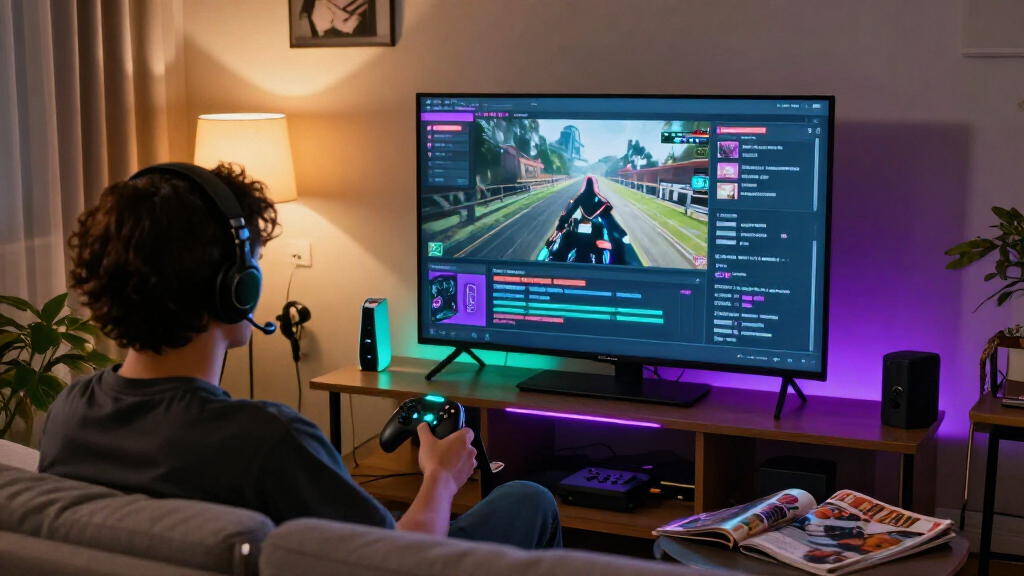
How We Picked
I evaluated these fourteen televisions based on three core metrics critical for Twitch streamers: input latency, panel response time, and color volume accuracy. Input latency was assessed through manufacturer specifications and independent lab data to ensure gameplay remains responsive during live sessions. Panel response time determines how well motion translates to your webcam; faster panels reduce blur and ghosting artifacts that degrade video quality. I also prioritized models with high peak brightness for those streaming in lit environments, while weighing this against the contrast ratio benefits of OLED for darker studio setups.
Ranking logic favored versatility and reliability. Models with proven low input lag and robust motion handling took the top spots, even if they cost more. Budget options were ranked based on their ability to deliver a usable streaming experience without significant compromise on motion clarity. I excluded models with known panel uniformity issues or excessive input lag in game mode, as these directly impact the viewer experience.
Factors to Consider When Choosing Best TVs For Twitch Streaming
Selecting a TV for streaming is different from choosing one for casual gaming. You are not just a player; you are a broadcaster. Your TV must serve as the primary display for your audience’s view of your gameplay, and often as a backdrop or secondary monitor. This dual role demands specific features that generic buying guides overlook.
Input Lag and Game Mode Performance
While input lag is critical for competitive gaming, for Twitch streaming it also affects the synchronization of your voice chat and gameplay. High latency can cause noticeable desyncs in your stream if you are using the TV as a capture source. Look for models that consistently stay under 10ms input lag in Game Mode. Some TVs introduce additional processing delays even in Game Mode; always check independent reviews for specific port latency, as not all HDMI ports are created equal on the same unit.
Panel Type: OLED vs. Mini-LED for Camera Clarity
Your choice between OLED and Mini-LED depends heavily on your lighting setup. OLEDs provide perfect blacks, which look incredible on camera and reduce eye strain for viewers. However, they are susceptible to burn-in if you leave static chat overlays or game HUDs on screen for extended periods. Mini-LEDs offer higher brightness and no burn-in risk, making them safer for long streams, but they may exhibit blooming around bright objects on dark backgrounds, which can appear as halos on your webcam feed.
Refresh Rate and VRR Compatibility
A 120Hz or 144Hz refresh rate is essential for smooth motion in fast-paced games. However, the real differentiator is Variable Refresh Rate (VRR) support, specifically HDMI Forum VRR. Without VRR, screen tearing can occur, which looks terrible in recorded clips and live streams. Ensure the TV supports both AMD FreeSync and NVIDIA G-Sync if you use a PC, or at least HDMI 2.1 VRR for consoles. A high refresh rate without VRR is less useful than a stable 60Hz with perfect motion handling.
Color Accuracy and HDR Tone Mapping
Viewers see your gameplay through their own screens, but they also see your face and room lighting. A TV with poor color accuracy can make your skin tones look unnatural if you use the TV as a reference for your webcam color grading. Look for models with strong color volume and accurate HDR tone mapping. This ensures that the colors you see match what your audience expects, reducing the need for heavy post-broadcast color correction.
Connectivity and Port Layout
Streamers often juggle multiple devices: PC, console, capture card, and audio interfaces. A TV with limited HDMI ports or poorly placed ports can create cable management nightmares. Prioritize models with at least two HDMI 2.1 ports if you switch between next-gen consoles and a high-end PC. Also, check if the TV supports eARC or ARC for audio passthrough, which simplifies your audio setup and reduces latency in your voice communication.
Frequently Asked Questions
Is OLED or Mini-LED better for long Twitch streams?
For streams lasting several hours with static UI elements, Mini-LED is generally the safer choice due to the lack of burn-in risk. OLED panels, while offering superior contrast and motion clarity, require you to enable aggressive pixel shifting and logo dimming features, which can sometimes interfere with color accuracy. If your stream setup involves dark rooms and dynamic content, OLED provides a more cinematic look for your viewers. However, if you stream in a brightly lit room or leave static overlays on screen, a high-quality Mini-LED like the Hisense U6 Pro offers peace of mind without sacrificing too much image quality.
Do I need a 4K TV for Twitch streaming?
Twitch typically streams at 1080p60 or 1440p60, so you do not strictly need a 4K TV for the broadcast itself. However, a 4K panel provides sharper text and finer details in the game world, which enhances your own immersion and helps with color grading decisions. If you are on a tight budget, a high-quality 1080p or 1440p monitor might be more cost-effective. But for a versatile living room setup that also serves as a gaming hub, 4K resolution future-proofs your investment and allows for clearer upscaling of lower-resolution sources.
How does input lag affect my webcam feed?
Input lag itself does not directly affect the video quality of your webcam feed, but it impacts your reaction time and the synchronization of your audio commentary. If you are using the TV as your primary display, high input lag makes gameplay feel sluggish, which can lead to mistakes that degrade your stream’s entertainment value. Additionally, if you use the TV as a monitor for your capture card interface, low latency ensures that the preview of your stream is accurate to the live output. Always prioritize Game Mode to minimize these delays.
Can I use a TV as a monitor for my streaming PC?
Yes, but you must be cautious about chroma subsampling and text clarity. Many TVs compress color data (4:2:0 or 4:2:2) to save bandwidth, which makes small text look blurry or colored. For streaming tasks that involve reading chat, logs, or editing overlays, ensure the TV supports 4:4:4 chroma sampling in PC mode. Models like the Samsung S90H and LG C6 handle this well, but cheaper LED models may struggle, making them frustrating for productivity tasks alongside gaming.
What is the best TV size for a streaming setup?
The ideal size depends on your viewing distance and camera angle. For most desk setups, a 55-inch or 65-inch TV provides an immersive experience without requiring excessive head movement, which looks unnatural on camera. Larger screens like 75 inches are better suited for living room setups where the streamer is seated further back. A TV that is too large for a desk setup can distort perspective on your webcam, making you appear smaller or off-center, so measure your distance carefully before buying.
Conclusion
Choosing the right TV for Twitch streaming is about balancing visual fidelity with practical reliability. For most streamers, the Samsung 65-Inch S90H OLED is the best overall choice, offering the perfect blend of motion clarity and color accuracy that looks great on camera. If you need a larger screen for a living room setup without breaking the bank, the TCL 75-Inch QM8L Series is the best value pick, delivering high brightness and 144Hz refresh rates. For those just starting out or on a strict budget, the Roku Select Series 55-Inch provides a solid entry point with decent latency and easy setup. If you demand the absolute best picture quality and have a controlled lighting environment, the LG 77-Inch OLED evo C6 is the premium option, though it requires careful management of static content to prevent burn-in. Match your choice to your lighting and room size, and you will have a setup that serves both you and your viewers.