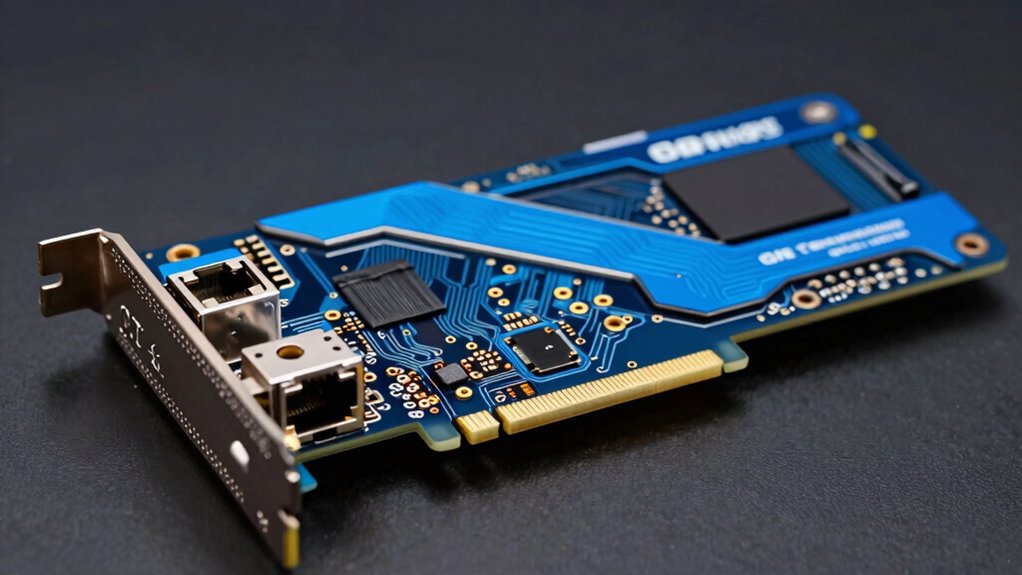

Searching for the best 10gbe network cards pcie in 2026? The top choices vary from high-performance options like the Intel 82599EN SFP+ to more budget-friendly models such as the Cudy 10G PCIe Ethernet Card. The main tradeoffs involve balancing speed, compatibility, and price—more advanced cards often require better hardware support, while cheaper options might lack features or durability. Whether you’re setting up a server, upgrading a workstation, or building a NAS, choosing the right card depends heavily on your specific needs. Continue reading for a detailed comparison of each option to find the perfect match for your setup.

Get the latest gadgets delivered free — and shop member deals
- Fast, free delivery on millions of items
- Access to Prime Big Deal Days deals on October 6–7
- Prime Video, Amazon Music and more included
Complete the kit



Key Takeaways
- The top-performing cards tend to feature SFP+ ports and enterprise-grade controllers like the Intel 82599EN, offering maximum speed and reliability.
- Budget-friendly options such as the Cudy 10G PCIe Ethernet Network Card provide solid performance for less demanding setups but may lack advanced features.
- Compatibility varies significantly, with some cards supporting Linux, Windows, and VMware seamlessly, while others may require additional drivers or configurations.
- Physical size and port options are critical—consider whether dual RJ45 ports or SFP+ are necessary for your network infrastructure.
- Price often correlates with build quality and feature set; investing in a slightly more expensive card can improve durability and future-proofing.
| 10G PCIe Network Card 10Gb Base-T AQC113 RJ45 NIC Ethernet Adapter | 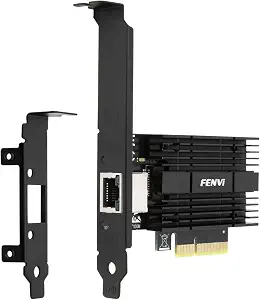 | Best Overall for Multi-Gig Versatility | Controller: Marvell AQC113 | Speed Support: 10G/5G/2.5G/1G/100Mbps | Interface: PCIe x4/x8/x16 | VIEW ON AMAZON | See Our Full Breakdown |
| Cudy 10G PCIe Ethernet Network Card (PE10G) |  | Best for Versatile, Multi-OS Compatibility | Network Speed: 10/1/2.5/5/10 Gbps | Interface: PCIe x1 | Wake-on-LAN: Supported | VIEW ON AMAZON | See Our Full Breakdown |
| TRENDnet 10G PCIe Network Adapter, TEG-10GECTX |  | Best for Windows Enterprise Environments | Hardware Interface: PCIe Gen 2 3.0 x4 | Supported Speeds: 10Gbps / 5Gbps / 2.5Gbps / 1Gbps / 100Mbps | Standards: IEEE 802.3ab; IEEE 802.3bz 2.5GBASE-T; IEEE 802.3an 10GBASE-T | VIEW ON AMAZON | See Our Full Breakdown |
| 10Gtek 2.5G PCIe Network Adapter – Gigabit Ethernet Card with Realtek RTL8125 Controller |  | Best for Cost-Effective 2.5G and 10G Networking | Controller: Realtek RTL8125BG + ASMedia ASM1806 | Port: RJ-45 | Interface: PCIe 2.0 x1 | VIEW ON AMAZON | See Our Full Breakdown |
| 10Gb PCIe Network Card, Realtek RTL8127 10G RJ45 Ethernet Adapter |  | Best for Compact 10G Copper Networking | Brand: BZIZU | Model Number: TXA401 | Interface: PCIe 4.0 x1 | VIEW ON AMAZON | See Our Full Breakdown |
| 10Gb PCIe NIC Network Card, Intel 82599EN SFP+, X520-DA1 Compatible |  | Best for High-Performance NAS and Server Use | Brand: BZIZU | Model Number: 10G-1S(1xSFP+) | Number of Ports: 1 | VIEW ON AMAZON | See Our Full Breakdown |
| NICGIGA 10Gb PCIe 4.0 x1 Network Card, Realtek RTL8127 Ethernet Adapter |  | Best for Compact Systems and Broad Compatibility | Model: NIC-RTL8127 | Interface: PCIe 4.0 x1 | Max Speed: 10Gbps | VIEW ON AMAZON | See Our Full Breakdown |
| 10G Base-T PCIe 4.0 x1 Network Card with Marvell AQC113 Controller |  | Best for Desktop and Server High-Speed Connectivity | Controller: Marvell AQtion AQC113 | Speed: Up to 10 Gbps | Interface: PCIe 4.0 x1 | VIEW ON AMAZON | See Our Full Breakdown |
| VIMIN 10G PCIe Network Card with Dual 10Gbps RJ45 Ports |  | Best for Multi-Device High-Speed Networking | Ports: 2x 10Gbps RJ45 | Chipset: Intel X540-T2 | Compatibility: Windows, Linux, VMware | VIEW ON AMAZON | See Our Full Breakdown |
| TP-Link 10Gb PCIe Network Card (TX401) – PCIe to 10 Gigabit Ethernet Adapter |  | Best for Home and Office Bandwidth-Intensive Tasks | Speed: 10 Gbps | Interface: PCIe 3.0 | Compatibility: Windows 10/8.1/8/7, Windows Server, Linux | VIEW ON AMAZON | See Our Full Breakdown |
| SABRENT 10Gb PCIe Network Card, 10GBASE-T, Multi-Gig NIC (NT-10PE) |  | Best Overall for Versatile High-Speed Networking | Interface: PCIe 3.0 x4 | Supported Speeds: 10GbE, 5G, 2.5G, 1G, 100Mbps | Controller: Marvell AQC113 | VIEW ON AMAZON | See Our Full Breakdown |
| 10Gb PCIe Network Card, VunLink 10GbE RJ45 Ethernet Card with Realtek RTL8127AT, Multi-Gig 10G/5G/2.5G/1G NIC Adapter for PC, NAS & Server, PCIe 4.0 x1 |  | Best Compact Choice for Budget-Conscious High-Speed Networking | Interface: PCIe 4.0 x1 | Supported OS: Windows 10/11, Linux | Supported Speeds: 10Gbps, 5G, 2.5G, 1G | VIEW ON AMAZON | See Our Full Breakdown |
| 10Gtek 10Gb PCI-E NIC Network Card, Single SFP+ Port, with Intel 82599EN Controller, Support Windows Server/Linux/VMware |  | Best for Data Centers and Virtualization Environments | Controller: Intel 82599EN | Port: SFP+ | Speed: 10Gb | VIEW ON AMAZON | See Our Full Breakdown |
| 10gbe network cards pcie | Interface | Compatibility | Warranty |
|---|---|---|---|
| 10G PCIe Network Card 10Gb Bas | PCIe x4/x8/x16 | Windows 11/10, Windows Server, Linux | — |
| Cudy 10G PCIe Ethernet Network | PCIe x1 | — | 2 years |
| TRENDnet 10G PCIe Network Adap | — | Windows, Windows Server | — |
| 10Gtek 2.5G PCIe Network Adapt | PCIe 2.0 x1 | — | — |
| 10Gb PCIe Network Card | PCIe 4.0 x1 | — | — |
| 10Gb PCIe NIC Network Card | — | Proxmox, TrueNAS, Unraid, ESXi, QNAP, Synology, Ubuntu, Debian, CentOS | One year |
| NICGIGA 10Gb PCIe 4.0 x1 Netwo | PCIe 4.0 x1 | Windows 11/10, Windows Server 2019/2022, Linux Kernel 6.x+ | 1 Year |
| 10G Base-T PCIe 4.0 x1 Network | PCIe 4.0 x1 | Windows 10/11, Windows Server, Linux | 1 Year |
| VIMIN 10G PCIe Network Card wi | — | Windows, Linux, VMware | 1 Year |
| TP-Link 10Gb PCIe Network Card | PCIe 3.0 | Windows 10/8.1/8/7, Windows Server, Linux | 2 years |
| SABRENT 10Gb PCIe Network Card | PCIe 3.0 x4 | Windows, Linux, Unraid, QNAP, Proxmox | — |
| 10Gb PCIe Network Card | PCIe 4.0 x1 | — | 1 Year |
| 10Gtek 10Gb PCI-E NIC Network | PCIe x8 | — | — |
More Details on Our Top Picks
10G PCIe Network Card 10Gb Base-T AQC113 RJ45 NIC Ethernet Adapter
This card stands out for its support of multi-gig speeds up to 10Gbps, making it ideal for demanding server and NAS setups. Compared with the Cudy PE10G, it offers broader OS compatibility and a built-in heatsink for extended stability. Its reliance on PCIe x4/x8/x16 slots means it’s less suited for older or lower-end desktops that lack these slots, but it provides a straightforward, reliable solution for high-speed networking. The inclusion of a heatsink ensures consistent performance during prolonged data transfers, which is a key advantage over some alternatives that lack active cooling. For those who need a flexible, high-performance card across multiple OS and hardware configurations, this model provides a balanced mix of speed, stability, and compatibility.
Pros:- Supports multi-gig speeds up to 10Gbps for fast data transfer
- Compatible with Windows, Linux, and Windows Server
- Built-in heatsink for stable extended operation
- Flexible installation options with low-profile and standard brackets
Cons:- Requires PCIe x4/x8/x16 slots, limiting compatibility with some systems
- Driver installation needed, which could be complex for some users
Best for: IT professionals and server administrators requiring reliable multi-gig connectivity in enterprise environments.
Not ideal for: Casual users or those with limited PCIe slots, especially if they only need basic 1Gbps networking or have PCIe x1-only systems.
- Controller:Marvell AQC113
- Speed Support:10G/5G/2.5G/1G/100Mbps
- Interface:PCIe x4/x8/x16
- Port:Single RJ45 10GBASE-T
- Compatibility:Windows 11/10, Windows Server, Linux
- Heatsink:Built-in
- Form Factor:Low-profile and standard brackets
Our verdict“This card is perfect for those needing a versatile, high-speed network solution in a server or high-performance desktop environment.”
Cudy 10G PCIe Ethernet Network Card (PE10G)
The Cudy PE10G offers an impressive range of speeds from 1Gbps up to 10Gbps, supporting multiple OS including Windows, Linux, and macOS. Unlike the TRENDnet TEG-10GECTX with its more focused Windows compatibility, this card provides broader system support, making it appealing for mixed environments. Its support for Wake-on-LAN enhances remote management, an advantage for enterprise setups. The PCIe x1 interface, however, could be a limiting factor if your motherboard lacks an available slot, which is a common issue for many users. This model makes sense for those who prioritize cross-platform support and remote management features in a compact form factor.
Pros:- Supports high-speed 10Gbps Ethernet connections
- Includes both low-profile and standard brackets for flexible installation
- Supports Wake-on-LAN for remote management
- Compatible with Windows, Linux, and macOS
Cons:- Requires PCIe x1 slot, which may be unavailable on some systems
- Customer reviews indicate some compatibility issues
Best for: Small business or tech-savvy home users seeking flexible, cross-platform 10G Ethernet connectivity.
Not ideal for: Enthusiasts with older systems lacking PCIe x1 slots or users primarily on Windows who don’t need macOS or Linux support.
- Network Speed:10/1/2.5/5/10 Gbps
- Interface:PCIe x1
- Wake-on-LAN:Supported
- Bracket Types:Low-profile and standard
- Supported OS:Windows, Linux, macOS
- Warranty:2 years
Our verdict“Best suited for users needing cross-platform support and remote management on systems with PCIe x1 slots.”
TRENDnet 10G PCIe Network Adapter, TEG-10GECTX
The TRENDnet TEG-10GECTX is tailored for Windows users with its solid support for Windows and Windows Server, making it a reliable choice for enterprise or data center applications. It supports up to 10Gbps, with additional compatibility for 2.5Gbps and 1Gbps, aligning with the Cudy PE10G but with the added benefit of NDAA and TAA compliance, appealing to government and regulated industries. Its PCIe Gen 2 x4 interface is a limitation compared to newer PCIe standards, but for many existing systems, it remains sufficient. The inclusion of both standard and low-profile brackets adds versatility, and the device’s driver support is straightforward for Windows platforms. However, its restriction to Windows and Windows Server could exclude users on Linux or macOS. This makes it an excellent fit for Windows-centric environments needing high-speed networking.
Pros:- Supports up to 10Gbps Ethernet speeds
- Includes both standard and low-profile brackets
- NDAA and TAA compliance for government use
- Supports multiple high-speed standards (2.5G, 1G, 10G)
Cons:- Requires PCIe 3.0 x4 slot, which might not be available on older motherboards
- Limited to Windows and Windows Server, excluding Linux and macOS users
Best for: IT departments and enterprise users focused on Windows infrastructure and compliance needs.
Not ideal for: Home users or those with mixed OS environments that include Linux or macOS, due to limited OS support.
- Hardware Interface:PCIe Gen 2 3.0 x4
- Supported Speeds:10Gbps / 5Gbps / 2.5Gbps / 1Gbps / 100Mbps
- Standards:IEEE 802.3ab; IEEE 802.3bz 2.5GBASE-T; IEEE 802.3an 10GBASE-T
- Compatibility:Windows, Windows Server
- Included Brackets:Standard and low-profile
- Compliance:NDAA + TAA
Our verdict“Ideal for Windows-based enterprise environments needing compliant, high-speed 10G networking.”
10Gtek 2.5G PCIe Network Adapter – Gigabit Ethernet Card with Realtek RTL8125 Controller
The 10Gtek 2.5G PCIe Adapter stands out for its support of 2.5G, 1G, and 100Mbps speeds, making it a flexible choice for users who don’t need full 10Gbps but want faster-than-Gigabit performance. Its Realtek RTL8125BG controller is common in budget-friendly options, but compared to the 10G PCIe Network Card with RTL8127, it offers better multi-speed support and VLAN/Jumbo Frames features. The PCIe 2.0 x1 interface limits bandwidth slightly, but for most home or small office applications, it’s sufficient. Compatibility across Windows, Linux, and VMware provides broad usability, although it lacks Wake-on-LAN and some enterprise features. This makes it suitable for users balancing cost and performance without requiring advanced management features.
Pros:- Supports 2.5G, 1G, and 100Mbps speeds
- Compatible with Windows, Linux, and VMware
- Supports VLAN and Jumbo Frames for advanced networking
- Budget-friendly price point
Cons:- Does not support Wake-on-LAN or enterprise features
- Limited to PCIe 2.0 x1, which may bottleneck higher speeds in some scenarios
Best for: Home users or small business owners seeking an affordable upgrade for faster network speeds.
Not ideal for: Power users or data centers needing enterprise-grade features or full 10Gbps speeds.
- Controller:Realtek RTL8125BG + ASMedia ASM1806
- Port:RJ-45
- Interface:PCIe 2.0 x1
- Supported Speeds:2500/1000/100 Mbps
- Support OS:Windows 7/8/10/11, Windows Server 2008 R2/2012/2016/2019, Linux, VMware
- Not Supported:ESXi 7/8, FreeBSD, Hot Swapping
Our verdict“A strong choice for budget-conscious users wanting faster speeds without enterprise features.”
10Gb PCIe Network Card, Realtek RTL8127 10G RJ45 Ethernet Adapter
The Realtek RTL8127-based BZIZU TXA401 offers a practical option for those needing 10G Ethernet over copper in a compact form. Its PCIe 4.0 x1 interface makes it compatible with modern systems, and it supports 10GBASE-T with auto-negotiation for multiple speeds. Compared to the 10Gtek 2.5G Adapter, it emphasizes 10Gbps over copper, making it suitable for high-bandwidth needs such as video editing or NAS access. Its inclusion of both full-height and low-profile brackets enhances installation versatility, and support for Windows, Linux, and FreeBSD broadens its usability. The main limitation is that it requires driver installation for full functionality, and some reviews cite moderate performance ratings, indicating that it may not be as stable or feature-rich as higher-end options.
Pros:- Supports 10GBASE-T over copper with auto-negotiation
- Fits into PCIe 4.0 x1 slots, compatible with modern systems
- Includes full-height and low-profile brackets
- Supports Windows, Linux, and FreeBSD
Cons:- Requires driver installation for full 10G operation
- Moderate user reviews suggest variability in stability
Best for: Small labs, home media editing setups, or NAS users requiring reliable 10G over copper in a compact form.
Not ideal for: Data centers or enterprise environments needing advanced features like VLAN or jumbo frames, or systems without PCIe x1 slots.
- Brand:BZIZU
- Model Number:TXA401
- Interface:PCIe 4.0 x1
- Network Speed:10GBASE-T
- Power Consumption:Under 4W
- Supported OS:Windows 11/10, Linux, FreeBSD
Our verdict“Suitable for compact, high-speed copper networking setups in small-scale or home environments.”
10Gb PCIe NIC Network Card, Intel 82599EN SFP+, X520-DA1 Compatible
This card stands out for its robust support of sustained 10Gbps throughput, making it an excellent choice for demanding NAS or server environments. Its compatibility with multiple operating systems and third-party optics provides flexibility that surpasses many comparable cards like the NICGIGA RTL8127, which is more limited in supported cabling options. The inclusion of both low-profile and full-height brackets facilitates versatile installation, but the passive heatsink means airflow is critical—without adequate cooling, thermal performance may suffer. Additionally, it requires a PCIe x4, x8, or x16 slot, which could restrict use in smaller systems. Compared with the NICGIGA, this model offers better compatibility and durability but at a potentially higher cost and power draw.
Pros:- Supports sustained 10Gbps throughput for high-speed data transfer
- Compatible with multiple operating systems and third-party optics
- Includes both low-profile and full-height brackets for flexible installation
Cons:- Passive heatsink may require good airflow or additional cooling
- Requires PCIe x4, x8, or x16 slot, which may limit compatibility in small form factor systems
Best for: System administrators or power users deploying high-speed storage networks needing reliable, multi-OS compatible NICs.
Not ideal for: Casual home users or small office setups with limited PCIe slots or minimal network demands.
- Brand:BZIZU
- Model Number:10G-1S(1xSFP+)
- Number of Ports:1
- Media:10 Gbps PCIe NIC
- Compatibility:Proxmox, TrueNAS, Unraid, ESXi, QNAP, Synology, Ubuntu, Debian, CentOS
- Form Factor:Low-profile and full-height brackets included
- Warranty:One year
Our verdict“This card is best suited for enterprise or advanced users seeking reliable, high-throughput network connections in server environments.”
NICGIGA 10Gb PCIe 4.0 x1 Network Card, Realtek RTL8127 Ethernet Adapter
This NICGIGA card excels in delivering high-speed 10Gbps performance with a PCIe 4.0 x1 interface, perfect for systems with limited PCIe slots where space is constrained. Its support for Windows, Linux, and high-quality cabling like Cat6a or Cat7 makes it a flexible choice, especially compared to the Intel-based options like the VIMIN or TP-Link cards that may require PCIe x8 or x16 slots for optimal performance. However, being limited to PCIe x1 could be a drawback for users with larger, more expandable systems. Its low heat generation and plug-and-play support make it suitable for demanding applications, but system compatibility with PCIe 4.0 x1 is critical for full performance.
Pros:- High-speed 10Gbps performance suitable for demanding applications
- Broad OS support and easy plug-and-play setup
- Compact PCIe 4.0 x1 form factor fits into small or full-size systems
Cons:- Limited to PCIe x1, restricting compatibility with some systems
- Supports only single-port operation, less flexible for multi-device setups
Best for: Enthusiasts or IT professionals needing a compact, versatile 10Gbps NIC for small form factor or upgrade projects.
Not ideal for: Older systems with only PCIe 2.0 slots or users needing dual ports or higher throughput in a single card.
- Model:NIC-RTL8127
- Interface:PCIe 4.0 x1
- Max Speed:10Gbps
- Supported Speeds:10Gbps, 5Gbps, 2.5Gbps, 1Gbps, 100Mbps
- Compatibility:Windows 11/10, Windows Server 2019/2022, Linux Kernel 6.x+
- Cabling Support:Cat6a, Cat7, high-quality Cat6
- Warranty:1 Year
Our verdict“This card makes the most sense for users with space-constrained systems who need reliable 10Gbps networking without sacrificing performance.”
10G Base-T PCIe 4.0 x1 Network Card with Marvell AQC113 Controller
This NICGIGA card offers up to 10 Gbps speeds via a PCIe 4.0 x1 interface, making it ideal for desktops and servers where stable, fast internet is critical. Its compatibility with Windows, Linux, and support for Wake-on-LAN provides versatility that benefits remote management and network reliability. Compared to dual-port options like the VIMIN, this single-port card keeps cost and complexity down while still delivering robust performance. The heat dissipation features contribute to stable long-term operation, though the single port limits flexibility for multi-device setups. For users with PCIe 4.0 x1 slots, it offers a straightforward, reliable upgrade path without the need for larger or more expensive cards.
Pros:- High-speed 10Gbps network performance
- Broad OS compatibility and Wake-on-LAN support
- Effective heat management for stable operation
Cons:- Limited to a single port, less flexible for multi-device needs
- Requires PCIe 4.0 x1 slot, which may not be available in older systems
Best for: Power users and small businesses upgrading single-port high-speed network connectivity in desktops or servers.
Not ideal for: Users requiring dual ports or multi-Gig support, or those with PCIe 3.0 slots only.
- Controller:Marvell AQtion AQC113
- Speed:Up to 10 Gbps
- Interface:PCIe 4.0 x1
- Ports:1 x 10G RJ45 Ethernet
- Compatibility:Windows 10/11, Windows Server, Linux
- Warranty:1 Year
Our verdict“This card fits well for users seeking a straightforward, single-port 10Gbps upgrade on modern desktops or servers with PCIe 4.0 x1 slots.”
VIMIN 10G PCIe Network Card with Dual 10Gbps RJ45 Ports
The VIMIN 10G card stands out for its dual 10Gbps RJ45 ports powered by the Intel X540-T2 chipset, making it ideal for setups requiring multiple high-speed connections. Its compatibility with Windows, Linux, and VMware makes it flexible for diverse environments, and support for PCIe x8 or x16 slots ensures broad system support compared to single-port cards like the TP-Link TX401, which offers less flexibility in high-density setups. The dual ports enable more versatile network configurations, but the reliance on x8/x16 slots could be limiting for smaller systems. Its heat dissipation features contribute to stable long-term operation, making it a good choice for enterprise or advanced home lab uses.
Pros:- Dual 10Gbps RJ45 ports for high bandwidth and redundancy
- Compatible with multiple operating systems and virtualization platforms
- Supports PCIe x8 and x16 slots for flexible installation
Cons:- Requires available PCIe x8 or x16 slots, limiting in smaller systems
- No support for 2.5G or 5G speeds, which some users might prefer for cost efficiency
Best for: Network administrators or power users requiring dual high-speed connections for servers or high-performance workstations.
Not ideal for: Users with limited PCIe slots, or those who only need a single Ethernet port for basic tasks.
- Ports:2x 10Gbps RJ45
- Chipset:Intel X540-T2
- Compatibility:Windows, Linux, VMware
- PCIe Slots:x8, x16
- Speed Support:Up to 10Gbps
- Warranty:1 Year
Our verdict“This card is best suited for advanced networking setups needing dual high-speed ports in enterprise or high-performance environments.”
TP-Link 10Gb PCIe Network Card (TX401) – PCIe to 10 Gigabit Ethernet Adapter
The TP-Link TX401 offers high-speed 10Gbps Ethernet connectivity with broad compatibility, making it well-suited for users needing fast internet or data transfers in home or office environments. Its support for multiple data rates and included CAT6A cable add value, especially compared with single-port cards that lack bundled accessories like the NICGIGA or VIMIN. Its PCIe 3.0 interface may limit maximum throughput slightly compared to PCIe 4.0 options, but for most users, this won’t be a bottleneck. The absence of advanced software features means it’s more straightforward, but those seeking detailed network management may find it lacking.
Pros:- Supports ultra-fast 10 Gbps Ethernet speeds
- Includes high-quality CAT6A cable for optimal performance
- Compatible with a wide range of operating systems
Cons:- Requires PCIe 3.0 slot, limiting compatibility with older hardware
- No advanced network management software included
Best for: Home users or small businesses upgrading to 10Gbps internet or high-speed data transfer without requiring advanced management features.
Not ideal for: Enterprise environments needing dual ports or specific advanced network features, or systems with PCIe 2.0 slots only.
- Speed:10 Gbps
- Interface:PCIe 3.0
- Compatibility:Windows 10/8.1/8/7, Windows Server, Linux
- Included Cable:1.5 m CAT6A Ethernet Cable
- Form Factor:Full-Height and Low-Profile Brackets
- Warranty:2 years
Our verdict“This card is a strong choice for users wanting a straightforward, high-speed network upgrade in modern desktops or office PCs.”
SABRENT 10Gb PCIe Network Card, 10GBASE-T, Multi-Gig NIC (NT-10PE)
The SABRENT NT-10PE stands out for its comprehensive compatibility and robust thermal design. Unlike the VunLink card, which excels in compact setups, the SABRENT offers a full-height form factor and supports a broad range of operating systems, including NAS solutions like QNAP and Unraid. Its aluminum heatsink ensures sustained performance under load, making it suitable for demanding server environments. However, its full-height design limits use in smaller cases, and manual driver setup may be necessary for certain OS. Compared to other options, its versatility and thermal management make it a reliable choice for high-performance, multi-platform networks.
Pros:- Delivers true 10GbE speeds with reliable performance
- Built-in aluminum heatsink for thermal stability
- Supports multiple operating systems and NAS devices
Cons:- Full-height form factor limits compatibility with small cases
- Driver installation may require manual setup for some OS
Best for: IT professionals setting up versatile, high-speed networks across various operating systems and server environments.
Not ideal for: Users with small form factor cases or those seeking a low-profile card for compact builds.
- Interface:PCIe 3.0 x4
- Supported Speeds:10GbE, 5G, 2.5G, 1G, 100Mbps
- Controller:Marvell AQC113
- Form Factor:Full-height PCIe card
- Compatibility:Windows, Linux, Unraid, QNAP, Proxmox
- Heatsink:Aluminum
Our verdict“This card is best suited for high-performance servers and workstations needing reliable, multi-OS 10GbE connectivity.”
10Gb PCIe Network Card, VunLink 10GbE RJ45 Ethernet Card with Realtek RTL8127AT, Multi-Gig 10G/5G/2.5G/1G NIC Adapter for PC, NAS & Server, PCIe 4.0 x1
The VunLink VUN-NIC10G offers impressive 10Gbps speeds in a compact PCIe 4.0 x1 form factor, making it ideal for small systems or those prioritizing space efficiency. Compared with the SABRENT card, it trades off some versatility for a smaller size, supporting only specific OS like Windows 10/11 and Linux. Its auto-negotiation of multiple gigabit speeds ensures flexibility with different network setups, and low CPU utilization maintains performance stability. However, its limited PCIe lane width may bottleneck performance in heavily loaded systems, and it requires compatible cabling and slots. Overall, it makes the most sense for users with limited space who need high-speed networking without extensive hardware expansion.
Pros:- Ultra-fast 10Gbps speeds with low CPU load
- Compact PCIe 4.0 x1 interface fits in small systems
- Supports multiple gigabit auto-negotiation
Cons:- Limited PCIe lane bandwidth may limit maximum throughput
- Requires compatible PCIe slot and cabling for optimal performance
Best for: Small-form-factor PC builders or users needing a budget-friendly, high-speed NIC for demanding tasks.
Not ideal for: Environments requiring multi-OS NAS compatibility or extensive driver support, where the SABRENT might be better suited.
- Interface:PCIe 4.0 x1
- Supported OS:Windows 10/11, Linux
- Supported Speeds:10Gbps, 5G, 2.5G, 1G
- Built-In Media:VUN-NIC10G
- Warranty:1 Year
Our verdict“This card is best for users needing a space-efficient, high-speed NIC for smaller or budget-conscious setups.”
10Gtek 10Gb PCI-E NIC Network Card, Single SFP+ Port, with Intel 82599EN Controller, Support Windows Server/Linux/VMware
The 10Gtek 10Gb PCIe NIC with Intel’s 82599EN controller excels in demanding data center setups, supporting virtualization and high-throughput applications. Its PCIe 8x interface provides ample bandwidth for maximum performance, unlike the other two options which limit speed or lane width. The inclusion of both low-profile and full-height brackets makes it adaptable to various rack and tower servers. While it offers reliable 10Gb Ethernet and broad OS support, it does not support hot swapping, which could be a concern in dynamic server environments. Compared to the SABRENT or VunLink cards, this model emphasizes stability and enterprise-level features, at the cost of increased complexity and cost.
Pros:- Supports 10Gb Ethernet with high reliability
- Compatible with Windows Server, Linux, and VMware
- Includes low-profile and standard brackets for flexible installation
Cons:- No hot swapping support in server environments
- Higher cost and complexity compared to consumer-grade cards
Best for: IT professionals managing servers or virtualized environments requiring high reliability and scalability.
Not ideal for: Home users or small setups where simple plug-and-play is preferred, due to its enterprise focus and complexity.
- Controller:Intel 82599EN
- Port:SFP+
- Speed:10Gb
- Interface:PCIe x8
- Supported OS:Windows Server, Linux, VMware
- Supports:I/O virtualization
Our verdict“This card is best suited for enterprise, data center, or virtualization scenarios demanding maximum stability and bandwidth.”
How We Picked
The products in this roundup were evaluated based on multiple criteria that matter for PCIe 10GbE network cards. Performance benchmarks, including throughput and latency, were primary factors, alongside compatibility with different operating systems like Windows, Linux, and VMware. Build quality and port options influenced durability and versatility, while features like dual ports or support for multi-gig speeds added value for specific setups. Cost was also considered, ensuring options provide good value without sacrificing essential capabilities. Cards were ranked to balance performance, usability, and affordability, helping buyers identify the best overall choices for different needs.Factors to Consider When Choosing 10gbe Network Cards Pcie
When choosing a 10GbE PCIe network card, there are several key factors beyond basic specs to consider. The right card depends on your specific network environment, budget, and future plans. Carefully evaluating these factors can prevent bottlenecks or compatibility issues later on, making your investment worthwhile. Here are the most important considerations:Port Type and Quantity
Decide whether you need SFP+ ports for fiber connections or RJ45 ports for traditional Ethernet cables. Dual-port cards offer redundancy or increased bandwidth, but they can also come at a higher cost and size. Matching port types to your existing infrastructure ensures seamless integration and optimal performance.
Compatibility and Support
Verify that the card supports your operating system and hardware. Some models excel with Windows but lack Linux drivers, and enterprise-grade cards may require specific BIOS or firmware updates. Reading user reviews and manufacturer documentation helps avoid driver conflicts and setup headaches.
Performance and Throughput
Look beyond advertised speeds—consider real-world throughput, latency, and packet processing capabilities. Cards with advanced controllers like Intel’s 82599EN typically provide more consistent performance under load, which is vital for data-intensive tasks or server applications.
Form Factor and Physical Size
Ensure the card fits your PC case and motherboard. Some high-end cards with dual ports or larger heatsinks may require extra space. Check slot compatibility, especially if your motherboard has limited PCIe lanes or slots.
Price and Future-Proofing
Balance your budget with the features you need. Investing slightly more can extend the lifespan of your network setup, especially if you plan to upgrade other components later. Cheaper models may suffice for basic tasks but could become bottlenecks as your network demands grow.
Frequently Asked Questions
Will a 10GbE PCIe card work with my existing network infrastructure?
Most 10GbE PCIe cards are compatible with standard Ethernet networks, but compatibility depends on the ports and protocols your infrastructure supports. If your switch or router also handles 10GbE, the card will work seamlessly. However, for older network equipment, you might need adapters or different port types, and driver support should be verified for your operating system.
Is it worth paying extra for a dual-port 10GbE card?
Dual-port cards are beneficial if you require network redundancy, link aggregation, or increased bandwidth for heavy data transfers. They are particularly useful in server or storage setups where uptime and speed are critical. However, they tend to be more expensive and larger, so assess whether your workload justifies the additional investment.
Can I use a 10GbE PCIe card in a standard desktop PC?
Yes, most 10GbE PCIe cards are compatible with standard desktop motherboards, provided there is an available PCIe slot. Ensure your PC case has enough space and your motherboard supports PCIe 3.0 or higher for optimal performance. Also, check power requirements and BIOS compatibility before installation.
Do I need special cables or switches for 10GbE cards?
It depends on the port type. SFP+ ports require fiber optic cables and compatible switches, while RJ45 ports use standard Ethernet cables—Cat6a or higher for 10GbE speeds. Make sure your network switch supports 10GbE on the same port type to avoid bottlenecks or compatibility issues.
How do I ensure driver support for Linux or VMware?
Many high-end or popular cards like those from Intel and Realtek offer Linux drivers and VMware compatibility out of the box. Check the manufacturer’s website for driver downloads and user forums for troubleshooting tips. For niche or less common cards, verify driver availability before purchase to avoid setup frustrations.
Conclusion
If you need the best overall performance and reliability for demanding data centers or enterprise environments, the Intel 82599EN SFP+ makes an excellent choice. Budget-conscious users seeking solid performance without breaking the bank should consider the Cudy 10G PCIe Ethernet Card. For those new to high-speed networking, a plug-and-play option with broad OS support will ease setup and future upgrades. High-end users demanding dual ports, fiber connectivity, or multi-gig support might lean toward premium models like the SABRENT 10Gb PCIe NIC. Ultimately, your choice depends on matching features with your current hardware, budget, and network needs.
As an affiliate, we earn on qualifying purchases.Fall Picks
fall essentials