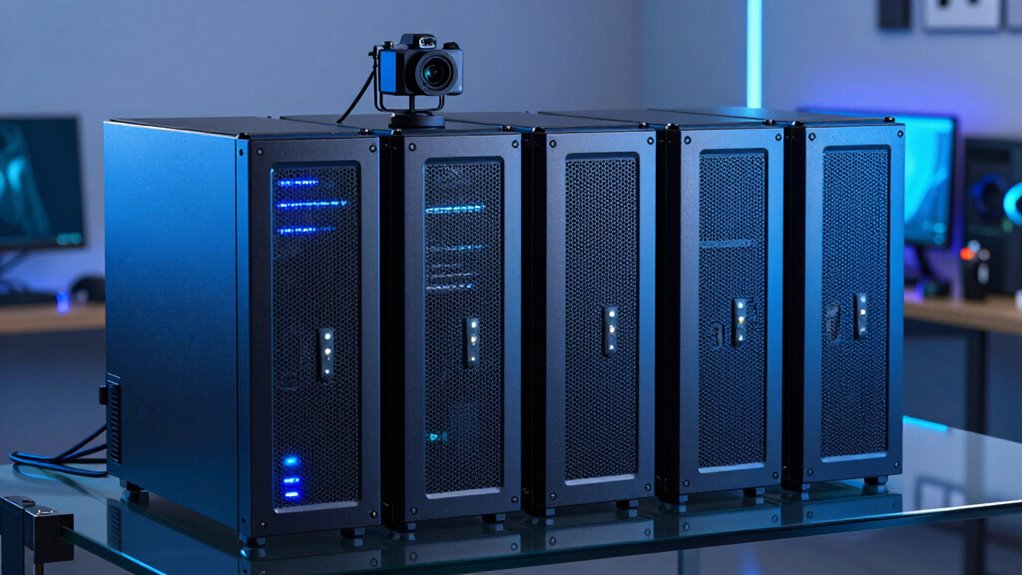
Finding the right home lab server can be challenging, especially with options spanning from DIY kits to high-end enterprise hardware. The best overall pick balances performance, expandability, and ease of use, making it ideal for most enthusiasts. The ZimaBoard 2 stands out for its affordability and flexibility, perfect for beginners or small projects. Meanwhile, the Dell PowerEdge R730xd offers robust, enterprise-level specs for those needing serious power. The key tradeoffs often involve balancing budget against scalability, noise, and complexity. Keep reading for a detailed breakdown of these options to find the best fit for your home lab ambitions.

Get the latest gadgets delivered free with Prime
- Fast, free delivery on millions of items
- Prime Video, Amazon Music and more included
- Member-only deals all year
Complete the kit



Key Takeaways
- Top picks vary significantly in price, with DIY options offering great value for beginners and enterprise gear suited for advanced users.
- Expandability and hardware flexibility are common differentiators, especially between rackmount and tower servers.
- Power consumption and noise levels are often overlooked but crucial for home environments.
- Renewed or refurbished servers can provide high performance at a lower cost, but may come with less warranty and reliability assurances.
- Ease of setup and management varies greatly; some servers require technical expertise, while others are more user-friendly.


| home lab server | Memory | Form Factor | Storage |
|---|---|---|---|
| ZimaBoard 2 Home Server | 8GB DDR5 | Single board / compact | 32GB eMMC |
| Dell PowerEdge R730xd 24-Bay S | 128GB DDR4 | 2U Rack Server | — |
| Dell PowerEdge R730XD Server | | 128GB DDR4 | 2U Rack Server | — |
| Dell PowerEdge T620 Tower Serv | 128GB | Tower | 8x 3TB SAS |
| HP ProLiant DL360p Gen8 1U Rac | — | 1U Rack Mount | 8x 300GB 10K SAS SFF HDD |
| HP ProLiant DL360 G7 1U Rackmo | 72GB DDR3 RAM | 1U Rack Mount | 4 x 900GB 10K SAS HDD |
| ZimaBoard 2 1664 x86 Home Serv | 16GB LPDDR5 | — | 64GB eMMC |
More Details on Our Top Picks
ZimaBoard 2 Home Server, Intel N150, Build Your First Real Server
This compact, purpose-built home server stands out for its x86 architecture, quad-core performance, and versatile expandability, making it ideal for those starting their homelab journey. Unlike the Dell PowerEdge R730xd, which offers extensive storage and enterprise-grade hardware, the ZimaBoard 2 prioritizes simplicity and energy efficiency, though it sacrifices raw scalability and high-throughput storage options. Its native PCIe x4 slot and dual SATA ports allow for flexible upgrades, but building a system requires some technical skill, and its limited storage capacity may not meet heavy data needs. It excels as a personal cloud, media server, or lightweight Docker host, especially for users seeking a straightforward, customizable platform.
Pros:- Compact, energy-efficient design suitable for small spaces
- Flexible expansion options via PCIe x4 slot and dual SATA ports
- Supports multiple OS including Linux, Docker, CasaOS
Cons:- Limited to 2 drive bays, restricting storage capacity
- Requires technical knowledge to build and configure properly
- Less powerful compared to rack-mounted enterprise servers
Best for: Beginners or hobbyists wanting a manageable, customizable home server for media, file sharing, or lightweight self-hosted services.
Not ideal for: Power users requiring high storage capacity, enterprise features, or extensive virtualization—these demands exceed its modest hardware scope.
- Build Type:Purpose-built home server
- Processor:Intel N150 quad-core
- Memory:8GB DDR5
- Storage:32GB eMMC
- Expansion:PCIe 3.0 x4, dual SATA
- Networking:Dual 2.5GbE
- Preinstalled OS:ZimaOS
- Form Factor:Single board / compact
Our verdict“This pick makes the most sense for beginners or DIYers seeking a flexible, small-scale home server for basic services.”
Dell PowerEdge R730xd 24-Bay SFF 2U Server, 2x Intel Xeon E5-2690 v4, 128GB DDR4, 4x 1.2TB SAS HDD (Renewed)
This rack-mount server offers substantial storage capacity and processing power, making it suitable for demanding homelabs or small business setups. Compared with the Dell PowerEdge T620, which provides more drive bays and a tower form, the R730xd’s 24-bay design enables large-scale storage expansion in a 2U chassis, though it comes with higher power consumption and noise. Its dual Xeon E5-2690 v4 processors deliver a combined 28 cores, ideal for virtualization and multi-threaded workloads. The 128GB DDR4 RAM enhances multitasking, but the system’s refurbished condition and older hardware mean it might lack some newer features and efficiency. It’s a robust choice for users needing a compact, high-capacity server with enterprise features.
Pros:- High storage capacity with 24 drive bays for scalable data storage
- Dual Xeon processors deliver excellent multi-threaded performance
- Redundant power supplies improve reliability
Cons:- Refurbished condition may lead to unpredictable longevity
- High power draw and noise due to 2U form factor
- Limited to pre-installed 4 drives, expansion requires additional purchase
Best for: Advanced homelab users or small business owners needing a compact, high-performance storage server with strong multitasking capabilities.
Not ideal for: Mainly casual users or those with limited space and lower performance needs, as this server’s size and noise level may be overkill.
- Form Factor:2U Rack Server
- Processors:2x Intel Xeon E5-2690 v4
- Memory:128GB DDR4
- Drive Bays:24x 2.5″ SFF
- Networking:Dual 10Gb SFP+ / 1Gb RJ45
- Power Supplies:Dual 750W
- Condition:Renewed
Our verdict“This server is ideal for users needing a compact yet powerful storage and virtualization platform, willing to handle some complexity.”
Dell PowerEdge R730XD Server | 2x Xeon E5-2670 v3 (24 Cores) | 128GB RAM | 12x 3.5″ Trays (Renewed)
Compared with the R730xd with newer E5-2690 v4 processors, this model offers similar core counts at a potentially lower cost, making it a compelling choice for budget-conscious homelab builders. Its 12 hot-swap bays provide ample storage expansion, though you’ll need to purchase drives separately, unlike the pre-populated R730xd. The dual Xeon E5-2670 v3 CPUs deliver 24 cores at 2.3GHz, suitable for multitasking and virtualization, but the hardware is from the 13th generation, leading to higher power consumption and less energy efficiency. This server’s value lies in its balance of performance and affordability, especially for users who don’t require the latest hardware but want a versatile 2U rack system.
Pros:- 24 cores from dual Xeon E5-2670 v3 CPUs provide solid multi-threaded performance
- 12 hot-swap 3.5″ drive bays for flexible storage options
- Good value for a 2U rack server in its class
Cons:- Drive trays are empty—additional drives must be purchased separately
- Older hardware architecture leads to higher power use
- Refurbished condition may introduce variability in reliability
Best for: Home lab enthusiasts seeking a cost-effective, multi-core system with substantial storage potential.
Not ideal for: Users wanting the latest hardware or high energy efficiency, as this older-generation system consumes more power and may lack modern features.
- Form Factor:2U Rack Server
- Processors:2x Intel Xeon E5-2670 v3
- Total Cores:24
- Memory:128GB DDR4
- Drive Bays:12x 3.5″ LFF
- Condition:Renewed
Our verdict“This server delivers a strong multi-core platform at an affordable price, ideal for budget-conscious home labs with moderate storage needs.”
Dell PowerEdge T620 Tower Server, 2x Intel Xeon E5-2640 Six-Core 2.5GHz, 128GB RAM, 8x 3TB SAS HDDs, H710 RAID, 2x 750W PSUs (Renewed)
This tower server excels for those needing large storage capacity and straightforward expansion, especially in a home lab or small office environment. Its dual Xeon E5-2640 processors and 8 hot-swap drives support heavy multitasking and substantial data loads, similar to the PowerEdge T620 but with fewer drive bays. The included RAID controller offers flexible disk management, making it suitable for media servers, backups, or virtualization. Compared with rack-mounted alternatives, its tower form factor simplifies setup and maintenance, though it’s older hardware that may lack some modern power efficiency features. It’s a reliable, high-capacity option for users prioritizing storage and ease of access.
Pros:- Large 8-bay configuration supports significant storage expansion
- Dual Xeon processors handle multitasking well
- Tower form factor offers easier access and maintenance
Cons:- Refurbished condition may affect long-term reliability
- Older hardware architecture results in higher power consumption
- Limited to 8 bays, fewer than some rack counterparts
Best for: Home lab users or small offices needing a large, expandable tower server for media, backups, or virtualization.
Not ideal for: Enthusiasts seeking the latest hardware or a rack-mount setup, as this model’s age and tower design limit modern features and rack compatibility.
- Form Factor:Tower
- Processors:2x Intel Xeon E5-2640
- Memory:128GB
- Storage:8x 3TB SAS
- RAID Controller:H710
- Power Supplies:Dual 750W
- Condition:Renewed
Our verdict“This tower server is well-suited for users needing high-capacity, expandable storage with straightforward access and maintenance.”
HP ProLiant DL360p Gen8 1U Rack Server – 2x E5-2640 Xeon 2.5GHz, 64GB RAM, 8x 300GB SAS HDD (Renewed)
This HP ProLiant DL360p Gen8 stands out for its combination of robust processing power and flexible storage, making it ideal for a home lab that demands enterprise-level features. Compared to the ZimaBoard 2, it offers significantly higher raw performance and more advanced RAID options, but at the cost of increased complexity and power consumption. Its dual Xeon CPUs and 64GB RAM support heavy virtualization and multitasking, yet the lack of an included operating system means extra setup time. The renewed condition might also raise concerns about longevity, especially for 24/7 operation. This server is best suited for those comfortable with enterprise hardware who need reliability and expandability, but less so for beginners or those seeking plug-and-play simplicity.
Pros:- Dual 6-core Xeon CPUs deliver strong multitasking capabilities
- 64GB RAM allows extensive virtualization and workload handling
- Redundant power supplies and multiple NICs enhance uptime and reliability
Cons:- No operating system included, requiring additional setup and licensing
- Renewed (used) condition may limit lifespan and reliability
- Older Gen8 hardware may lack support for the latest technologies
Best for: IT professionals or advanced hobbyists wanting enterprise-grade reliability and expandability in their home lab.
Not ideal for: Beginners or users seeking an affordable, plug-and-play server with minimal setup.
- Form Factor:1U Rack Mount
- CPU:2x Intel Xeon E5-2640 6-Core 2.5GHz
- RAM:64GB PC3-10600R
- Storage:8x 300GB 10K SAS SFF HDD
- RAID Controller:HP P420i
- Network:4x Gigabit NIC
Our verdict“This server makes the most sense for experienced users needing enterprise features, but requires technical skill and extra investment.”
HP ProLiant DL360 G7 1U Rackmount Server – Dual Xeon X5675 3.06GHz, 72GB RAM, 4x900GB SAS HDD, P410i RAID, Dual NIC, Redundant Power (Renewed)
The HP ProLiant DL360 G7 offers a step up in raw processing power with its dual Xeon X5675 processors, making it better suited for demanding workloads than the older Gen8. It provides 72GB of DDR3 RAM, supporting intensive multitasking and virtualization, but its hard drives and memory must be installed and configured by the user, which might be daunting for less experienced hobbyists. Compared to the ZimaBoard 2, it surpasses in raw compute and storage capacity but sacrifices simplicity and compactness. Its remote management features like HP iLO add convenience for troubleshooting, yet the hardware’s age may affect long-term reliability. This pick generally targets users with technical expertise who want enterprise-grade performance without the high cost of new hardware.
Pros:- Powerful dual Xeon X5675 processors for demanding workloads
- Large 72GB RAM capacity supports extensive virtualization
- Redundant power supplies and remote management enhance reliability
Cons:- Hard drives and memory upgrades require technical installation
- Age of hardware may impact future support and longevity
- Refurbished condition could affect long-term stability
Best for: Small business owners or advanced homelab enthusiasts needing substantial compute and storage power.
Not ideal for: Beginners or users seeking a straightforward, minimal-configuration home server.
- Form Factor:1U Rack Mount
- Processor:Dual Xeon X5675 6-Core 3.06 GHz
- Memory:72GB DDR3 RAM
- Storage:4 x 900GB 10K SAS HDD
- RAID:HP Smart Array P410i
- Network:2x Gigabit NIC
Our verdict“Ideal for those with technical skills who need robust processing and storage, but not suited for beginners or casual users.”
ZimaBoard 2 1664 x86 Home Server, N150, 16GB LPDDR5, PCIe 3.0×4 Expansion
The ZimaBoard 2 stands out for its tiny footprint combined with server-class capabilities, making it perfect for those who need a flexible, space-efficient solution. Its quad-core N150 CPU up to 3.6GHz and 16GB LPDDR5 memory support most NAS, media server, or VPN tasks, though the limited onboard storage of 64GB eMMC can be a constraint without expansion. Compared to the larger rack-mounted options like the HP DL360p, it offers easier setup and lower power use, but it requires a degree of technical skill to configure and optimize for different use cases. Its PCIe slot allows expansion, yet the lack of dedicated GPU limits certain workloads. This device is best for hobbyists or small-scale home labs that prioritize space and flexibility over raw storage capacity.
Pros:- Compact, space-saving design ideal for home environments
- Supports various OS options like TrueNAS and Ubuntu
- PCIe slot and dual SATA ports enable flexible expansion
Cons:- Limited onboard storage at only 64GB eMMC
- Requires technical skills for setup and tuning
- No integrated GPU, limiting GPU-intensive applications
Best for: Tech enthusiasts and hobbyists wanting a scalable, space-saving home server for NAS, Docker, or media hosting.
Not ideal for: Users needing high storage capacity or expecting enterprise-level redundancy out of the box.
- Processor:N150 quad-core up to 3.6GHz
- Memory:16GB LPDDR5
- Storage:64GB eMMC
- Expansion:PCIe 3.0×4
- Networking:Dual 2.5GbE Ethernet
- Storage Ports:Dual SATA
Our verdict“Best suited for users comfortable with DIY setup who want a flexible, small-scale server for a variety of home lab tasks.”
How We Picked
These products were selected based on a combination of performance, build quality, expandability, and value for different user needs. Priority was given to servers with proven reliability, good community or manufacturer support, and flexibility for various use cases like virtualization, media hosting, or learning. We considered both new and refurbished options to provide a range suitable for different budgets. The ranking reflects a balance of power, ease of use, and long-term upgradeability, ensuring each picks fulfills a distinct role for the home lab enthusiast.Factors to Consider When Choosing Home Lab Server
Choosing the right home lab server involves evaluating several key factors that go beyond raw specs. Understanding your intended use case, available space, and future expansion plans can help avoid costly mistakes. In this guide, I’ll cover the most critical considerations that can influence your decision and help you find a server that balances performance and practicality.Performance and Processing Power
Assess your workload requirements carefully. For basic tasks like media streaming or small-scale virtualization, a quad-core CPU may suffice, but more demanding projects like multiple virtual machines or container hosting will need higher core counts and faster processors. Keep in mind that higher performance often means increased power consumption and noise, which can be a concern in a home setting. Choosing a server with room for CPU upgrades can provide future-proofing without initial over-investment.
Expandability and Hardware Flexibility
Look at the server’s capacity for adding drives, RAM, and other peripherals. Rackmount units often provide more slots and bays, ideal for scaling, but they can be noisier and require more space. Tower servers tend to be quieter and easier to upgrade but may have fewer expansion options. Consider your long-term plans—if you expect your storage needs or processing power to grow, prioritize systems with ample PCIe slots, RAM slots, and drive bays.
Power Consumption and Noise Levels
Home environments demand quieter and more energy-efficient setups. Enterprise-grade servers tend to be louder and use more power, which could lead to increased costs and disturbances. Many modern servers include energy-saving features, but it’s worth verifying their noise ratings and power draw before purchasing. This is especially important if your server will run continuously in a shared living space or small apartment.
Ease of Management and Maintenance
Some servers come with management tools like IPMI, remote console access, and straightforward BIOS interfaces, making ongoing maintenance easier. Simpler systems with user-friendly interfaces are better for those less comfortable with technical details. Conversely, enterprise hardware might require experience with server management, but it offers more advanced features like hot-swappable drives and redundant power supplies, which can save headaches during upgrades or failures.
Price and Total Cost of Ownership
Budget constraints influence many buying decisions, but consider the total cost over time. Cheaper, DIY, or refurbished servers can save money upfront but may lack warranties or have higher maintenance needs. High-end servers cost more initially but can offer better durability, scalability, and lower ongoing costs. Balance your immediate budget against your future needs to avoid upgrading too soon or outgrowing your initial purchase.
Frequently Asked Questions
Can I run a home lab server 24/7 without issues?
Yes, most servers are designed for continuous operation, but you should consider models with good thermal management and energy efficiency. Ensuring proper cooling and ventilation is vital to prevent overheating, especially in small or poorly ventilated spaces. Investing in a UPS (Uninterruptible Power Supply) can also protect your hardware from power fluctuations. Regular maintenance and monitoring can help sustain performance over time without failures.
Is it better to buy a new or refurbished home lab server?
Refurbished servers often provide excellent value, offering enterprise-grade hardware at a lower cost. However, they might come with limited warranties and less predictable longevity. New servers come with full warranties and the reassurance of the latest hardware technology, but at a premium price. For hobbyists or those testing different setups, refurbished or used gear can be a smart choice, provided you buy from reputable sources.
What’s the ideal size for a home lab server?
Size depends on your space constraints and expansion plans. Tower servers are generally more compact and quieter, suitable for small rooms or shared spaces. Rackmount servers are better for larger, dedicated setups where space and noise are less of a concern, and scalability is a priority. Consider the physical footprint and your future needs—bigger isn’t always better if space is limited.
How much power should I expect my home lab server to consume?
Power consumption varies widely; entry-level DIY servers may use as little as 50-100W, while enterprise-grade hardware can exceed 300W, especially under load. This impacts your electricity bill and cooling requirements. Look for energy-efficient models with power-saving features if you plan to run your server continuously. Proper ventilation and placement can also help manage heat and reduce energy use.
Do I need enterprise hardware for a home lab?
Not necessarily. For most home labs, consumer or prosumer hardware offers enough power and flexibility. Enterprise servers excel in scalability, durability, and advanced features, but they are often overkill for typical home projects and come with higher costs and complexity. If your goals include learning enterprise-grade configurations or simulating large environments, then investing in such hardware makes sense. Otherwise, cost-effective options usually suffice.
Conclusion
For those just starting or working within a tight budget, the ZimaBoard 2 or DIY NAS kits provide accessible entry points with enough flexibility for basic projects. The Dell PowerEdge R730xd makes a compelling choice for users seeking a balance between power and expandability, especially if they can handle refurbishments. The enterprise-grade servers like the Dell PowerEdge R730xd or HP ProLiant DL360 series are best suited for advanced users or those planning large, scalable setups. Ultimately, your choice should align with your technical comfort level, future plans, and space constraints, ensuring you get the most value from your investment in a home lab server.