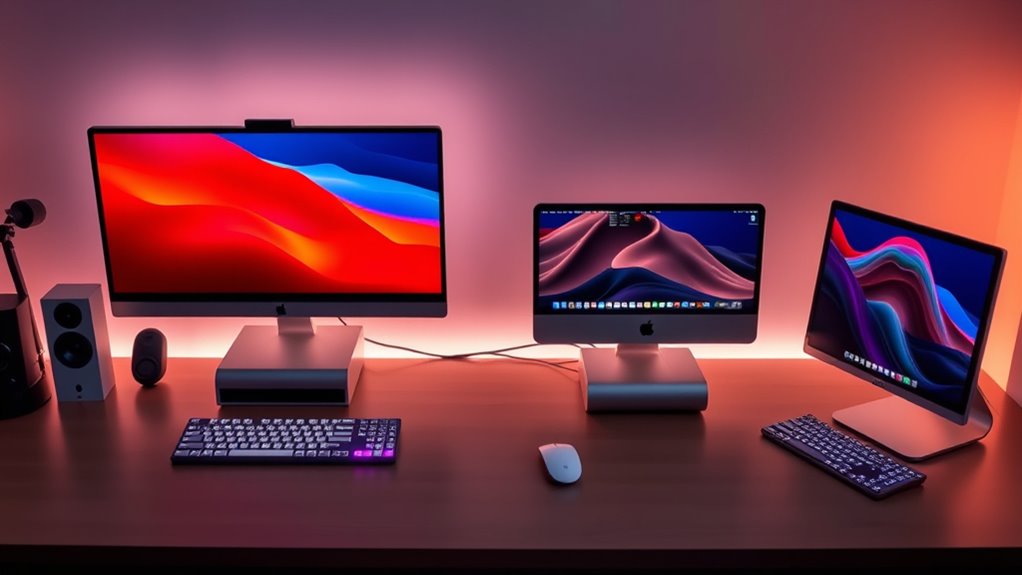

To maximize performance in 2025, I recommend the top four Mac Studio configurations featuring the latest M4 Pro or M4 Max chips, with at least 32GB of RAM for heavy multitasking. Opt for 1TB or larger SSDs to handle massive files efficiently. Prioritizing models with multiple Thunderbolt ports and expanded connectivity will give you flexibility. Keep in mind, balancing these specs with your budget is key—there’s more to uncover if you explore further.
Key Takeaways
- Prioritize higher CPU core counts and M4 Pro chips for demanding workflows like 3D rendering and video editing.
- Opt for at least 512GB or 1TB SSD storage to accommodate large media files and ensure smooth performance.
- Select configurations with maximum RAM support (32GB or more) for future-proof multitasking and large datasets.
- Ensure ample Thunderbolt, USB-C, HDMI, and Ethernet ports for versatile connectivity and external device integration.
- Balance high-end specs with budget considerations, choosing essential upgrades like GPU and storage for optimal performance.

Apple 2024 Mac mini Desktop Computer with M4 chip with 10‑core CPU and 10‑core GPU: Built for Apple Intelligence, 16GB Unified Memory, 256GB SSD Storage, Gigabit Ethernet. Works with iPhone/iPad
SIZE DOWN. POWER UP — The far mightier, way tinier Mac mini desktop computer is five by five...
As an affiliate, we earn on qualifying purchases.
Apple Mac mini Desktop Computer with M4 Chip, 16GB RAM, 256GB SSD
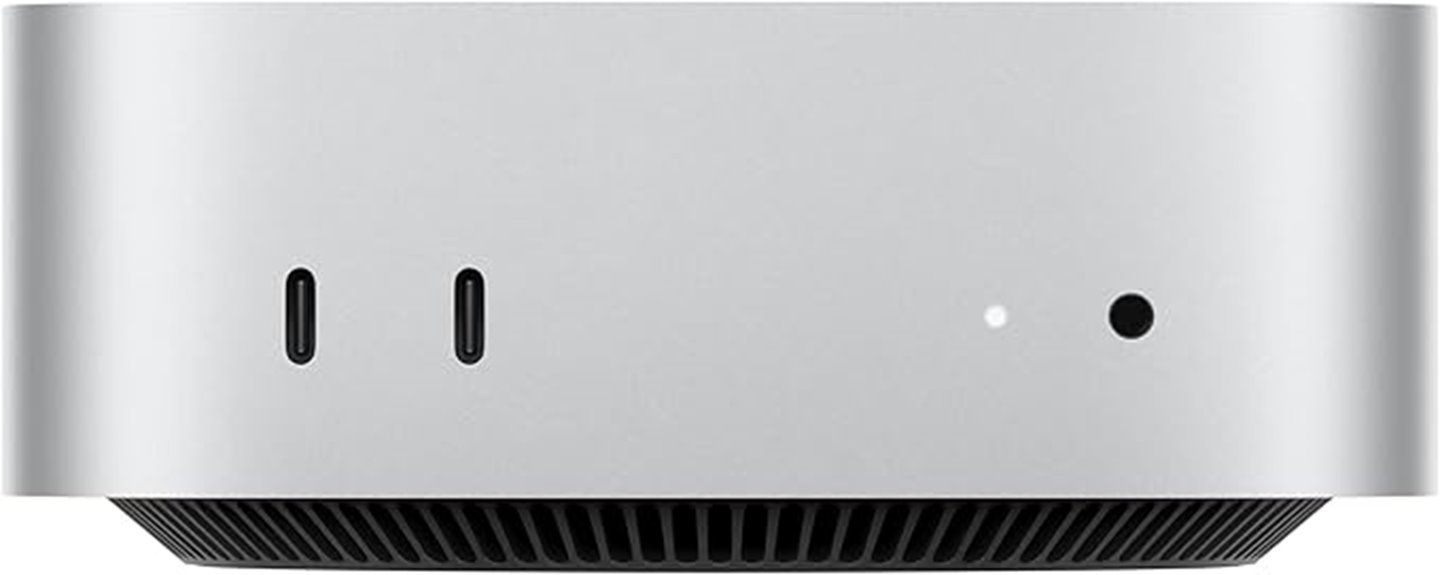
If you’re looking for a compact yet powerful desktop that can handle demanding tasks, the Apple Mac mini with the M4 chip is an excellent choice. Its small five-by-five-inch design packs a punch with a 10-core CPU and GPU, making it perfect for intensive applications. The 16GB unified memory guarantees smooth multitasking, while the 256GB SSD delivers quick storage access. Designed to fit seamlessly next to monitors or in tight spaces, it combines minimalist aesthetics with high performance. Connectivity options like Thunderbolt, HDMI, and USB-C keep you versatile. Plus, its integration with the Apple ecosystem boosts productivity and security effortlessly.
Best For: users seeking a compact yet powerful desktop with seamless Apple ecosystem integration for demanding tasks and multitasking.
Pros:
- Compact, sleek design fits easily in various spaces
- Powerful M4 chip with 10-core CPU and GPU for high performance
- Excellent ecosystem connectivity with iPhone, iPad, and macOS apps
Cons:
- Limited storage options starting at 256GB, which may require external drives for large files
- No dedicated graphics card, relying on integrated GPU for visual tasks
- Price point may be higher compared to other compact desktops with similar specs
Apple 2024 Mac mini Desktop Computer with M4 chip with 10‑core CPU and 10‑core GPU: Built for Apple Intelligence, 24GB Unified Memory, 512GB SSD Storage, Gigabit Ethernet. Works with iPhone/iPad
SIZE DOWN. POWER UP — The far mightier, way tinier Mac mini desktop computer is five by five...
As an affiliate, we earn on qualifying purchases.
Apple Mac mini Desktop Computer with M4 Chip (2024)
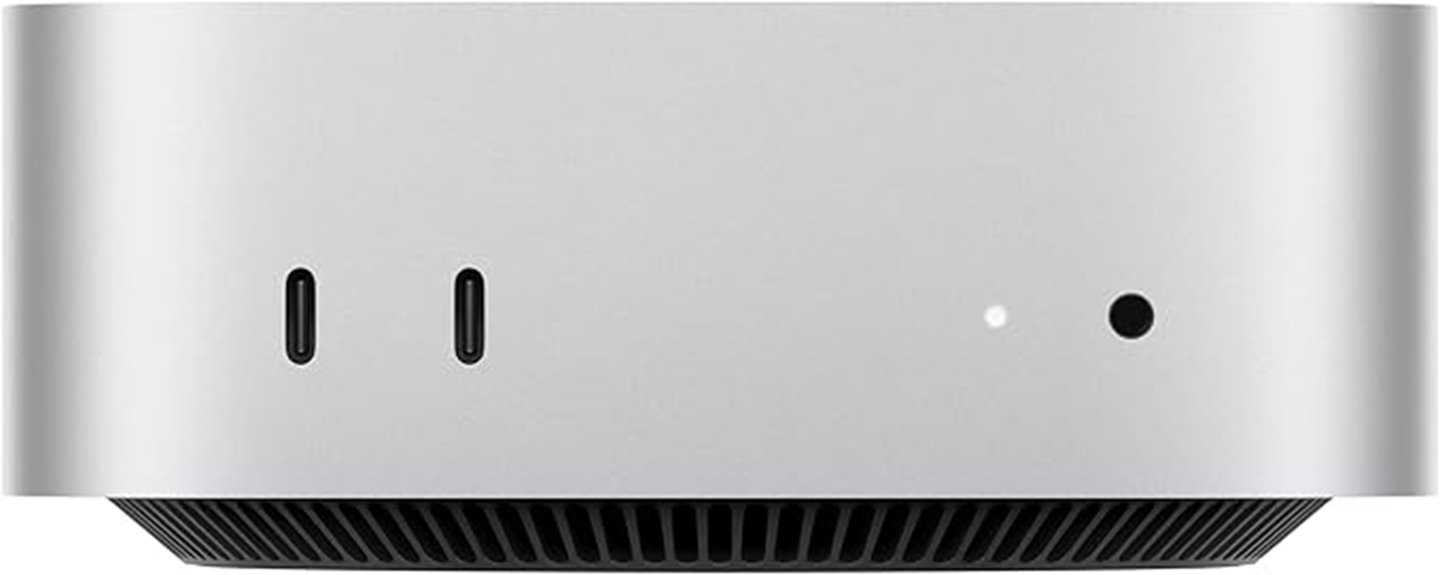
Looking for a compact desktop that combines powerful performance with seamless Apple ecosystem integration? The Apple Mac mini with M4 Chip (2024) is perfect. Its five-by-five-inch design fits easily on any desk or next to a monitor. Powered by the M4 chip with a 10-core CPU and GPU, it offers lightning-fast speed and smooth multitasking. With 24GB of unified memory and a 512GB SSD, it handles demanding tasks effortlessly. Plus, it connects easily via Thunderbolt, HDMI, USB-C, and Ethernet. Integrated with macOS optimized for Apple Silicon, it ensures privacy and intelligent features, making it an ideal choice for productivity and creative work.
Best For: users seeking a compact, high-performance desktop that seamlessly integrates with the Apple ecosystem for work, creative projects, and everyday productivity.
Pros:
- Compact design fits easily in tight spaces and next to monitors
- Powerful M4 chip with 10-core CPU and GPU delivers fast, smooth performance
- Extensive connectivity options including Thunderbolt, HDMI, USB-C, and Ethernet
Cons:
- Limited storage options starting at 512GB, which may require external drives for large files
- No dedicated graphics card, potentially limiting high-end gaming or intensive 3D rendering
- macOS compatibility may restrict some software options compared to Windows-based PCs
Apple 2024 Mac mini Desktop Computer with M4 chip with 10‑core CPU and 10‑core GPU: Built for Apple Intelligence, 16GB Unified Memory, 512GB SSD Storage, Gigabit Ethernet. Works with iPhone/iPad
SIZE DOWN. POWER UP — The far mightier, way tinier Mac mini desktop computer is five by five...
As an affiliate, we earn on qualifying purchases.
Apple 2024 Mac mini Desktop Computer with M4 Chip
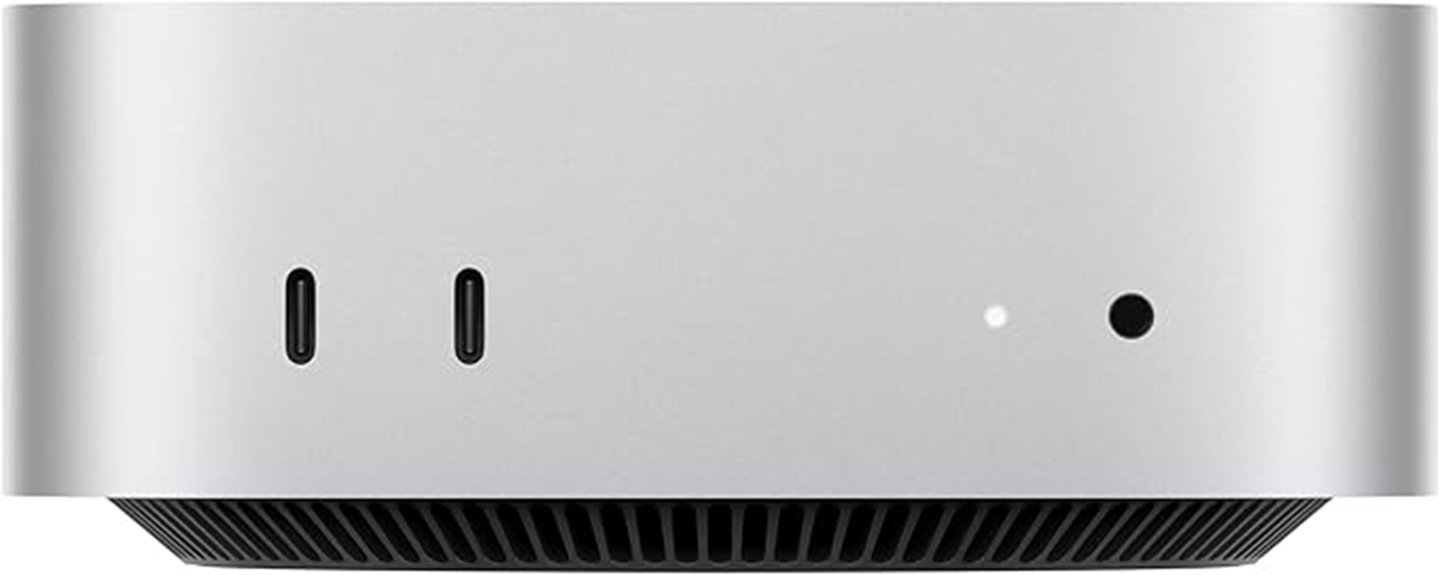
The Apple 2024 Mac mini Desktop Computer with M4 Chip stands out as an ideal choice for professionals and power users seeking a compact yet highly capable workstation. Its small 5×5-inch design easily fits beside monitors or in tight spaces, yet it packs impressive performance with the 10-core CPU and GPU, plus 16GB of unified memory. The 512GB SSD ensures fast data access, while multiple ports support versatile connectivity. Powered by Apple silicon and integrated with macOS, it delivers smooth multitasking, enhanced productivity, and privacy features. As a carbon-neutral device, it aligns with environmental goals, making it a powerful, eco-friendly desktop solution.
Best For: professionals, creatives, and power users seeking a compact, high-performance desktop with advanced connectivity and privacy features.
Pros:
- Small form factor fits easily in tight spaces or next to monitors
- Powerful M4 chip with 10-core CPU and GPU ensures fast performance
- Seamless integration with Apple ecosystem and macOS optimizations
Cons:
- Limited upgradeability due to compact design and integrated hardware
- Higher price point compared to some other compact desktops with similar specs
- May require additional peripherals for a complete workstation setup
Apple 2024 Mac mini Desktop Computer with M4 Pro chip with 12‑core CPU and 16‑core GPU: Built for Apple Intelligence, 24GB Unified Memory, 512GB SSD Storage, Gigabit Ethernet. Works with iPhone/iPad
SIZE DOWN. POWER UP — The far mightier, way tinier Mac mini desktop computer is five by five...
As an affiliate, we earn on qualifying purchases.
Apple Mac mini 2024 Desktop with M4 Pro Chip
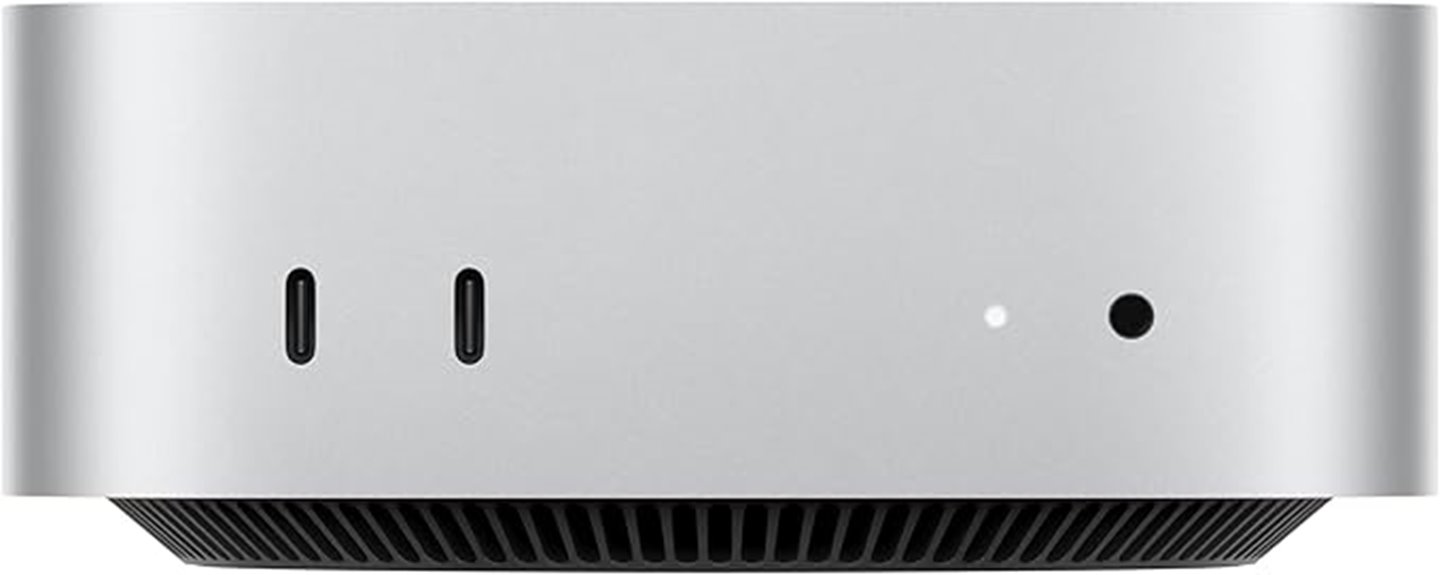
Designed for professionals who need powerful performance in a compact footprint, the Apple Mac mini 2024 with M4 Pro chip delivers exceptional computing capabilities without taking up much space. Its five-by-five-inch size fits easily next to any monitor, making it perfect for tight workspaces. With a 12-core CPU and 16-core GPU, it handles demanding projects, complex scenes, and large code compilations effortlessly. The 24GB of unified memory and 512GB SSD ensure fast multitasking and quick data access. Equipped with multiple ports—Thunderbolt, HDMI, USB-C, Ethernet, and headphone jack—it offers versatile connectivity. Seamlessly integrates with the Apple ecosystem, boosting productivity and creativity.
Best For: professionals and creators who need powerful, compact computing performance with seamless Apple ecosystem integration.
Pros:
- Compact size easily fits into tight workspaces
- High-performance M4 Pro chip handles demanding tasks effortlessly
- Versatile connectivity options support multiple devices and peripherals
Cons:
- Limited storage capacity may require external solutions for large files
- No dedicated GPU options beyond the 16-core GPU in the M4 Pro
- Premium price point might be a consideration for budget-conscious users
Factors to Consider When Choosing Mac Studio Configurations
When choosing a Mac Studio configuration, I focus on your processing power needs, since demanding tasks require more robust chips. I also consider memory and storage options to guarantee your workflow remains smooth and efficient. Finally, checking connectivity and software compatibility helps prevent issues down the line and maximizes your investment.
Processing Power Needs
Choosing the right Mac Studio configuration depends heavily on evaluating your processing power needs. I recommend assessing the complexity of your tasks, like video editing, 3D rendering, or software development, to determine the required CPU performance. If you handle multiple demanding applications at once, opting for a more advanced CPU with additional cores ensures smooth multitasking. It’s also wise to consider potential future workload increases or software updates that might demand more processing capacity down the line. When deciding between standard and Pro configurations, think about how resource-intensive your workflows are, as this substantially affects performance. Finally, balance your processing needs with your budget since more powerful CPUs and extra cores tend to raise costs. Prioritizing your specific workload ensures you select a Mac Studio that maximizes performance without overspending.
Memory Capacity Importance
Have you ever experienced lag or delays while working on large files or running multiple applications? That’s often caused by insufficient memory. Higher memory capacity allows for smoother multitasking and better handling of complex projects. When you increase RAM, your system is less likely to slow down, even with demanding software like video editors or 3D rendering tools. For professional workflows, I recommend at least 16GB of unified memory to guarantee efficiency and future-proofing. Adequate memory also enables seamless switching between apps and tasks, boosting productivity. Plus, it improves your ability to run virtual machines or manage large datasets, which are essential for specialized work. Fundamentally, memory capacity is a key factor in maximizing your Mac Studio’s performance and ensuring it meets your evolving needs.
Storage Options Suitability
Selecting the right storage capacity for your Mac Studio depends heavily on your specific workflow and data needs. If you handle large files or work with extensive media libraries, opting for 512GB or 1TB guarantees smoother performance and reduces reliance on external drives. Creative professionals working with high-resolution videos or big datasets should prioritize larger SSD options to streamline their workflow. Conversely, casual or light users might find 256GB sufficient if they frequently use cloud storage or external drives for backups. Keep in mind, higher storage capacities usually come with increased costs, so balance your needs against your budget. Ultimately, choosing the right storage means considering your current projects and future growth to avoid bottlenecks and ensure efficient data management.
Connectivity Requirements
When evaluating connectivity requirements for your Mac Studio, it’s essential to guarantee the configuration provides enough Thunderbolt and USB ports to support all your peripherals and external devices. Make sure there are sufficient ports for your keyboards, external drives, and other accessories, and consider the placement—front-facing USB-C ports are more convenient for frequent use. If you rely on high-quality video output, confirm the availability of HDMI ports and Ethernet for reliable internet. Also, check if the Mac Studio supports multiple external displays through its available ports, which can expand your workspace. Lastly, verify your existing devices and accessories are compatible to avoid needing extra adapters or hubs. Proper connectivity setup is key to maximizing your workflow and minimizing clutter.
Software Compatibility Checks
Ensuring your Mac Studio supports the latest macOS version is crucial for maintaining compatibility with current and future software updates. I always check that my essential applications, like Adobe Creative Cloud or Microsoft 365, are compatible with the M4 or M4 Pro chips to avoid performance issues. It’s also important to verify that any specialized software or plugins I rely on are optimized for Apple Silicon processors. Additionally, I confirm that external devices and peripherals work seamlessly with the available ports on my chosen Mac Studio model. To stay ahead, I review software developer updates and support pages regularly, ensuring that future updates will continue to support my setup. Prioritizing these compatibility checks helps me maximize performance and avoid unexpected hiccups.
Budget Constraints
Budget constraints considerably influence which Mac Studio configuration I can choose, often forcing me to prioritize certain features over others. High-end components like the M4 Pro chip or large SSDs quickly add to the cost, so I need to think about whether I really need the top-tier options or if a more modest setup will suffice. Opting for less RAM can save money but might limit multitasking and future-proofing, while smaller storage options like 256GB SSDs are more affordable but could require external drives later. I also have to decide if premium features, such as advanced GPUs or extra ports, are essential or if I can get by with a more basic model. Balancing my performance needs against my budget is key to choosing a configuration that works now and later.
Future Expansion Potential
Considering future expansion potential is vital when selecting a Mac Studio configuration, as it guarantees your setup remains adaptable over time. I look at the number and types of ports to make certain I can connect new peripherals or external storage easily. Evaluating the maximum RAM supported allows me to upgrade memory as my needs grow without replacing the entire system. I also check compatibility with upcoming software updates and hardware standards to avoid obsolescence. Storage expansion options, like adding SSDs, are key for handling larger files or projects. Finally, I consider the physical size and design to guarantee it can accommodate internal modifications if needed. Prioritizing these factors helps me choose a Mac Studio that stays relevant and capable well into the future.
Frequently Asked Questions
How Does the M4 Pro Chip Differ From the Standard M4?
The M4 Pro chip differs from the standard M4 mainly in its performance capabilities. The Pro version offers more CPU and GPU cores, which means faster processing and better graphics handling. It also has increased memory bandwidth and possibly more cache, making it ideal for demanding tasks like video editing or 3D rendering. If you’re looking for top-tier power, the M4 Pro is the better choice for intensive workflows.
Can I Upgrade RAM or Storage After Purchase?
Did you know that most Mac Studio models support up to 128GB of RAM? I can tell you, upgrading RAM or storage after purchase isn’t straightforward. Apple designs these components to be non-upgradable, so I recommend choosing the maximum specs when you buy. If you need more storage, external drives are a good option. Planning ahead guarantees your Mac Studio stays fast and functional for years.
Which Configurations Are Best for Professional Creative Work?
For professional creative work, I recommend the highest-end Mac Studio with the M3 Ultra chip, 128GB of RAM, and at least 8TB of storage. This setup handles intensive tasks like video editing, 3D rendering, and music production effortlessly. I choose this configuration because it offers maximum power and future-proofing, ensuring I can work smoothly on demanding projects without slowing down or hitting limitations.
What Cooling Solutions Are Used in the Mac Studio?
Cooling in the Mac Studio is clever and consistent, using a sophisticated system that combines a large, efficient heatsink with strategically placed fans. I find that this design dissipates heat diligently, ensuring the device stays cool during intensive tasks. The silent fans spin softly, providing superior cooling without disturbing your workflow. This smart solution keeps my Mac Studio stable, secure, and superbly silent, even under serious stress.
Is External GPU Support Available for Mac Studio?
Yes, the Mac Studio supports external GPU (eGPU) setups, which can considerably boost graphics performance. I’ve seen users connect Thunderbolt 3 or 4 eGPUs for demanding tasks like video editing and 3D rendering. Just keep in mind, compatibility depends on your specific eGPU enclosure and GPU model. I recommend checking Apple’s latest compatibility guidelines to guarantee seamless performance and avoid any connectivity issues.
Conclusion
So, whether you’re craving a tiny powerhouse or just want to impress your friends with the latest tech, these Mac Studio setups will have you covered. Just remember, more RAM and a snazzy chip won’t turn you into a genius overnight—though it might make your coffee breaks way faster. Pick your perfect config, sit back, and pretend you’re running the world’s coolest creative empire. Because hey, who needs sleep when you’ve got a Mac?