
For most video editors, I’d choose the 16-inch MacBook Pro with M5 Pro, 48GB RAM, and 2TB SSD as the best overall balance of screen space, memory, and project storage. The M5 Max models are stronger fits for demanding effects work and large projects, while the 14-inch M5 Max is the standout when portability matters more than a larger preview area. The main tradeoffs are chip performance versus portability, built-in storage versus external-drive reliance, and the lower cost of renewed older models versus their age and remaining support life. I compare all 10 options by editing workload, configuration, and practical longevity below. Read on for the full breakdown and a guide to choosing the right MacBook Pro for video editing.

Get the latest gadgets delivered free with Prime
- Fast, free delivery on millions of items
- Prime Video, Amazon Music and more included
- Member-only deals all year
Complete the kit



Key Takeaways
- The 16-inch M5 Pro with 48GB RAM and 2TB SSD is the most balanced configuration here: it gives demanding editors useful memory and workspace without stepping up to an M5 Max.
- The 128GB RAM, 4TB M5 Max model is the specialist choice for unusually large, effects-heavy, or multitasking workflows; most editors will not make full use of that headroom.
- The 14-inch M5 Max pairs high-end processing with a more portable body, but its smaller screen is a meaningful compromise for timeline and color work.
- Renewed M1 Pro and M3 Pro 16-inch models can make more sense than a renewed Intel i9 or 13-inch M1 when editing is the goal, thanks to their newer Apple silicon platforms and larger displays.
- RAM and storage shape the buying decision as much as the chip: a powerful processor cannot compensate for frequent memory pressure or an internal drive too small for active media.


| macbook pro for video editing | Processor | Memory | Storage | Display |
|---|---|---|---|---|
| Apple 2023 MacBook Pro with M2 | M2 Pro, 12-core CPU | 32GB unified memory | 512GB SSD | 16.2-inch Liquid Retina XDR mini-LED, 3456 × 2234 |
| Apple 2026 MacBook Pro Laptop | M5 Max, 18-core CPU | 36GB unified memory | 2TB SSD | 14.2-inch Liquid Retina XDR |
| Apple MacBook Pro 16.2-inch La | M5 Max, 18-core CPU | 128GB unified memory | 4TB SSD | 16.2-inch Liquid Retina XDR |
| Apple 2021 MacBook Pro with M1 | M1 Pro, 10-core CPU | 32GB | 512GB SSD | 16.2-inch Liquid Retina XDR, 3456 × 2234 |
| Apple 2026 MacBook Pro Laptop | M5 Pro, 18-core CPU | 24GB unified memory | 1TB SSD | 16.2-inch Liquid Retina XDR |
| Apple 16-inch MacBook Pro with | Apple M5 Pro, 18-core CPU and 20-core GPU | 48GB unified memory | 2TB SSD | 16.2-inch Liquid Retina XDR |
| Apple 2026 MacBook Pro 16.2-in | Apple M5 Pro, 18-core CPU and 20-core GPU | 48GB unified memory | 1TB SSD | 16.2-inch Liquid Retina XDR, up to 1600 nits peak brightness |
| Apple 2019 MacBook Pro 16-inch | 2.4GHz Intel Core i9 | 32GB RAM | 512GB SSD | 16-inch Retina |
| Apple MacBook Pro 16-inch | Apple M3 Pro, 12-core CPU and 18-core GPU | 36GB unified memory | 1TB SSD | 16.2-inch Liquid Retina XDR, 3456 x 2234 |
| Apple 2020 MacBook Pro | 2.0GHz Intel Core i5 | 16GB RAM | 512GB SSD | 13.3-inch Retina, 2560 x 1600 |
More Details on Our Top Picks
Apple 2023 MacBook Pro with M2 Pro Chip, 16.2-inch, 32GB RAM, 512GB SSD, Space Gray (Renewed)
I’d choose this renewed 16-inch model for editors who want a roomy HDR preview and plenty of memory without stepping up to the newest Max configurations. Its 12-core M2 Pro and 32GB unified memory suit demanding timelines and multitasking, while the Liquid Retina XDR display offers a large canvas for reviewing footage. Compared with the newer 16.2-inch MacBook Pro with M5 Pro, it gives up newer-generation processing and connectivity, but still provides a substantial editing setup. The main compromises are practical: 512GB storage can fill quickly with media, and the listed 9-pound weight makes it a poor pick for frequent travel. Since it is renewed, condition and warranty terms also deserve close attention.
Pros:- 32GB unified memory supports heavier multitasking and editing projects.
- 16.2-inch Liquid Retina XDR display gives footage a large, high-contrast viewing area.
- M2 Pro with a 19-core GPU is suited to demanding creative workflows.
- HDMI, SDXC, and three Thunderbolt 4 ports support common editing accessories.
Cons:- 512GB SSD leaves limited room for large video libraries and cache files.
- Listed 9-pound weight is a substantial portability drawback.
- Renewed condition may mean cosmetic wear or different warranty coverage.
Best for: Editors who want a large HDR screen and 32GB memory for home or studio timelines, and are comfortable buying a renewed laptop.
Not ideal for: Frequent travelers and editors keeping active footage on the internal drive; its listed weight is high and 512GB may be tight.
- Processor:M2 Pro, 12-core CPU
- GPU:19-core GPU
- Memory:32GB unified memory
- Storage:512GB SSD
- Display:16.2-inch Liquid Retina XDR mini-LED, 3456 × 2234
- Display features:Up to 1600 nits peak HDR, P3, 120Hz ProMotion
- Ports:Three Thunderbolt 4, HDMI 2.1, SDXC, headphone jack, MagSafe 3
- Operating system:macOS
Our verdict“Choose this renewed M2 Pro if a large display and 32GB memory matter more than a newer chip, lighter carry, or larger internal drive.”
Apple 2026 MacBook Pro Laptop with M5 Max Chip, 14.2-inch Liquid Retina XDR Display, 36GB RAM, 2TB SSD, Wi-Fi 7, Space Black
This 14.2-inch MacBook Pro is the lineup’s compact choice for editors who need strong GPU capability and generous internal storage in a smaller display size. The M5 Max with a 32-core GPU, paired with 36GB memory, is aimed at demanding creative work, while the 2TB SSD gives active projects more room than the 512GB drives in the renewed M2 Pro and M1 Pro models. Compared with the 16.2-inch M5 Max with 128GB memory and 4TB storage, this version is easier to carry but has less memory, storage, and screen area. That tradeoff suits mobile workflows, but editors who rely on a wide timeline or extensive on-device media may prefer the larger model. Its premium configuration may also be more than routine editing requires.
Pros:- M5 Max chip with a 32-core GPU targets demanding video and graphics workflows.
- 36GB unified memory supports substantial multitasking.
- 2TB SSD provides more working space than the 512GB renewed options.
- Thunderbolt 5, HDMI, and SDXC support a useful range of editing connections.
Cons:- 14.2-inch screen offers less timeline and preview space than the 16.2-inch models.
- 36GB memory and 2TB storage are below the 128GB and 4TB configuration in the larger M5 Max.
- A Max-class configuration may be excessive for lighter editing workloads.
Best for: Mobile professional editors who want an M5 Max GPU and 2TB of internal storage in a more compact MacBook Pro.
Not ideal for: Editors who need a large built-in timeline, 128GB-class memory, or maximum internal storage for large projects.
- Processor:M5 Max, 18-core CPU
- GPU:32-core GPU
- Memory:36GB unified memory
- Storage:2TB SSD
- Display:14.2-inch Liquid Retina XDR
- Battery life:Described as all-day
- Connectivity:Wi-Fi 7, Bluetooth 6
- Ports:Three Thunderbolt 5, MagSafe 3, SDXC, HDMI, headphone jack
Our verdict“Pick this 14-inch M5 Max when portability and a capable GPU matter more than the larger screen and higher memory ceiling of its 16-inch counterpart.”
Apple MacBook Pro 16.2-inch Laptop with M5 Max Chip, 128GB RAM, 4TB SSD, Space Black
For editors whose projects routinely stretch memory and storage limits, this is the most expansive configuration in this batch. Its 128GB unified memory, 4TB SSD, and 40-core GPU are aimed at complex timelines, large source libraries, and demanding creative workloads. Against the 14.2-inch M5 Max MacBook Pro with 36GB memory and 2TB SSD, this model offers a larger screen and far more capacity, but it is less suited to a mobile-first setup. The tradeoff is not subtle: this much memory and storage can be unnecessary for straightforward cuts, and the large 16.2-inch chassis is less convenient to carry. The product data also omits the display resolution and battery duration, so buyers should verify those details if they affect a specific workflow.
Pros:- 128GB unified memory provides substantial capacity for demanding workflows.
- 4TB SSD accommodates more active project media without relying as heavily on external storage.
- 40-core GPU is the largest listed GPU configuration in this batch.
- 16.2-inch Liquid Retina XDR display provides a broad editing workspace.
Cons:- The large display and chassis make it less convenient to carry than the 14.2-inch M5 Max model.
- Memory and storage capacity may exceed the needs of many video editors.
- Product details do not specify display resolution or battery duration.
Best for: Professional editors handling large, layered projects or extensive media libraries who need unusually high memory and internal storage.
Not ideal for: Editors working mainly on short-form or lightweight projects, or anyone prioritizing a compact laptop and lower-spec configuration.
- Processor:M5 Max, 18-core CPU
- GPU:40-core GPU
- Memory:128GB unified memory
- Storage:4TB SSD
- Display:16.2-inch Liquid Retina XDR
- Battery life:Described as all-day
- Ports:Three Thunderbolt 5, MagSafe 3, SDXC, HDMI, headphone jack
- Wireless:Wi-Fi 7, Bluetooth 6
Our verdict“Choose this 16-inch M5 Max when your projects genuinely need 128GB memory and 4TB storage, rather than a lighter or more restrained configuration.”
Apple 2021 MacBook Pro with M1 Pro Chip (16-inch, 32GB RAM, 512GB SSD) – Space Gray (Renewed)
This renewed 2021 model is the more restrained large-screen option for editors who want 32GB memory and a 16.2-inch XDR display without choosing a newer Max-tier machine. Its M1 Pro has a 10-core CPU and 16-core GPU, making it a less powerful choice on paper than the renewed M2 Pro MacBook Pro with a 19-core GPU, while still offering a capable setup for many editing tasks. The listed 20–21-hour battery life may appeal to people who edit away from a desk, though the product data does not define testing conditions. Storage is the bigger workflow constraint: 512GB can disappear quickly when footage and project files live locally. A renewed unit also brings more uncertainty about condition and warranty than a new M5 Pro model.
Pros:- 32GB RAM supports multitasking and substantial editing applications.
- 16.2-inch XDR display with 120Hz ProMotion gives a large, smooth viewing workspace.
- Product data lists 20–21 hours of battery life.
- 1080p camera and six-speaker system are useful for calls and media review.
Cons:- M1 Pro and its 16-core GPU are older and less capable on paper than the M2 Pro option in this roundup.
- 512GB SSD may require frequent external-drive use for video projects.
- Renewed condition may involve cosmetic wear or limited warranty coverage.
Best for: Editors seeking a large XDR display and 32GB memory for general creative work, particularly those open to a renewed older-generation MacBook Pro.
Not ideal for: Editors needing the strongest GPU performance, a large internal media drive, or the confidence of buying a new model.
- Processor:M1 Pro, 10-core CPU
- GPU:16-core GPU
- Memory:32GB
- Storage:512GB SSD
- Display:16.2-inch Liquid Retina XDR, 3456 × 2234
- Refresh rate:120Hz ProMotion
- Battery life:Listed as 20–21 hours
- Camera and audio:1080p FaceTime HD camera; six-speaker system
Our verdict“This renewed M1 Pro suits editors who value a large display and 32GB memory over newer-generation performance and greater internal storage.”
Apple 2026 MacBook Pro Laptop with M5 Pro Chip, 16.2-inch Liquid Retina XDR Display, 24GB RAM, 1TB SSD, Space Black
The 16.2-inch M5 Pro is the balanced new-generation pick for editors who want a large XDR screen, current connectivity, and more internal storage than the renewed 512GB models. Its 18-core CPU and 20-core GPU are paired with 24GB unified memory and a 1TB SSD, a sensible middle ground for many professional workflows. Compared with the 14.2-inch M5 Max MacBook Pro, it gives you more screen space but a less powerful chip tier; compared with the 16-inch M5 Max with 128GB and 4TB, it is a more measured configuration with much less headroom. That makes it a better fit for editors who do not need Max-level capacity. The 24GB memory ceiling and unspecified real-world battery duration may matter for unusually complex projects or long unplugged sessions.
Pros:- M5 Pro with an 18-core CPU and 20-core GPU targets demanding creative workloads.
- 16.2-inch Liquid Retina XDR display offers more editing space than the 14.2-inch M5 Max model.
- 1TB SSD provides twice the listed capacity of the renewed M1 Pro and M2 Pro options.
- Thunderbolt 5, HDMI, SDXC, and MagSafe 3 support common production connections.
Cons:- 24GB memory is far below the 128GB available in the high-capacity M5 Max model.
- M5 Pro has a lower GPU tier than the M5 Max configurations in this batch.
- Product data does not specify battery duration beyond an all-day claim.
Best for: Video editors who want a new-generation 16-inch MacBook Pro for regular professional work, with 1TB storage and current ports.
Not ideal for: Editors working with exceptionally large timelines or memory-heavy projects who would benefit from the 128GB M5 Max configuration.
- Processor:M5 Pro, 18-core CPU
- GPU:20-core GPU
- Memory:24GB unified memory
- Storage:1TB SSD
- Display:16.2-inch Liquid Retina XDR
- Battery life:Described as all-day
- Connectivity:Wi-Fi 7, Bluetooth 6
- Ports:Thunderbolt 5, HDMI, SDXC, MagSafe 3
Our verdict“Choose this M5 Pro for a current 16-inch editing laptop with balanced memory and storage, but step up to M5 Max for unusually demanding projects.”
Apple 16-inch MacBook Pro with M5 Pro Chip, 48GB RAM, 2TB SSD, Space Black (2026)
I’d choose this M5 Pro configuration when editing sessions demand both ample working memory and room for local media. Its 48GB of unified memory suits complex timelines and simultaneous creative apps, while the 2TB SSD leaves more space for footage and active projects than the 1TB drive in the other 2026 M5 Pro option here. The 16.2-inch Liquid Retina XDR display also gives editors a roomy, high-contrast workspace. The tradeoff is its large, heavy chassis, which is less appealing for frequent travel, and the supplied specs do not spell out the newer model’s full port selection. For editors who need more internal storage, this is a more practical fit than the otherwise similar 1TB M5 Pro model; those who rely on external drives may prefer that alternative.
Pros:- 48GB unified memory supports demanding timelines and multitasking
- 2TB SSD provides more room for footage and active projects than the 1TB M5 Pro alternative
- 16.2-inch Liquid Retina XDR display offers a large, high-contrast editing workspace
- M5 Pro chip with 18-core CPU and 20-core GPU targets professional creative workloads
Cons:- Large 16-inch design is less convenient to carry than a compact laptop
- 2TB configuration may be unnecessary for editors who work from external media
- Supplied product details do not list its full connectivity options
Best for: Video editors managing large source libraries or multi-app workflows who want 48GB memory and 2TB of internal storage.
Not ideal for: Editors who prioritize a lighter travel setup or already keep projects on fast external storage and do not need a 2TB internal drive.
- Processor:Apple M5 Pro, 18-core CPU and 20-core GPU
- Memory:48GB unified memory
- Storage:2TB SSD
- Display:16.2-inch Liquid Retina XDR
- Battery:All-day battery life (as described)
- Power adapter:140W USB-C
- Color:Space Black
Our verdict“Choose this M5 Pro when 48GB memory and 2TB of built-in project space matter more than portability.”
Apple 2026 MacBook Pro 16.2-inch (M5 Pro, 18-core CPU, 20-core GPU, 48GB RAM, 1TB SSD, Space Black)
This 2026 M5 Pro model pairs 48GB unified memory with current-generation connectivity, making it a strong choice for editors who move footage between cameras, cards, and external displays. Its three Thunderbolt 5 ports, HDMI, SDXC slot, and MagSafe 3 make a more complete desktop-style editing setup than the older renewed M3 Pro model, which uses Thunderbolt 4. The bright 16.2-inch Liquid Retina XDR display and 18-core CPU/20-core GPU give demanding work a capable home base. Compared with the 2TB M5 Pro configuration in this lineup, however, this one has half the internal storage, so larger libraries may require external drives. At 4.71 pounds, it is also a substantial carry. I’d favor it for modern ports and workflow flexibility, not for maximum built-in media capacity.
Pros:- M5 Pro with 18-core CPU and 20-core GPU is configured for professional workloads
- 48GB unified memory gives headroom for complex timelines and creative apps
- Thunderbolt 5, HDMI, SDXC, and MagSafe 3 support a versatile editing desk
- 16.2-inch Liquid Retina XDR display is specified at up to 1600 nits peak brightness
Cons:- 1TB SSD offers less internal project space than the 2TB M5 Pro alternative
- 4.71-pound weight makes it cumbersome for frequent travel
- M5 Pro configuration supports up to three external displays
Best for: Editors building a current-generation setup with memory for complex projects, direct SDXC access, and several display connections.
Not ideal for: Travel-focused editors who need a light machine, or professionals who want 2TB internal storage without relying on external drives.
- Processor:Apple M5 Pro, 18-core CPU and 20-core GPU
- Memory:48GB unified memory
- Storage:1TB SSD
- Display:16.2-inch Liquid Retina XDR, up to 1600 nits peak brightness
- Ports:3x Thunderbolt 5, HDMI, SDXC, MagSafe 3
- Wireless:Wi-Fi 7 and Bluetooth 6
- Camera:12MP Center Stage
- Weight:4.71 pounds
Our verdict“Pick this model for a current M5 Pro editing workstation with broad connectivity, provided 1TB storage is enough.”
Apple 2019 MacBook Pro 16-inch with Intel Core i9, 32GB RAM, 512GB SSD, Space Gray (Renewed)
This renewed 2019 MacBook Pro is a niche pick for editors who need an Intel-based Mac for older software or a workflow tied to Intel compatibility. Its Core i9 processor and 32GB RAM are a stronger starting point for demanding work than the 2020 13-inch Intel Core i5 model in this roundup, and the 16-inch Retina display gives timelines more room. But this older platform is a clear step behind the Apple silicon M3 Pro and M5 Pro machines for a new video-editing setup. The 512GB SSD also leaves limited space for footage, so external storage will likely be part of the plan. Renewed condition adds another uncertainty around warranty coverage. I’d choose it only when Intel compatibility has a concrete purpose, not as the general-purpose performance pick.
Pros:- Intel Core i9 and 32GB RAM offer a higher-end configuration than the 2020 13-inch Core i5 model
- 16-inch Retina display provides more workspace than the 13-inch renewed option
- Four Thunderbolt 3 ports support multiple high-speed accessories
- Touch ID and Magic Keyboard are included
Cons:- Older Intel platform is less suited to buyers seeking a current-generation editing Mac
- 512GB SSD can fill quickly with video footage and project files
- Renewed condition may come with limited warranty coverage
Best for: Editors who must run Intel-dependent macOS software or maintain an existing Intel-based production workflow.
Not ideal for: Buyers starting a modern editing workflow, especially those who want Apple silicon, larger built-in storage, or clearer warranty coverage.
- Processor:2.4GHz Intel Core i9
- Memory:32GB RAM
- Storage:512GB SSD
- Display:16-inch Retina
- Connectivity:Four Thunderbolt 3 ports
- Keyboard and security:Magic Keyboard and Touch ID
- Color:Space Gray
- Condition:Renewed
Our verdict“Consider this renewed Intel model only when software compatibility matters more than newer Apple silicon performance.”
Apple MacBook Pro 16-inch (2023, Renewed) – M3 Pro Chip, 12-Core CPU, 18-Core GPU, 36GB RAM, 1TB SSD, Space Black
For editors who want Apple silicon without choosing one of the newer M5 Pro machines, this renewed M3 Pro offers a useful middle ground: 36GB unified memory, a 1TB SSD, and a 16.2-inch Liquid Retina XDR display with ProMotion up to 120Hz. That memory and storage make it better equipped for demanding work than the renewed 2019 Intel Core i9 model, while the newer 2026 M5 Pro options offer a more current chip and, in one configuration, 48GB RAM. Its Thunderbolt 4, HDMI, SDXC, and MagSafe 3 ports help keep a desk setup straightforward. The main compromise is buying renewed hardware, with potential warranty limits, plus a 4.8-pound weight that undercuts its appeal as a mobile edit station. It suits buyers who accept those tradeoffs for a capable Apple silicon system.
Pros:- M3 Pro 12-core CPU and 18-core GPU target professional creative workloads
- 36GB unified memory and 1TB SSD support larger projects than the renewed Intel models here
- 16.2-inch Liquid Retina XDR display includes ProMotion up to 120Hz
- Thunderbolt 4, HDMI, SDXC, and MagSafe 3 cover common editing connections
Cons:- Renewed condition may provide less warranty coverage than a new model
- Heavier than the 13-inch renewed MacBook Pro
- M3 Pro is an older generation than the M5 Pro alternatives in this roundup
Best for: Video editors seeking an Apple silicon Mac with substantial memory and a full-size XDR display who are open to a renewed unit.
Not ideal for: Buyers who need a new machine, want the latest M5 Pro generation, or carry their laptop throughout the day.
- Processor:Apple M3 Pro, 12-core CPU and 18-core GPU
- Memory:36GB unified memory
- Storage:1TB SSD
- Display:16.2-inch Liquid Retina XDR, 3456 x 2234
- Refresh rate:Up to 120Hz with ProMotion
- Ports:3x Thunderbolt 4, HDMI, SDXC, MagSafe 3, 3.5mm headphone jack
- Weight:4.8 pounds
- Condition:Renewed
Our verdict“Choose this renewed M3 Pro for a capable Apple silicon editing setup if you do not need the newest generation.”
Apple 2020 MacBook Pro (13-inch, 16GB RAM, 512GB SSD, Space Gray, Renewed)
This renewed 2020 13-inch MacBook Pro is the lineup’s portability-first option, but its Intel Core i5 and integrated Iris Plus graphics set a firm ceiling for video work. The 3.1-pound body and 13.3-inch Retina display make it easier to carry than the 16-inch M3 Pro and M5 Pro choices, while 16GB RAM and a 512GB SSD can handle modest edits and everyday media tasks. It is not the pick I’d make for long, effects-heavy timelines: compared with the renewed 16-inch M3 Pro, it has less memory, a smaller screen, and no dedicated graphics hardware. Its limited warranty and variable battery life also matter on a used device. Choose it for lighter cuts and portability, not as a workstation replacement.
Pros:- 3.1-pound weight is lower than the 16-inch MacBook Pro options in this roundup
- 16GB RAM and a 512GB SSD suit lighter editing and general creative tasks
- 13.3-inch Retina display has a 2560 x 1600 resolution
- Touch ID and backlit keyboard are included
Cons:- Intel Core i5 and integrated Iris Plus graphics are a poor fit for demanding editing workloads
- Smaller display offers less timeline and preview space than the 16-inch models
- Renewed condition, limited warranty, and usage-dependent battery life add uncertainty
Best for: Students, journalists, and casual creators who need a portable Mac for short-form edits and lighter video projects.
Not ideal for: Editors working with complex 4K timelines, heavy effects, or large media libraries who need a bigger screen and stronger graphics capability.
- Model year:2020
- Processor:2.0GHz Intel Core i5
- Memory:16GB RAM
- Storage:512GB SSD
- Graphics:Intel Iris Plus Graphics
- Display:13.3-inch Retina, 2560 x 1600
- Weight:3.1 pounds
- Battery life:Up to 10 hours (listed)
- Condition:Renewed; limited warranty
Our verdict“Pick this renewed 13-inch model for portability and light edits, but choose an Apple silicon 16-inch Mac for sustained professional work.”
How We Picked
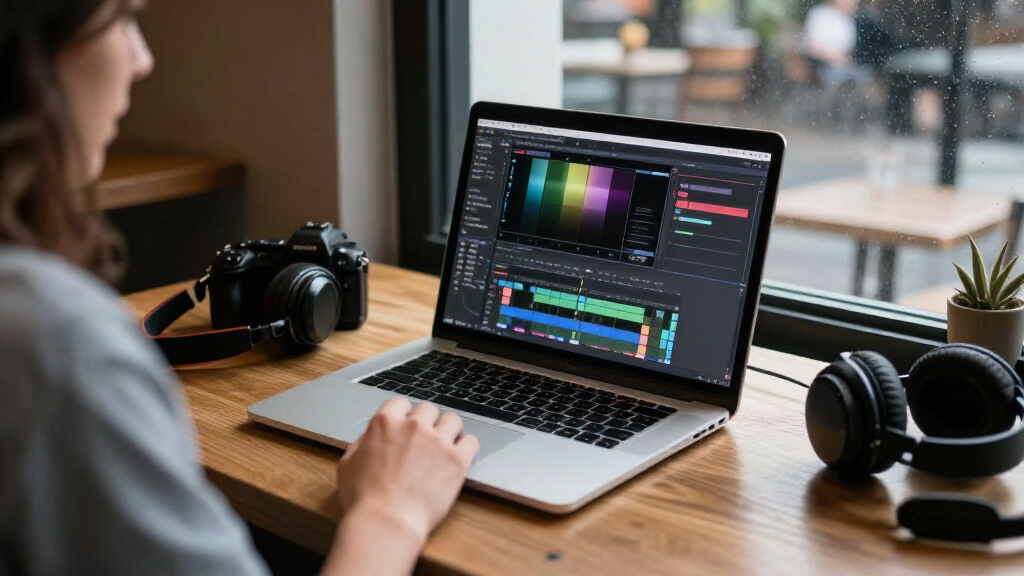
I ranked these MacBook Pros by how well their listed configurations match real editing demands: editing codec and resolution, effects and multicamera complexity, memory headroom, internal storage, display workspace, and portability. For video work, a faster chip matters, but so do enough unified memory to keep demanding timelines responsive and enough storage to manage active projects without constant file juggling.
The ranking favors balanced configurations over headline specifications alone. That puts a 16-inch M5 Pro with 48GB RAM and 2TB SSD ahead of more specialized options for most editors, while the M5 Max models earn higher consideration for heavier workloads. Renewed models are judged by their generation and configuration as well as their lower-upfront-cost appeal; older Intel and 13-inch options rank lower because their age, screen size, or platform limits make them less compelling for sustained editing. I treat listed specifications as the basis for comparison and avoid assuming that every buyer needs the most powerful model.
| macbook pro for video editing | Battery life |
|---|---|
| Apple 2023 MacBook Pro with M2 | — |
| Apple 2026 MacBook Pro Laptop | Described as all-day |
| Apple MacBook Pro 16.2-inch La | Described as all-day |
| Apple 2021 MacBook Pro with M1 | Listed as 20–21 hours |
| Apple 2026 MacBook Pro Laptop | Described as all-day |
| Apple 16-inch MacBook Pro with | — |
| Apple 2026 MacBook Pro 16.2-in | — |
| Apple 2019 MacBook Pro 16-inch | — |
| Apple MacBook Pro 16-inch | — |
| Apple 2020 MacBook Pro | Up to 10 hours (listed) |
Factors to Consider When Choosing Macbook Pro For Video Editing
Choosing a MacBook Pro for editing is less about buying the biggest chip and more about matching the computer to the footage, software, and working habits you already have. I’d start with the demands of your projects, then balance memory, storage, screen size, and portability before paying for extra performance.
Match the chip to your footage and effects
Start with the formats and effects you use, not a general label such as “professional editing.” Straightforward cuts, light color correction, and common social-video exports place different demands on a Mac than noise reduction, complex compositing, multicamera timelines, or high-resolution RAW footage. An M5 Pro configuration is a sensible performance tier for many editors, while an M5 Max is easier to justify when GPU-heavy work or frequent high-resolution exports dominate the day. A faster chip may shorten demanding tasks, but it does not improve every editing step equally. Check which formats your editor and plugins support, since software settings and media codecs can change how much benefit you get. Avoid paying for a Max tier if your current workflow is limited by organization, storage, or a slow external drive instead.
Choose memory for project complexity
Unified memory is shared across the system and graphics workload, so it affects how much footage, software, and background activity can remain active together. Editors working with several applications, large timelines, or memory-intensive effects should leave more headroom than someone cutting a short project with a simple track layout. A higher-memory configuration can help reduce slowdowns from memory pressure, but it is a poor substitute for an efficient workflow or well-managed media. Since memory is not a routine upgrade after purchase, think about the projects you expect to handle over the computer’s useful life rather than only the next edit. If you mostly edit compressed footage and keep projects modest, an extreme memory configuration may be hard to justify. Don’t assume a high-end chip automatically includes enough RAM for your workload; compare the full configuration.
Plan storage around active projects
Internal SSD capacity affects how conveniently you can keep applications, cache files, proxies, and current media close at hand. Video libraries grow quickly, so even a large internal drive may not hold every archive or source file you keep. External SSDs and a separate backup drive can expand capacity, but they add cables, file-management steps, and another item to protect during travel. For active projects, consider how much media you prefer to keep on the laptop and whether your editing location has reliable access to external storage. A larger internal SSD is especially useful for mobile work, but it should not replace a backup plan. One common mistake is spending heavily on processor power while leaving too little space for the footage and cache that make editing practical.
Pick a screen size for the way you edit
A 16-inch display gives the timeline, preview, and editing controls more room, which can reduce how often you rearrange panels or connect a monitor. A 14-inch model is easier to carry and can suit editors who move between locations or often use an external display at a desk. Neither size guarantees a better finished edit; the real question is whether your work benefits more from workspace on the laptop or a lighter everyday setup. For color-critical decisions, plan to assess your display workflow and calibration needs rather than relying on screen size alone. Editors who spend long sessions on a laptop may value the larger panel, while field shooters may prefer the smaller footprint. Do not overlook desk setup: a dock and external monitor can change the value of a portable model.
Weigh renewed models against age and condition
Renewed MacBook Pros can offer a lower-cost route into a larger display or a stronger configuration, but age brings tradeoffs beyond raw performance. Check the seller’s return terms, warranty coverage, battery condition policy, and whether the included configuration matches the listing before buying. A renewed Apple silicon model is generally a more relevant comparison for current editing workflows than an older Intel machine, but actual suitability still depends on your software and media. Consider how long you expect to keep the laptop and whether the operating-system and application support you need will remain available during that period. A low purchase cost can lose its appeal if the battery needs service or the machine cannot comfortably handle your projects. For work-critical editing, weigh service access and downtime alongside the specification sheet.
Pay for useful headroom, not unused capacity
Extra performance is most valuable when it removes a real bottleneck: stalled playback, long exports, insufficient memory, or constant movement of media. Before stepping up to a Max chip or a very large memory configuration, identify which of those problems you actually face. Editors who earn their living from tight turnaround times may value faster exports and more headroom because delays have a direct workflow cost. Students and occasional editors may get more practical benefit from storage, a dependable backup setup, or an external display. A more powerful configuration can also invite larger projects, but it does not fix rushed media organization or missing backups. My rule is to spend first on the limitation you can name, then reserve extra capacity for a clear change in workload.
Frequently Asked Questions
Is the 14-inch M5 Max a better editing choice than a 16-inch M5 Pro?
It depends on whether your workload benefits more from the M5 Max tier or from a larger built-in workspace. The 14-inch M5 Max suits editors who need high performance while traveling and are comfortable using a smaller timeline or connecting a monitor at a desk. The 16-inch M5 Pro with 48GB RAM and 2TB SSD is a more balanced fit for long editing sessions, larger previews, and projects that benefit from its memory and storage configuration. If your work involves intensive effects or GPU-heavy tasks, the M5 Max may be the better match. If screen space and day-to-day comfort matter more, the 16-inch model is the safer pick.
Should I choose an M5 Max model even if I mostly edit 4K footage?
Not automatically: resolution alone does not describe how demanding a project is. Compressed 4K cuts with modest effects may not use the extra headroom of an M5 Max, while multicamera edits, complex effects, high-bitrate media, and intensive color work can make that tier more useful. The M5 Pro options in this lineup offer a more measured balance for many 4K workflows, particularly when paired with ample memory and storage. Look at playback performance and export times in your own software before treating the chip tier as a shortcut to a better fit. If you cannot identify a workload that needs the extra capability, prioritize memory, storage, and display size first.
Is a renewed M1 Pro MacBook Pro still worth considering for video editing?
A renewed 16-inch M1 Pro with 32GB RAM can remain a plausible choice for editors with moderate projects who value a larger screen and want to avoid buying the newest generation. It is a more relevant editing candidate than the 2019 Intel i9 or 13-inch M1 options in this list because it combines Apple silicon with a roomy 16-inch display. The newer M3 Pro and M5 configurations offer a longer runway for current workflows, so the M1 Pro makes less sense if you need maximum longevity or handle increasingly demanding footage. Check battery condition, return coverage, and software compatibility before deciding. If the renewed model’s condition is uncertain or the savings are small, a newer configuration is the lower-risk choice.
How much internal SSD storage do I need if I edit from external drives?
External drives can hold source media and archives, but the internal SSD still needs room for macOS, applications, cache, proxies, and projects you want available offline. The right capacity depends on how many active edits you keep open and whether you generate large proxy or render files. Editors who work in several locations may value more internal space because it reduces dependence on carrying and connecting drives. A desk-based editor with a well-organized external SSD setup may be comfortable with a smaller internal drive, provided backups are separate and reliable. Do not treat one external drive as both your working copy and your only backup.
Which model should a beginner buy if they expect to grow into editing?
A beginner should choose a configuration that handles current projects comfortably without paying for capacity they may never use. Among these options, a 16-inch M5 Pro model is a sensible long-term starting point for someone who wants workspace and memory for more complex edits later, while an M3 Pro renewed model may suit a more budget-conscious buyer who accepts an older generation. The 14-inch M5 Max is harder to justify for basic learning unless portability or demanding work is already part of the plan. Set aside resources for an external backup drive and, if useful, a monitor; those can improve the editing setup more than unused chip headroom. Choose based on the footage and software you expect to work with during the next few years.
Conclusion
Best overall: I’d pick the 16-inch M5 Pro with 48GB RAM and 2TB SSD for editors who want a strong mix of workspace, memory, and storage without opting for the highest chip tier. Best value: the renewed 16-inch M3 Pro with 36GB RAM and 1TB SSD is the more measured choice for buyers who want a capable Apple silicon editing setup and can accept an older generation. Best premium: the 16-inch M5 Max with 128GB RAM and 4TB SSD is aimed at unusually demanding projects and editors who can use that much headroom. Best for beginners: the 16-inch M5 Pro with 24GB RAM and 1TB SSD offers a current platform and generous screen space without the more specialized Max configuration. Best for mobile, demanding work: choose the 14-inch M5 Max if portability is a priority; for specific large-memory needs, choose the 128GB M5 Max. I’d skip the older Intel and 13-inch renewed models unless their condition, software fit, and role as a secondary or basic editing machine make the compromises worthwhile.
Fall Picks
fall essentials
As an affiliate, we earn on qualifying purchases.