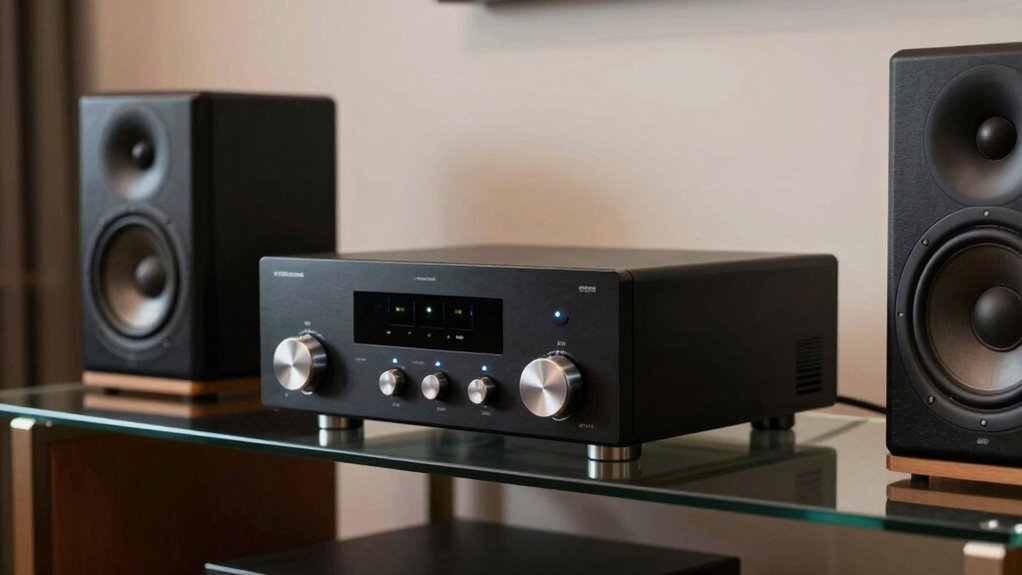

For anyone serious about high-fidelity sound, selecting the right stereo integrated amplifier is key. The best models deliver balanced power, clarity, and versatility, but they vary in features and price. The Yamaha A-S801 stands out as the overall top pick thanks to its impressive power and detailed sound. The Cambridge Audio AXA35 offers excellent value with a straightforward design, while the Denon PMA-900HNE shines for its hi-res capabilities. Choosing the right amplifier involves balancing power, connectivity, build quality, and budget. Continue reading for a detailed breakdown of each option and what makes them unique.
Complete the kit



Key Takeaways
- The best amplifiers combine power and clarity without excessive complexity.
- Many top models now include streaming and digital inputs, adding versatility.
- Build quality and component selection significantly affect long-term durability and sound.
- Entry-level options often sacrifice some features but still deliver solid performance.
- Tradeoffs typically involve balancing budget, power output, and feature set.
| Fosi Audio TB10D 2 Channel Stereo Amplifier, Class D Mini Power Integrated Amplifier with 600W, Bass and Treble Control |  | Best for Power and Versatility in Compact Form | Power Output: 600W | Channels: 2 | Weight: 2.4 pounds | VIEW ON AMAZON | See Our Full Breakdown |
| Cambridge Audio AXA35 Integrated Amplifier with Built-in Phono Stage |  | Best for Vinyl Enthusiasts on a Budget | Power Output: 35 Watts (into 8 Ohms) | Frequency Response: 5Hz – 50kHz | S/N Ratio: >82dB | VIEW ON AMAZON | See Our Full Breakdown |
| Fosi Audio BT10A Bluetooth 5.0 Stereo Audio Amplifier Receiver, 2 Channel Class D Mini Hi-Fi Integrated Amp for Home Passive Speakers, 50W x 2 |  | Best for Wireless Convenience and Compact Power | Power Output: 50W x 2 | Bluetooth Version: 5.0 | Input: 3.5mm AUX | VIEW ON AMAZON | See Our Full Breakdown |
| Fosi Audio MC331 Tube Integrated Amplifier with DAC, 2 Channel Home Audio Stereo Power Amp for Bookshelf Speakers and Headphones |  | Best for Vintage Style and Versatile Inputs | Power Output: 105W x2@4Ω | Inputs: Bluetooth, USB, coaxial, optical, RCA | Weight: 4.2 pounds | VIEW ON AMAZON | See Our Full Breakdown |
| Yamaha A-S501BL Natural Sound Integrated Stereo Amplifier (Black) |  | Best Value for Versatile Home Audio | Power Output: 85 W + 85 W (20 Hz – 20 kHz, 0.019% THD) | Inputs: Digital coax, TOSLINK optical, analog including Phono | Standby Power Consumption: 0.5 W | VIEW ON AMAZON | See Our Full Breakdown |
| Yamaha A-S701BL Natural Sound Integrated Stereo Amplifier |  | Best for Power and Multi-Source Flexibility | Power Output: 100 W + 100 W (20 Hz – 20 kHz, 0.019% THD) | Inputs: Digital coax, TOSLINK optical, Phono | Weight: 24.7 pounds | VIEW ON AMAZON | See Our Full Breakdown |
| WiiM Amp Ultra Stereo Streaming Amplifier, HDMI ARC & RoomFit, Silver |  | Best for Modern Digital and Room Calibration | Power Output: 100W | Connectivity: Wi-Fi 6, Bluetooth 5.3, HDMI ARC | Display: 3.5” touchscreen | VIEW ON AMAZON | See Our Full Breakdown |
| Denon PMA-900HNE Integrated Stereo Amplifier (85W x 2), Hi-Res Certified |  | Best for Digital-Ready High-Resolution Listening | Power Output: 85W x 2 | Built-in HEOS: Yes | Voice Control: Alexa, Siri, Google Assistant | VIEW ON AMAZON | See Our Full Breakdown |
| Yamaha A-S801BL Natural Sound Integrated Stereo Amplifier |  | Best for High-Resolution and Audiophile-Grade Sound | Power Output: 100 W per channel | Frequency Response: 10 Hz – 100 kHz | DAC Support: DSD (2.8 MHz / 5.6 MHz), PCM (384 kHz / 32 bit) | VIEW ON AMAZON | See Our Full Breakdown |
| stereo integrated amplifiers hi fi | Power Output | Inputs | Weight |
|---|---|---|---|
| Fosi Audio TB10D 2 Channel Ste | 600W | — | 2.4 pounds |
| Cambridge Audio AXA35 Integrat | 35 Watts (into 8 Ohms) | 4x RCA, 1x Phono, 1x 3.5mm Aux | — |
| Fosi Audio BT10A Bluetooth 5.0 | 50W x 2 | — | — |
| Fosi Audio MC331 Tube Integrat | 105W x2@4Ω | Bluetooth, USB, coaxial, optical, RCA | 4.2 pounds |
| Yamaha A-S501BL Natural Sound | 85 W + 85 W (20 Hz – 20 kHz, 0.019% THD) | Digital coax, TOSLINK optical, analog including Phono | 22.7 pounds |
| Yamaha A-S701BL Natural Sound | 100 W + 100 W (20 Hz – 20 kHz, 0.019% THD) | Digital coax, TOSLINK optical, Phono | 24.7 pounds |
| WiiM Amp Ultra Stereo Streamin | 100W | — | 5.4 pounds |
| Denon PMA-900HNE Integrated St | 85W x 2 | 3 optical, 1 coaxial, 1 USB-A, MM/MC phono | — |
| Yamaha A-S801BL Natural Sound | 100 W per channel | Gold plated digital coax, TOSLINK optical, analog including Phono | — |
More Details on Our Top Picks
Fosi Audio TB10D 2 Channel Stereo Amplifier, Class D Mini Power Integrated Amplifier with 600W, Bass and Treble Control
The Fosi Audio TB10D stands out for its impressive 600W power output, making it ideal for users who want dynamic sound without sacrificing space. Compared with the Cambridge Audio AXA35, which offers only 35W but excels in clarity and built-in phono, the TB10D prioritizes raw power over specialized features. Its versatile connectivity options and sound customization with bass and treble knobs cater to those who want flexible setup options, though its high power may be excessive for small rooms or passive speakers with low impedance. The lack of wireless connectivity and the need for some technical knowledge for optimal setup are notable tradeoffs. This amplifier is best suited for users who desire high volume and are comfortable with setup complexity.
- High power output for large or demanding speakers
- Multiple connectivity options
- Sound customization controls
- May overpower small spaces or passive speakers
- Requires technical setup
Pros:- Impressive 600W power for dynamic sound
- Versatile connectivity options for multiple devices
- Bass and treble controls for sound tailoring
Cons:- Too powerful for small or passive speakers
- Requires technical knowledge for optimal setup
Best for: Power-hungry users with large or demanding passive speakers in medium to large rooms
Not ideal for: Beginners or those with small, passive speakers in confined spaces due to potential overpowered output
- Power Output:600W
- Channels:2
- Weight:2.4 pounds
- Model Number:TB10D
- Warranty:24 months
Our verdict“Ideal for users needing high volume and flexibility, willing to handle a more complex setup.”
Cambridge Audio AXA35 Integrated Amplifier with Built-in Phono Stage
The Cambridge Audio AXA35 offers a balanced blend of power and audio clarity, making it perfect for vinyl collectors and those seeking straightforward, high-quality sound. Its 35W output is lower than the Denon PMA-600NE, but the integrated phono stage adds significant value for vinyl lovers. While it lacks digital inputs and Bluetooth, its multiple RCA inputs and sleek design appeal to users prioritizing analog sources. The size may be bulky for very small spaces, and it isn’t suitable for surround sound or digital streaming. This amp is tailored for listeners who appreciate vinyl and simple setups without the need for wireless features.
- Built-in phono stage for vinyl playback
- Multiple inputs for versatile connectivity
- Sleek, metal finish
- No digital or Bluetooth support
- Limited to 2 channels, not surround sound
Pros:- Built-in phono stage for vinyl playback
- Multiple input options for versatility
- Sleek, durable metal construction
Cons:- Lacks digital and Bluetooth connectivity
- Limited to 2 channels, no surround sound
Best for: Vinyl collectors and users wanting a high-quality, simple stereo system
Not ideal for: Tech-savvy users desiring digital streaming or multi-channel setups
- Power Output:35 Watts (into 8 Ohms)
- Frequency Response:5Hz – 50kHz
- S/N Ratio:>82dB
- Inputs:4x RCA, 1x Phono, 1x 3.5mm Aux
- Dimensions:3.3″ x 16.9″ x 13.2″
- Material:Metal
Our verdict“Perfect for vinyl lovers needing a clean, reliable amplifier with classic features.”
Fosi Audio BT10A Bluetooth 5.0 Stereo Audio Amplifier Receiver, 2 Channel Class D Mini Hi-Fi Integrated Amp for Home Passive Speakers, 50W x 2
The Fosi Audio BT10A excels in delivering wireless streaming with Bluetooth 5.0, making it ideal for users who want a clutter-free setup. Its 50W per channel output suits small to medium rooms with passive speakers, and the built-in protection circuits enhance reliability. Compared with the Denon PMA-600NE, which offers higher power and more inputs, the BT10A prioritizes wireless convenience and simplicity. Its basic interface and limited wattage can be a drawback for larger spaces or demanding speakers, but for casual listening, it provides clear sound and ease of use. This model is best for users who value wireless streaming and compact design over raw power.
- Supports Bluetooth 5.0 for stable wireless streaming
- Built-in protection circuits for safety
- Compact and easy to set up
- Limited to 50W per channel, not for large rooms
- External speakers required for full setup
Pros:- Supports Bluetooth 5.0 for reliable wireless streaming
- Built-in protection circuits enhance safety
- Compact size ideal for versatile placement
Cons:- Limited to 50W per channel, not for large rooms
- Requires external speakers for full audio setup
Best for: Small to medium rooms where wireless streaming and simplicity are priorities
Not ideal for: Large spaces or demanding speakers requiring high wattage or advanced features
- Power Output:50W x 2
- Bluetooth Version:5.0
- Input:3.5mm AUX
- Protection Features:Short-circuit, thermal, overvoltage, undervoltage, DC
- Chipset:Texas Instruments TPA3116
Our verdict“Perfect for casual, wireless listening in smaller spaces with passive speakers.”
Fosi Audio MC331 Tube Integrated Amplifier with DAC, 2 Channel Home Audio Stereo Power Amp for Bookshelf Speakers and Headphones
The Fosi Audio MC331 combines vintage aesthetic with modern versatility, featuring vacuum tubes and a built-in DAC. Its 105W output, compared with the Denon PMA-600NE, offers more power for demanding bookshelf speakers or headphone listening. The inclusion of multiple input options—Bluetooth, USB, coaxial, optical, and RCA—makes it highly adaptable for various sources. The visual appeal of vacuum tubes and the remote control make it attractive for vintage enthusiasts, though handling fragile tubes and the vintage design might not suit minimalists. Its power level suits medium-sized rooms, but it might be too vintage for those seeking a sleek, modern look. This amp appeals most to those who appreciate a retro aesthetic combined with modern input flexibility.
- Multiple input options including Bluetooth and USB
- Vintage vacuum tube design with visual appeal
- High power output for demanding speakers or headphones
- Fragile vacuum tubes require careful handling
- Vintage styling may not appeal to minimalists
Pros:- Versatile input options including Bluetooth and USB
- Vintage vacuum tube aesthetic with visual appeal
- Powerful enough for demanding bookshelf speakers and headphones
Cons:- Fragile vacuum tubes require careful handling
- Design may be too vintage for modern minimalist tastes
Best for: Vintage aesthetic enthusiasts needing flexible inputs and high power for headphones or bookshelf speakers
Not ideal for: Minimalist modernists or users seeking lightweight, modern design without vacuum tubes
- Power Output:105W x2@4Ω
- Inputs:Bluetooth, USB, coaxial, optical, RCA
- Weight:4.2 pounds
- Warranty:24 months
- Built-In Media:MC331; Bluetooth Antenna; Vacuum Tubes x2
Our verdict“Ideal for vintage style aficionados who want versatile inputs and robust power for various audio sources.”
Yamaha A-S501BL Natural Sound Integrated Stereo Amplifier (Black)
The Yamaha A-S501BL stands out for offering a solid balance of power and connectivity at an attractive price point. With 85W per channel, it can drive most home speakers with ease, making it a good choice for those seeking reliable performance without overspending. Its digital coax and optical inputs, along with a phono stage, support a broad range of sources, surpassing basic models that might lack digital options. The use of gold-plated connectors enhances durability and sound quality, while auto standby adds convenience. However, at 22.7 pounds, its weight could be a drawback for portability or frequent repositioning, and its specifications are somewhat limited in detail. Compared to the Yamaha A-S701BL, it offers less power but remains a practical, budget-friendly option for everyday listening. If you’re after straightforward, versatile sound for a home setup, this amplifier makes an accessible choice.
Pros:- Good power output of 85W per channel for robust sound
- Multiple digital and analog inputs including Phono for vinyl enthusiasts
- High-quality gold-plated connectors for durability
Cons:- Relatively heavy at 22.7 pounds, making it less portable
- Limited detailed specifications in the product description
Best for: Budget-conscious buyers seeking reliable, versatile stereo amplification for home listening.
Not ideal for: Users who need the highest power output or advanced features like multi-room streaming or modern digital integration.
- Power Output:85 W + 85 W (20 Hz – 20 kHz, 0.019% THD)
- Inputs:Digital coax, TOSLINK optical, analog including Phono
- Standby Power Consumption:0.5 W
- Weight:22.7 pounds
- Model Number:A-S501BL
Our verdict“This amp suits those wanting a dependable, budget-friendly option for versatile home audio use.”
Yamaha A-S701BL Natural Sound Integrated Stereo Amplifier
The Yamaha A-S701BL makes a compelling case for higher performance with 100W per channel, ideal for driving larger or more demanding speakers. Its inclusion of multiple digital inputs, such as optical and coaxial, surpasses the A-S501BL’s connectivity options, supporting a broader range of digital sources. The gold-plated terminals ensure high-quality audio transmission, and its support for various sources like vinyl, Bluetooth, and multi-room streaming adds versatility. Compared to the A-S501BL, it offers more power but is slightly heavier at 24.7 pounds, which could be inconvenient for portability. However, it remains a stereo-only model, limiting surround sound options. If you need a more powerful, feature-rich amplifier for a dedicated listening room, this model is a strong contender.
Pros:- Powerful output of 100W per channel for large or demanding speakers
- Multiple digital inputs including optical and coaxial
- Supports various sources like vinyl, Bluetooth, and multi-room audio
Cons:- Relatively heavy at 24.7 pounds, less portable
- Limited to stereo output, not suitable for surround sound
Best for: Home audiophiles who prioritize higher power and multi-source connectivity for stereo listening.
Not ideal for: Users seeking a lightweight, portable amplifier or surround sound capabilities.
- Power Output:100 W + 100 W (20 Hz – 20 kHz, 0.019% THD)
- Inputs:Digital coax, TOSLINK optical, Phono
- Weight:24.7 pounds
- Item Count:1
- Warranty:1 Year Limited Warranty
Our verdict“Ideal for audiophiles wanting more power and multi-source flexibility in a stereo amplifier.”
WiiM Amp Ultra Stereo Streaming Amplifier, HDMI ARC & RoomFit, Silver
The WiiM Amp Ultra integrates high-end digital components like an ESS SABRE DAC and dual TPA3255 amps, offering 100W of clean power. Its standout feature is the RoomFit room correction technology, allowing for tailored sound in challenging spaces—a feature that sets it apart from traditional analog-only amps like Yamaha’s models. Connectivity options include Wi-Fi 6, Bluetooth 5.3, and HDMI ARC, supporting streaming services and voice control, though it doesn’t support AirPlay, which might be limiting for some users. Its touchscreen interface adds a modern touch, ideal for tech-savvy or multi-room setups. Compared with the Denon PMA-900HNE, it offers streamlined digital integration but lacks some of the broader format support. If you want a sleek, digitally advanced amplifier with room calibration, this choice is compelling.
Pros:- High-quality ESS SABRE DAC for clear, detailed sound
- Multiple connectivity including Wi-Fi 6 and HDMI ARC
- Built-in RoomFit technology for customized sound calibration
Cons:- Incompatible with AirPlay, limiting some streaming options
- Setup and calibration are required for optimal performance
Best for: Modern digital enthusiasts who want multi-room, voice-controlled streaming with room calibration.
Not ideal for: Traditionalists or those needing AirPlay compatibility or extensive format support.
- Power Output:100W
- Connectivity:Wi-Fi 6, Bluetooth 5.3, HDMI ARC
- Display:3.5” touchscreen
- Dimensions:7.87 x 8.3 x 3 inches
- Weight:5.4 pounds
Our verdict“Best suited for users seeking a digitally advanced amplifier with personalized room correction features.”
Denon PMA-900HNE Integrated Stereo Amplifier (85W x 2), Hi-Res Certified
The Denon PMA-900HNE offers a versatile 85W per channel, supporting a wide array of high-resolution audio formats, including DSD and PCM, making it appealing for serious audiophiles. Its built-in HEOS facilitates seamless multi-room streaming, and voice control compatibility with Alexa, Siri, and Google Assistant adds convenience. The array of inputs—optical, coaxial, USB-A, and phono—ensures compatibility with many sources, including turntables and digital devices. Compared with the Yamaha A-S801BL, it emphasizes digital versatility and smart features over raw power, but the setup could be complex for beginners. Its higher price reflects its premium features, so it’s best for those who prioritize high-res audio and multi-room integration.
Pros:- Supports high-res audio formats including DSD and PCM
- Built-in HEOS for multi-room wireless streaming
- Multiple digital and analog inputs including a phono stage
Cons:- No specific dimensions or weight info available, which could impact space planning
- Setup complexity might be challenging for newcomers
Best for: Audiophiles who want high-resolution playback and integrated multi-room streaming.
Not ideal for: Beginners or users with limited space and simple setup needs.
- Power Output:85W x 2
- Built-in HEOS:Yes
- Voice Control:Alexa, Siri, Google Assistant
- Inputs:3 optical, 1 coaxial, 1 USB-A, MM/MC phono
- Supported Audio Formats:MP3, ALAC, WAV, FLAC HD, DSD
Our verdict“Ideal for high-resolution audio enthusiasts seeking multi-room streaming and versatile digital inputs.”
Yamaha A-S801BL Natural Sound Integrated Stereo Amplifier
The Yamaha A-S801BL is designed for high-end listening, providing 100W per channel and a built-in USB DAC supporting DSD and PCM formats. Its high-quality components, including 12,000 µF capacitors and extruded aluminum heat sinks, ensure stable, detailed sound reproduction. The extensive digital inputs, along with a dedicated phono input, make it suitable for vinyl lovers and digital sources alike. Its wide frequency response up to 100 kHz caters to audiophiles seeking accurate sound across the spectrum. Compared to the Yamaha A-S701BL, it delivers more refined sound quality and higher-resolution support at the expense of increased size and complexity. If your priority is premium sound quality with high-resolution support, this amplifier fits well into a dedicated high-fidelity setup.
Pros:- High power with 100W per channel for demanding speakers
- Supports high-resolution formats including DSD and PCM
- Multiple digital and analog inputs, including Phono for vinyl
Cons:- May be bulky for limited space environments
- Lacks modern streaming features like Wi-Fi or Bluetooth
Best for: Audiophiles requiring high-resolution audio support and premium build quality for critical listening.
Not ideal for: Small spaces or users seeking straightforward, simplified setups without extensive digital features.
- Power Output:100 W per channel
- Frequency Response:10 Hz – 100 kHz
- DAC Support:DSD (2.8 MHz / 5.6 MHz), PCM (384 kHz / 32 bit)
- Inputs:Gold plated digital coax, TOSLINK optical, analog including Phono
- Capacitors:12,000 µF block capacitors
- Heat Sinks:Extruded aluminum
Our verdict“Excellent for dedicated audiophile setups demanding high-resolution support and premium components.”
How We Picked
This list was curated based on a combination of performance metrics, build quality, usability, and value for money. We evaluated each amplifier’s power output, connectivity options, sound clarity, and user interface. Durability and brand reputation also played roles in the ranking, ensuring that the selected models provide reliable, high-quality sound for different budgets. Products were ordered to highlight the best overall choice first, followed by options that excel in specific categories like value, premium features, or beginner friendliness.Factors to Consider When Choosing Stereo Integrated Amplifiers Hi Fi
Choosing the right stereo integrated amplifier involves several key considerations that go beyond just wattage or brand reputation. Understanding your specific needs—whether for casual listening, critical hi-fi setups, or streaming—helps narrow down options. It’s also important to evaluate how much power you need for your speakers, the types of inputs and outputs required, and the build quality to ensure longevity. Getting these factors right can significantly enhance your listening experience and ensure your investment pays off over time.Power and Compatibility with Your Speakers
Matching your amplifier’s power output with your speakers is essential to achieve clear, distortion-free sound. Overpowered amplifiers can damage sensitive speakers, while underpowered ones may struggle to drive larger models effectively. Consider your speaker’s impedance and recommended wattage—this guides you toward a compatible amplifier that provides enough headroom for dynamic music passages, without risking overload.
Input and Connectivity Options
Modern hi-fi amplifiers often include digital inputs, Bluetooth, or streaming capabilities, which expand their versatility. Think about what devices you want to connect—turntables, smartphones, computers, or streaming services—and choose an amplifier that offers the right ports. Avoid models with limited inputs if you plan to connect multiple sources, but also beware of overly complex setups if simplicity is your goal.
Build Quality and Long-Term Reliability
High-quality components and sturdy construction translate into better sound stability over time. Metal chassis, quality capacitors, and reliable brand reputation matter more than just the specs sheet. Investing in a well-built amplifier reduces the risk of failures and ensures consistent performance, especially if you plan to use it daily or for extended listening sessions.
Features and User Interface
Ease of use can make or break your experience. Intuitive controls, clear displays, and remote access improve daily usability. Look for features like tone controls, remote control, or app integration if you want more flexibility. However, extra features often come at a cost, so consider which ones genuinely enhance your listening rather than complicate it.
Price and Value for Money
While higher-priced models typically offer better sound quality and more features, some budget options deliver surprisingly good performance for less. Identify your priorities—whether power, connectivity, or build quality—and balance these against your budget. Sometimes, spending a bit more upfront results in longer-term satisfaction and fewer upgrades.
Frequently Asked Questions
Can I use a stereo integrated amplifier with my existing speakers?
Yes, most stereo integrated amplifiers are designed to drive passive speakers. To ensure compatibility, check your speakers’ impedance and the amplifier’s power output. Matching these specifications prevents damage and ensures optimal sound quality. If your speakers require more power or specific connections, choose an amplifier that provides those features, and consider whether your setup needs additional components like a preamp or DAC.
Is it worth paying more for a hi-res certified amplifier?
Paying extra for a hi-res certified amplifier can be beneficial if you primarily listen to high-resolution digital files or streaming services. These models often include better DACs and support formats like DSD or PCM at higher bit depths, delivering clearer, more detailed sound. For casual listeners using standard sources, the added expense may not translate into noticeable improvements, so consider your source quality before investing in higher-end digital features.
Should I prioritize power or features when choosing an amplifier?
Prioritizing power makes sense if you have large or inefficient speakers that need more drive for optimal sound. On the other hand, if your focus is on streaming or digital connectivity, features like Bluetooth, Wi-Fi, or app control may be more valuable. Balancing both based on your listening habits and speaker setup is key—rarely does a single factor dictate the best choice, so consider your overall system and preferences.
Are integrated amplifiers suitable for home theater setups?
While integrated amplifiers excel in stereo music systems, some models with HDMI or multiple digital inputs can work in basic home theater configurations. However, dedicated AV receivers generally provide more surround sound options and better video integration. If your primary goal is stereo music with high fidelity, an integrated amplifier is ideal; for multichannel sound, consider a home theater receiver instead.
How important is build quality compared to features?
Build quality directly influences an amplifier’s durability and consistent performance over time. While features add convenience and versatility, they do not compensate for poor construction or low-quality components. A well-built amplifier with fewer features can outperform a feature-rich but cheaply made model in the long run, making durability a key factor in your decision.
Conclusion
The best overall choice for most users remains the Yamaha A-S801, blending power, build quality, and detailed sound at a reasonable price. For those prioritizing budget without sacrificing sound, the Cambridge Audio AXA35 offers excellent value. If you seek premium features and higher power, the Denon PMA-900HNE stands out with its hi-res support. Beginners or casual listeners may prefer simpler models like the Fosi Audio TB10D, while audiophiles with a focus on streaming will appreciate models like the WiiM Amp Ultra. Your choice should align with your specific setup, listening preferences, and budget.