
TL;DR

Get the latest gadgets delivered free with Prime
- Fast, free delivery on millions of items
- Prime Video, Amazon Music and more included
- Member-only deals all year
Meta’s Ray-Ban smart glasses are under scrutiny for their perceived creepiness. The debate centers on whether these devices can be made more acceptable or should be banned altogether.
Meta’s Ray-Ban smart glasses remain a controversial topic as public opinion and user feedback question whether they can ever be perceived as non-creepy. The debate focuses on their design, functionality, and social acceptance, with no definitive resolution yet.
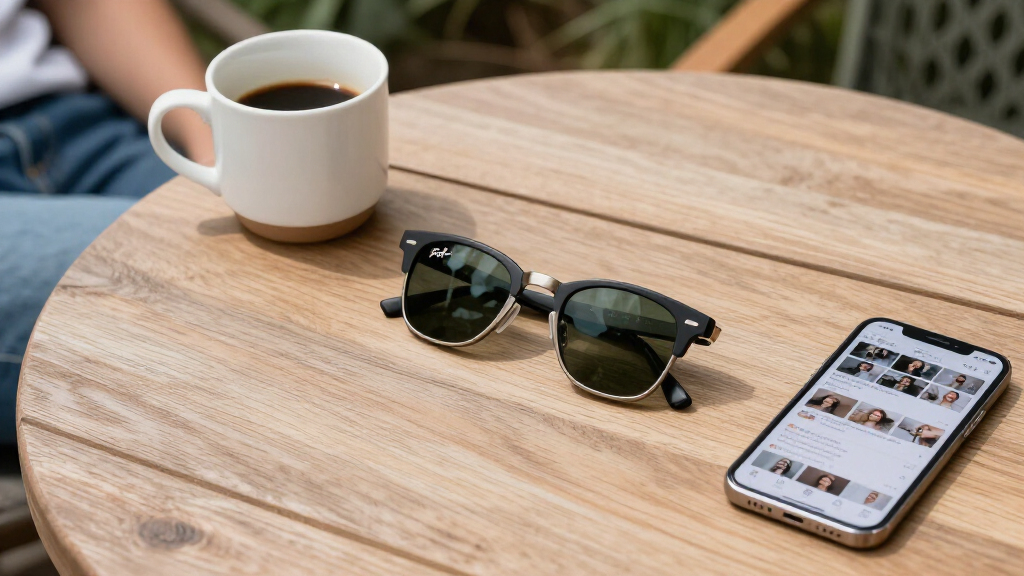
Meta’s Ray-Ban smart glasses, launched in 2021, integrate camera and audio features into stylish eyewear. While some users appreciate the convenience, critics argue that their appearance and perceived surveillance capabilities make them seem intrusive or ‘creepy.’
Recent discussions, including social media debates and consumer feedback, highlight a divide: some see potential for improved design and privacy features, while others call for bans or stricter regulations. For more insights, visit our wearables section. Meta has not announced any major redesigns or policy changes in response to these concerns, but the company continues to promote the glasses as a fashionable tech accessory.
Can Meta Ray-Bans ever not be creepy?
Camera-equipped eyewear promises hands-free convenience, but it also changes the social contract of every room it enters. The real question is not simply whether smart glasses should exist—it is whether bystanders can understand, challenge, and meaningfully consent to what the glasses do.
The creepiness is not just about appearance
Stylish frames reduce the visible distance between ordinary eyewear and a recording device. That subtlety is convenient for the wearer—but uncertainty for everyone else.
Covert recording
A bystander may not notice a camera, understand an indicator light, or know when a recording begins. The device can capture people before they have a chance to object.
Invisible collection
People nearby may not know what audio, images, or contextual information is retained, processed, shared, or connected to a broader platform account.
Ambient surveillance
One wearer controls the device while everyone in view bears part of the privacy cost. Repeated across public life, personal convenience can become pervasive monitoring.
Ban, regulate, or redesign?
Each approach solves a different part of the problem. A credible way forward may combine enforceable rules with hardware and product changes.
| Approach | Privacy protection | User utility | Practical challenge | Likely outcome |
|---|---|---|---|---|
| Full ban | +Strongest limit on device-enabled recording | −Removes accessibility and hands-free benefits | Defining and enforcing which eyewear is prohibited | Clear boundary, limited innovation |
| Restricted use | ~Higher protection in sensitive places | +Preserves use in lower-risk settings | Rules may vary across workplaces, venues, and regions | Context-specific compromise |
| Privacy-first redesign | ~Depends on visible, verifiable safeguards | +Maintains most everyday functions | Trust fails if indicators can be obscured or disabled | Best route to social acceptance |
| Status quo | −Leaves consent and transparency gaps unresolved | +Maximum flexibility for owners | Public resistance may intensify as adoption grows | Convenience with persistent distrust |
What would make smart glasses less intrusive?
These priorities are a qualitative framework derived from the debate—not measured product scores. The strongest safeguards should be obvious to bystanders and difficult for wearers to bypass.
Trust-building priorities
Relative emphasis for a privacy-first redesign.
Qualitative design framework · not consumer testing data
Four tests for legitimacy
A small indicator light is only the beginning. Social acceptance requires a system that works for people who never chose to wear the product.
The signal must be visible, understandable, and inseparable from camera operation.
Venues and individuals need workable ways to establish device-free boundaries.
Short retention, limited sharing, and local processing reduce secondary exposure.
Trust should rest on enforceable architecture and audits, not marketing promises alone.
How one design decision becomes a public issue
The debate moves from hardware to social behavior, adoption, and ultimately regulation. Each link affects what happens next.
Discreet camera
Recording capability blends into familiar eyewear.
Bystander uncertainty
People cannot confidently determine device status.
Social discomfort
Wearers face suspicion, restrictions, or exclusion.
Adoption friction
Public resistance limits mainstream acceptance.
Policy pressure
Lawmakers and venues consider rules or bans.
What remains unresolved
Legal frameworks are still developing, and public acceptance may depend as much on social norms as on technical specifications.
Can the glasses be redesigned to feel less creepy?
Possibly. Clear recording indicators, enforceable privacy controls, restrained data collection, and recognizable design cues could reduce uncertainty. Styling alone will not resolve the consent problem.
Should smart glasses be banned?
The case is contested. Supporters of bans prioritize protection from covert recording. Opponents argue that targeted restrictions and better product design can preserve legitimate uses.
Do existing privacy laws settle the issue?
Not comprehensively. General recording, surveillance, and data-protection rules may apply, but dedicated smart-glasses requirements remain limited or unclear across many regions.
What can the public do now?
Shape the norm. Consumers can challenge unclear recording behavior, support device policies in sensitive spaces, submit product feedback, and press policymakers for transparent safeguards.
The better question is not “Are smart glasses creepy?”
Ask whether people around the wearer have visibility, agency, and protection. If those conditions cannot be guaranteed, restrictions become easier to justify. If they can, privacy-first redesign may offer a better path than a blanket ban.
Impact of Public Perception on Smart Glasses Adoption
The ongoing debate over Meta Ray-Bans reflects broader concerns about privacy, social acceptance, and the future of wearable technology. If such devices are widely viewed as creepy or invasive, it could hinder mainstream adoption and prompt regulatory action, shaping the future landscape of smart eyewear.smart glasses with privacy features
As an affiliate, we earn on qualifying purchases.
As an affiliate, we earn on qualifying purchases.
History and Public Response to Smart Glasses
Smart glasses have faced mixed reactions since their inception, with early models often criticized for bulky design and privacy issues. Meta’s Ray-Bans, introduced as a fashionable alternative, have stirred new debate about how wearable tech should balance utility and social norms. Public concern about surveillance and privacy has grown, especially with high-profile incidents involving covert recording or data misuse.
In 2022, privacy advocates and some lawmakers called for restrictions or bans on smart glasses that could facilitate covert recording, citing potential misuse. Despite this, tech companies continue to develop and promote these devices, emphasizing their convenience and style.
“Design and privacy features are key to changing perceptions of smart glasses. Without improvements, they risk being seen as invasive or ‘creepy.'”
— an anonymous researcher
As an affiliate, we earn on qualifying purchases.
Unclear Path Forward for Smart Glasses Acceptance
It remains uncertain whether Meta or other companies will successfully redesign their smart glasses to eliminate perceptions of creepiness or if regulatory bodies will impose bans. Public opinion is divided, and legal frameworks are still in development, making the future landscape unpredictable.
As an affiliate, we earn on qualifying purchases.
Next Steps in Smart Glasses Development and Regulation
Meta and other manufacturers are expected to explore new designs and privacy features to address concerns. Additionally, lawmakers and privacy advocates may propose regulations or bans, influencing the market. Monitoring public feedback and regulatory developments over the coming months will clarify the future of smart glasses.
camera glasses with privacy controls
As an affiliate, we earn on qualifying purchases.
As an affiliate, we earn on qualifying purchases.
Key Questions
Can Meta Ray-Bans be redesigned to look less creepy?
Yes, potential redesigns could focus on aesthetics, privacy indicators, and discreet features, but it remains to be seen if companies will pursue these changes.
Should smart glasses be banned due to privacy concerns?
This is a matter of ongoing debate. Some argue bans are necessary to protect privacy, while others believe regulation and design improvements are better solutions.
What are the main privacy issues with smart glasses?
The primary concerns include covert recording, data collection without consent, and surveillance capabilities that could infringe on personal privacy.
Are there existing regulations for smart glasses?
Regulations are still in development in many regions. Some laws address surveillance and data privacy, but specific rules for smart glasses are limited or unclear.
What can consumers do if they find smart glasses creepy?
Consumers can voice their opinions through reviews, social media, and advocacy, influencing companies and policymakers to consider privacy and design improvements.
Source: rss
Fall Picks
fall essentials
As an affiliate, we earn on qualifying purchases.