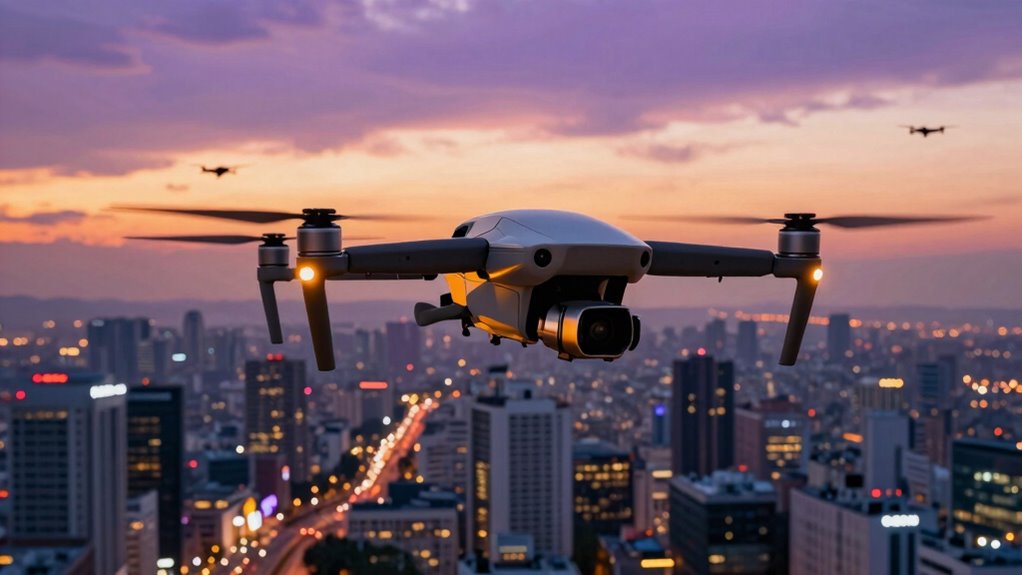

You might think drones started as just fun gadgets, but they quickly proved their value beyond hobbies. Today, they’re powerful tools used in industries like agriculture, delivery, security, and disaster response. Their advanced technology allows for high-quality aerial images, real-time data, and access to hard-to-reach places, saving lives and improving efficiency. As drones keep evolving, their impact becomes even larger—discover how their growth is changing the way we see and interact with the world around you.
Key Takeaways
- Technological advancements transformed drones from simple gadgets into sophisticated tools with diverse industry applications.
- Drones enable rapid, safe access to disaster zones, improving emergency response and damage assessment.
- Their affordability and ease of use democratized aerial imaging, expanding professional and recreational use.
- Integration into sectors like agriculture, security, and infrastructure inspection enhanced operational safety and efficiency.
- Continuous innovation has made drones essential for visual, safety, and response strategies across multiple industries.
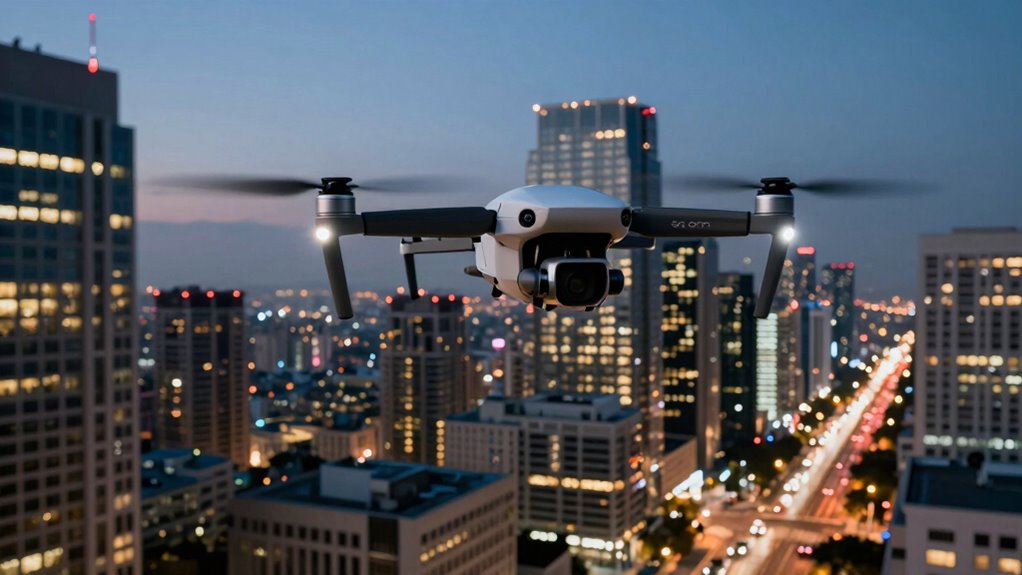
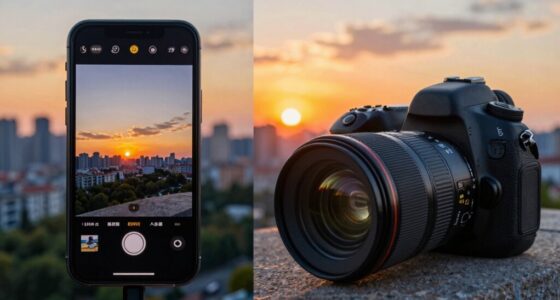
Drones have evolved far beyond their initial status as hobbyist gadgets, transforming into powerful tools that impact industries worldwide. Today, you see them used in ways that go far beyond simple recreational flying. One of the most striking examples is aerial photography. Instead of relying on helicopters or expensive cranes, you can now capture stunning, high-resolution images from the sky with a drone. This technology allows photographers and marketers to get unique perspectives that were once difficult or costly to achieve. Whether it’s for real estate, filmmaking, or landscape documentation, drones make aerial shots more accessible and affordable. Their agility and ease of use mean that you don’t need special training or hefty budgets to produce professional-quality images. This democratization of aerial photography has opened up new creative avenues, enabling both amateurs and professionals to push visual boundaries.
But the impact of drones goes well beyond photography. You’ll also find them playing an essential role in disaster response. When emergencies strike, quick access to affected areas often makes the difference between saving lives and losing them. Drones can swiftly reach disaster zones that are otherwise difficult to access—think collapsed buildings, flooded areas, or wildfire-ravaged landscapes. Equipped with thermal cameras and high-definition sensors, they provide real-time data to rescue teams, helping pinpoint survivors or assess damage accurately. This rapid information gathering can save valuable time, enabling responders to plan more effective rescue operations. Instead of sending personnel into dangerous or inaccessible zones, you can deploy drones first to survey the area, identify hazards, and strategize accordingly. Their ability to deliver immediate, detailed visuals makes them indispensable in emergency management. Additionally, the increasing sophistication of drone technology is driving further innovations across multiple sectors, making these tools even more integral to our everyday operations. The evolution of drones from hobbyist gadgets to essential tools is driven by their versatility and increasing technology advancements. As a result, they are increasingly used in community safety initiatives, providing vital support during crises. You see drone technology becoming integral in industries like agriculture, delivery, security, and infrastructure inspection. You see drone technology becoming integral. It’s not just about flying toys anymore; it’s about harnessing a tool that enhances safety, efficiency, and creativity. As advancements continue, your role in utilizing drones will likely expand, whether you’re using them for professional projects or community safety initiatives. The progression from mere recreational devices to indispensable operational platforms underscores why drones have become so much more than a hobby—they’re reshaping how we see, respond to, and interact with our world.
professional drone for aerial photography
As an affiliate, we earn on qualifying purchases.
As an affiliate, we earn on qualifying purchases.
Frequently Asked Questions
How Are Drones Impacting Environmental Conservation Efforts?
Drones substantially impact environmental conservation by enhancing wildlife monitoring and forest surveillance. You can use them to track animal populations, preventing poaching and illegal activities. Drones also help you survey forests more efficiently, spotting deforestation or disease early. Their agility and aerial perspective make conservation efforts more effective, allowing you to gather essential data quickly and safely, ultimately protecting ecosystems and promoting sustainable environmental practices.
What Are the Legal Restrictions on Commercial Drone Use?
Think of legal restrictions on commercial drone use like traffic rules for pilots—strict but necessary. You must obtain drone licensing, ensuring you’re qualified to fly safely and responsibly. Privacy concerns are also a big deal; you can’t invade people’s personal space or capture private moments without permission. These laws aim to protect everyone’s rights, so you need to stay informed and compliant to avoid fines or legal issues while operating your drone commercially.
How Do Drone Technologies Vary Across Different Industries?
You’ll find drone technologies vary widely across industries. In delivery services, drones focus on rapid, efficient transportation of goods, often equipped with GPS and obstacle sensors. For aerial photography, drones prioritize high-resolution cameras and stabilizers to capture stunning images from above. These industry-specific features help drones meet their unique demands, whether delivering packages or creating breathtaking visuals, showcasing how tailored drone tech enhances various sectors beyond hobbyist use.
What Safety Measures Are in Place for Drone Operations?
Imagine yourself soaring through the sky, knowing safety measures protect your journey. You must register your drone and obtain pilot certification, ensuring responsible flying. Airspace is monitored with geofencing technology, preventing unauthorized areas. Regular maintenance checks and adherence to flight restrictions keep everyone safe. These safety measures create a secure environment, allowing you to enjoy drone flying while minimizing risks, making every flight as safe as it is exciting.
How Is Drone Data Being Integrated Into Urban Planning?
You’ll find drone data plays a crucial role in urban planning by providing detailed insights into urban infrastructure. City planners use this data for mapping, monitoring construction, and evaluating traffic flow. They often utilize data visualization tools to interpret drone imagery effectively, making it easier to identify issues and plan improvements. This integration helps create smarter, more efficient cities, ensuring infrastructure development aligns with real-time conditions and future growth needs.
drone thermal camera for disaster response
As an affiliate, we earn on qualifying purchases.
As an affiliate, we earn on qualifying purchases.
Conclusion
So, as you see, drones are no longer just toys or hobbies—they’re transforming industries and changing the way we see the world. But what’s next? With technology advancing at lightning speed, the possibilities are endless—and maybe a little mysterious. Will you be part of this revolution, or will you watch from the sidelines? One thing’s for sure: the future of drones is more unpredictable than ever, and it’s just getting started.
agricultural drone with multispectral sensors
As an affiliate, we earn on qualifying purchases.
As an affiliate, we earn on qualifying purchases.
As an affiliate, we earn on qualifying purchases.