
TL;DR

Get the latest gadgets delivered free with Prime
- Fast, free delivery on millions of items
- Prime Video, Amazon Music and more included
- Member-only deals all year
In 2026, the AI processor market is led by several models distinguished by performance, efficiency, and specialization. This list ranks the top 10 processors shaping AI workloads today.
Multiple AI processors have been recognized as the top performers in 2026, with leading models from NVIDIA, AMD, and Intel dominating benchmarks. These processors are crucial for AI research, enterprise deployment, and high-performance computing, making this list essential for industry professionals and tech enthusiasts alike. For a detailed overview, see the original analysis.
The list includes NVIDIA’s latest H100 Tensor Core GPU, AMD’s MI300X, and Intel’s Ponte Vecchio, among others. As discussed in Europe built sovereign clouds to escape US control, processor choices are vital for cloud infrastructure. The NVIDIA H100 remains the benchmark for AI training and inference, leveraging its advanced tensor cores and high memory bandwidth. AMD’s MI300X offers a compelling balance of compute power and energy efficiency, appealing to data centers. Intel’s Ponte Vecchio emphasizes versatility and integration with existing HPC infrastructure. The ranking considers performance metrics such as throughput, latency, power efficiency, and scalability, based on recent industry benchmarks and vendor disclosures.
Manufacturers continue to push the envelope with new architectures, increased core counts, and improved AI-specific features. For more insights, see 7 Best PC Processors for Prime Day Deals in 2026. Compatibility with current AI frameworks and software ecosystems remains a key factor influencing adoption. While NVIDIA maintains its lead, AMD and Intel are closing the gap with innovative solutions tailored for diverse workloads, from deep learning training to real-time inference.
The 10 picks
- 1
 AMD Ryzen 9 9950X 16-Core Desktop ProcessorView on Amazon →
 - 2
 AMD Ryzen 7 9800X3D 8-Core, 16-Thread Desktop ProcessorView on Amazon →
 - 3
 AMD Ryzen 7 5800X3D 8-core, 16-thread Desktop Processor with AMD 3D V-Cache T…View on Amazon →
 - 4
 AMD Ryzen 7 7800X3D 8-Core, 16-Thread Desktop ProcessorView on Amazon →
 - 5
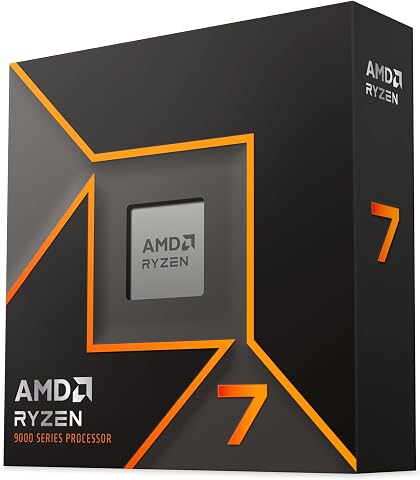 AMD Ryzen 7 9700X 8-Core, 16-Thread Unlocked Desktop ProcessorView on Amazon →
 - 6
 AMD Ryzen 7 5800XT 8-Core, 16-Thread Desktop ProcessorView on Amazon →
 - 7
 AMD Ryzen 7 7700X 8-Core, 16-Thread Unlocked Desktop ProcessorView on Amazon →
 - 8
 Intel Core Ultra 5 Desktop Processor 225, 10 cores (6 P-cores + 4 E-cores), u…View on Amazon →
 - 9
 AMD Ryzen 5 9600X 6-Core, 12-Thread Unlocked Desktop ProcessorView on Amazon →
 - 10
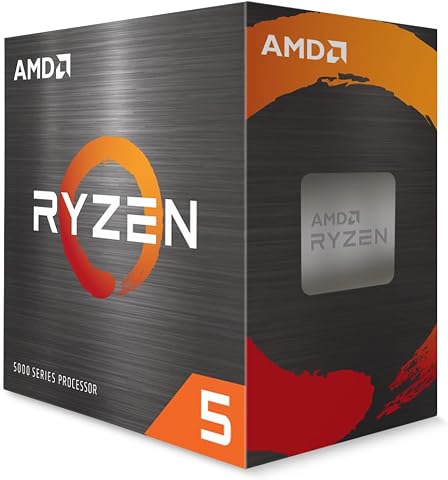 AMD Ryzen 5 5500 6-Core Desktop Processor with Wraith Stealth CoolerView on Amazon →
Impact of Leading AI Processors on 2026 AI Development
The top AI processors in 2026 are shaping the future of AI research, commercial applications, and enterprise infrastructure. Their capabilities influence the speed and efficiency of AI model training, deployment, and real-time inference, directly affecting sectors like healthcare, automotive, and finance. Companies investing in these processors gain competitive advantages through faster innovation cycles and more sophisticated AI solutions. As AI workloads grow in complexity, the importance of high-performance, energy-efficient processors becomes even more critical, making this ranking a key reference for industry decision-makers.
Evolution and Benchmarking of AI Processors in 2026
Over the past few years, AI processors have evolved rapidly, driven by demands for higher compute density and efficiency. NVIDIA’s H100, launched in late 2024, set new standards with its Tensor Core architecture optimized for AI workloads. AMD’s MI300X, introduced in early 2025, marked a shift towards more energy-efficient, scalable solutions suitable for data centers. Intel’s Ponte Vecchio, also released in 2025, emphasized integration with existing HPC infrastructure and versatility across workloads. Industry benchmarks from MLPerf, SPEC, and proprietary tests have been instrumental in evaluating these processors’ real-world performance. The competitive landscape remains dynamic, with each vendor focusing on specific strengths like scalability, power efficiency, or specialized AI features.
Outstanding Questions About Future AI Processor Developments
While current models dominate the market, it is unclear how upcoming architectures, such as AMD’s next-generation MI400X or Intel’s future HPC chips, will compare in performance and energy efficiency. The pace of innovation suggests new contenders may emerge, and software ecosystem support remains a critical factor that could influence future rankings. Additionally, the long-term impact of AI-specific hardware on power consumption and sustainability is still being evaluated, with ongoing research and industry debates.
Next Steps for AI Hardware Innovation and Adoption
Manufacturers are expected to release next-generation processors in late 2026 and early 2027, potentially reshaping the top 10 list. Focus areas include further improvements in AI acceleration, energy efficiency, and integration with emerging AI frameworks like quantum computing interfaces. Industry analysts anticipate increased adoption of these processors across sectors such as autonomous vehicles, healthcare AI, and large-scale data analytics. Monitoring upcoming benchmarks, product launches, and software ecosystem updates will be essential for understanding the evolving landscape.
Key Questions
Which AI processor currently leads the market in 2026?
The NVIDIA H100 Tensor Core GPU remains the leading AI processor in 2026, excelling in training and inference workloads based on recent benchmarks.
How do AMD’s and Intel’s processors compare to NVIDIA’s in AI performance?
AMD’s MI300X offers a strong balance of compute power and energy efficiency, while Intel’s Ponte Vecchio emphasizes versatility and integration. However, NVIDIA maintains a performance edge in most benchmarks.
What factors influence the ranking of these AI processors?
Performance metrics such as throughput, latency, power efficiency, scalability, and compatibility with AI frameworks are key factors in ranking these processors.
Are new AI processors expected to come out soon that could change this list?
Yes, upcoming releases from AMD and Intel are anticipated in late 2026 and early 2027, which could significantly impact the current top 10 rankings.
Why is energy efficiency important in AI processors?
Energy efficiency reduces operational costs and environmental impact, especially as AI workloads become more demanding and data centers scale up.
Source: ThorstenMeyerAI.com
Halloween Picks
halloween
As an affiliate, we earn on qualifying purchases.