
🔍 Read the full analysis: The Design Details Behind “TURBINE — WERK 9”’S SVG Rotor on ThorstenMeyerAI.com

Get the latest gadgets delivered free with Prime
- Fast, free delivery on millions of items
- Prime Video, Amazon Music and more included
- Member-only deals all year
TL;DR
TURBINE — WERK 9 presents a web page as an interactive field guide, with scrolling tied to the movement of an SVG rotor. The project description says the interaction combines browser technology, vector paths and scroll input, but does not provide implementation specifics or technical measurements.
TURBINE — WERK 9 uses a scroll-driven SVG rotor to turn movement through a web page into part of an industrial-themed interactive field guide, according to the original project analysis on ThorstenMeyerAI.com. The description frames the design as an exploration of how browser-based interaction can suggest the mechanics of a physical place, though it does not specify the rotor’s code, performance or exact behavior.
The project is described as an interactive field guide, rather than a conventional brochure. Its main interaction connects the visitor’s scrolling to an SVG rotor, making page navigation appear linked to the machine-inspired visual language. The account says the experience combines a browser, a set of vector paths and scroll input, but does not detail the underlying implementation.
The design framing gives the interaction a defined purpose: visitors are invited to explore the page as if moving through a place, while the field-guide format helps organize that exploration. The write-up presents the rotor as the central design device, tying the visual movement to the industrial setting rather than treating animation as a separate decorative effect.
ThorstenMeyerAI.com points readers to a fuller case study about how the team shaped the rotor’s motion, organized the visual system and translated a sense of physical space into a browser experience. The available project description does not include those detailed design decisions, screenshots, code samples or measurements.
Interactive field guide · Design analysis
The Design Details Behind “TURBINE — WERK 9”’s SVG Rotor
TURBINE — WERK 9 turns a familiar browser action—scrolling—into part of an industrial-themed field guide. Its central device is an SVG rotor whose movement is linked to the visitor’s progress through the page.
“
What if a web page behaved less like a brochure and more like a machine you could walk around?Project framing · ThorstenMeyerAI.com
01
SVG rotor
Scroll
page movement
Web
interactive field guide
N/A
not supplied
Scroll Becomes Part of the Rotor
The project description connects page navigation to a visible mechanical motif. Scrolling is presented as part of the experience, while the rotor gives that movement an industrial visual counterpart. The available account describes the concept, but leaves the exact behavior and implementation open.
01 / Input
A familiar action
The visitor moves through the page by scrolling. The description identifies this common browser input as the trigger connected to the rotor.
02 / Visual response
A machine-inspired cue
An SVG rotor provides the visual focus. Its motion links navigation to the project’s industrial setting rather than leaving animation as a separate flourish.
03 / Purpose
A place to explore
The field-guide framing invites visitors to move through a browser experience as though exploring a physical environment.
What the description confirms
The stated ingredients are browser technology, SVG vector paths, and scroll input. The account does not identify the code, animation method, path structure, or the precise relationship between scroll distance and rotor movement.
A Field Guide in the Browser
The concept brings three design ideas together: the atmosphere of an industrial place, the organization of a field guide, and a responsive visual centerpiece. The available description positions them as one browser experience.
Industrial setting shapes the visual mood.
Field-guide framing organizes exploration.
Scrolling becomes the visitor’s movement through content.
The SVG rotor is linked to that movement.
Rotor Mechanics Still Undetailed
The project account establishes the design premise, but it does not provide the material needed to evaluate its technical behavior or how it performs for different visitors and devices.
Motion mapping
Continuous or section-based movement, scroll mapping, and animation technique are unspecified.
SVG construction
The number and structure of vector paths are not provided.
Access and performance
No findings on keyboard access, reduced motion, compatibility, mobile behavior, or loading performance are included.
Project evidence
No code samples, screenshots, contributor details, audience data, or user-testing results accompany the supplied description.
Scope of the claim
The description presents a design concept, not independently measured results. It does not say the rotor was generated with AI or document automation used to build it.
Key Questions
What is TURBINE — WERK 9?
An industrial-themed interactive web field guide described as having a rotor animation connected to scrolling.
How does the rotor respond?
The account says it is scroll-driven, but does not explain how scroll input maps to movement or name the animation technique.
Was the rotor made with AI?
The available description does not say that AI generated or built it. It identifies browser technology, SVG paths, and scrolling.
Where can more detail be found?
ThorstenMeyerAI.com points to a live experience and a fuller design teardown. Their contents are not included in the supplied account.
Source: ThorstenMeyerAI.com · Project description and analysis
Scroll Becomes Part of the Rotor
The project’s design significance lies in how it links a familiar action—scrolling—to an identifiable visual response. Instead of leaving the rotor as a static illustration, the page description says the visitor’s movement through the content is connected to the rotor’s motion. That makes navigation part of the presentation of the project, not merely a way to reach the next section.
This approach may be relevant to designers working on interactive web experiences, particularly those seeking to express a physical or mechanical setting through a browser. The example also highlights the accessibility of the underlying ingredients described: vector artwork, browser rendering and a common user input. However, the feature provides no user testing or accessibility evaluation, so it does not establish how well the interaction works for different visitors or devices.
For readers interested in automation and AI tools, the project offers a design example rather than evidence of an AI-generated or automated system. The description does not say that AI produced the rotor, nor does it document any automation in its construction. Its reported focus is the relationship between visual design and interaction.
Products Worth Considering

Sonos Era 100 Wireless Smart Speaker, Black

LG 34GX90SA-W 34-inch Ultragear WQHD OLED Curved Gaming Monitor

Samsung 32-Inch Odyssey OLED G8 (G80SH) 4K Gaming Monitor
As an affiliate, we earn on qualifying purchases.
A Field Guide in the Browser
The project description begins with a design question: whether a web page can behave less like a brochure and more like a machine that a visitor can move around. TURBINE — WERK 9 is presented as an answer through its industrial atmosphere, field-guide framing and scroll-responsive rotor. The available account positions these elements as parts of one browser experience.
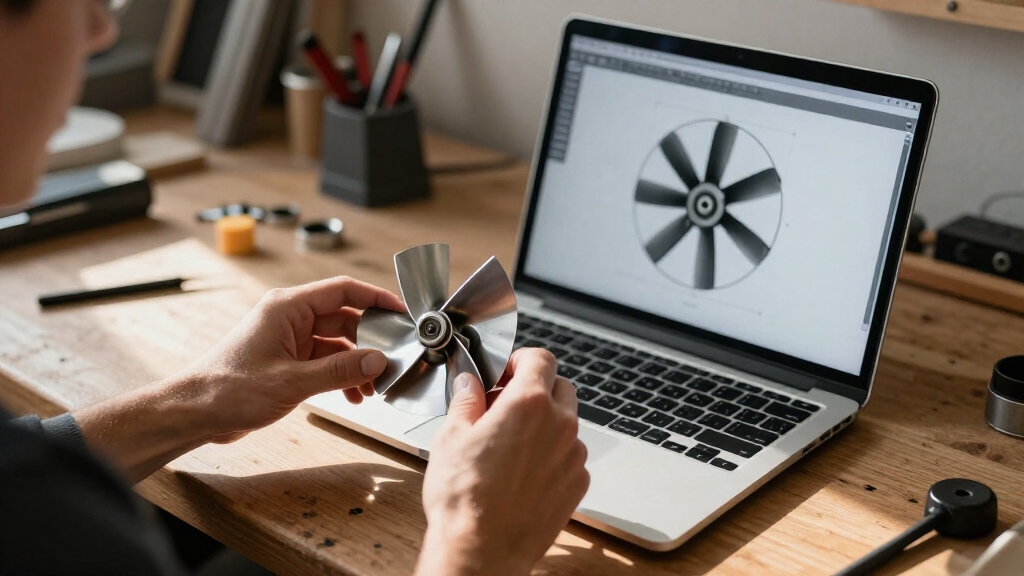
The rotor is made from SVG vector paths, according to the description. SVG is a format for vector graphics that can be rendered in a web page, but no information is provided about the number or structure of the paths, the animation method, or how scrolling maps to the rotor’s movement. The project feature says a fuller design teardown covers those choices; they cannot be confirmed from the brief description alone.
The page promotes both a live room and a full case study. Those links indicate that the work is intended to be experienced as well as read about. The supplied description, however, does not report launch dates, project contributors, client details or the site’s technical requirements.
“What if a web page behaved less like a brochure and more like a machine you could walk around?”
— ThorstenMeyerAI.com
Rotor Mechanics Still Undetailed
The short project account does not explain how scrolling controls the rotor, whether its movement is continuous or section-based, or how the SVG is animated. It also offers no information about browser compatibility, mobile behavior, loading performance, keyboard access or reduced-motion settings.
It is not clear who designed or developed the project, whether it represents a commissioned installation or an independent concept, or when it was published. No audience data, user-testing results or performance metrics are given. The description’s claims about creating a responsive experience are therefore presented as project framing, not as independently measured findings.
The page advertises a live experience and a fuller teardown, but the material supplied here does not include their contents. Further detail about the visual system and the rotor’s motion would be needed to assess how the design works in practice.
The Full Case Study May Add Detail
ThorstenMeyerAI.com directs readers to the full design teardown and the live room. Those are the next places to look for specifics about how the rotor was constructed, how scroll input is translated into movement and how the rest of the visual system supports the field-guide format.
Until those details are available, the confirmed account is limited to the project’s stated concept: an industrial-themed browser experience in which scrolling is linked to an SVG rotor. No additional technical release, evaluation or future development is announced in the description.
Source: ThorstenMeyerAI.com
Key Questions
What is TURBINE — WERK 9?
It is described by ThorstenMeyerAI.com as an industrial-themed interactive field guide built for the web, with a rotor animation connected to scrolling.
How does the SVG rotor respond to visitors?
The project description says the rotor is scroll-driven, but it does not explain the precise mapping between scroll input and rotor movement or identify the animation technique.
Is the rotor made with AI?
The available description does not say that AI generated or built the rotor. It describes browser technology, SVG vector paths and scrolling as the elements behind the experience.
What technical details are available?
The description identifies SVG paths and scroll input but gives no code, compatibility information, performance measurements or accessibility findings. It points to a fuller case study for further design detail.
Source: ThorstenMeyerAI.com