TL;DR

Get the latest gadgets delivered free with Prime
- Fast, free delivery on millions of items
- Prime Video, Amazon Music and more included
- Member-only deals all year
Qblox announced an integration connecting NVIDIA DGX Spark to its quantum system controller through NVIDIA NVQLink. The company reports round-trip latency below 7.2 microseconds on DGX Spark and below 4.0 microseconds on an RTX PRO 6000 Blackwell; practical performance across quantum workloads has not been detailed.
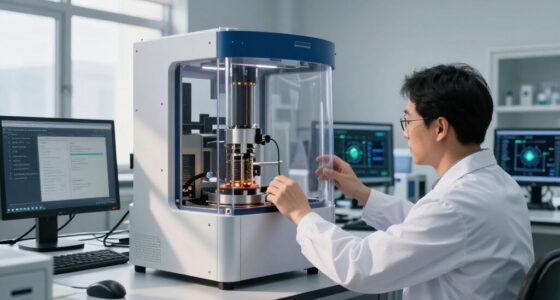
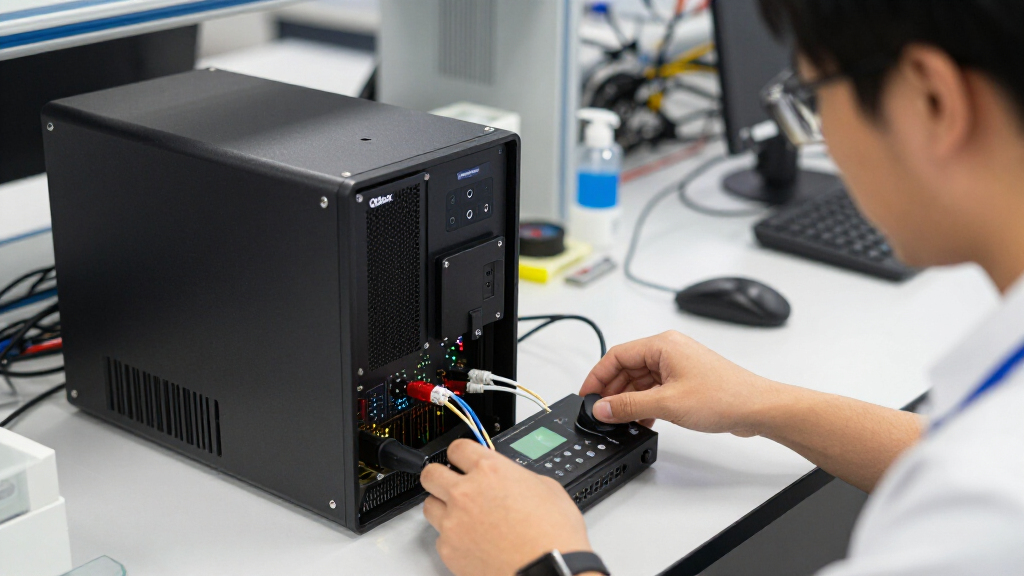
Qblox said it has connected an NVIDIA DGX Spark system to its quantum system controller using NVIDIA NVQLink, reporting round-trip latency below 7.2 microseconds on DGX Spark. The integration is designed to link GPU computing with quantum hardware control for real-time hybrid workloads, including calibration and quantum error correction.
In its announcement, Qblox reported round-trip latency below 4.0 microseconds using an NVIDIA RTX PRO 6000 Blackwell GPU and below 7.2 microseconds on DGX Spark. The company did not provide the test setup, workload details, or measurement methodology in the supplied announcement, so the figures are vendor-reported results rather than independently assessed performance.
The setup combines Qblox’s Q1 sequence processors and LINQ connectivity with NVIDIA’s NVQLink and CUDA-Q software. Qblox says this arrangement puts GPU computing into the quantum control loop, allowing classical processors to handle information from experiments with low latency.
Among the intended uses are GPU-accelerated calibration, where qubit parameters could be updated while experiments continue, and quantum error correction, where syndrome data would be sent to GPU-based decoders. The announcement describes these as supported applications and capabilities of the integration; it does not report a deployed quantum system correcting errors in real time.
Connecting GPUs to Quantum Control
Quantum processors depend on classical systems to issue control signals, read measurements, and process data. Bringing GPU computing closer to that loop could let researchers test approaches that require fast classical computation, rather than moving data through a slower or more separated workflow. Qblox presents calibration and error correction as key applications.
The potential relevance is tied to scaling quantum systems: error correction and control become more demanding as researchers work toward logical qubits, which encode information in ways intended to protect it from errors. The integration is a hardware and software connection, not evidence that the broader challenges of useful, fault-tolerant quantum computing have been solved. Its practical value will depend on performance under real experimental workloads and on how reliably the connection operates across different systems.
DGX Spark also gives researchers a desktop platform for development, according to NVIDIA and Qblox. They say code developed with CUDA-Q can later be moved to GPU servers as quantum systems grow. That could offer a route from local experimentation to larger computing resources, though the announcement does not give migration results or a schedule for broader availability.
As an affiliate, we earn on qualifying purchases.
From NVQLink Plans to Measurements
The announcement builds on earlier work between Qblox and NVIDIA. The companies announced Qblox’s work with NVIDIA NVQLink in October 2025, according to the supplied report. Qblox later announced support for the CUDA-Q real-time API in March 2026.
Qblox characterizes the October 2026 development as a move from architecture toward measured hardware performance. In practical terms, the new announcement adds latency figures for two GPU platforms to the collaboration’s prior software and system integration work. The figures and performance descriptions remain attributable to Qblox; the supplied material does not include independent testing or a customer deployment.
“Quantum computers will scale only as fast as the classical control systems around them.”
— Niels Bultink, Qblox CEO and co-founder
As an affiliate, we earn on qualifying purchases.
Testing and Deployment Details Pending
The announcement does not specify the conditions used to measure the reported round-trip latency, including the exact workload, system configuration, or whether the same method was used for both GPUs. No independent measurements, detailed benchmark results, or customer deployments are included in the supplied material.
It is also unclear how the integration performs across different quantum devices and experimental workloads, or whether it has demonstrated sustained real-time calibration or error correction in an operating system. Qblox and NVIDIA describe those functions as intended applications, but the announcement does not quantify accuracy, throughput, or improvements to quantum-system performance.
GPU-accelerated quantum computing hardware
As an affiliate, we earn on qualifying purchases.
As an affiliate, we earn on qualifying purchases.
Further Performance Evidence Needed
The next useful evidence would include fuller benchmark methods and results, tests on working quantum systems, and demonstrations showing how calibration or error-correction tasks behave during experiments. Qblox’s announcement does not set a date for those details or identify a customer rollout.
Researchers and system developers will also be watching whether CUDA-Q code developed on DGX Spark transfers as described to larger GPU servers, and how the connection performs as quantum hardware scales. For now, the confirmed development is the announced integration and the latency figures reported by Qblox; its impact on deployed quantum systems remains to be established.
As an affiliate, we earn on qualifying purchases.
Key Questions
What did Qblox announce?
Qblox said it integrated NVIDIA DGX Spark with its quantum system controller using NVIDIA NVQLink, connecting GPU computing with quantum hardware control.
What latency did Qblox report?
Qblox reported round-trip latency below 7.2 microseconds on DGX Spark and below 4.0 microseconds on an NVIDIA RTX PRO 6000 Blackwell GPU. The supplied announcement does not include detailed test methods or independent verification.
What could the integration be used for?
Qblox identifies GPU-accelerated calibration and quantum error correction as intended uses, including processing syndrome data with GPU-based decoders. The announcement does not establish that these functions are already operating in a deployed quantum system.
Can code developed on DGX Spark run on larger systems?
Qblox and NVIDIA say CUDA-Q supports development on desktop hardware, with the same code designed to transfer to GPU servers as quantum systems scale. The announcement does not provide a migration demonstration or performance comparison.
Source: rss
Halloween Picks
halloween
As an affiliate, we earn on qualifying purchases.