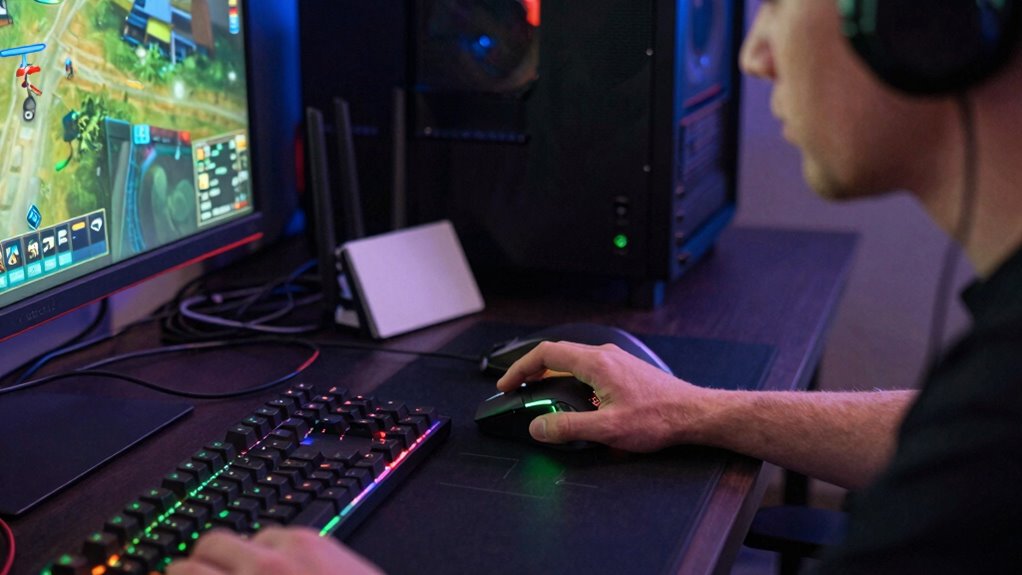

To reduce ping and lag, start by optimizing your internet connection—use a stable, fast network and update your router firmware. Switch to a wired Ethernet connection for better stability and lower latency. Close background applications and smart devices that drain bandwidth. Choose game servers closer to your location to minimize travel time data, and fine-tune your game settings by lowering graphics to boost performance. Keep going to discover even more effective lag-busting tips to elevate your gaming experience.
Key Takeaways
- Use a wired Ethernet connection for stability and lower latency.
- Close background applications and disconnect unnecessary devices to free bandwidth.
- Select game servers geographically closer to your location to reduce lag.
- Optimize your internet by prioritizing gaming traffic with QoS settings on your router.
- Adjust in-game settings by lowering graphics and effects for smoother performance.
Top picks for "bust ways reduce"
Open Amazon search results for this keyword.
As an affiliate, we earn on qualifying purchases.
Optimize Your Internet Connection
A stable and fast internet connection is essential for reducing lag in online games. To achieve this, you need to minimize network congestion, which can slow down your connection during peak times. One way to do this is by checking your router firmware and updating it if necessary. An outdated firmware can cause connection issues and increase latency. Additionally, prioritize your gaming traffic through Quality of Service (QoS) settings if your router supports it. This helps ensure your game data gets precedence over other devices or downloads. By optimizing your network setup, you reduce the chances of lag spikes caused by congestion or router inefficiencies, giving you a smoother, more responsive gaming experience. Leveraging European cloud servers can also enhance your connection stability by providing dedicated, energy-efficient infrastructure for your gaming needs. Implementing proper network configurations and network traffic management techniques can further optimize your connection for online gaming, especially when combined with energy-efficient infrastructure. Regularly monitoring your network’s traffic patterns can help identify and eliminate sources of unnecessary congestion, further improving your gaming performance.
Use a Wired Ethernet Connection
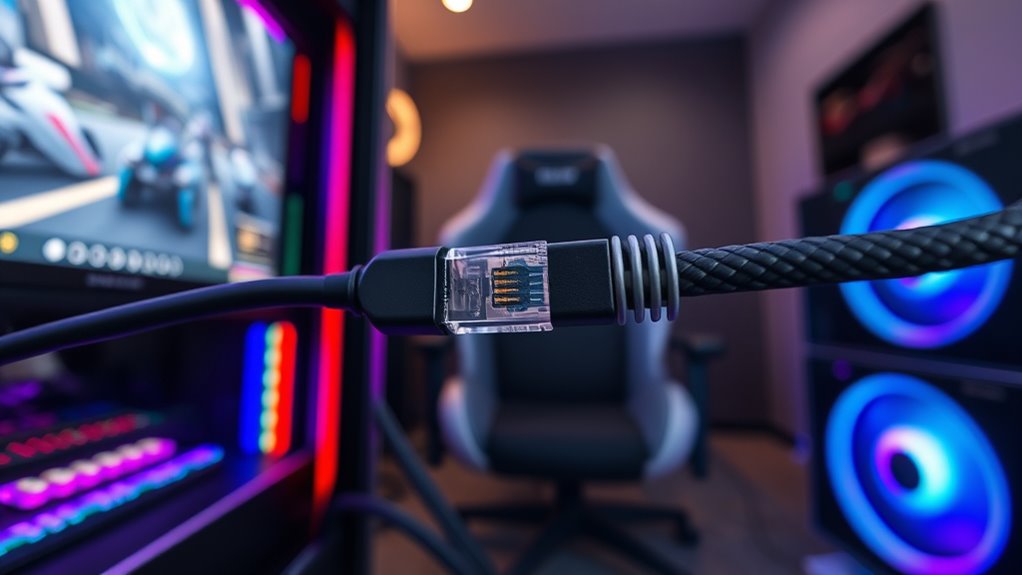
Using a wired Ethernet connection can markedly reduce lag compared to relying on Wi-Fi. It provides better Ethernet stability and connection consistency, essential for smooth gameplay. A wired setup minimizes interference and signal drops, ensuring your data travels swiftly and reliably. To maximize benefits:
- Connect directly to your router with an Ethernet cable.
- Use high-quality, shielded cables for peak stability.
- Avoid network switches or hubs that can introduce delays.
- Keep your Ethernet cable length as short as possible to reduce latency.
Close Background Applications and Devices
Background applications and devices can consume valuable bandwidth and system resources, leading to increased lag during gameplay. This can include network congestion caused by multiple devices competing for bandwidth. To combat this, focus on background process management by closing unnecessary programs and browser tabs. This reduces the load on your CPU and RAM, helping your game run smoother. Additionally, disconnect or turn off devices like smartphones, tablets, or smart home gadgets that might be causing device interference. These devices can siphon bandwidth or create network congestion, which worsens lag. By actively managing background applications and minimizing device interference, you free up resources and optimize your network for gaming. Staying vigilant about what runs in the background ensures your system dedicates maximum power to your game, resulting in a more stable and responsive online experience. Proper device management can further help prevent network interruptions and improve overall gaming performance, especially when understanding system resource allocation. Regularly monitoring your network bandwidth usage can also help identify and eliminate sources of lag, ensuring smoother gameplay. Being aware of background processes and ensuring they are optimized can make a significant difference in your gaming experience.
Select Servers Closer to Your Location

Choosing a game server closer to your location can considerably reduce lag and improve your connection stability. When selecting a server, focus on server selection options that prioritize location proximity. This minimizes the distance data must travel, decreasing latency. To optimize your experience:
Choosing a nearby game server reduces lag and boosts connection stability.
- Check the server list for options near your geographic area.
- Use any available auto-select feature to find the best server based on ping.
- Manually choose a server in your country or region if the game allows.
- Avoid connecting to servers far away, even if they seem to have better player populations.
Adjust Game Settings for Better Performance

Once you’ve selected a server close to your location, optimizing your in-game settings can further reduce lag and improve performance. Adjusting graphic settings helps balance visual quality with smooth gameplay. Lowering options like shadows, textures, and effects can considerably boost your frame rate, reducing lag spikes. To find the right balance, consider this table:
| Setting | Impact on Performance | Recommended Level |
|---|---|---|
| Shadows | High impact | Low |
| Texture Quality | Moderate impact | Medium or Low |
| Effects | High impact | Low |
| Anti-Aliasing | Moderate impact | Off or Low |
Reducing these settings minimizes the load on your GPU, ensuring smoother gameplay and less lag. Focus on maintaining a high frame rate for ideal responsiveness. Additionally, detecting passive voice in your descriptions can help make your instructions clearer and more direct. For optimal performance, it is also beneficial to close background applications that may consume system resources. Furthermore, adjusting your network settings can help stabilize your connection and reduce lag during gameplay. Implementing quality of service (QoS) rules on your router can prioritize gaming traffic for a more consistent experience.
Frequently Asked Questions
Can VPNS Help Reduce Gaming Lag?
Yes, VPNs can help reduce gaming lag by improving your connection’s stability and routing your traffic more efficiently. VPN benefits include lower latency effects and avoiding congested routes, which can minimize lag spikes. When you choose a VPN with servers close to the game server, you often experience a smoother gaming experience with reduced ping. Just pick a fast, reliable VPN to get the best results.
How Does Your Router Influence Ping Stability?
Think of your router as the traffic cop of your internet, guiding data smoothly to reduce ping hiccups. Your router’s settings, like QoS and firmware updates, can prioritize gaming traffic and improve stability. Avoid network congestion by limiting other devices during gameplay. When your router is optimized, it keeps your connection steady, minimizing lag and making your gaming experience more enjoyable. Proper router management truly keeps your ping in check.
Is There an Ideal Ping Rate for Competitive Gaming?
For competitive gaming, aiming for a ping under 30ms is ideal to guarantee smooth gameplay. You should choose server locations close to you to reduce latency, and monitor your connection for packet loss, which can cause lag spikes. Lower ping minimizes delays, giving you faster response times. Keep your internet stable and prioritize wired connections when possible, because they help maintain a consistent ping and reduce the chances of lag affecting your performance.
Do Gaming-Specific Internet Plans Lower Lag?
Imagine smoother gameplay with less frustration—yes, gaming-specific internet plans often lower lag. They prioritize gaming traffic, reducing delays caused by network congestion. Fiber optics connections further enhance this experience by providing faster, more stable speeds. With these plans, you get a more responsive game environment, minimizing lag spikes. So, if you’re serious about gaming, investing in a dedicated plan can make a noticeable difference in your overall performance.
Can Hardware Upgrades Improve Your Gaming Latency?
Upgrading your hardware can definitely improve your gaming latency by reducing hardware bottlenecks that slow down data processing. Faster CPUs, more RAM, and a solid-state drive (SSD) help optimize latency, ensuring quicker response times and smoother gameplay. By focusing on hardware upgrades, you enhance latency optimization, which lowers ping and minimizes lag, giving you a more seamless gaming experience. Don’t overlook the importance of keeping your hardware updated for peak performance.
Conclusion
By optimizing your internet, using a wired connection, closing background apps, choosing closer servers, and tweaking game settings, you take control of your gaming experience. These steps improve your speed, reduce lag, and enhance your gameplay. Consistently applying these tips guarantees smoother connections, faster responses, and fewer frustrations. Ultimately, it’s about actively managing your setup, making smarter choices, and staying dedicated to achieving seamless, lag-free gaming every time you play.