
📊 Full opportunity report: From Clipboard To Camera: Improving Gauge Readings In Industry on IdeaNavigator AI — validation score, market gap, and execution plan.

Get the latest gadgets delivered free with Prime
- Fast, free delivery on millions of items
- Prime Video, Amazon Music and more included
- Member-only deals all year
TL;DR
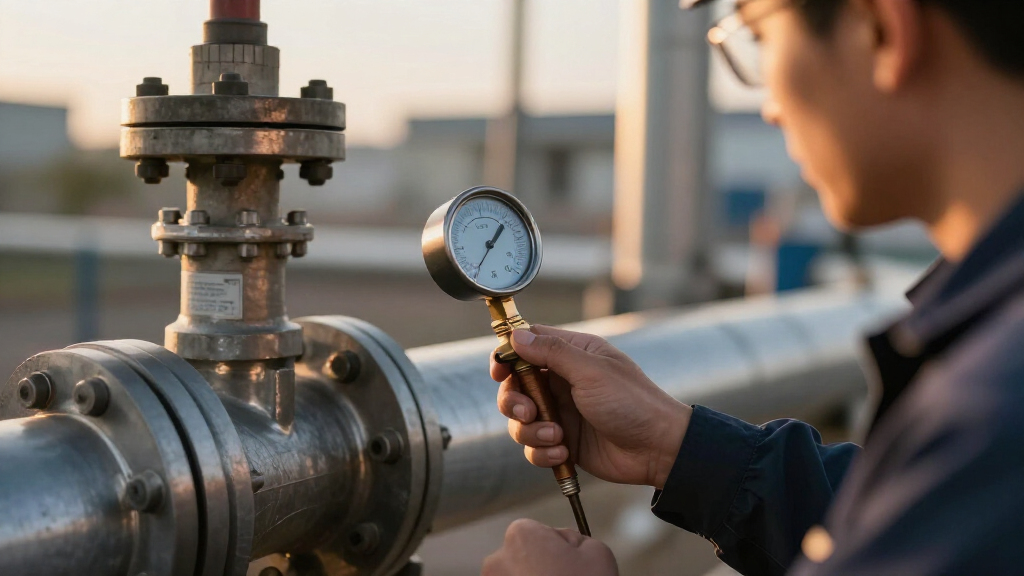
A new approach uses phone photos to read analog gauges in industrial facilities, replacing manual transcription. Early tests show potential for improved accuracy and early failure detection without costly sensor upgrades.
Industrial facilities are testing a new workflow that replaces manual clipboard gauge readings with phone photos, aiming to improve accuracy and enable real-time monitoring. The method leverages current sight model technology to read analog dials reliably from ordinary photographs, offering a low-cost alternative to retrofitting legacy equipment with sensors. This development could significantly impact maintenance practices across the sector.
The concept involves technicians photographing each gauge during their routine rounds using their smartphones. An app then automatically reads the gauge value, compares it against expected ranges, logs the reading with timestamp and location, and flags any anomalies immediately. This process creates a digital trend history that was previously unavailable with manual transcription, which often contained errors and was rarely used for ongoing monitoring.
Initial testing is being conducted at three facilities over a month, with the goal of comparing error rates and early detection of failures between the new photo-based system and traditional clipboard methods. The approach is designed to be a narrow, incremental change, making it easier to adopt and validate in real-world settings.
Industry experts see this as a promising step toward digital transformation in maintenance, especially for legacy systems where installing sensors is costly or impractical. The solution is offered as a subscription service, with tiered pricing based on the number of gauges monitored per facility.
Potential Impact on Maintenance and Data Accuracy
This approach could revolutionize how industrial facilities gather and utilize gauge data, leading to more accurate readings, early failure detection, and reduced downtime. By eliminating transcription errors and enabling trend analysis, facilities can shift from reactive to predictive maintenance, saving costs and improving safety. The low-cost, sensor-free method also makes digital monitoring accessible for older equipment that would otherwise be excluded from IoT upgrades.
industrial gauge photo reading app
As an affiliate, we earn on qualifying purchases.
As an affiliate, we earn on qualifying purchases.
Legacy Equipment and the Need for Better Data Collection
Many industrial plants rely on analog gauges for critical process monitoring, but traditional methods involve manual transcription onto paper, which is prone to errors and rarely used for trend analysis. Retrofitting these systems with IoT sensors is often prohibitively expensive, especially for older or less critical equipment. As a result, plants lack reliable, continuous data streams that could inform maintenance decisions.
Recent advances in sight model AI and image recognition technology have made it feasible to read analog dials accurately from photos taken with smartphones. This has opened the door to a low-cost, scalable solution that leverages existing equipment without hardware upgrades, fitting into the broader trend of digital transformation in industrial maintenance.
smartphone gauge reader for industrial equipment
As an affiliate, we earn on qualifying purchases.
As an affiliate, we earn on qualifying purchases.
Uncertainties About Long-Term Reliability and Adoption
It is not yet clear how well the photo-based readings will perform over extended periods and varied lighting conditions. The pilot programs are still in early stages, and the long-term accuracy, integration with existing maintenance systems, and user acceptance remain to be fully evaluated. Additionally, the cost-effectiveness of scaling this approach across large facilities or multiple sites has not been established.
As an affiliate, we earn on qualifying purchases.
Next Steps in Validation and Broader Deployment
The ongoing pilot tests will compare error rates and early failure detection capabilities between the photo-based system and traditional methods. If successful, facilities are expected to expand the program, and vendors will refine the app and workflow. Broader adoption will depend on demonstrated reliability, ease of use, and cost savings. Industry stakeholders will watch for published results and potential integration with existing maintenance management platforms.
sensor-free industrial gauge reading
As an affiliate, we earn on qualifying purchases.
As an affiliate, we earn on qualifying purchases.
Key Questions
How accurate are phone photos for reading gauges?
Initial tests indicate high reliability, with the sight model AI reading analog gauges accurately from photos taken in typical industrial lighting conditions. However, long-term performance data is still being collected.
Will this replace all manual gauge readings?
Not immediately. The current focus is on testing as a low-cost, incremental improvement for specific workflows. Full replacement depends on pilot outcomes and industry acceptance.
What are the cost implications for facilities?
The system is offered as a subscription service, with costs scaled by the number of gauges monitored. It aims to be more affordable than retrofitting IoT sensors on legacy equipment.
Can this system detect all types of gauge failures?
It can flag anomalies based on deviations from expected ranges, potentially catching early signs of failure. However, it is not a replacement for all diagnostic tools and may need to be complemented by other sensors or inspections.
What industries are most likely to adopt this technology?
Industries with extensive legacy equipment, such as power plants, chemical facilities, and manufacturing plants, are prime candidates for early adoption due to the high cost of sensor retrofits.
Source: IdeaNavigator AI
Halloween Picks
halloween
As an affiliate, we earn on qualifying purchases.