
📊 Full opportunity report: DDR5 Now, DDR6 Soon: A Buyer’s Field Guide on ThorstenMeyerAI.com — validation score, market gap, and execution plan.

Get the latest gadgets delivered free — and shop member deals
- Fast, free delivery on millions of items
- Access to Prime Big Deal Days deals on October 6–7
- Prime Video, Amazon Music and more included
TL;DR
With DDR5 prices remaining high and DDR6 still in development, this guide advises buyers to purchase DDR5 for current needs and avoid waiting for DDR6, which isn’t ready for mainstream use until 2027.
Buyers should prioritize purchasing DDR5 memory now for their 2026-2028 builds, as forecasts indicate DDR6 will not be widely available or cost-effective until 2027 or later, and waiting may result in higher costs and missed platform upgrades.
Market forecasts show that DDR5 prices are unlikely to decline significantly before 2028, with some experts suggesting that the next two years will see prices stay steady or increase. DDR6, which promises higher bandwidth and new form factors, is not yet commercially available for mainstream platforms, and its adoption is staged, beginning with enterprise and AI servers around 2026–27. It will require new CPUs, chipsets, and modules, with prices estimated to be 2–3 times higher than DDR5 at launch.
For consumers building or upgrading PCs in the near term, the recommended configuration remains DDR5-6000 CL30, offering optimal performance and value. Capacities of 32GB or 64GB are advised based on workload needs, avoiding over-investment in 128GB modules, which are unnecessary for most users and expensive. Buying DDR4 in 2026 is discouraged due to its end-of-life status and lack of future support; new builds should focus solely on DDR5.
DDR5 now, DDR6 soon
A buyer’s field guide. The 20-year instinct — wait for prices to drop, or wait for the next generation — is broken this cycle. Buy the DDR5 you actually need now; don’t wait for DDR6. Here’s the reasoning.
Driven to end-of-life, production slashed. Same money, dead-end socket. Leave a working DDR4 box alone — but never start a new build on DDR4 to “save.”
A framework, not a gamble. Buy the DDR5 you need now, at the sweet spot, in the capacity you’ll actually use — don’t buy DDR4, don’t wait for DDR6. The two costliest mistakes in this market are the ones that feel prudent: waiting for a price drop that isn’t coming, and waiting for a next-gen part that launches dearer than what’s on the shelf. Next: The SSD Squeeze.
Implications of DDR5 and DDR6 for PC Buyers in 2026
This guidance helps consumers avoid overpaying or delaying upgrades, ensuring they invest in current-generation memory that will remain relevant for years. It also clarifies that waiting for DDR6 is unlikely to be cost-effective or practical until at least 2027, and that early adoption of DDR6 involves risks like limited capacities and early-stage bugs. Understanding this helps buyers make informed decisions aligned with their performance needs and budget constraints.
As an affiliate, we earn on qualifying purchases.
Current Market Conditions and Future Memory Developments
The memory market has experienced significant price volatility, driven by supply shortages and increased demand. DDR5 launched in 2021 but has remained expensive, with prices only gradually decreasing. Meanwhile, DDR4 is being phased out, and manufacturers have indicated that DDR6 will not be ready for mainstream use until 2027, with initial deployments focused on enterprise and AI applications. The transition to DDR6 will involve new hardware platforms, including CPUs, chipsets, and memory modules, with a phased rollout over several years.
Previous memory generations, such as DDR4, took multiple years to become widespread, with early adoption often costly and limited. DDR6’s architecture, featuring increased bandwidth and new form factors like CAMM2, signifies a major technological leap but also delays for mainstream adoption. Consumers should plan their upgrades accordingly, focusing on current standards.
“DDR6 is a roadmap, not a product for mainstream desktops in 2026; its widespread adoption is still a few years away.”
— Memory industry spokesperson
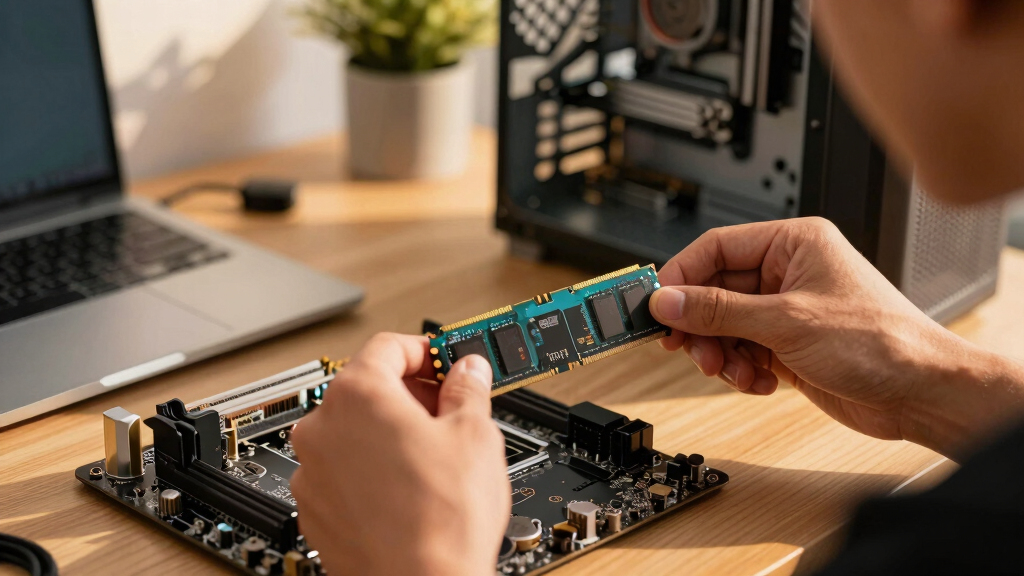
high performance DDR5 memory kit 64GB
As an affiliate, we earn on qualifying purchases.
As an affiliate, we earn on qualifying purchases.
Uncertainties Surrounding DDR6 Adoption and Pricing
It remains unclear exactly when DDR6 modules will become available at consumer-friendly prices, or how quickly manufacturers will resolve early-stage issues like stability and capacity limitations. The timeline for widespread adoption is based on current projections and may shift depending on technological developments, market demand, and supply chain factors.
As an affiliate, we earn on qualifying purchases.
Next Steps for PC Builders and Upgraders in 2026
Consumers should focus on purchasing high-quality DDR5 modules at current prices, particularly DDR5-6000 CL30, and avoid over-investing in capacity beyond their needs. Monitoring JEDEC standards and motherboard compatibility lists will be key indicators of DDR6 readiness. For those with long-term plans, waiting until 2027 for DDR6-compatible platforms might be advantageous, but most will benefit from immediate DDR5 investments.
best DDR5 RAM for gaming and productivity
As an affiliate, we earn on qualifying purchases.
As an affiliate, we earn on qualifying purchases.
Key Questions
Should I buy DDR4 now to save money?
No. DDR4 is being phased out, and new builds should prioritize DDR5, which offers better future support and performance.
Is DDR6 worth waiting for in 2026?
For most users, no. DDR6 will not be available at scale until 2027 and will come with higher prices and limited capacities initially.
What DDR5 configuration provides the best value?
DDR5-6000 CL30 is the recommended sweet spot for most workloads, balancing performance and cost.
Will DDR6 provide significant performance gains for gaming?
Likely not. DDR6’s bandwidth benefits are more relevant for AI, scientific computing, and heavy workloads rather than gaming frame rates.
When will DDR6 become mainstream?
Widespread adoption is expected around 2027–2030, starting with enterprise and high-end desktop platforms.
Source: ThorstenMeyerAI.com
Evergreen bestsellers Picks
bestsellers
As an affiliate, we earn on qualifying purchases.