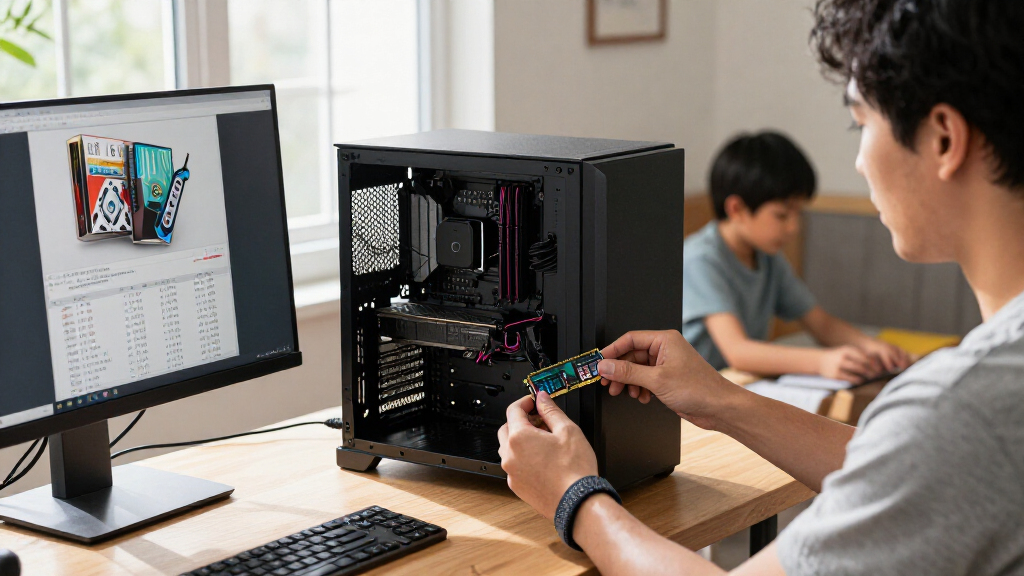

🔍 Read the full analysis: How AI Is Bringing Memory Supply Concerns To Consumers on ThorstenMeyerAI.com

Get the latest gadgets delivered free with Prime
- Fast, free delivery on millions of items
- Prime Video, Amazon Music and more included
- Member-only deals all year
TL;DR
SK hynix says memory demand is likely to exceed supply through 2030, while Samsung and Micron have also described tight supply extending into coming years. AI data centers are increasing demand for high-bandwidth memory made using capacity that also serves consumer products, adding pressure to prices and device makers.
SK hynix expects memory demand to exceed supply through 2030, a forecast that puts pressure on the outlook for consumer PCs and phones as AI data centers compete for production capacity. The South Korean chipmaker said new factories take years to build and leading-edge production is technically difficult; its finance chief said higher memory costs and shortages are expected to reduce PC and mobile-device shipments.
In its October 28 earnings release, SK hynix said supply was not keeping pace with market growth and forecast that demand would exceed supply through 2030. The company attributed the outlook to the long lead time for new production facilities and the technical difficulty of advanced manufacturing. The release itself did not name consumer devices; the company’s finance chief, Kim Woo-Hyun, discussed their prospects on the earnings call.
Kim said PC and mobile-device shipment volumes were expected to fall because of rising memory prices and supply shortages, while growth in AI infrastructure demand would more than offset that decline. The company also said HBM customers’ requested volumes exceed what it can currently supply. Long-term agreements with 14 major customers cover more than half of SK hynix’s production capacity for 2027 and 2028, according to the call.
Consumer-market figures in the source point to pressure already being felt. It reports that a 32GB DDR5-6000 kit costs at least $447 in the United States, compared with a Tom’s Hardware-recorded low of $72, updated October 26. TrendForce figures cited in the source show contract prices for ordinary memory chips rose 93% to 98% in the first quarter of 2026, then rose in subsequent quarters. Those measures refer to different products and price points; neither is a direct estimate of how much every consumer device will cost.
Infographic 01 · Where the memory goes
AI data centers get first call on memory.
High-bandwidth memory (HBM) for AI chips and the memory in your phone come out of the same factories. HBM needs far more wafer per gigabit, and its buyers sign years ahead.
The bakery problem
HBM share of wafers vs. share of the memory bits they produce
Same factories, same wafers: every wafer used for AI memory is missing from phone and PC memory.
Who gets first call
Long contracts lock up supply years ahead
- SK hynix: deals with 14 major customers, usually five years, with deposits; more than 50% of 2027–2028 capacity
- Micron: more than 75% of fiscal 2027 shipments already committed
- HBM demand: customers want “more than double” what SK hynix can supply today
- Cloud budgets: memory ≈ 47% of big cloud providers’ capex in 2026, 68% in 2027 (TrendForce estimates)
Three makers, three horizons, one customer’s view
- SK hynixThrough 2030Demand above supply (company forecast)
- SamsungInto 2028Tight supply, based on market research
- MicronNo “line of sight”Tighter in 2027 and 2028 than in 2026
- Acer (customer)Easing from 2H 2027Says suppliers talk up the shortage
HBM is a wedding cake, phone memory is bread. Same ovens. The cake customers pay more and order years ahead.Thorsten Meyer · my analogy
Sources: TrendForce, 2 Jun (wafer and bit shares, estimates); TrendForce, 25 Aug (capex shares, estimates); SK hynix, 28 Oct 2026; SK hynix call, 28 Oct; Micron call, 30 Sep; The Register, 1 Oct; Samsung call, 29 Oct; Acer via Tom's Hardware / DigiTimes. Wafer-per-gigabit ratio: my arithmetic. All horizons are forecasts.
Powered by Thorsten Meyer AI
How AI Demand Reaches Store Shelves
The consumer connection is a competition for manufacturing capacity. High-bandwidth memory, or HBM, is used alongside processors in AI systems. It is made from DRAM, the same broad category of memory used for a computer’s working memory and in many mobile devices. Manufacturers have commercial incentives to direct capacity toward products with strong demand and returns, which can leave less available for other memory types.
That pressure can reach buyers through higher component costs, changes in device specifications, or both. The source cites reporting that some manufacturers are cutting memory, storage or camera specifications in mainstream devices to manage prices, and that some phone makers are reusing recycled memory chips. Those are reported market responses, not evidence that every manufacturer or model is making the same changes.
Affordability is also relevant beyond upgrades. If memory costs stay elevated, consumers could face higher prices for new phones and computers, fewer lower-cost configurations, or delays in replacing devices. The scale and timing of any impact will depend on supply, demand and manufacturers’ pricing decisions; SK hynix’s forecast is not a guarantee of a particular retail price.
Products Worth Considering

Amazon Kindle Scribe Colorsoft 64GB (1st Generation)

Anker SOLIX S2000 Portable Power Station, 2,010Wh, 1,500W

Logitech MX Brio Ultra HD 4K Webcam, Graphite
As an affiliate, we earn on qualifying purchases.
Why HBM Uses Scarce Capacity
DRAM temporarily holds data a device is using, while NAND flash stores files and apps after power is off. HBM is a type of DRAM built by stacking chips and connecting them to move data quickly beside AI processors. That design makes it useful for AI workloads, but its production draws on manufacturing resources also used for other memory products.
TrendForce estimates cited in the source say HBM will account for about 22% of wafer starts at the three largest memory makers by the end of 2026, while supplying about 9% of memory bits. By the end of 2027, its estimated shares are about 30% of wafer starts and 13% of bits. These are market-research estimates, not company-wide audited results; they illustrate why growing HBM output does not translate one-for-one into more memory bits overall.
Other suppliers have offered related but not identical outlooks. The source says Samsung expects tight supply into 2028 and Micron has said it has no “line of sight” to a supply-demand balance. These statements show that the concern is not limited to SK hynix, but each company has its own products, customers and forecast assumptions.
“Supply is not keeping pace with the growth of the market.”
— SK hynix, in its October 28 earnings release
Prices, Supply and Forecast Risks
The forecasts are not guarantees of how long shortages will last or what consumers will pay. Building factories takes time, but the eventual supply response depends on investment, production yields and market demand. AI infrastructure spending could also change, affecting how much HBM customers order.
The source notes that memory makers benefit financially from tight supply, while Acer has accused suppliers of talking up shortages to protect margins. That is an allegation, not an independently established explanation for current prices. Suppliers’ forecasts and customers’ objections should be weighed with that commercial context in mind.
It is also unclear how much of the reported price movement will pass through to specific devices, which products will see specification changes, and when supply might ease. The source’s retail memory-kit price, contract-chip prices and shipment figures measure different parts of the market and should not be treated as interchangeable.
Signals in Upcoming Results
Investors and consumers will be watching subsequent earnings reports from SK hynix, Samsung and Micron for updates on production plans, HBM orders, customer agreements and supply expectations. Changes in those disclosures could show whether the projected tightness is persisting or whether new capacity and market shifts are narrowing the gap.
For consumers, upcoming PC and phone launches and pricing announcements will offer a more direct test of how manufacturers are responding. Shipment data and independent retail-price tracking can help distinguish broad market pressure from changes limited to particular products. Until those details emerge, the duration and size of the impact on individual buyers remain uncertain.
Key Questions
Why can AI demand affect memory in phones and PCs?
AI systems use high-bandwidth memory made from DRAM. Its production draws on manufacturing capacity also used for other memory, including products for consumer devices, so a shift toward HBM can tighten supply elsewhere.
How long does SK hynix expect demand to exceed supply?
SK hynix said on October 28 that it expects memory demand to exceed supply through 2030. This is the company’s forecast, not a certainty or a precise prediction of retail prices.
Does this mean every phone and computer will cost more?
No. Higher component costs can contribute to device price rises or changes in specifications, but the effect varies by manufacturer, model and product strategy. The source does not establish a uniform price increase for all devices.
Are other memory makers reporting tight supply?
The source says Samsung expects tight supply into 2028 and Micron has said it has no “line of sight” to balance supply and demand. Those are company statements with different outlooks; they do not establish exactly when the overall market will normalize.
Source: ThorstenMeyerAI.com