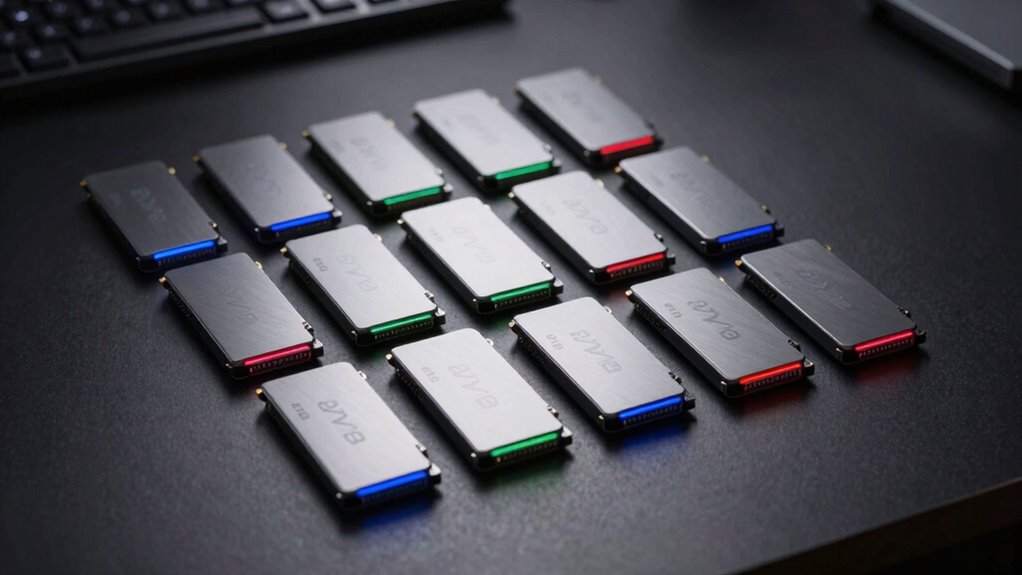

If you’re searching for the best NVMe SSDs with 8TB capacity, you’re likely balancing speed, durability, and price. The WD_BLACK SN850X 8TB stands out as the top overall pick due to its high read/write speeds and reliable performance. For those prioritizing cutting-edge PCIe 5.0 technology, the WD_BLACK SN8100 8TB offers blazing-fast speeds, though at a premium price. Meanwhile, the SanDisk Optimus GX PRO 8TB provides solid performance at a more accessible price point. Each option involves tradeoffs between speed, thermal management, and cost. Continue reading for a detailed breakdown of these drives and what makes each suitable for different needs.

Get the latest gadgets delivered free with Prime
- Fast, free delivery on millions of items
- Prime Video, Amazon Music and more included
- Member-only deals all year
Complete the kit



Key Takeaways
- The highest-performing drives like WD_BLACK SN8100 excel in speed but come with a higher cost and potential thermal challenges.
- Cooling solutions, such as heatsinks, can significantly impact sustained performance, especially in intensive tasks like gaming and content creation.
- PCIe 4.0 remains a reliable choice, but PCIe 5.0 models offer superior speeds at a premium—consider your current motherboard compatibility.
- Pricing varies sharply; the most expensive options tend to offer the best performance but may not be necessary for all users.
- Build quality and warranty support are vital for longevity and peace of mind, especially with 8TB drives that are a significant investment.


| nvme ssds 8tb | Form Factor | Interface | Capacity | Sequential Read Speed |
|---|---|---|---|---|
| WD_BLACK SN850X 8TB NVMe SSD | M.2 2280 | — | — | — |
| TEAMGROUP MP44 8TB PCIe 4.0 NV | 2280 | PCIe x4 | — | — |
| SanDisk Optimus GX PRO 850X 8T | M.2 2280 | PCIe 4.0 | 8 TB | 7,300 MB/s |
| Samsung SSD 990 PRO 4TB PCIe 4 | M.2 2280 | PCIe 4.0 | 4 TB | 7,450 MB/s |
| WD_BLACK SN8100 4TB NVMe SSD | M.2 2280 | PCIe 5.0×4 | 8 TB | 14,900 MB/s |
| WD_BLACK SN850X 8TB NVMe SSD w | M.2 2280 | — | 8TB | — |
| Lexar 8TB NM790 Internal NVMe | M.2 2280 | — | — | — |
| Samsung SSD 9100 PRO 8TB PCIe | M.2 2280 | PCIe 5.0×4 | 8TB | up to 14,800MB/s |
| WD_BLACK SN8100 8TB NVMe SSD w | M.2 2280 | PCIe 5.0×4 NVMe | 8TB | up to 14,900MB/s |
More Details on Our Top Picks
WD_BLACK SN850X 8TB NVMe SSD – M.2 2280, Up to 7,300 MB/s Read, Up to 6,300 MB/s Write, Gaming Internal Solid State Drive
The WD_BLACK SN850X 8TB stands out for its remarkable speeds up to 7,300MB/s read and 6,300MB/s write, making it ideal for gamers and power users who need fast load times and large storage. Unlike the SanDisk GX PRO, it offers slightly lower endurance but excels in real-world gaming performance, especially when paired with a compatible M.2 slot. Its optional heatsink enhances thermal stability during intense sessions, a feature not offered by all high-capacity SSDs. However, it demands a compatible M.2 slot and may require additional heatsink installation for optimal thermal management. The dashboard software provides useful monitoring, but only on Windows. Tradeoffs include system compatibility and the need for proper thermal setup, but overall, it offers a compelling balance of speed, capacity, and features for demanding users.
Pros:- Exceptional read/write speeds up to 7,300/6,300 MB/s
- Large 8TB capacity supports extensive game libraries or data sets
- Optional heatsink improves thermal performance during heavy workloads
- WD_BLACK Dashboard for monitoring and customization
Cons:- Requires compatible M.2 slot and possibly an additional heatsink
- Performance varies based on system configuration
- Dashboard features limited to Windows
Best for: Gamers and high-performance PC builders who want top-tier speeds and large storage capacity.
Not ideal for: Users with older systems lacking M.2 NVMe slots or those seeking a portable drive, as this is an internal component.
- Digital Storage Capacity:8 TB
- Hard Disk Interface:Solid State
- Form Factor:M.2 2280
- Read Speed:7,300 MB/s
- Write Speed:6,300 MB/s
Our verdict“This SSD is perfect for gamers and professionals needing blazing speeds and large storage, provided their system supports M.2 NVMe drives.”
TEAMGROUP MP44 8TB PCIe 4.0 NVMe SSD with SLC Cache
The TEAMGROUP MP44 8TB delivers impressive PCIe 4.0 speeds up to 7,000MB/s read and 6,000MB/s write, making it a strong choice for demanding applications without the premium price of some competitors like the Samsung 990 PRO. Its large 8GB SLC cache enhances sustained performance, especially during large transfers, but it requires a compatible motherboard with PCIe 4.0 support to realize its full potential. The graphene label helps with heat dissipation, yet system compatibility remains a consideration. The five-year warranty adds peace of mind, although the internal-only design limits portability. Compared to high-end models, it balances speed and capacity with affordability, but system requirements could be a barrier.
Pros:- High PCIe 4.0 speeds up to 7,000MB/s read and 6,000MB/s write
- Generous 8TB capacity suitable for large datasets
- Effective heat dissipation via graphene label
- Five-year warranty offers long-term reliability
Cons:- Requires PCIe 4.0-compatible motherboard for peak performance
- Internal design limits portability
- Higher cost compared to lower-capacity SSDs
Best for: Power users who want high performance with a focus on value and durability, especially in desktop setups.
Not ideal for: Laptop users or those with older motherboards lacking PCIe 4.0 support, as they won’t access full speeds.
- Storage Capacity:8 TB
- Interface:PCIe x4
- Form Factor:2280
- Read Speed:7000 MB/s
- Write Speed:6000 MB/s
- Cache Memory:8 GB
Our verdict“This drive makes the most sense for desktop users seeking a blend of speed, capacity, and value, provided their system supports PCIe 4.0.”
SanDisk Optimus GX PRO 850X 8TB NVMe SSD, PCIe 4.0, M.2 2280
The SanDisk Optimus GX PRO 850X 8TB combines high PCIe 4.0 speeds up to 7,300MB/s read and 6,600MB/s write with a focus on endurance, supporting up to 4,800 TBW—making it suitable for heavy editing, gaming, and data-intensive tasks. Its high endurance rating surpasses many competitors like the TEAMGROUP MP44, catering to users who need reliable, long-term performance. Data encryption adds a layer of security, ideal for content creators handling sensitive data. However, system compatibility with PCIe 4.0 is essential, and the price point, though not specified, is likely on the higher side. This makes it less suitable for budget-conscious buyers but perfect for those prioritizing durability and speed.
Pros:- High-speed PCIe 4.0 performance up to 7,300/6,600 MB/s
- Exceptional endurance with 4,800 TBW rating
- Supports data encryption for security
- Large 8TB capacity for extensive storage
Cons:- Requires PCIe 4.0 support for full speed
- Price may be higher due to high endurance features
- Internal-only design limits portability
Best for: Content creators, gamers, and professionals needing high endurance and security in demanding workflows.
Not ideal for: Users with incompatible PCIe 4.0 systems or those seeking portable, external storage options.
- Capacity:8 TB
- Interface:PCIe 4.0
- Form Factor:M.2 2280
- Sequential Read Speed:7,300 MB/s
- Sequential Write Speed:6,600 MB/s
- Endurance:4,800 TBW
Our verdict“This SSD suits creators and gamers who need a reliable, high-endurance drive for intensive workloads, provided their system supports PCIe 4.0.”
Samsung SSD 990 PRO 4TB PCIe 4.0 M.2 NVMe SSD
The Samsung 990 PRO 4TB offers headline-grabbing speeds up to 7,450MB/s read and 6,900MB/s write, making it a prime choice for users who need rapid data access in a compact 4TB package. Compared to the larger 8TB options, it’s more limited in capacity but excels in power efficiency and thermal management, which can translate to longer laptop battery life or cooler operation in small form factors. Its high performance is ideal for gaming, editing, and other demanding tasks, yet the smaller capacity means it’s less suited for users with extensive storage needs unless paired with external drives. The higher cost relative to capacity is another consideration, especially for those needing maximum storage.
Pros:- Extremely fast sequential speeds up to 7,450/6,900 MB/s
- Compact form factor suitable for laptops and small PCs
- Enhanced power efficiency and heat control
- Reliable Samsung quality and endurance
Cons:- Limited capacity compared to 8TB drives
- Higher cost per GB for smaller capacity
- Performance depends on system PCIe 4.0 support
Best for: Power users with space-constrained setups or those prioritizing speed over capacity, such as laptop gamers and creative professionals.
Not ideal for: Users requiring large internal storage for media libraries or data archives, as the capacity is limited to 4TB.
- Capacity:4 TB
- Interface:PCIe 4.0
- Form Factor:M.2 2280
- Sequential Read Speed:7,450 MB/s
- Sequential Write Speed:6,900 MB/s
Our verdict“Ideal for compact, high-speed setups where space and power efficiency matter most, but less so for large storage needs.”
WD_BLACK SN8100 4TB NVMe SSD – PCIe 5.0×4, M.2 2280, Up to 14,900MB/s Read Speed, Up to 11,000MB/s Write Speed
The WD_BLACK SN8100 4TB pushes the boundaries with PCIe 5.0 speeds up to 14,900MB/s read and 11,000MB/s write, dwarfing the performance of PCIe 4.0 counterparts like the Samsung 990 PRO. Its blazing speeds make it the ideal choice for AI, gaming, and video editing workflows that demand rapid data throughput. While it offers a maximum capacity of 8TB, finding these models can be challenging as they are newer and less widely available. The drive’s power efficiency and thermal management are advanced, but the need for a PCIe 5.0-compatible motherboard limits its immediate upgrade path for many users. This drive is best for early adopters and those who want to future-proof their builds.
Pros:- Unmatched PCIe 5.0 speeds up to 14,900/11,000 MB/s
- Supports capacities up to 8TB for large storage needs
- Power-efficient with advanced thermal management
- Ideal for AI, gaming, and content creation
Cons:- Requires PCIe 5.0 motherboard for full performance
- Limited availability and higher price point
- Early-generation technology may face compatibility issues in some systems
Best for: Enthusiasts and professionals seeking the latest PCIe 5.0 technology for high-speed tasks and future compatibility.
Not ideal for: Users with older motherboards or those who don’t need PCIe 5.0 speeds, as they won’t experience full benefits.
- Capacity:8 TB
- Interface:PCIe 5.0×4
- Form Factor:M.2 2280
- Sequential Read Speed:14,900 MB/s
- Sequential Write Speed:11,000 MB/s
Our verdict“This SSD is tailored for early adopters and power users who want the fastest, most future-proof storage available today, provided their system supports PCIe 5.0.”
WD_BLACK SN850X 8TB NVMe SSD with Heatsink
The WD_BLACK SN850X 8TB stands out for its blazing fast read speeds of up to 7,300 MB/s and substantial 8TB capacity, making it ideal for gamers and professionals who need quick load times and large storage pools. Compared to the Samsung SSD 9100 PRO, which offers even faster PCIe 5.0 speeds, the SN850X’s performance is more accessible and compatible with a wide range of systems, thanks to its PCIe 4.0 interface. The inclusion of a heatsink and Game Mode 2.0 ensures thermal stability during intensive tasks, but it’s worth noting that this model is now phased out in favor of newer models, which may limit availability. For high-end gaming rigs and workstation setups, this SSD offers a reliable blend of speed and capacity, though it’s less suited for users seeking the latest PCIe 5.0 technology or those with systems lacking compatible M.2 slots.
Pros:- Very high read/write speeds suitable for gaming and professional workflows
- Large 8TB capacity for extensive storage needs
- Includes heatsink for thermal regulation during heavy loads
- Features like Game Mode 2.0 enhance gaming performance
Cons:- Replaced by newer models, reducing availability
- Requires compatible M.2 slot and heatsink installation
- Performance benefits are mainly noticeable in high-end systems
Best for: Gamers and professionals needing reliable, high-capacity storage with excellent thermal management
Not ideal for: Users with systems that lack M.2 slots or those who want the absolute latest PCIe 5.0 speeds
- Capacity:8TB
- Form Factor:M.2 2280
- Read Speed:7,300 MB/s
- Write Speed:6,300 MB/s
- Features:Heatsink, Game Mode 2.0, Predictive Loading, Adaptive Thermal Management
- Manufacturer:Sandisk Technologies, Inc.
Our verdict“This SSD is ideal for gamers and power users who prioritize capacity and thermal stability over the latest PCIe 5.0 speeds.”
Lexar 8TB NM790 Internal NVMe SSD, 7000/6200 MB/s, M.2 2280, PCIe Gen 4×4
The Lexar NM790 8TB delivers impressive read speeds of up to 7,000 MB/s and write speeds of 6,200 MB/s, making it a strong choice for demanding tasks like gaming, content creation, and large file transfers. Compared with the WD_BLACK SN850X, which offers similar performance, the NM790 provides a compelling balance of speed and capacity at a potentially lower price point, though it lacks the advanced gaming features and thermal management of the WD model. Its compatibility with desktops, laptops, and PlayStation 5 broadens its appeal, but the absence of bundled hardware or detailed warranty limits its immediate usability for inexperienced users. This pick is well-suited for users who want a high-capacity NVMe SSD that balances performance and affordability, but those seeking premium features or extensive support might prefer other options.
Pros:- Exceptional read and write speeds suitable for demanding applications
- High 8TB capacity for large files and extensive game libraries
- Compatible with multiple devices including PS5 and laptops
- Power-efficient design reduces overall energy consumption
Cons:- No included hardware or installation accessories
- Limited warranty information available
- Potentially higher cost per GB compared to other PCIe 4.0 SSDs
Best for: Power users and gamers who need reliable high-speed storage without premium extras
Not ideal for: Beginners or those needing included installation hardware and extended warranty support
- Digital Storage Capacity:8 TB
- Hard Disk Interface:NVMe
- Connectivity Technology:PCIe
- Form Factor:M.2 2280
- Read Speed:7000 MB/s
- Write Speed:6200 MB/s
- Media Speed:6500 MB/s
- Compatible Devices:Desktop, Gaming Console, Laptop, PS5
Our verdict“This SSD offers a strong performance-to-cost ratio for savvy users who prioritize speed and capacity without extra frills.”
Samsung SSD 9100 PRO 8TB PCIe 5.0×4 M.2 2280 SSD
The Samsung 9100 PRO 8TB pushes performance boundaries with up to 14,800 MB/s sequential read speeds, making it a prime choice for AI, creative workloads, and gaming on systems that support PCIe 5.0. Compared to the WD_BLACK SN8100, which also boasts PCIe 5.0, the Samsung model offers comparable or slightly better speeds with a focus on thermal stability and high IOPS, suitable for demanding environments. However, its high price and the need for PCIe 5.0 slots limit its appeal to early adopters with compatible hardware. While it promises impressive performance, actual gains depend heavily on the system’s PCIe 5.0 support. For those with cutting-edge systems, this SSD can handle data-intensive tasks with ease, but it’s less practical for users on older platforms or with tighter budgets.
Pros:- Exceptional PCIe 5.0 sequential read/write speeds
- Massive 8TB storage capacity for large projects
- Advanced thermal management for sustained high performance
- Optimized for high IOPS workloads
Cons:- Requires PCIe 5.0 support for full performance
- High price point makes it less accessible
- Performance gains are system-dependent
Best for: Content creators and AI developers with PCIe 5.0 compatible systems seeking maximum speed
Not ideal for: General consumers or users with PCIe 4.0 systems who won’t see performance benefits
- Capacity:8TB
- Interface:PCIe 5.0×4
- Form Factor:M.2 2280
- Sequential Read Speed:up to 14,800MB/s
- Sequential Write Speed:up to 13,400MB/s
- Random Read IOPS:2,200K
- Random Write IOPS:2,600K
- Controller:5nm
Our verdict“This SSD is best suited for users with PCIe 5.0 support who need the highest possible throughput for demanding tasks.”
WD_BLACK SN8100 8TB NVMe SSD with Heatsink – PCIe 5.0×4, M.2 2280, Up to 14,900MB/s Read Speed, Up to 11,000MB/s Write Speed, Gaming and Content Creation
The WD_BLACK SN8100 8TB combines extraordinary PCIe 5.0 speeds—up to 14,900 MB/s read and 11,000 MB/s write—with a built-in RGB heatsink, making it a top choice for gamers and creators pushing the envelope. Compared to the Samsung 9100 PRO, which offers similar high speeds, the SN8100 emphasizes aesthetic appeal with RGB lighting and a robust heatsink, ensuring thermal stability during extended heavy workloads. Its high endurance rating of up to 4,800 TBW signals reliability for intensive use, but the premium price and system compatibility requirements might restrict its utility for casual users or those with older hardware. For performance-driven builds aimed at gaming or creative tasks, this drive offers speed, style, and durability in one package.
Pros:- Outstanding PCIe 5.0 performance with high sequential speeds
- Built-in RGB heatsink for thermal and aesthetic benefits
- High endurance of up to 4,800 TBW for demanding workloads
- Reliable TLC NAND technology
Cons:- Premium price limits accessibility
- Requires PCIe 5.0 motherboard for optimal speeds
- Limited compatibility with older hardware
Best for: Enthusiasts and professionals seeking maximum PCIe 5.0 performance with aesthetic flair
Not ideal for: Users with older systems lacking PCIe 5.0 support or those on a tighter budget
- Capacity:8TB
- Interface:PCIe 5.0×4 NVMe
- Form Factor:M.2 2280
- Sequential Read Speed:up to 14,900MB/s
- Sequential Write Speed:up to 11,000MB/s
- Endurance:up to 4,800 TBW
- NAND Technology:TLC 3D CBA NAND
- Heatsink:RGB, anodized aluminum
Our verdict“This SSD is perfect for high-end gaming and content creation systems where speed, style, and durability are priorities.”

How We Picked
These NVMe SSDs were evaluated primarily on performance metrics such as sequential read/write speeds, IOPS, and thermal management capacity. Durability and endurance ratings, measured in TBW (Terabytes Written), played a key role, ensuring the drives can handle extensive workloads. Usability factors like compatibility with PCIe 4.0 and 5.0 standards, heat dissipation features, and firmware stability were also considered. To rank these options, I balanced raw performance with value for money, reliability, and user feedback on real-world use, aiming to highlight drives that suit different user needs and budgets.| nvme ssds 8tb | Interface |
|---|---|
| WD_BLACK SN850X 8TB NVMe SSD | — |
| TEAMGROUP MP44 8TB PCIe 4.0 NV | PCIe x4 |
| SanDisk Optimus GX PRO 850X 8T | PCIe 4.0 |
| Samsung SSD 990 PRO 4TB PCIe 4 | PCIe 4.0 |
| WD_BLACK SN8100 4TB NVMe SSD | PCIe 5.0×4 |
| WD_BLACK SN850X 8TB NVMe SSD w | — |
| Lexar 8TB NM790 Internal NVMe | — |
| Samsung SSD 9100 PRO 8TB PCIe | PCIe 5.0×4 |
| WD_BLACK SN8100 8TB NVMe SSD w | PCIe 5.0×4 NVMe |
Factors to Consider When Choosing Nvme Ssds 8tb
Choosing an 8TB NVMe SSD involves understanding the tradeoffs between speed, thermal management, compatibility, and cost. Not all drives deliver the same performance in prolonged use, especially under demanding workloads. It’s important to match the drive’s capabilities with your specific use case—whether gaming, content creation, or extensive data storage. Additionally, considering future-proofing by opting for PCIe 5.0 when compatible can provide a speed advantage, but at a higher investment. This guide covers key factors that can help you make an informed decision beyond just raw specifications.Performance and Speed
Speed is a primary factor, especially for tasks like 4K video editing or large file transfers. PCIe 4.0 drives generally deliver up to 7,300 MB/s read and 6,300 MB/s write speeds, which are more than sufficient for most users. PCIe 5.0 models push these limits even further, but their real-world benefit depends on your system’s compatibility. Keep in mind that sustained performance can vary based on thermal design and workload intensity; drives with heatsinks or active cooling tend to maintain high speeds longer.
Thermal Management
High-speed NVMe SSDs generate significant heat during continuous use, which can cause thermal throttling—reducing speeds to prevent overheating. Many drives include heatsinks or are designed with better heat dissipation features. If you plan to use the drive extensively, especially in compact or enclosed systems, selecting a model with an integrated heatsink or adding one separately can preserve performance and extend longevity. Overlooking thermal management may lead to performance drops during long gaming sessions or intensive data processing.
Compatibility and Interface
Ensure your motherboard supports PCIe 4.0 or 5.0 for the best performance. While PCIe 4.0 drives are compatible with most modern systems, PCIe 5.0 drives require newer motherboards, which might increase the overall cost. Compatibility also extends to physical fit—most 8TB NVMe SSDs use the M.2 2280 form factor, but checking your system’s slot availability and BIOS support is wise. Investing in a drive that aligns with your system ensures you get the maximum performance without hardware bottlenecks.
Endurance and Warranty
Since 8TB drives involve a significant financial outlay, evaluating endurance ratings (TBW) is essential. Higher TBW indicates the drive can handle more data writes over its lifetime, which is important for heavy workloads like video editing or server use. Additionally, a lengthy warranty period adds confidence and protection against early failure. Always review manufacturer support and firmware updates—reliable brands tend to offer better longevity and customer service.
Price and Value
While high-end PCIe 5.0 SSDs deliver exceptional speeds, they also come with a hefty price tag. For most users, a PCIe 4.0 drive offers excellent value, balancing speed and cost effectively. Be wary of paying for features you might not need, such as elaborate heatsinks if your system has good airflow. Conversely, investing in a more expensive drive can pay off if you require sustained high performance and durability over many years.
Frequently Asked Questions
Is PCIe 5.0 worth it for an 8TB NVMe SSD in 2026?
PCIe 5.0 offers significantly higher theoretical speeds compared to PCIe 4.0, which can benefit demanding tasks like 8K video editing or large-scale data analysis. However, the real-world advantage depends on your system’s motherboard and CPU support, as well as your workload. For most users, PCIe 4.0 SSDs still provide ample speed and better value, but if you plan to upgrade your system soon or need future-proofing, investing in PCIe 5.0 could be worthwhile.
Do I need a heatsink on my 8TB NVMe SSD?
Many high-performance NVMe SSDs generate enough heat to cause thermal throttling during extended use. A heatsink can help maintain high speeds and prolong the lifespan of your drive. If your system has limited airflow or you plan to use the drive intensively—such as gaming, rendering, or large file transfers—adding a heatsink or choosing a model with one integrated makes sense. For casual or occasional use, a drive without a heatsink may suffice, but monitoring temperatures is recommended.
How does endurance affect my choice of an 8TB NVMe SSD?
Endurance, measured in TBW, indicates how much data you can write to the drive over its lifetime. Higher TBW ratings are vital if you anticipate heavy workloads like continuous video editing or server tasks. An 8TB drive with lower endurance may fail prematurely under constant use, leading to data loss or replacement costs. Always match your expected workload with the endurance rating to ensure the drive will last as long as you need it, especially considering the investment involved.
Is it better to buy an NVMe SSD with a heatsink or without?
Choosing between a heatsink-equipped drive and one without depends on your system and workload. Drives with heatsinks are better suited for sustained high-speed tasks because they dissipate heat more effectively, reducing thermal throttling. If your PC case has limited airflow or you’re using the drive in a compact build, a heatsink is generally advantageous. For open-air systems or less demanding use, a drive without a heatsink might be enough, but monitoring temperatures during heavy use remains important.
Are higher price 8TB NVMe SSDs justified?
Higher priced drives typically offer faster speeds, better thermal management, and higher endurance ratings. If your workload demands sustained high performance or you want a drive that remains reliable over many years, investing in a premium model can be justified. However, for general storage or less intensive tasks, more affordable options provide excellent value without the premium cost. Consider your specific needs and how much you benefit from the extra features before paying a premium.
Conclusion
For most users, the WD_BLACK SN850X 8TB offers the best overall balance of speed, reliability, and value, making it ideal for gamers and power users. Those seeking cutting-edge technology and maximum performance should consider the WD_BLACK SN8100 8TB, despite its higher price. If your budget is more constrained but you still want solid performance, the SanDisk Optimus GX PRO 8TB stands out as a reliable choice. Beginners or casual users can comfortably opt for more affordable models, while professionals working with large data sets or editing content should prioritize drives with higher endurance and thermal features. Each choice hinges on your specific needs and system compatibility, so weigh these factors carefully before purchasing.