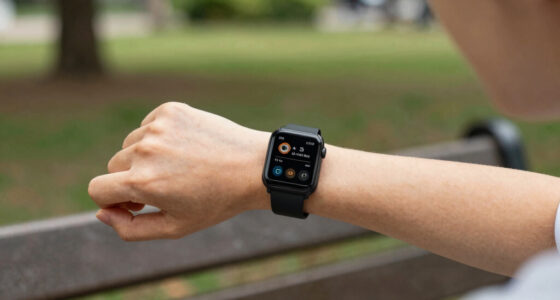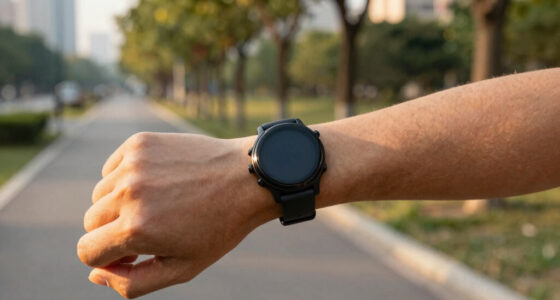
Fitness trackers focus on basic health monitoring like steps, heart rate, and sleep, and they usually last several days on a single charge. Smartwatches offer more versatility, including notifications, calls, and apps, but often need daily charging. Compatibility with your device’s operating system also varies. If you want a simple, long-lasting device, a fitness tracker is ideal. For more features and seamless integration, a smartwatch might suit you better—keep exploring to find out more.

Get the latest gadgets delivered free with Prime
- Fast, free delivery on millions of items
- Prime Video, Amazon Music and more included
- Member-only deals all year
Key Takeaways
- Fitness trackers primarily monitor health metrics and have longer battery life, while smartwatches offer broader functionalities like notifications and apps.
- Fitness trackers typically last several days to a week on a single charge; smartwatches often require daily charging.
- Compatibility varies, with fitness trackers often limited to specific apps or OS, whereas smartwatches usually support multiple platforms.
- Fitness trackers focus on activity and health tracking; smartwatches provide communication, entertainment, and productivity features.
- Both devices are evolving, with advancements enhancing health sensors and display technology to better meet user needs.
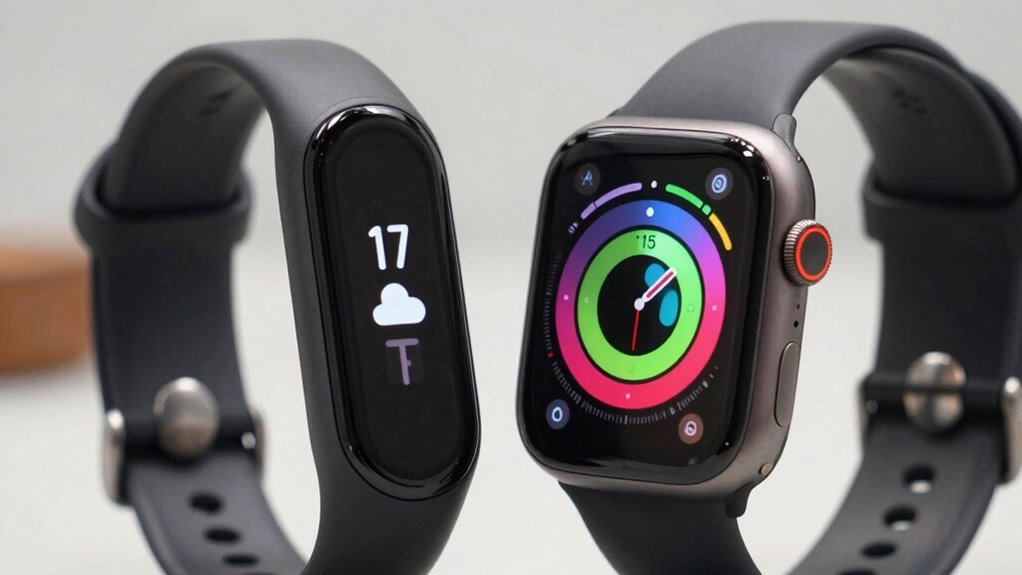
When choosing between a fitness tracker and a smartwatch, understanding their differences can help you find the device that best suits your needs. One of the main factors to contemplate is battery life. Fitness trackers typically boast longer battery life because they focus on basic activity monitoring and have fewer features that drain power. You might get several days or even a week of use on a single charge, making them ideal if you don’t want to worry about charging often. Smartwatches, on the other hand, pack more functionalities—like app notifications, music control, and even GPS—so they tend to require daily charging or every couple of days. If you prefer a device that lasts longer between charges, a fitness tracker could be the better choice.
Another vital aspect is compatibility issues. Fitness trackers are generally designed to sync with your smartphone through specific apps, and compatibility can sometimes be limited by operating systems or app updates. For example, some trackers work seamlessly with Android but have limited features on iOS, or vice versa. Smartwatches usually offer broader compatibility, especially if they run on popular platforms like Apple’s watchOS or Google’s Wear OS, but they can still face issues with certain apps or software updates. You need to make sure that the device you pick works smoothly with your existing phone and ecosystem, to avoid frustration down the line. Compatibility considerations are crucial when selecting your device to ensure seamless integration with your digital environment.
Beyond battery life and compatibility, the scope of features differs markedly. Fitness trackers tend to concentrate on health metrics like step count, heart rate, sleep tracking, and sometimes basic exercise recognition. They’re simple tools designed to motivate activity and monitor your health. Smartwatches, however, are more like mini-computers. They can handle notifications, calls, messaging, weather updates, and even run a variety of apps. If you want a device that integrates seamlessly into your digital life and offers more than just fitness tracking, a smartwatch is probably what you need. Additionally, some smartwatches incorporate advanced sensors that can measure blood oxygen levels and ECG data, expanding their health monitoring capabilities. The ongoing display technology advancements continually enhance the visual experience, making these devices more appealing and easier to use.
This continuous technological evolution ensures that both types of devices are becoming more sophisticated and user-friendly, allowing users to choose based on their specific needs and preferences. However, take into account your lifestyle and priorities. If you’re mainly interested in keeping tabs on your daily activity with minimal fuss and want a device that lasts several days without charging, a fitness tracker fits the bill. But if you prefer a multifunctional device that keeps you connected and offers a richer user experience, investing in a smartwatch might be the better route. Ultimately, weighing these differences will help you select a device that aligns with your routines and preferences, making your fitness and tech experience more enjoyable.
best fitness tracker with long battery life
As an affiliate, we earn on qualifying purchases.
As an affiliate, we earn on qualifying purchases.
Frequently Asked Questions
Can Fitness Trackers Monitor Sleep Quality Accurately?
Yes, fitness trackers can monitor sleep quality fairly accurately through sleep monitoring features. They use sensors like accelerometers and heart rate monitors to track movement and heart rate patterns during sleep. While they provide useful insights into your sleep quality, they might not be as precise as clinical sleep studies. Still, they’re great for everyday use and helping you identify trends and improve your sleep habits.
Are Smartwatches Suitable for Professional Athletes?
Yes, smartwatches are suitable for professional athletes. They offer advanced features like training customization, allowing you to tailor workouts to your needs. Many models also have professional endorsements from sports organizations, ensuring reliability and precision. With real-time analytics, GPS tracking, and heart rate monitoring, smartwatches help you optimize performance and recovery. They’re a valuable tool for serious athletes aiming to push their limits and track progress accurately.
How Long Do Fitness Tracker Batteries Typically Last?
You might worry about frequent charging, but fitness tracker batteries typically last 5 to 14 days, depending on usage. To optimize battery life, turn off unnecessary features and use battery-saving modes. Charging methods are simple: most use a USB cable or a charging dock. By managing settings and choosing convenient charging options, you can keep your fitness tracker powered longer without constant recharging, making it more reliable for your daily activities.
Do Smartwatches Support Third-Party Apps?
Yes, smartwatches support third-party apps, enhancing their functionality through app compatibility. Depending on your device’s OS integration, you can easily download and install apps from app stores, expanding features like fitness tracking, weather updates, or messaging. Most popular smartwatches, whether they run on Wear OS, watchOS, or others, offer a robust app ecosystem, making it simple to customize your experience and stay productive on the go.
Are Fitness Trackers Waterproof for Swimming?
Many fitness trackers, around 70%, now feature waterproof designs, making swimming compatibility a common feature. If you’re wondering whether a fitness tracker is waterproof for swimming, check the device’s waterproof features—most are rated for water resistance up to a certain depth, like 50 meters. This means you can confidently wear it during pool laps or open water swims without worry, enhancing your workout tracking seamlessly.
smartwatch with notifications and apps
As an affiliate, we earn on qualifying purchases.
As an affiliate, we earn on qualifying purchases.
Conclusion
So, whether you’re a dedicated fitness fanatic or just want a shiny gadget on your wrist, remember: fitness trackers keep you honest about your steps, while smartwatches make sure everyone knows you’re busy. Choose wisely—after all, one’s for counting calories, and the other’s for counting likes. Either way, you’ll look trendy while pretending to be healthier. Just don’t forget to actually move—those gadgets won’t do all the work for you!
fitness tracker compatible with iOS and Android
As an affiliate, we earn on qualifying purchases.
As an affiliate, we earn on qualifying purchases.
smartwatch with GPS and music control
As an affiliate, we earn on qualifying purchases.
As an affiliate, we earn on qualifying purchases.
Halloween Picks
halloween
As an affiliate, we earn on qualifying purchases.