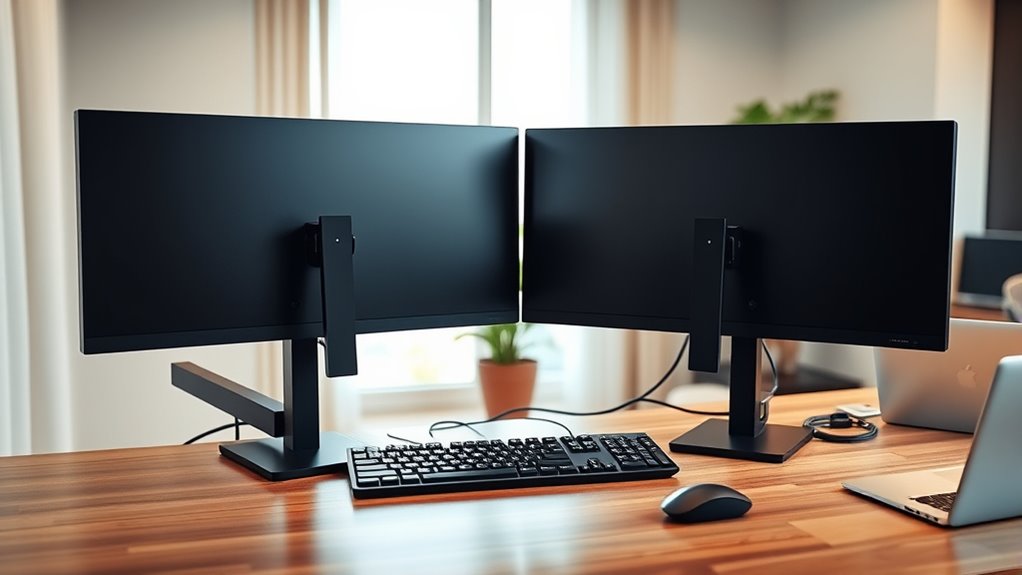

To avoid costly mistakes in a dual-monitor setup, guarantee you select the right sizes and position them correctly—your primary screen should be at eye level, with secondary ones within easy reach. Follow ergonomic principles by adjusting stands and maintaining proper distance to reduce strain. Keep cables organized and avoid clutter, and make sure your workspace has good lighting and ventilation. For valuable tips on creating a comfortable, efficient workspace, keep exploring these essential points.
Key Takeaways
- Ensure monitors are size-matched and positioned at eye level to prevent neck strain and optimize workspace flow.
- Use adjustable stands to customize height and tilt, promoting ergonomic comfort during extended use.
- Manage cables with ties or sleeves to maintain workspace organization and reduce safety hazards.
- Position monitors to minimize glare and align with proper lighting for reduced eye strain and better focus.
- Regularly check and maintain equipment for safety, cable integrity, and optimal performance to prolong device lifespan.
Choosing the Wrong Monitor Sizes and Positions
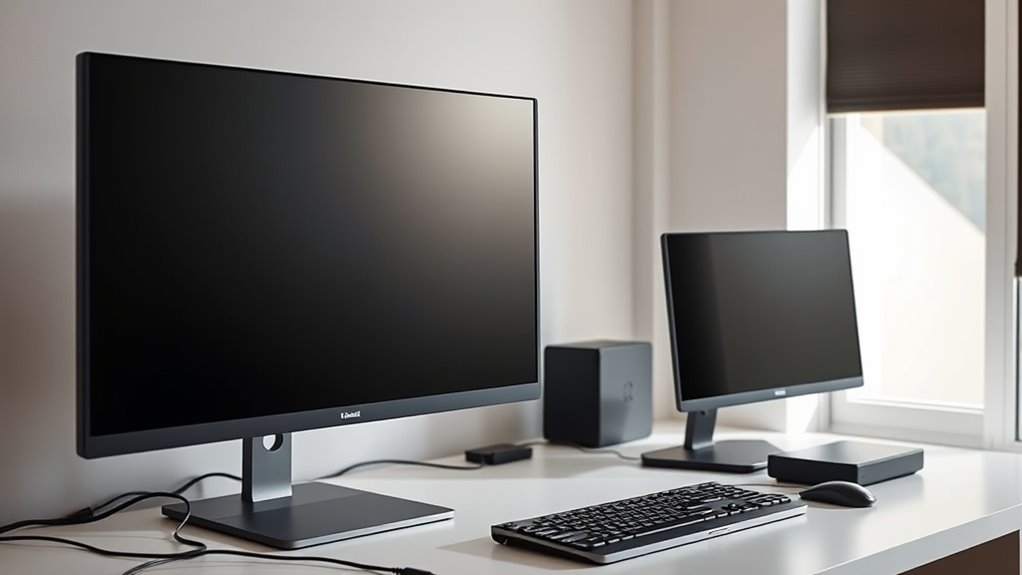
Choosing the wrong monitor sizes and positions can substantially hinder your productivity and cause discomfort. Monitor size mismatches often lead to awkward viewing angles and inconsistent workspace flow, making it harder to focus and switch between screens efficiently. Additionally, monitor placement mistakes—such as positioning one screen too high or too low—strain your neck and eyes, leading to fatigue over time. When selecting monitors, guarantee they are proportionate in size, with primary screens at eye level and secondary displays within easy reach. Avoid stacking monitors or placing them at varying heights, as this disrupts your natural line of sight. Proper monitor positioning helps you work comfortably and minimizes visual clutter, keeping your workflow smooth and your posture healthy. Ensuring your monitor setup supports color accuracy and optimal contrast ratios can further improve your viewing experience and reduce eye strain during extended use. Moreover, aligning your monitors according to standardized sizes and ergonomic principles promotes better posture and sustained comfort throughout your work sessions. To maximize ergonomic benefits, consider adjustable monitor stands that allow you to fine-tune height and tilt for personalized comfort. Incorporating ergonomic guidelines can also help you create a workspace that reduces strain and enhances focus. Paying attention to monitor calibration ensures consistent image quality across screens, further supporting your productivity and visual comfort.
Ignoring Ergonomic Principles for Comfort
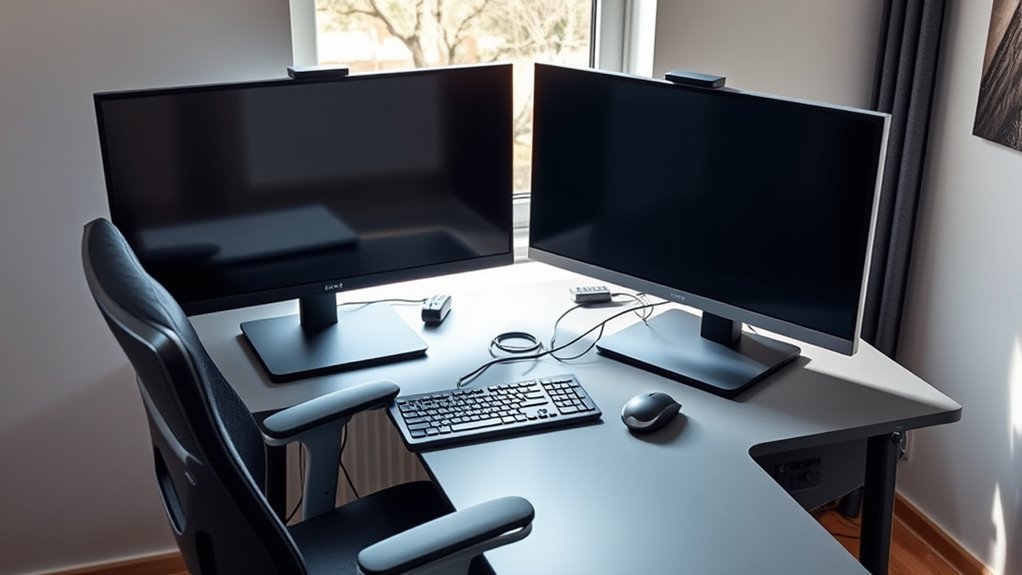
Ignoring ergonomic principles when setting up your desk can lead to significant discomfort and long-term health issues. To prevent this, prioritize proper positioning and support. First, use adjustable stands to raise monitors to eye level, reducing neck strain. Second, incorporate ergonomic accessories like keyboard trays and wrist rests to maintain neutral wrist positions. Third, ensure your chair supports good posture, with feet flat on the floor and hips at a 90-degree angle. Fourth, position your monitors about an arm’s length away, with screens directly in front of you. Paying attention to air quality can create a more engaging and motivating workspace environment. Additionally, maintaining proper lighting can reduce eye strain and improve focus during work sessions. Being aware of environmental factors, such as air quality and lighting, that impact comfort can help you make more effective adjustments. Remember, small adjustments can make a big difference in your overall well-being.
Neglecting Proper Cable Management and Power Supply
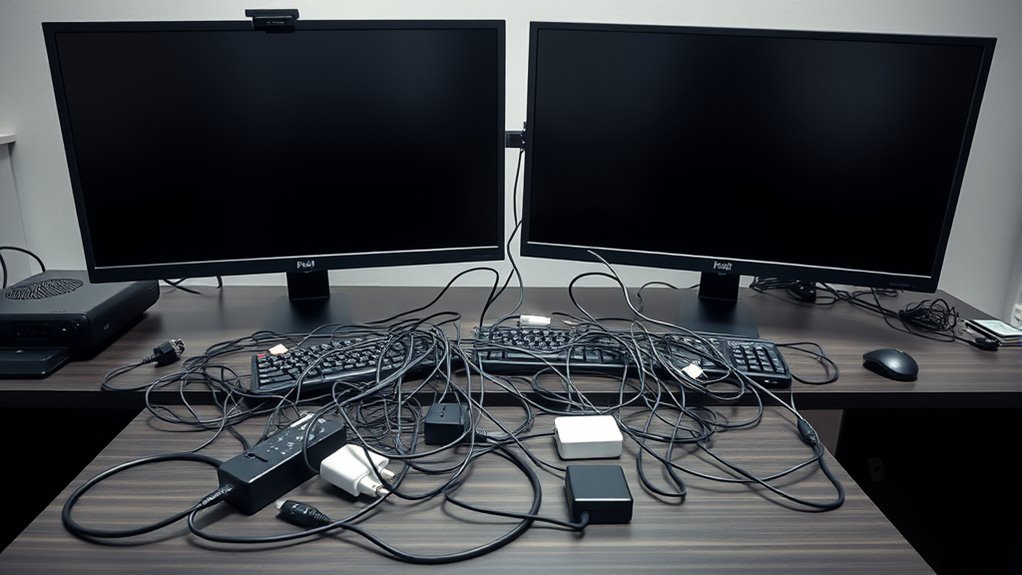
Neglecting proper cable management and power supply organization can quickly turn your workspace chaotic and inefficient. Cable clutter not only looks messy but also makes it harder to troubleshoot or adjust your setup. Without neat cables, you risk accidental disconnections or damage to ports. Overloading your power supply can cause overheating, reduce device lifespan, or even create safety hazards. To prevent this, use cable ties or sleeves to keep cords organized and off your desk surface. Ensure your power strip can handle all your devices without exceeding its capacity. Regularly check for loose connections and avoid daisy-chaining power strips. Proper cable management minimizes clutter, boosts safety, and improves airflow, helping your dual-monitor setup run smoothly and reliably. Additionally, integrating smart power management solutions can optimize energy use and enhance overall safety. Being aware of piercing care and hygiene practices can also prevent complications that might disrupt your work environment. Practicing energy-efficient wiring techniques can further promote a safer and more organized workspace. Implementing electric bike principles such as efficient energy use can inspire better organization and safety measures in your workspace, and paying attention to cable maintenance can extend the lifespan of your equipment.
Frequently Asked Questions
How Can I Optimize Monitor Placement for Multiple Applications?
To optimize monitor placement for multiple applications, you should set each monitor’s height at eye level to reduce strain. Arrange your monitors in a slight arc or side-by-side, keeping frequently used apps in the center. Maintain a clean desk organization to prevent clutter, which helps in quick shifts between screens. Adjust the tilt and distance for comfort, ensuring your neck and eyes stay relaxed during extended work sessions.
What Are the Best Monitor Types for Color Accuracy?
You should choose monitors with IPS or OLED display technology for superior color accuracy. Look for models that support extensive color calibration options and cover high color gamuts like Adobe RGB or DCI-P3. These features guarantee your colors stay precise across different applications. Regularly calibrate your display using professional tools to maintain ideal accuracy. This way, you’ll get consistent, true-to-life colors, perfect for design, photography, or any work demanding precise color reproduction.
How Often Should I Replace or Upgrade My Monitors?
Think of your monitors as the engines of your workspace; they need regular tune-ups to keep running smoothly. You should consider replacing or upgrading your monitors every 3 to 5 years, depending on their monitor lifespan and performance. If you notice flickering, reduced color accuracy, or sluggish response times, it’s time for an upgrade. Staying proactive guarantees your setup remains efficient and up-to-date, preventing costly tech breakdowns.
Are There Budget-Friendly Options for Ergonomic Accessories?
Yes, there are affordable solutions for ergonomic accessories. You can explore budget-friendly options like adjustable monitor stands, keyboard risers, or anti-fatigue mats. Additionally, DIY adjustments, such as stacking books to elevate your monitors or using homemade wrist rests, help improve comfort without breaking the bank. These affordable solutions and DIY tweaks make it easier to create an ergonomic workspace that suits your needs and saves money.
What Safety Precautions Should I Take With Multiple Monitors?
Think of your monitors as a symphony needing harmony. To keep them safe, manage cables neatly to prevent tripping hazards and accidental pulls. Regularly calibrate your monitors to guarantee consistent display quality, reducing eye strain. Position them at eye level and keep a safe distance to avoid neck strain. These steps help you create a secure, comfortable workspace, letting you focus on your work without worry.
Conclusion
By paying attention to monitor sizes, positioning, and ergonomic principles, you can create a workspace that feels seamless and comfortable. Avoiding common pitfalls like tangled cables or awkward setups might just gently steer you toward a more efficient, stress-free environment. Embrace these small adjustments, and you’ll find your dual-monitor setup not only more functional but also a pleasant space to work and thrive. Sometimes, a little mindful tweak makes all the difference.