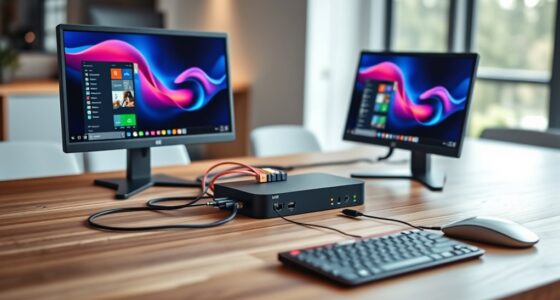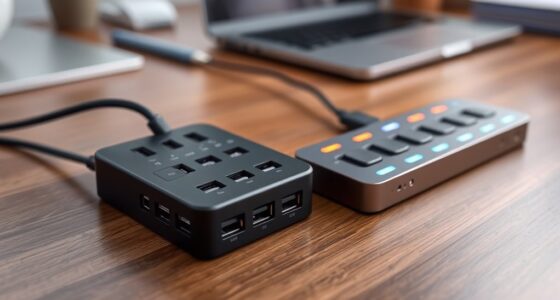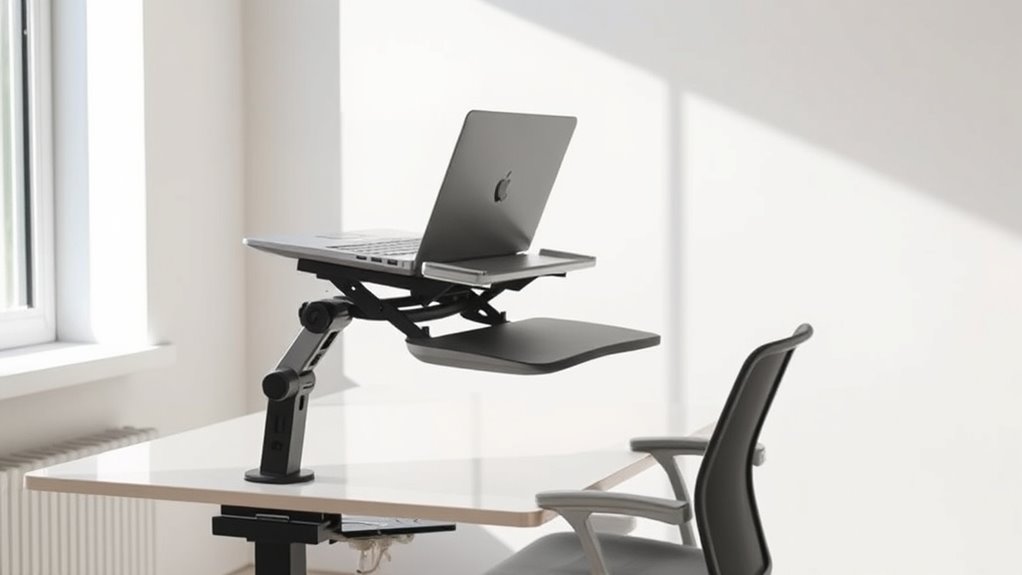

To stop neck and wrist pain, adjust your laptop so the screen is at eye level using a stand or books, and use an external keyboard and mouse to keep your wrists neutral. Keep your chair and desk at the right height to support good posture, and incorporate ergonomic accessories like wrist rests. Regular breaks and stretches are essential. Want more tips to create a comfortable, pain-free workspace? Keep going for expert insights.
Key Takeaways
- Elevate your laptop to eye level using stands or books to prevent neck strain and ensure a natural, comfortable viewing angle.
- Use an external keyboard and mouse to keep wrists straight and reduce tension during prolonged typing sessions.
- Adjust your chair and desk so forearms are parallel to the ground and feet are flat, promoting proper posture.
- Take regular breaks and perform stretching exercises for your neck, shoulders, and wrists to alleviate muscle tension.
- Organize your workspace with proper lighting and accessible essentials to minimize glare and support ergonomic positioning.
Top picks for "ergonomic laptop setup"
Open Amazon search results for this keyword.
As an affiliate, we earn on qualifying purchases.
Adjust Your Laptop Height for Optimal Eye Level

To prevent neck strain and promote good posture, you should adjust your laptop height so that the top of your screen is at or just below eye level. Proper laptop elevation guarantees your eyes are aligned with the screen, reducing the need to tilt your head downward. This eye level positioning helps maintain a neutral neck position, preventing discomfort over time. Using a stand or stacking books can help achieve the right height if your laptop isn’t adjustable. Keep in mind that when your laptop is at the correct elevation, your shoulders stay relaxed, and you avoid hunching forward. Additionally, incorporating ergonomic principles from fin and forage can help optimize your workspace for long-term comfort. Employing ergonomic accessories like vetted 1st Home Theatre Projector can further enhance your setup and support better posture during extended work sessions. Exploring smart home solutions, such as adjustable automatic stands, can also provide seamless height adjustments to maintain ergonomic positioning effortlessly. Incorporating ergonomic design ideas ensures your workspace remains comfortable and reduces the risk of repetitive strain injuries. Regularly adjusting your setup and practicing ergonomic awareness can significantly improve your overall comfort and productivity.
Use an External Keyboard and Mouse for Better Posture
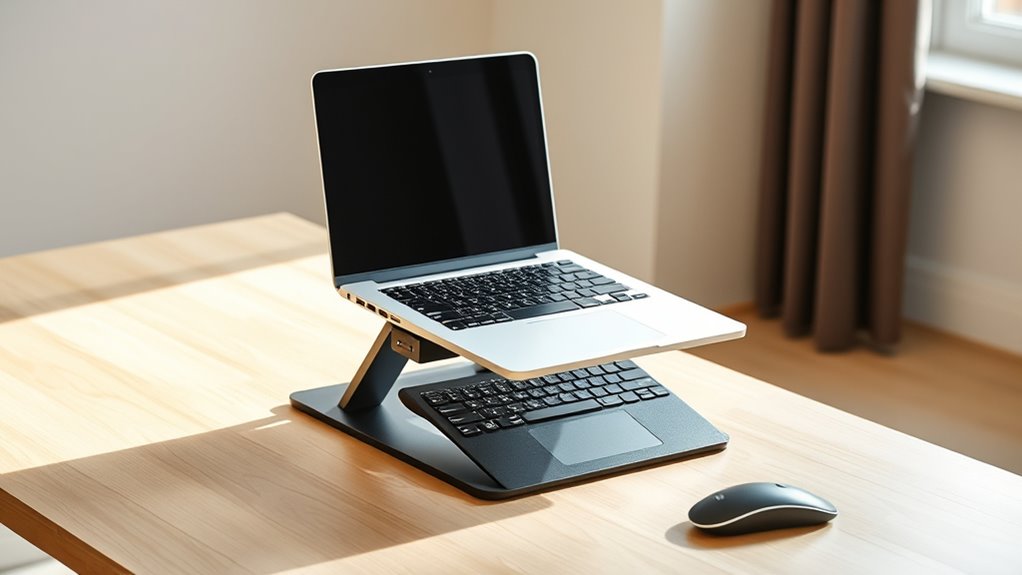
Using an external keyboard and mouse can considerably improve your posture by allowing you to position your hands and arms comfortably. This setup reduces strain on your wrists and shoulders, preventing pain over time. Choose wireless connectivity options to keep your workspace clutter-free and enhance mobility. Learning keyboard shortcuts can boost efficiency and reduce repetitive movements. Adjust your external keyboard so your elbows are close to your sides and your wrists stay straight. Additionally, selecting reliable power sources can help prevent interruptions during long work sessions, ensuring continuous productivity. Properly positioning your peripherals also minimizes musculoskeletal strain and promotes better overall comfort. Incorporating ergonomic accessories like wrist rests or monitor stands can further support proper alignment and reduce fatigue. Similarly, position your mouse at a comfortable height to avoid reaching or twisting. Here’s a quick comparison:
| Feature | Benefits |
|---|---|
| Wireless Connectivity | Eliminates cable clutter, improves flexibility |
| Keyboard Shortcuts | Speeds up workflow, minimizes mouse use |
| Ergonomic Positioning | Reduces wrist and shoulder strain |
| Adjustable height | Ensures comfortable arm positioning |
| Compatibility | Works with most laptops and desktops |
Additionally, choosing ergonomically designed peripherals can further enhance your comfort during long work sessions.
Position Your Screen to Minimize Glare and Neck Strain
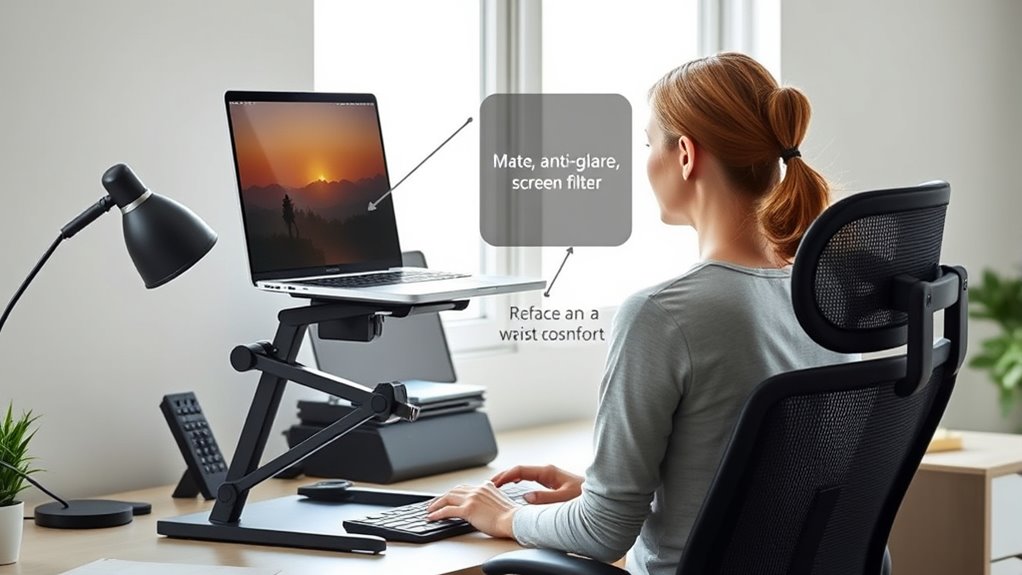
Positioning your screen correctly can considerably reduce glare and prevent neck strain during long work sessions. To minimize screen glare, adjust your monitor so that light sources, like windows or lamps, aren’t directly reflecting on the screen. Use an anti-glare filter if necessary. Keep your screen at eye level to promote neck comfort; this prevents you from tilting your head up or down excessively. The top of the screen should be roughly at or slightly below eye height, allowing your gaze to naturally fall downward. By aligning your screen properly, you reduce the need to crane your neck or squint, which lessens neck discomfort over time. Proper screen positioning is a simple but effective way to support your posture and enhance overall ergonomic comfort. Additionally, incorporating energy-efficient technology can contribute to a more sustainable workspace. Ensuring your workspace is well-lit with appropriate lighting conditions can further improve visibility and reduce eye strain.
Ensure Proper Desk and Chair Height Alignment

Make sure your desk is at the right height so your arms rest comfortably and your wrists stay straight. Adjust your chair so your feet are flat on the ground and your knees are at a 90-degree angle. Using ergonomic accessories can help fine-tune your setup for even better comfort and support. Additionally, incorporating proper styling products can help maintain healthy hair, reducing the need for excessive adjustments that can lead to discomfort. Ensuring your workspace has the correct ergonomic design can also significantly prevent strain and promote better posture throughout the day. Paying attention to ergonomic principles in your setup can further enhance comfort and reduce fatigue. Incorporating AI-driven solutions into ergonomic research is an emerging trend that could lead to more personalized workspace adjustments.
Adjust Desk Height
Ensuring your desk height is properly adjusted is essential for maintaining a comfortable and ergonomic workspace. When making ergonomic adjustments, your goal is to keep your forearms parallel to the ground and your wrists straight. To do this effectively:
- Set your desk height so your elbows form about a 90-degree angle when typing.
- Confirm your monitor is at eye level to avoid neck strain.
- Adjust your chair height if needed to support proper posture.
- Consider using ergonomic accessories such as supportive wrist rests to further reduce strain during long periods of typing. Incorporating auditory feedback techniques can also help you maintain proper ergonomic posture by increasing awareness of body positioning during work sessions.
Proper desk height prevents unnecessary strain on your neck, shoulders, and wrists. Remember, ergonomic adjustments are about creating a workspace that promotes natural alignment and comfort. Take the time to fine-tune your desk height; small changes can considerably reduce discomfort during long work sessions.
Align Chair Properly
To achieve ideal comfort and prevent strain, you need to align your chair properly with your desk height. Proper chair alignment assures your hips are level and your feet rest flat on the floor, promoting ergonomic seating. Adjust the chair height so your knees are at a 90-degree angle, with your thighs parallel to the ground. Your lower back should be supported by the chair’s lumbar support, maintaining the natural curve of your spine. When your chair is correctly aligned, your arms can rest comfortably on the desk or keyboard without raising or lowering your shoulders. This setup reduces tension in your neck, shoulders, and wrists. Additionally, using adjustable luggage & bags can help you transport ergonomic accessories more easily when working remotely. Regularly check and fine-tune your chair position to maintain ergonomic seating throughout your workday, and consider posture awareness to further prevent discomfort during long periods of sitting.
Use Ergonomic Accessories
Using ergonomic accessories can substantially enhance your workspace by helping you maintain proper desk and chair height alignment. These tools support better monitor placement and make keyboard shortcuts more accessible, reducing strain. Consider the following:
- Adjustable keyboard trays or stands help position your keyboard at the right height, preventing wrist pain.
- Monitor risers or stands elevate your screen to eye level, minimizing neck strain and improving monitor placement.
- Ergonomic mouse pads with wrist support keep your wrists aligned, reducing discomfort during extended use.
- Incorporating ergonomic principles into your setup ensures your workspace promotes better posture and reduces the risk of musculoskeletal discomfort. Additionally, selecting adjustable components can allow for personalized ergonomic configurations tailored to your unique needs.
- Choosing ergonomic accessories designed with user comfort in mind can further optimize your workspace and promote sustained well-being. To maximize comfort, consider adjusting your workspace regularly to prevent repetitive strain and maintain proper posture throughout your work session.
Incorporate Supportive Accessories to Reduce Wrist Tension
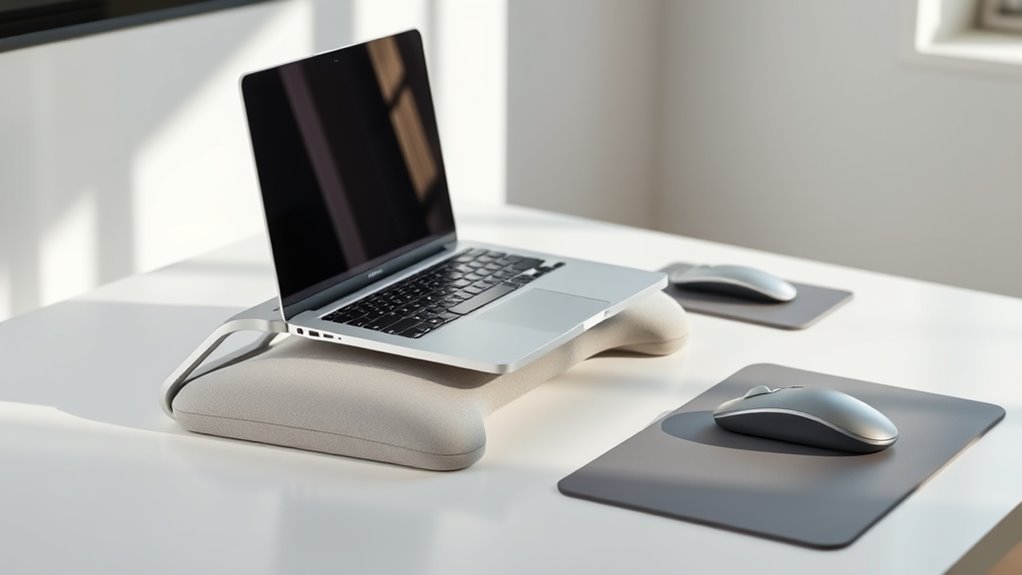
Adding supportive accessories can make a big difference in reducing wrist tension while you work. Ergonomic wrist supports, adjustable laptop stands, and soft gel wrist pads all help keep your wrists in a neutral position. These tools can improve comfort and prevent strain during long hours at your laptop.
Ergonomic Wrist Supports
Wrist tension often results from prolonged typing or mouse use, but incorporating ergonomic wrist supports can make a significant difference. These ergonomic aids help keep your wrists in a neutral position, reducing strain and discomfort. Using a wrist support ensures your wrists don’t bend awkwardly during long sessions, preventing fatigue and potential injuries. Here are some effective options:
- Gel-filled wrist rests that cushion your wrists and provide stability.
- Memory foam wrist supports that mold to your wrist shape for personalized comfort.
- Adjustable wrist pads that allow you to customize height and angle for ideal alignment.
Adding these ergonomic aids not only improves comfort but also promotes better wrist health. Incorporate a wrist support into your workspace to reduce tension and support long-term productivity.
Adjustable Laptop Stands
Adjustable laptop stands are essential tools for creating an ergonomic workspace, especially when you need to customize your device’s height and angle. Their portable design allows you to position your laptop at eye level, reducing neck strain and encouraging better posture. Look for stands with strong stability features to prevent wobbling or slipping during use. With adjustable height and tilt, you can find the most suitable angle to keep your wrists in a neutral position, minimizing tension. Many stands are lightweight and easy to carry, making them perfect for both home and office setups. By elevating your laptop and ensuring a stable base, you create an environment that promotes comfort, decreases fatigue, and helps prevent musculoskeletal issues over time.
Soft Gel Wrist Pads
Have you ever experienced discomfort after long hours at your laptop? Soft gel wrist pads can provide much-needed cushioning support, easing wrist tension and preventing strain. These gel wrist pads conform to your wrist’s shape, offering a comfortable barrier between your wrist and the keyboard or mouse. Here are three benefits of using gel wrist pads:
- Reduce pressure points and distribute weight evenly
- Prevent repetitive strain injuries like carpal tunnel syndrome
- Enhance overall comfort during extended typing sessions
Maintain a Neutral Wrist Position During Work
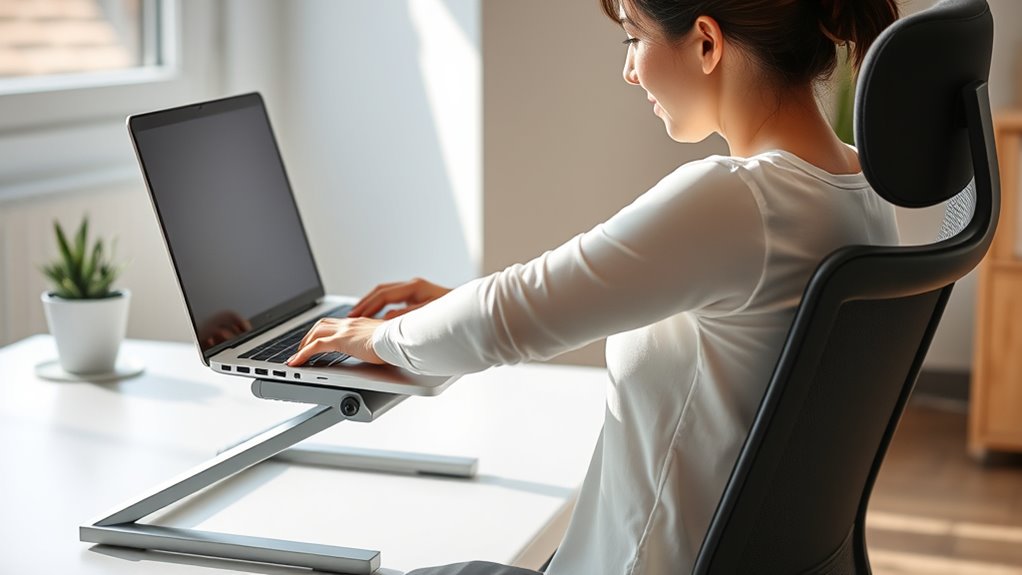
Maintaining a neutral wrist position while working on your laptop helps reduce strain and prevent repetitive strain injuries. Keep your wrists straight and avoid excessive wrist extension or flexion. To achieve this, your keyboard should be positioned so your wrists remain in a relaxed, neutral positioning during use. Use an external keyboard if necessary, elevating your laptop to ensure your forearms are parallel to the ground. Avoid resting your wrists on sharp edges or hard surfaces; a soft gel wrist pad can help support your wrists without forcing them into awkward angles. Regularly check your wrist alignment and make adjustments as needed. Proper wrist positioning minimizes tension and allows for comfortable, efficient typing, reducing the risk of soreness or long-term injury.
Take Regular Breaks and Practice Stretching Exercises

Taking regular breaks and practicing stretching exercises is essential to maintaining comfort and preventing strain during long hours at your laptop. Frequent breaks help reduce muscle tension and improve circulation. During each break, try these simple stretching routines to relieve neck, shoulder, and wrist tension.
- Stand up and gently tilt your head side to side to stretch your neck.
- Roll your shoulders backward and forward to loosen tight muscles.
- Extend your arms and stretch your wrists by flexing and rotating them.
Aim for a break every 30 to 60 minutes, adjusting based on how your body feels. Incorporating these practices into your routine can considerably reduce discomfort and promote better posture throughout your workday.
Optimize Your Workspace for Comfort and Accessibility

Creating an ergonomic workspace begins with positioning your equipment thoughtfully to guarantee comfort and accessibility. Start by organizing your desk to keep essentials within easy reach, reducing unnecessary stretching or twisting. A clutter-free desk helps you maintain better posture and prevents strain. Lighting optimization is also vital; ensure your workspace is well-lit with natural light or adjustable lamps to minimize eye strain. Avoid glare on your screen by positioning your laptop away from direct light sources. Proper desk organization and lighting not only enhance comfort but also improve focus and productivity. Remember, a tidy, well-lit workspace supports long-term health by reducing the need to adopt awkward positions or strain your eyes. Small adjustments make a significant difference in creating an ergonomic setup.
Develop Good Posture Habits for Long-Term Health
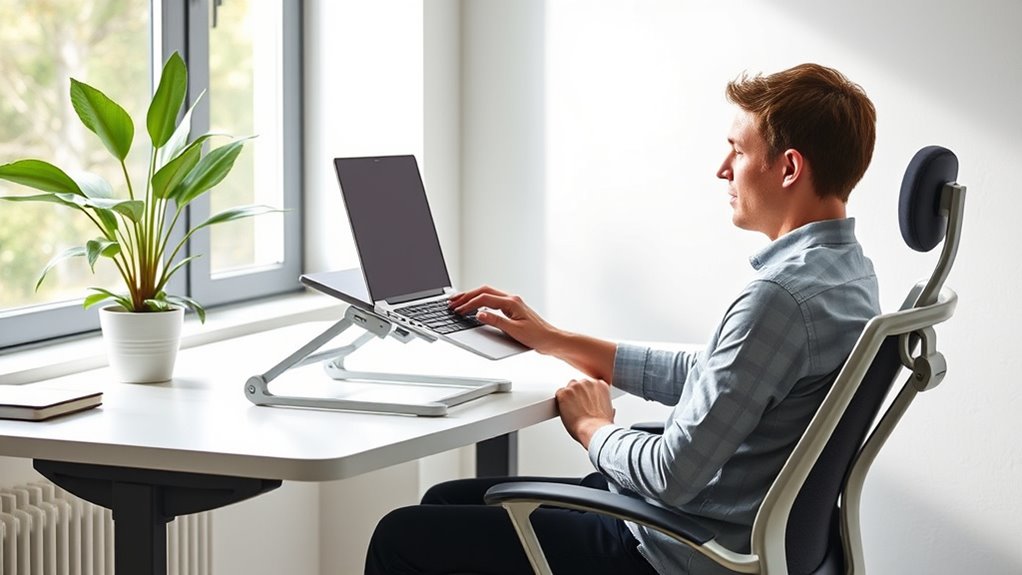
Once your workspace is organized and well-lit, focusing on your posture can make a lasting difference in your comfort and health. Developing good posture habits involves practicing correct sitting posture and mindful ergonomics daily. To support long-term health:
- Keep your feet flat on the ground and knees at a 90-degree angle to reduce strain.
- Sit upright with your shoulders relaxed and back supported, maintaining a neutral spine.
- Position your screen at eye level to prevent neck tilting and encourage proper alignment.
Frequently Asked Questions
How Can I Adjust My Laptop for Better Lower Back Support?
To improve lower back support, you should adjust your chair for ideal lumbar support. Sit back fully and use a cushion or lumbar pillow if your chair lacks proper support. Make sure your chair height allows your feet to rest flat on the floor, and adjust the tilt to maintain natural spine curvature. Proper chair adjustments help reduce strain, keeping your lower back comfortable and supported during long laptop sessions.
What Are the Signs of Poor Ergonomic Setup Affecting My Health?
If your posture awareness is off, you might notice headache symptoms, neck strain, or wrist discomfort. Poor ergonomic setup often leads to slouching, forward head posture, or awkward wrist angles, which can cause pain and fatigue. Stay attentive to how you sit and type, and adjust your workspace to support a natural posture. Recognizing these signs early helps prevent long-term health issues and improves your overall comfort.
How Do I Choose the Right Ergonomic Accessories for My Workspace?
Did you know that proper ergonomic accessories can boost productivity by up to 25%? To choose the right ones, focus on chair positioning that supports your back and aligns your hips. Make certain your monitor height keeps your eyes level to prevent neck strain. Adjustable accessories are best, allowing you to customize your workspace for comfort, reducing pain, and improving your overall posture throughout the day.
Can Ergonomic Adjustments Improve My Overall Productivity?
Yes, ergonomic adjustments can boost your overall productivity. When you set up your workspace properly, you reduce discomfort and fatigue, allowing you to work more efficiently. Incorporate productivity tips like proper chair height and monitor placement to maximize ergonomic benefits. These small changes help you stay focused longer, avoid distractions, and work comfortably, ultimately making your day more productive and less stressful.
How Often Should I Reassess My Workspace Ergonomics?
You should reassess your workspace ergonomics at least once every three to six months. Regular workspace evaluations help you identify any issues that may cause discomfort or reduce productivity. Incorporate ergonomic check-ins into your routine to guarantee your setup remains ideal as your needs or equipment change. Staying proactive with these evaluations helps prevent pain and maintains comfort, keeping you focused and efficient throughout your workday.
Conclusion
By tweaking your setup, you’re steering your workstation away from the rocks of neck and wrist pain. Think of your posture as the steady sail that keeps your comfort afloat, guiding you smoothly through long hours. Embrace these tips like a trusted compass, and watch discomfort drift away like fog. When your workspace sings harmony with your body, every task becomes a breeze—making health and productivity your greatest voyage.